
Business Casual Women: Build a Polished Work Wardrobe
Business casual for women offers more freedom than traditional corporate clothing, but that flexibility can also make getting dressed confusing. The dress code sits between formal business attire and everyday casual wear, combining comfortable garments with a neat, intentional and workplace-appropriate appearance.
A polished work wardrobe does not require a different outfit for every day of the month. A carefully selected collection of trousers, blouses, dresses, knitwear, jackets and comfortable shoes can create many combinations. The goal is to choose pieces that coordinate easily and support your normal working routine.
Modern offices also differ widely in their expectations. A creative agency may welcome colourful trainers and relaxed tailoring, while a law firm may expect structured jackets and closed-toe shoes. Hybrid workplaces add another consideration because employees often need outfits that look professional in meetings while remaining comfortable throughout the day.
This guide explains how to build a practical business casual wardrobe for women without losing your personal style. It covers essential clothing, outfit formulas, seasonal dressing, shoes, accessories, fit and common mistakes, helping you create professional outfits that feel confident rather than restrictive.
What Does Business Casual Mean for Women?
Business casual is a professional dress code that combines formal and relaxed clothing. It is less structured than a traditional suit but more polished than weekend wear. Common choices include tailored trousers, blouses, midi skirts, simple dresses, knitwear, blazers, loafers and smart flats.
The exact definition depends on the company, industry and location. A business casual outfit in a technology company may include dark jeans and clean trainers, while a financial office may expect trousers, a blouse and polished shoes. Workplace culture should always guide your final clothing choices.
Fit, condition and styling often matter as much as the individual garment. A simple cotton shirt can look professional when it is clean, pressed and correctly fitted. The same shirt may appear too casual when it is heavily creased, oversized without intention or combined with distressed clothing.
Business casual should allow you to perform your job comfortably while presenting a reliable professional image. You should be able to walk, sit, reach and work without constantly adjusting your clothes. An outfit that looks polished but causes discomfort throughout the day is not a practical choice.
Understand Your Workplace Dress Code First
Before buying new clothes, observe how experienced colleagues and managers dress during a normal working week. Pay attention to footwear, sleeve lengths, denim, patterns and the level of tailoring. These details often provide more useful guidance than the broad phrase “business casual” in an employee handbook.
Consider whether different situations require different levels of formality. Everyday desk work may allow knitwear and flats, while client presentations may call for a blazer and more structured shoes. Keeping one polished layer at work can help you adapt quickly when an unexpected meeting appears.
New employees can ask a recruiter, manager or human resources representative for practical examples. A question such as whether dark jeans or trainers are acceptable is easier to answer than asking what business casual means generally. Clear information can prevent both unnecessary spending and uncomfortable first-day mistakes.
When the expectations remain uncertain, begin slightly more polished than the average office outfit. You can relax your clothing gradually after understanding the culture. It is usually easier to remove a blazer or simplify an outfit than to correct clothing that appears noticeably too casual.
Build a Business Casual Capsule Wardrobe
A business casual capsule wardrobe is a small collection of coordinating pieces that can create many professional outfits. Instead of buying individual garments without a plan, you choose versatile colours, shapes and fabrics. This reduces morning decisions and helps you use more of what you already own.
A practical starting capsule might include two pairs of trousers, one skirt, one dress and four office-appropriate tops. Add a blazer, cardigan, lightweight knit and two pairs of comfortable shoes. These items can produce several weeks of outfits when the colours and proportions work together.
Choose two or three main neutral colours such as navy, black, grey, cream, camel or chocolate brown. Add one or two accent colours that suit your complexion and personal style. A limited palette does not need to look dull when you introduce texture, jewellery and occasional patterns.
Your capsule should reflect your actual working life rather than an idealised office wardrobe. Someone who walks between buildings needs different shoes from a person attending formal board meetings. Begin with the items you require most often, then add specialised pieces only when a genuine need appears.
Start with Well-Fitting Tailored Trousers
Tailored trousers are one of the most useful business casual essentials because they work with shirts, knitwear, blazers and simple T-shirts. Straight-leg, tapered and wide-leg designs can all look professional when the waist, length and fabric suit your body and workplace.
Wide-leg trousers remain a strong modern workwear choice because they combine movement with a structured appearance. Pair them with a fitted knit, tucked blouse or shorter jacket to create balanced proportions. Shoes should sit comfortably beneath the hem without causing the fabric to drag.
Straight-leg trousers provide a timeless option for offices with conservative dress codes. They can be worn with loafers, flats, boots or low heels across several seasons. A mid-rise or high-rise waist often creates a clean line when shirts and lightweight jumpers are tucked in.
Check how the trousers look while sitting as well as standing. The waistband should remain comfortable, pockets should lie flat and the fabric should not pull sharply across the hips. Professional tailoring can make an affordable pair look more polished than an expensive garment with an unsuitable fit.
Choose Business Casual Tops That Mix Easily
A useful work wardrobe needs tops that can be worn alone or layered beneath a blazer, cardigan or jacket. Blouses, button-down shirts, knit tops and refined T-shirts are reliable choices. Select necklines and sleeve lengths that remain comfortable during movement and video meetings.
A white or cream shirt is a classic option, but it does not need to be stiff or overly formal. Cotton poplin creates structure, while softer fabrics produce a relaxed appearance. A slightly oversized shirt can work well when the remaining outfit is tailored and the proportions appear intentional.
Fine-knit tops are practical for cooler offices and transitional seasons. Crew-neck, V-neck, mock-neck and knitted polo designs can look professional without requiring a separate jacket. Avoid heavy fabrics that become uncomfortable beneath a blazer or lose their shape during the working day.
Patterns and colour can prevent a capsule wardrobe from becoming repetitive. Subtle stripes, small prints and rich solid shades coordinate easily with neutral bottoms. Very transparent materials may require a camisole, while excessively shiny or heavily embellished tops can appear more suitable for evening events.
Use Blazers to Make Outfits Look Polished
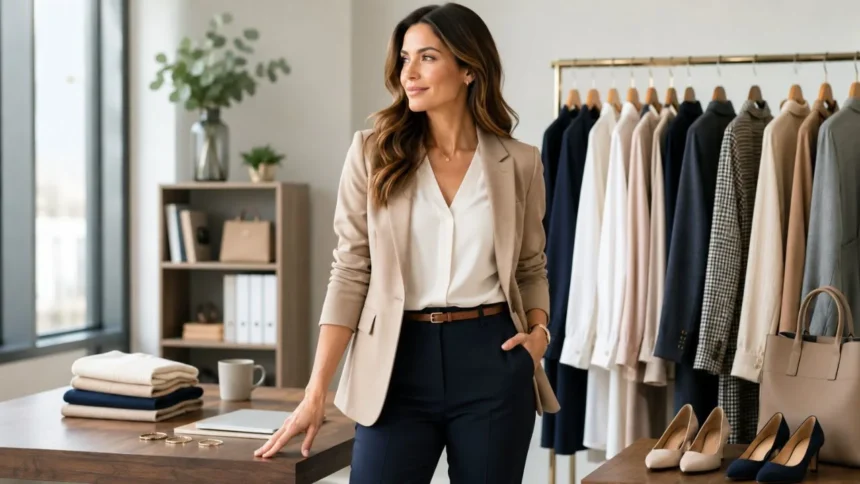
A blazer is one of the quickest ways to make a simple outfit feel workplace-ready. It can elevate trousers and a T-shirt, add structure to a dress or make dark jeans appropriate for a relaxed office. The best blazer should complement several garments rather than one specific outfit.
Structured blazers create a more traditional professional appearance, while soft or unlined jackets feel relaxed and comfortable. Single-breasted designs are generally easy to style, although double-breasted blazers can create a confident statement. Choose a length that works with your trousers, skirts and natural proportions.
Neutral colours provide the greatest versatility, but a blazer does not have to be black. Navy, taupe, olive, burgundy and soft grey can feel less severe while remaining professional. A subtle check or textured weave may also add interest without limiting the number of possible combinations.
The shoulders should sit correctly without deep wrinkles or unnecessary padding. Sleeves can be adjusted by a tailor when the body fits well, and pushing them slightly upward can create a relaxed look. Avoid jackets that restrict arm movement or feel uncomfortable while sitting at a desk.
Add Midi Skirts for Easy Professional Outfits
Midi skirts offer a polished alternative to trousers and can be worn throughout the year. Straight, A-line, pleated and gently flowing styles all work in business casual settings. The most practical option allows comfortable walking and sitting without requiring frequent adjustment.
An A-line skirt creates a defined waist while allowing movement through the hips. It pairs naturally with tucked shirts, fitted knitwear and shorter jackets. A structured fabric appears more formal, while a softer material creates an approachable and relaxed office outfit.
Slip-style and satin-look skirts can work in creative or less conservative offices when styled carefully. Combine them with a simple knit, tailored blazer or crisp shirt rather than an evening-style top. A matte finish is often easier to incorporate into daytime professional clothing.
Choose a length that feels appropriate for your workplace and daily activities. A skirt that appears suitable while standing may rise considerably when sitting. Test the complete outfit with your usual shoes so the hemline and proportions feel balanced from every angle.
Select Work Dresses That Require Little Styling
A simple work dress creates a complete outfit without requiring several coordinating pieces. Shirt dresses, wrap-style dresses, knit dresses and tailored midi designs can all fit a business casual wardrobe. A dress is particularly useful on busy mornings or during work travel.
Shirt dresses provide structure while remaining comfortable and easy to layer. A fabric belt can define the waist, while a leather belt creates a sharper appearance. During cooler weather, add a cardigan, blazer or fine knit beneath the dress for additional warmth.
A wrap-style dress can create an adjustable fit, although the neckline and front opening should remain secure during movement. A camisole or discreet fastening may provide extra coverage. Select a fabric with enough weight to prevent the dress from clinging or shifting throughout the day.
Plain dresses offer the greatest styling flexibility because shoes, jackets and accessories can change their appearance. Small prints can also work well when the colours coordinate with the rest of your wardrobe. Avoid designs that feel too similar to partywear, beachwear or formal evening clothing.
Wear Comfortable and Professional Shoes
Business casual shoes should look polished while supporting the amount of walking and standing your job requires. Loafers, ballet flats, low heels, ankle boots and refined trainers may all be suitable. The correct option depends on the dress code, season and your personal comfort needs.
Loafers are particularly versatile because they work with tailored trousers, skirts, dresses and dark denim. Classic leather creates a structured appearance, while suede or soft finishes feel more relaxed. Cushioned soles and adequate toe space are important when the shoes will be worn for several hours.
Flats do not need to look plain or overly casual. Pointed, almond and square-toe designs can create a professional shape without the height of a heel. A secure strap or higher-cut upper may feel more supportive than a shoe that repeatedly slips from the heel.
Clean minimalist trainers are accepted in many modern and creative workplaces, but they are not universal business casual footwear. Choose simple designs without heavy sports branding or worn soles. Keep an alternative pair of formal shoes available when meeting important clients or attending conservative events.
Choose Bags and Accessories Carefully
A structured work bag can make a simple outfit look organised and professional. It should hold your daily essentials without becoming so large that it is uncomfortable to carry. Consider space for a laptop, charger, notebook, water bottle and any items required during your commute.
Leather and high-quality synthetic materials create a polished appearance, but durability matters more than a designer label. Handles, stitching and closures should withstand regular use. A tote with secure compartments can prevent small objects from disappearing and protect work devices during travel.
Jewellery can add personality without dominating the outfit. Simple earrings, a watch, a pendant or a few rings may be enough to complete a business casual look. Creative workplaces may welcome stronger accessories, while client-facing or conservative roles may favour quieter pieces.
Belts, scarves and eyewear can also introduce colour and texture to neutral clothing. Choose one or two noticeable details rather than adding every accessory at once. The aim is to look intentional and recognisable without allowing styling elements to interfere with your work.
Create Business Casual Outfits with Jeans
Jeans may be suitable for business casual women in relaxed workplaces, especially on casual Fridays or non-client days. However, permission should never be assumed. Check company expectations before building several office outfits around denim that you may not be allowed to wear.
Dark indigo, black and deep grey jeans usually look more polished than faded washes. Straight-leg, slim-straight and wide-leg cuts can work when they fit well and have a clean finish. Avoid heavy distressing, large holes, frayed hems and dramatic decorative details.
Pair denim with more structured garments to maintain a professional balance. A blazer, button-down shirt, fine-knit jumper or polished loafer can make jeans feel deliberate rather than casual. A simple belt and organised work bag can further strengthen the office-ready appearance.
The outfit should still suit the activities planned for that day. Jeans may be acceptable during internal work but inappropriate for a formal client presentation. Keeping tailored trousers available allows you to adjust when the schedule changes or senior visitors arrive unexpectedly.
Dress for Business Casual Meetings and Interviews
Job interviews generally require a more polished interpretation of the company’s everyday dress code. A blazer, tailored trousers, modest blouse or professional dress creates a reliable starting point. It is usually safer to appear slightly more formal than the staff you observed online.
Client presentations and important meetings also justify additional structure. You might add a blazer, choose more formal shoes or replace denim with trousers. These adjustments communicate that you recognise the importance of the occasion without requiring an entirely separate formal wardrobe.
Comfort still matters because visible discomfort can affect confidence and concentration. Test the outfit before the event, particularly when wearing new shoes or unfamiliar shapewear. You should be able to sit, walk, reach and present without adjusting the clothing repeatedly.
Avoid trying a dramatic new style on the morning of an important meeting. Choose familiar pieces that fit correctly and make you feel capable. Personal confidence comes partly from appearance, but it also comes from knowing that your clothes will not distract you from the conversation.
Build Business Casual Outfits for Summer
Summer business casual outfits should use breathable materials while maintaining enough structure for the workplace. Cotton, linen blends, lightweight wool and breathable viscose can feel more comfortable than heavy synthetic fabrics. Choose garments that remain presentable even after commuting in warm weather.
Linen trousers and shirts can look polished, but pure linen wrinkles easily. Blended fabrics often provide the same relaxed texture with better shape retention. A lightweight jacket kept at the office can help when air conditioning makes indoor spaces much cooler than the journey outside.
Midi dresses, sleeveless blouses and lightweight skirts provide simple warm-weather options. Sleeveless clothing may be acceptable in some workplaces but not others, so keep a cardigan or blazer nearby. Extremely thin straps, beach-style fabrics and very short hemlines usually appear too casual.
Shoes should remain practical in heat without resembling holiday footwear. Slingback flats, loafers and refined open-back shoes may work depending on company rules. Casual flip-flops and worn pool slides rarely create the professional appearance expected from business casual clothing.
Build Business Casual Outfits for Winter
Winter workwear should provide warmth without creating excessive bulk. Fine-knit jumpers, wool-blend trousers, midi skirts and long-sleeved dresses can form the base of a professional outfit. Add layers that can be removed easily when office heating changes throughout the day.
A turtleneck or mock-neck knit works well beneath a blazer and creates a clean, modern line. Choose smooth, lightweight fabrics rather than very chunky jumpers when the dress code is more formal. A cardigan provides flexibility and can replace a jacket in relaxed offices.
Ankle boots are a useful winter footwear choice when they are clean, supportive and suitable for the office. Sleek leather or suede designs usually coordinate well with trousers and dresses. Keep indoor shoes at work when snow, rain or mud could damage flooring and make outdoor footwear look untidy.
A structured coat completes the winter outfit during the commute. Wool coats, belted designs and simple trench coats generally work across professional and casual settings. Practical features such as warm lining and secure pockets are more valuable than choosing a coat solely for its appearance.
Make Business Casual Work for Hybrid Offices
Hybrid work has increased demand for clothing that looks polished on camera while remaining comfortable during long periods at home. Knit tops, soft blazers and elastic-backed trousers can create a professional appearance without feeling as restrictive as traditional suiting.
Video meetings place greater visual attention on the upper part of the outfit. Clear necklines, solid colours and subtle patterns usually display well on camera. Very small prints may create visual distortion, while jewellery that repeatedly touches a microphone can become distracting.
Avoid treating remote work as a reason to remain in sleepwear all day. Changing into comfortable work clothing can create a helpful boundary between personal and professional time. The outfit does not need to be formal, but it should allow you to join an unexpected call confidently.
Choose hybrid work pieces that can move easily between home and office. A knitted jacket, refined pull-on trouser or washable blouse can serve both settings. This approach prevents you from maintaining two completely separate wardrobes for the same job.
Add Personality Without Looking Unprofessional
Business casual clothing does not require you to remove every sign of personal style. Colour, texture, patterns, jewellery and distinctive shoes can make a wardrobe feel individual. The key is to introduce personality in a way that still supports the professional setting.
Begin with one statement element and keep the rest of the outfit relatively simple. A colourful blazer can work with neutral trousers and a plain top, while printed trousers may look balanced beneath a solid knit. This approach creates interest without making the complete outfit feel visually crowded.
Your industry can influence how much experimentation feels appropriate. Fashion, design and media offices may view creative styling as part of professional identity. Banking, government and legal environments may expect quieter colours and more traditional shapes, particularly during external meetings.
Authenticity does not require ignoring the dress code. Instead, it means adapting your preferences to the environment. A polished outfit should feel like a professional version of your normal style rather than a costume you remove immediately after leaving the office.
Build Modest Business Casual Outfits
Modest workwear can be professional, modern and comfortable without relying on shapeless clothing. Wide-leg trousers, maxi or midi skirts, longline blazers and flowing blouses provide coverage while maintaining clear proportions. Fabric choice and thoughtful layering help the outfit look intentional.
A lightweight long-sleeved blouse can be worn beneath a sleeveless dress or structured vest. Fine-knit tops also provide coverage without adding excessive bulk. When layering, choose fabrics that slide comfortably over one another and remain breathable inside a heated office.
Longer skirts should allow safe walking and should not drag against the floor. Pleated, A-line and straight-cut designs can all work depending on your preferred silhouette. Pair fuller skirts with a more defined top or structured jacket to maintain visual balance.
Women who wear headscarves can coordinate them with the wardrobe’s neutral and accent colours. Breathable fabrics and secure styling are useful for long working days. The overall outfit should respect personal values while meeting safety requirements for any machinery or specialist work environment.
Find Business Casual Clothing for Every Body
Professional clothing should serve different heights, shapes, mobility needs and sizes. The purpose of business casual is not to force every woman into the same silhouette. A polished wardrobe begins with garments that fit your body rather than expecting your body to fit a standard garment.
Petite women may benefit from shorter jacket lengths, correctly placed waistlines and trousers designed for a reduced inseam. Continually rolling sleeves or shortening every garment can make shopping frustrating. Petite ranges may provide more accurate proportions even when tailoring is still required.
Tall women should check sleeve, rise and hem measurements rather than relying only on the labelled size. Longer inseams and tall-specific dresses can provide better placement through the waist and hips. Clothing should allow normal movement without appearing unintentionally cropped.
Plus-size business casual clothing should provide the same structure, quality and modern design available in smaller sizes. Look for brands with consistent measurements and helpful customer reviews. Tailoring, fabric quality and personal comfort matter more than following restrictive rules about which body types can wear particular styles.
Choose Colours and Fabrics Strategically
A coordinated colour palette makes it easier to create business casual outfits from fewer garments. Select neutrals that work with your natural colouring and existing shoes. Black is useful, but navy, brown, charcoal, cream and olive can create a softer and equally professional foundation.
Accent colours should appear in several pieces so they can be repeated throughout the wardrobe. A burgundy blouse might coordinate with a patterned scarf, printed skirt and neutral blazer. Repeating colours creates visual consistency without requiring every item to match exactly.
Fabrics influence comfort, appearance and maintenance. Wool blends, cotton, sturdy knits and quality synthetic blends can hold their shape during a long day. Very thin materials may become transparent, while fabrics that wrinkle immediately can require more care than your schedule allows.
Check washing instructions before purchasing because high-maintenance clothing can increase both cost and effort. A wardrobe filled with dry-clean-only items may not suit someone who needs fresh outfits five days a week. Washable garments can look polished when their fabric and construction are chosen carefully.
Build a Work Wardrobe on a Budget
A polished wardrobe can be built gradually without purchasing every recommended item at once. Begin by reviewing your current clothing and identifying which pieces already suit the dress code. You may only need better shoes, one pair of trousers and an additional layer to create several outfits.
Create a written shopping list based on genuine wardrobe gaps. Buying without a list can produce repeated colours, impractical fabrics and items that do not coordinate. Each new garment should ideally work with at least three pieces you already own.
Second-hand shops, resale platforms and seasonal sales can provide quality workwear at lower prices. Blazers, coats and leather shoes may offer particularly good value when lightly used. Inspect fabric, closures, linings and stains carefully before deciding whether an item is worth altering.
Spend more where durability and fit strongly affect daily comfort. Shoes, trousers, bras and outerwear may deserve a larger portion of the budget than trend-focused accessories. An affordable garment that fits well and receives regular use offers greater value than an expensive item that remains unworn.
Easy Business Casual Outfit Formulas
A simple outfit formula reduces decision-making without making every day look identical. Tailored trousers, a blouse and loafers create a dependable foundation. Add a blazer for meetings, or replace it with a cardigan when the office environment is more relaxed.
Another useful formula combines a midi skirt with a fitted knit and ankle boots. This works particularly well during autumn and winter, while flats can replace the boots in warmer weather. A belt or necklace can change the appearance without requiring another complete outfit.
For casual offices, wear dark straight-leg jeans with a button-down shirt and soft blazer. Complete the outfit with loafers or minimalist trainers when permitted. The contrast between casual denim and polished layers creates a balanced business casual look.
A simple dress with a jacket and comfortable shoes provides the quickest formula. Change the jacket, jewellery or belt to make the dress feel different across several wears. Repeating garments is normal and practical when they are clean, well maintained and styled thoughtfully.
Common Business Casual Mistakes to Avoid
One common mistake is assuming that every casual garment becomes business casual when combined with a blazer. Very distressed jeans, gym clothing, beachwear and extremely revealing garments may still look inappropriate. The complete outfit should appear intentional before the jacket is added.
Poor fit is another frequent problem. Clothing that pulls, slips, drags or requires constant adjustment can look less polished and reduce confidence. Tailoring small details such as sleeve length, trouser hems and waist fit can significantly improve the overall appearance.
Wearing uncomfortable shoes for the sake of formality can also create problems. Pain affects posture, movement and concentration, especially during commuting or events. Professional footwear is available in flats, supportive loafers and low heels, so discomfort should not be treated as a workplace requirement.
Finally, avoid ignoring maintenance. Creased shirts, scuffed shoes, missing buttons and visible pet hair can weaken an otherwise strong outfit. A small clothing brush, steamer and basic repair kit help keep the wardrobe ready without requiring frequent replacement purchases.
Care for Your Work Wardrobe
Read care labels before washing because incorrect heat or drying methods can damage fabric and alter fit. Wash similar colours together and use garment bags for delicate items. Treating clothing carefully helps affordable pieces remain polished for a longer period.
Hang blazers, trousers and dresses on supportive hangers that preserve their shape. Fold heavy knitwear because hanging can stretch the shoulders. Allow shoes to dry and rest between wears, particularly when they are used during a long commute.
Address small damage before it becomes difficult to repair. Replace loose buttons, secure falling hems and treat stains promptly. Keeping a basic sewing kit at home can prevent a useful garment from remaining unworn for several weeks.
Review the wardrobe at the end of each season. Remove items that no longer fit, cannot be repaired or do not suit your job. This makes genuine gaps easier to identify and prevents new purchases from disappearing inside an overcrowded cupboard.
Final Thoughts
Business casual for women is best understood as polished, comfortable and appropriate clothing rather than a fixed list of permitted garments. The correct wardrobe depends on your company, industry, daily responsibilities and personal needs. Observing the workplace is the most reliable starting point.
Build your collection around versatile trousers, tops, layers, dresses and practical shoes. A limited colour palette and repeatable outfit formulas can create variety without requiring excessive clothing. Fit and condition will usually influence your appearance more than price or brand.
Modern workwear can include relaxed tailoring, wide-leg trousers, knitwear, flats and selected denim while still looking professional. Trends can refresh the wardrobe, but they should never replace reliable essentials. Choose fashionable elements only when they support your existing clothing and normal routine.
The best business casual wardrobe helps you concentrate on your work rather than your outfit. When clothes fit properly, feel comfortable and match the situation, they can support confidence without demanding attention. Build slowly, buy thoughtfully and create a professional style that genuinely feels like you.
Frequently Asked Questions
What is business casual attire for women?
Business casual attire combines professional pieces with relaxed styling. Common options include tailored trousers, blouses, midi skirts, simple dresses, knitwear, blazers, loafers and polished flats.
Can women wear jeans for business casual?
Dark, clean jeans may be acceptable in relaxed workplaces, but company rules vary. Pair them with a structured shirt, blazer and polished shoes to create a more professional appearance.
Are trainers appropriate for business casual women?
Minimalist, clean trainers may suit creative and casual offices. More conservative workplaces may expect loafers, flats, boots or low heels, particularly during client meetings and formal events.
What should a woman wear on her first business casual workday?
Start with tailored trousers, a modest blouse, a blazer and comfortable polished shoes. You can adjust the level of formality after observing how colleagues and managers normally dress.
How many pieces are needed for a business casual wardrobe?
A starting capsule of approximately 12 to 18 coordinating pieces can create many outfits. Focus on versatile tops, bottoms, layers, shoes and one or two easy professional dresses.