

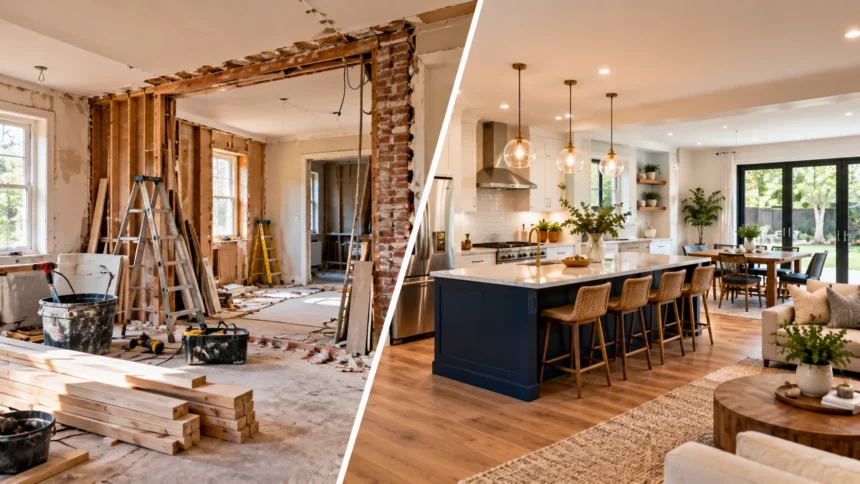
Home remodeling and renovation are two common terms used in home improvement projects, but they do not always mean the same thing. Many homeowners use these words interchangeably when planning kitchen upgrades, bathroom improvements, or complete house transformations. However, understanding the difference between remodeling and renovation can help you make better decisions about your property.
Both renovation and remodeling aim to improve a home’s appearance, functionality, and overall condition. The main difference lies in the type and extent of work involved. Renovation generally focuses on restoring or updating existing spaces, while remodeling changes the structure, layout, or purpose of a room.
This guide explains home remodeling vs. renovation, including their key differences, costs, timelines, benefits, and common examples. You will also learn when to choose each approach, what permits may be required, and how to plan a successful home improvement project without unnecessary expenses.
What Is Home Renovation?
Home renovation refers to improving, repairing, or updating an existing space without substantially changing its original layout or purpose. The goal is usually to restore functionality, refresh outdated features, or improve the appearance of a property. Common renovation projects include repainting walls, replacing flooring, upgrading fixtures, and refinishing kitchen cabinets.
Renovation projects often preserve the basic structure and arrangement of rooms. For example, updating an existing kitchen with new countertops, cabinet doors, and lighting is generally considered renovation work. The kitchen continues serving the same purpose, and its overall floor plan remains largely unchanged throughout the improvements.
Homeowners often choose renovation when their property is structurally sound but looks outdated or requires minor repairs. These projects can improve comfort and visual appeal without major construction. Renovations may also be more affordable and less disruptive than projects requiring extensive demolition or structural alterations.
What Is Home Remodeling?
Home remodeling involves changing the design, layout, structure, or function of an existing space. Unlike renovation, remodeling may require moving walls, rearranging rooms, or modifying major building systems. The purpose is often to improve how a home functions rather than simply refreshing its existing appearance.
For example, removing a wall between a kitchen and dining room to create an open-plan living area is a remodeling project. Converting an unused bedroom into a home office or changing a bathroom layout can also qualify. These improvements may require architectural planning, construction work, and changes to electrical or plumbing systems.
Remodeling is particularly useful when a home’s original layout no longer meets household needs. Families may want larger kitchens, additional bathrooms, or more functional living spaces. However, these changes usually require more planning, specialized labor, and financial resources than straightforward cosmetic renovations.
Home Remodeling vs. Renovation: Main Differences
The biggest difference between home remodeling and renovation is the extent of change to the existing property. Renovation generally improves an area while preserving its original structure and purpose. Remodeling, on the other hand, can transform the layout, functionality, or arrangement of rooms to create a different living environment.
Renovation projects often involve replacing outdated surfaces, repairing damaged materials, and upgrading existing fixtures. Remodeling may involve removing partitions, relocating plumbing, expanding rooms, or creating entirely new layouts. Consequently, remodeling frequently requires more construction work and coordination between different building professionals.
Another important difference involves project complexity and disruption. Renovations can sometimes be completed while homeowners continue using nearby spaces, depending on the work involved. Major remodeling projects may require temporary changes to household routines because structural modifications and building system alterations can affect multiple rooms.
How Remodeling and Renovation Costs Compare
Home renovation costs generally depend on the size of the property, materials selected, and improvements required. Cosmetic renovation projects involving painting, flooring, and fixtures may be relatively affordable. However, extensive repairs or premium finishes can make even a renovation expensive.
Home remodeling often costs more because it may involve structural modifications and changes to plumbing or electrical systems. Moving a kitchen, altering load-bearing walls, or expanding a bathroom can increase labor and material expenses. Architectural design services, engineering assessments, permits, and inspections may also contribute to the overall budget.
Neither approach has a fixed price because project requirements vary significantly. A luxury renovation may cost more than a small remodeling project with limited layout changes. Homeowners should compare detailed contractor estimates rather than assuming one category will always be cheaper.
Renovation vs. Remodeling: Which Takes Longer?
Home renovations often take less time when the existing room layout remains unchanged. Repainting walls, updating fixtures, or replacing flooring may require several days or weeks. The timeline depends on room size, material availability, surface preparation, and the amount of work involved.
Remodeling projects generally require additional time for design development, approvals, and construction coordination. Removing walls, relocating plumbing, or changing room layouts may involve several specialized trades. Large remodeling projects can take several months, particularly when structural modifications or unexpected repairs are necessary.
Project planning has a major influence on both renovation and remodeling schedules. Delayed material deliveries, contractor availability, permit approvals, and design changes can extend completion dates. Establishing a realistic timeline before construction begins helps reduce unnecessary disruptions and scheduling problems.
Common Examples of Home Renovation Projects
Painting interior walls is one of the most recognizable examples of home renovation. Replacing outdated flooring, installing new lighting fixtures, and updating kitchen cabinet finishes are also common improvements. These changes refresh existing spaces without fundamentally changing their intended use or layout.
Bathroom renovations may involve replacing faucets, upgrading vanities, repairing tiles, or installing new mirrors. Kitchen renovations frequently include updated countertops, backsplashes, appliances, and cabinet hardware. As long as the original room arrangement remains largely intact, these projects typically fall within the renovation category.
Exterior improvements can also qualify as renovation work. Repainting siding, repairing existing roofing, restoring windows, and replacing damaged exterior finishes help maintain a property’s condition. Such improvements may enhance curb appeal while protecting the building from weather-related deterioration.
Common Examples of Home Remodeling Projects
Removing an interior wall to combine separate rooms is a common example of home remodeling. This change alters the original floor plan and may improve movement between living spaces. Depending on the wall’s function, professional structural assessment and additional construction work may be necessary.
Kitchen remodeling often includes relocating cabinets, changing appliance positions, or creating a different cooking and dining arrangement. Bathroom remodeling may involve moving the shower, toilet, or bathtub to improve space efficiency. These changes can require substantial plumbing, electrical, and flooring modifications.
Converting unused areas into functional rooms is another form of remodeling. Homeowners may transform basements into entertainment spaces or adapt spare bedrooms into offices. Such projects must consider ventilation, lighting, safety requirements, and applicable building regulations before construction begins.
Kitchen Renovation vs. Kitchen Remodeling
Kitchen renovation focuses on updating existing features while maintaining the original kitchen layout. Homeowners may replace countertops, repaint cabinets, install new appliances, or upgrade lighting. These improvements can modernize the space without relocating major plumbing connections or changing structural elements.
Kitchen remodeling goes further by changing how the cooking space is arranged or used. It may involve removing walls, relocating sinks, expanding preparation areas, or creating a new island layout. These modifications can improve functionality but usually require more planning and specialized installation work.
Choosing between kitchen renovation and remodeling depends on the condition and usability of the existing design. If the layout works well, updating surfaces and fixtures may provide sufficient improvement. When storage, movement, or preparation space remains inadequate, a carefully planned remodel may offer greater benefits.
Bathroom Renovation vs. Bathroom Remodeling
Bathroom renovation usually involves improving existing surfaces, fittings, and fixtures without changing the floor plan. Replacing a vanity, updating lighting, repairing tiles, and installing new faucets are typical examples. These improvements refresh the bathroom while preserving its original plumbing arrangement.
Bathroom remodeling may involve relocating fixtures, enlarging a shower, or changing the room’s overall design. Such changes can require new plumbing connections, waterproofing arrangements, and electrical modifications. Remodeling can improve accessibility and functionality, although construction expenses may increase significantly.
The decision depends on whether the existing bathroom layout meets your household needs. A renovation may be appropriate when fixtures function properly and the space only looks outdated. Remodeling becomes more practical when the original arrangement creates persistent problems with movement, accessibility, or everyday use.
Structural Changes in Remodeling and Renovation
Structural modifications are more commonly associated with remodeling because they alter a building’s original arrangement. Removing load-bearing walls, creating new openings, or modifying structural supports can affect how loads are distributed. These projects require appropriate professional assessment to determine safe construction methods.
Renovations generally preserve existing structural arrangements, although some repair projects may involve structural components. For example, restoring deteriorated framing without changing the original layout can still be considered renovation. The project classification depends on the intended outcome rather than simply whether structural work occurs.
Homeowners should never assume that a wall or other building component can be removed safely without evaluation. Qualified structural professionals can determine whether proposed alterations are appropriate. Planning structural work correctly helps prevent property damage, unnecessary expenses, and serious construction safety problems.
Permit Requirements for Renovation and Remodeling
Permit requirements depend on local regulations and the type of home improvement work being completed. Cosmetic renovations such as painting or replacing certain finishes may not require permits in many jurisdictions. However, electrical modifications, plumbing changes, and structural repairs can trigger approval or inspection requirements.
Remodeling projects often involve construction activities that require additional permits. Removing structural walls, changing room layouts, adding plumbing connections, or expanding living areas may require official authorization. Architects, engineers, and qualified contractors can help homeowners understand the approvals applicable to their projects.
Contacting the relevant local building authority before starting work helps prevent avoidable complications. Completing regulated construction without the necessary permits can create problems during inspections or future property transactions. Both renovation and remodeling should follow applicable building codes and safety requirements.
Does Renovation or Remodeling Add More Home Value?
Both renovation and remodeling can influence property value, but financial returns depend on the improvements and local housing market. Updating outdated kitchens, repairing bathrooms, and maintaining exterior surfaces may improve buyer appeal. Well-planned improvements can make a property more attractive without requiring extensive structural changes.
Remodeling may add value when it improves an inefficient layout or creates more practical living space. However, expensive structural alterations do not guarantee that property value will increase by an equal amount. Local buyer preferences and comparable property prices play important roles in determining potential returns.
Homeowners planning to sell should prioritize improvements that address obvious defects and support broad buyer needs. Those remaining in their homes longer may place greater importance on personal comfort and functionality. The most worthwhile projects balance construction costs, practical benefits, and realistic resale expectations.
How to Decide Between Remodeling and Renovation
Start by identifying the specific problems you want to solve in your home. If existing rooms function well but appear outdated, renovation may be sufficient. Replacing worn finishes, updating fixtures, and improving lighting can produce meaningful results without changing the original floor plan.
Consider remodeling when the current layout prevents you from using the available space effectively. Small kitchens, poorly positioned bathrooms, and awkward room arrangements may require more substantial changes. A professional design consultation can help determine whether layout modifications would provide enough benefit to justify their cost.
Your budget, available time, and long-term housing plans should also influence the decision. Renovation may be appropriate for smaller budgets and limited schedules, while remodeling can support more extensive functional improvements. Comparing different project options helps you select the approach that best meets your priorities.
Budget Planning for Remodeling and Renovation
A realistic budget is essential regardless of the type of home improvement project. Begin by listing necessary repairs, desired upgrades, material costs, and professional services. Obtaining itemized contractor estimates provides a clearer understanding of expected expenses than relying entirely on general online pricing.
Include a contingency allowance for unexpected conditions discovered during construction. Approximately 10% to 20% of the planned budget is a common starting point, although older properties and complex projects may require more. Hidden damage, outdated systems, and material changes can otherwise create financial difficulties.
Track expenses throughout the project and maintain written records of approved changes. Prioritize essential work before optional decorative upgrades when spending begins to exceed expectations. Careful financial planning makes it easier to complete important improvements without unnecessary financial pressure.
Choosing the Right Contractor for Your Project
Selecting an experienced contractor can significantly influence renovation and remodeling results. Look for professionals whose previous work matches the type and complexity of your planned improvements. A contractor specializing in cosmetic renovations may have different experience from one managing extensive structural alterations.
Request written quotations that describe materials, labor, construction activities, timelines, and payment arrangements. Verify relevant qualifications, insurance, and applicable licenses before entering an agreement. Comparing multiple proposals helps you understand differences in scope, pricing, and services offered.
Communication is equally important when hiring construction professionals. Discuss your budget, design expectations, and preferred schedule before work begins. Clear written agreements and regular progress updates help reduce misunderstandings while supporting consistent workmanship throughout the project.
Energy Efficiency Improvements in Renovation and Remodeling
Energy-efficient upgrades can be included in both renovation and remodeling projects. Replacing inefficient lighting, improving suitable insulation, and addressing appropriate air leaks may reduce household energy consumption. These changes often improve comfort without requiring major alterations to the existing layout.
Remodeling may create additional opportunities to improve energy performance when walls or ceilings are already being opened. Contractors can evaluate insulation, ventilation, and building systems as part of the wider construction process. Coordinating these upgrades may reduce repeated labor compared with completing them separately.
Before making expensive energy improvements, consider the property’s climate, condition, and current utility expenses. A professional energy assessment can help identify appropriate priorities. Choosing upgrades based on measurable benefits rather than appearance alone supports more effective long-term financial decisions.
Common Mistakes to Avoid in Remodeling and Renovation
One common mistake is beginning construction without clearly defining the project scope. Homeowners may initially plan a simple renovation but later request structural changes that significantly increase costs. Establishing objectives and documenting design decisions beforehand helps prevent unnecessary confusion.
Another mistake involves overlooking essential repairs while focusing on decorative improvements. Installing new flooring over damaged subfloors or repainting walls with unresolved moisture problems can lead to repeated expenses. Completing appropriate inspections before construction helps identify conditions that require attention.
Underestimating project timelines and failing to maintain contingency funds can also create difficulties. Material shortages, inspection requirements, and unexpected building conditions may delay progress. Realistic schedules, detailed contracts, and consistent contractor communication help reduce these risks during both remodeling and renovation.
Can You Combine Remodeling and Renovation?
Many home improvement projects involve a combination of remodeling and renovation activities. For example, a homeowner may remove a wall to create an open kitchen while also replacing existing countertops and cabinets. The structural change represents remodeling, while the surface and fixture updates are renovation work.
Combining both approaches can help homeowners achieve functional and visual improvements within one coordinated project. However, it requires careful scheduling because structural alterations and building system changes should generally precede decorative finishes. Proper sequencing reduces repeated construction activities and unnecessary material damage.
Before combining projects, consider whether completing them together offers practical or financial benefits. Coordinating related work may save on repeated contractor visits, although the overall budget will still increase with additional improvements. A clear plan helps balance project efficiency with available financial resources.
Conclusion
Understanding home remodeling vs. renovation helps homeowners choose the most appropriate approach for their property. Renovation focuses on restoring or updating existing spaces, while remodeling changes layouts, structures, or room functions. Both approaches can improve comfort, appearance, and everyday usability when planned carefully.
Renovations are often suitable for properties requiring cosmetic improvements or repairs without major layout changes. Remodeling is generally more appropriate when existing spaces no longer meet household requirements. Costs, construction timelines, permits, and professional services should all be considered before making a final decision.
Whether you choose remodeling, renovation, or a combination of both, successful home improvement begins with realistic planning. Identify your priorities, establish a suitable budget, and work with qualified professionals when necessary. Making informed decisions helps create a more functional and comfortable home while protecting your investment.
Frequently Asked Questions
What Is the Main Difference Between Remodeling and Renovation?
Renovation updates or restores an existing space while generally preserving its layout and purpose. Remodeling changes the structure, arrangement, or function of a room, often requiring more extensive construction work.
Is Remodeling More Expensive Than Renovation?
Remodeling is often more expensive because it may involve structural alterations, relocated utilities, and specialized labor. However, a high-end renovation can cost more than a small remodeling project, depending on materials and scope.
Is Replacing Kitchen Cabinets Considered Remodeling or Renovation?
Replacing kitchen cabinets without changing the room’s layout is generally considered renovation. However, relocating cabinets, removing walls, or redesigning the kitchen’s overall arrangement may make the project a remodel.
Do You Need Permits for Home Renovation or Remodeling?
Permit requirements depend on local building regulations and the work involved. Cosmetic improvements may not require approval, while structural modifications, electrical upgrades, and significant plumbing changes often require permits or inspections.
Which Is Better for Increasing Home Value: Renovation or Remodeling?
Neither approach automatically provides a better financial return. Renovations may improve appeal at a lower cost, while remodeling can improve functionality. The outcome depends on project expenses, property condition, and local buyer preferences.