

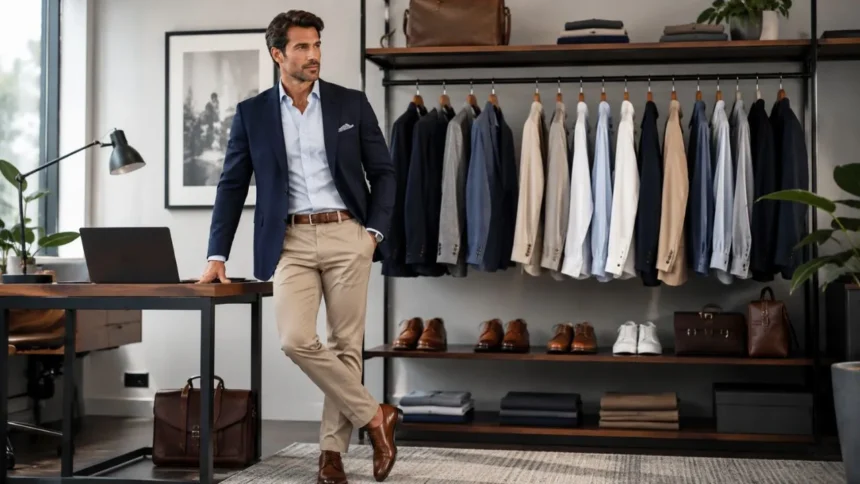
Business Casual Men: Build a Sharp Work Wardrobe
Business casual for men creates a balance between traditional office clothing and relaxed everyday style. It removes the need to wear a matching suit and tie every day, but it still requires clean, well-fitting and thoughtfully coordinated clothes. The result should look professional without appearing overly formal or uncomfortable.
The flexibility of this dress code can make it difficult to understand. Some workplaces accept dark jeans, knitted polos and minimalist trainers, while others expect tailored trousers, Oxford shirts and leather shoes. The correct outfit depends on the company, industry, location, seniority and type of work planned for the day.
A sharp work wardrobe does not require dozens of expensive garments. A focused collection of shirts, chinos, tailored trousers, knitwear, jackets and versatile shoes can create many different combinations. Choosing coordinating colours and dependable fabrics also makes getting dressed each morning faster and less stressful.
This guide explains how to build a modern business casual wardrobe for men. It covers essential clothing, fit, colour coordination, footwear, seasonal outfits, hybrid work, interviews and common styling mistakes. The goal is to help you look capable, comfortable and appropriately dressed in almost any professional environment.
What Does Business Casual Mean for Men?
Business casual is a workplace dress code that combines professional clothing with less formal styling. A typical outfit may include chinos or tailored trousers, a collared shirt, leather shoes and an optional blazer. A tie and matching suit are generally not required unless the occasion demands greater formality.
The word “casual” does not mean that anything worn outside work becomes suitable for the office. Sportswear, heavily distressed clothing, beach footwear and visibly worn garments can still look inappropriate. Business casual should appear intentional, even when the outfit feels comfortable and relaxed.
Modern interpretations may include knitted polos, overshirts, unstructured jackets and clean trainers. These pieces can work well in creative, technology and hybrid workplaces. However, conservative industries may continue to prefer traditional shirts, wool trousers, loafers and understated colours during normal office hours.
There is no universal business casual uniform that works in every company. The safest approach is to understand your employer’s expectations and dress according to the most formal responsibility on your schedule. Client meetings, presentations and interviews normally require a sharper outfit than independent desk work.
Learn Your Workplace Dress Code
Begin by reading the company handbook or any dress-code guidance provided during recruitment. Look for specific rules concerning jeans, trainers, shorts, visible tattoos, facial hair or branded clothing. A written policy provides a useful starting point, although everyday expectations may be more detailed than the document suggests.
Observe how managers and experienced colleagues dress during a regular working week. Their clothing can reveal whether jackets are expected, ties are optional or denim is widely accepted. Pay particular attention to employees whose responsibilities and level of client contact are similar to your own.
Workplace expectations may change according to the day or activity. A relaxed outfit may be suitable during internal planning, while a presentation to senior leadership may require tailored trousers and a blazer. Keeping a smart jacket or pair of formal shoes at work can help you handle unexpected meetings.
When you are uncertain, begin slightly more formal than necessary. A button-down shirt, chinos, leather shoes and an unstructured blazer provide a dependable first-day outfit. You can remove the jacket or introduce more relaxed pieces after you understand how the office actually operates.
Build a Men’s Business Casual Capsule Wardrobe
A capsule wardrobe is a compact collection of garments that work together in multiple combinations. It helps you avoid purchasing attractive pieces that do not coordinate with anything you own. A practical capsule can produce several weeks of outfits without requiring an overcrowded wardrobe.
Start with three or four shirts, two pairs of chinos and one pair of tailored trousers. Add a blazer, two pieces of knitwear and two versatile pairs of shoes. This foundation can be expanded gradually with seasonal clothing, additional colours and pieces required for particular professional situations.
Use neutral colours such as navy, charcoal, grey, white, light blue, beige and olive as the foundation. These shades coordinate easily and can be repeated without making every outfit appear identical. Burgundy, forest green, rust or muted blue can provide controlled colour and personal character.
Every new item should ideally work with at least three garments you already own. A navy blazer, for example, can be worn with grey trousers, beige chinos or dark denim. This simple buying rule prevents isolated purchases and improves the value you receive from each piece.
Start with Quality Button-Down Shirts
Button-down shirts are essential because they can be dressed up or down according to the workplace. Oxford cloth shirts provide texture and structure without feeling as formal as smooth dress shirts. White, light blue and subtle striped designs offer the greatest number of outfit combinations.
The shirt should fit comfortably through the chest and shoulders without pulling around the buttons. Sleeves should reach the wrist, and the collar should sit neatly without creating a large gap. Excess fabric around the waist can look untidy, particularly when the shirt is tucked into trousers.
A tucked shirt generally creates a sharper appearance for meetings and conservative offices. Untucked shirts may be acceptable in relaxed environments when the hem is designed for that purpose. A traditional long dress-shirt hem often hangs too low and can make an untucked outfit appear unfinished.
Patterns can add interest after the basic colours are covered. Fine stripes, checks and textured weaves are easier to coordinate than bold graphics or dramatic prints. The pattern should complement the trousers and jacket without making the complete outfit feel busy or distracting.
Add Polos and Knitted Shirts
A polo shirt offers a comfortable alternative to a traditional button-down while preserving a professional collar. It works particularly well in warm weather, relaxed offices and workplaces where employees move frequently. Choose a design with a structured collar and fabric that maintains its shape throughout the day.
Knitted polos provide a more refined version of the classic sports polo. Their softer texture works naturally with pleated trousers, loafers and lightweight jackets. Long-sleeved knitted polos can also replace a shirt and jumper combination during cooler months without creating excessive layers.
Fit is important because very tight polos can appear more suitable for a gym or golf course. The shoulder seams should sit correctly, and the sleeve opening should not restrict movement. The body should follow your shape without clinging tightly around the chest or stomach.
Avoid large logos, shiny performance fabrics and brightly contrasting details unless they are common in your workplace. Cotton, merino wool and quality knitted blends normally create a more polished finish. Solid navy, cream, grey, brown and dark green provide dependable business casual options.
Choose Chinos That Look Professional
Chinos are among the most versatile business casual trousers for men. They are less formal than wool dress trousers but more polished than most jeans. Navy, stone, khaki, olive and charcoal chinos can be worn with Oxford shirts, polos, knitwear and several types of office footwear.
The trousers should sit comfortably at the waist without requiring an excessively tight belt. A straight or gently tapered leg creates a clean shape that works across different body types. Extremely skinny cuts can restrict movement, while very loose trousers may look untidy without careful styling.
Check the length while wearing your normal work shoes. The hem can lightly touch the shoe or finish with a small break, depending on your preferred style. Excess fabric gathering around the ankle makes even high-quality trousers appear poorly fitted and visually shortens the legs.
Avoid chinos with cargo pockets, heavy distressing or excessive technical details for traditional offices. Stretch can improve comfort, but the fabric should still retain a structured appearance. Regular pressing or careful steaming helps preserve the clean line that makes chinos appropriate for professional settings.
Include Tailored Trousers for Sharper Days
Tailored trousers provide a more polished option for presentations, interviews and client-facing work. Grey wool or wool-blend trousers are especially useful because they coordinate with navy, brown, black and patterned jackets. They can also make a knitted polo or simple shirt look immediately more professional.
Pleated trousers have returned as a practical modern choice because they provide additional room and movement. A single pleat can create a clean drape without appearing overly formal. Flat-front trousers remain equally useful for men who prefer a simpler and more streamlined appearance.
The waistband should remain comfortable while sitting for long periods. Pockets should lie flat, and the fabric should fall cleanly from the hips without horizontal pulling. A tailor can adjust the waist, seat and length when the overall shape suits your body.
Tailored trousers do not need to be reserved for matching suits. Separates often create a more relaxed and flexible outfit. Combine charcoal trousers with a blue shirt and brown loafers, or wear light grey trousers with a navy knit and dark suede shoes.
Use Blazers and Unstructured Jackets
A blazer is one of the easiest ways to elevate a business casual outfit. It adds structure to chinos, dark jeans, polos and shirts without requiring a full suit. Navy is the most versatile starting colour because it works with grey, beige, olive and several shades of blue.
An unstructured jacket has less padding and internal construction than a traditional suit jacket. This creates a softer shape that feels natural with casual trousers. It is particularly suitable for hybrid offices, creative industries and warm climates where a heavily structured jacket may feel uncomfortable.
The shoulders are the most important part of the fit because they are difficult to alter. The jacket should follow your natural shoulder line without extending noticeably beyond it. The body can be shaped slightly, but you should still be able to button the jacket without pulling.
Avoid wearing a suit jacket as a separate blazer when its fabric looks highly formal or closely associated with matching trousers. Textured wool, cotton, linen blends and subtle patterns generally work better as separates. Their visual depth helps the jacket coordinate naturally with less formal clothing.
Add Knitwear for Comfortable Layering
Knitwear adds warmth and visual depth without making an outfit feel excessively formal. Crew-neck jumpers, V-neck sweaters, cardigans and quarter-zip knits can all work in business casual environments. Fine-gauge fabrics usually layer more smoothly over shirts and beneath jackets.
Merino wool is a popular workwear material because it provides warmth without substantial bulk. Cotton knitwear is useful during transitional weather and may be easier to maintain. Blended fabrics can also perform well when they feel comfortable and maintain their shape after repeated wear.
A crew-neck jumper can be worn over an Oxford shirt with the collar visible. A V-neck works well when you want more of the shirt to appear, while a cardigan offers easy temperature control. Quarter-zips are acceptable in many offices but should have a clean fit and minimal branding.
Choose colours that complement your shirts and trousers. Navy, charcoal, brown, burgundy and forest green are versatile options. Avoid extremely chunky knits beneath fitted jackets because the layers can restrict movement and cause the jacket to sit awkwardly around the shoulders.
Select the Right Business Casual Shoes
Shoes can determine whether an outfit appears professional or unfinished. Loafers, Derby shoes, brogues, Chelsea boots and minimalist trainers can all work within business casual dressing. The correct choice depends on the office culture, weather and level of formality required.
Brown leather shoes are highly versatile because they coordinate with navy, grey, beige and olive trousers. Dark brown appears more formal, while tan creates a lighter and more relaxed look. Black shoes work naturally with charcoal trousers and conservative office clothing but may feel severe with light chinos.
Suede loafers and Derby shoes introduce texture and soften an outfit. They work particularly well with chinos, knitted polos and unstructured jackets. Suede requires protection from wet weather, so leather shoes or boots may be more practical during frequent rain.
Minimalist trainers may suit relaxed and creative workplaces when they are clean and understated. Select simple leather or suede designs rather than running shoes with technical soles and bright branding. Keep a pair of smarter shoes available when your schedule includes clients or formal presentations.
Know When Jeans Are Appropriate
Jeans may be accepted in some business casual workplaces, but they should never be assumed to be suitable. Technology companies, creative agencies and relaxed hybrid offices may permit them regularly. Financial, legal and traditional corporate environments may restrict denim to designated casual days.
Choose dark indigo, black or deep grey jeans with a clean and even finish. Straight, slim-straight and gently tapered cuts usually create the most professional appearance. Avoid large rips, heavy fading, decorative stitching, exposed hardware and hems that drag beneath the shoe.
Balance denim with more polished pieces. A button-down shirt, knitted polo, blazer or refined jumper can make dark jeans feel intentional. Leather loafers, Chelsea boots or clean minimalist trainers complete the outfit more effectively than worn athletic shoes.
Jeans may be acceptable for everyday work but inappropriate for an interview or important client meeting. Review the schedule before choosing denim. Tailored trousers or chinos provide a safer option when you are uncertain about the people or responsibilities involved.
Coordinate Colours Without Overcomplicating Outfits
A limited colour palette makes business casual dressing easier and more consistent. Begin with navy, grey, white, light blue and beige because these shades coordinate naturally. Once the foundation is established, add richer colours through knitwear, shirts, socks or small accessories.
Use contrast to keep separates from appearing like an incorrectly matched suit. A navy blazer works well with medium-grey trousers because the difference is clear. Wearing a navy jacket with slightly different navy trousers may look accidental unless the textures and shades are intentionally distinct.
A simple method is to wear one light colour, one medium shade and one darker element. For example, combine a white shirt, beige chinos and a navy blazer. This creates visual balance without requiring advanced knowledge of colour theory or seasonal fashion.
Patterns should share at least one colour with the rest of the outfit. A blue checked shirt, for example, coordinates easily with navy chinos or a blue jacket. When wearing a noticeable pattern, keep other garments relatively simple so the outfit remains professional.
Use Accessories to Complete the Look
A leather belt should generally coordinate with the overall colour of your shoes. The shades do not need to match perfectly, but a black belt with light brown shoes can create unnecessary visual separation. A simple buckle normally looks more professional than a large decorative design.
A watch can add refinement without dominating the outfit. Leather straps work naturally with traditional office clothing, while simple metal bracelets suit both formal and relaxed combinations. Large sports watches may be practical, but they can feel visually heavy beside tailored shirts and jackets.
Work bags should protect your equipment while supporting the professional appearance of the outfit. Leather briefcases, structured totes and clean backpacks can all work depending on the industry. Avoid using a visibly damaged or heavily branded sports bag during client-facing situations.
Socks provide a controlled opportunity for colour and pattern. Navy, grey, brown and burgundy are dependable choices, while subtle stripes can add personality. Athletic white socks usually look out of place with tailored trousers and leather shoes unless the outfit is deliberately styled around clean trainers.
Focus on Fit Before Brands or Trends
Correct fit can make affordable clothing look more polished than an expensive garment in the wrong size. Shoulder seams, sleeve lengths, waist placement and trouser hems influence the complete appearance. A professional wardrobe should support your body rather than forcing you into an uncomfortable fashionable shape.
Shirts should provide enough room for movement without creating large folds of excess fabric. Trousers should sit securely without pulling across the hips, and jackets should close comfortably. Try each garment while sitting, reaching and walking rather than judging the fit while standing still.
Different brands use different size standards, so the number on the label should not control your decision. Focus on measurements and the shape of each garment. A larger or smaller labelled size may provide a better result than your usual choice.
Basic alterations can transform a wardrobe. Shortening sleeves, adjusting trouser hems and shaping a shirt may cost less than replacing the garment. Find a reliable tailor and begin with pieces that already fit correctly through difficult areas such as the shoulders and seat.
Dress Business Casual in Summer
Summer business casual outfits should use breathable fabrics that remain presentable in warm conditions. Cotton, linen blends, tropical wool, seersucker and lightweight knits provide more ventilation than heavy synthetic materials. Choose garments that allow air movement without becoming transparent or excessively creased.
A short-sleeved polo or knitted shirt can replace a long-sleeved button-down in relaxed workplaces. Combine it with lightweight chinos or tailored trousers and loafers. Long sleeves remain safer for conservative environments, but they can be rolled neatly when the dress code allows.
Linen shirts and trousers create a relaxed appearance, although pure linen naturally wrinkles. Blended fabrics provide a similar texture with better shape retention. A lightweight unstructured blazer can be kept at work for meetings without making the normal commute unnecessarily uncomfortable.
Shorts are still unsuitable in many professional offices, even during hot weather. Their acceptance depends heavily on the company and location. Lightweight trousers normally provide a safer solution while protecting the polished appearance expected from business casual attire.
Build Winter Business Casual Outfits
Winter business casual clothing should provide warmth through organised layers rather than one oversized garment. Begin with a shirt or fine knit, add a jumper or cardigan and finish with a blazer or coat. Each layer should fit comfortably without restricting movement around the shoulders.
Wool trousers, heavier chinos and corduroy can add warmth and seasonal texture. Darker shades such as charcoal, navy, brown and forest green work naturally during colder months. Corduroy should have a fine or medium wale to remain suitable for professional outfits.
Chelsea boots, leather Derbies and smart lace-up boots provide practical winter footwear. Choose soles that offer reasonable grip without looking like heavy hiking equipment. Clean salt, mud and water marks promptly so the shoes remain presentable inside the office.
A wool overcoat or simple raincoat completes the winter outfit more effectively than a sports jacket worn over formal clothing. The coat should be long enough to cover a blazer when necessary. Neutral navy, charcoal, camel and dark olive coordinate with most capsule wardrobes.
Make Business Casual Work for Hybrid Offices
Hybrid work requires clothing that looks professional during video meetings while remaining comfortable at home. Knitted polos, Oxford shirts, soft trousers and unstructured jackets move easily between remote and office settings. These pieces reduce the need to maintain separate wardrobes for each location.
Video calls place greater attention on the upper half of the outfit. Collared shirts, textured knitwear and clear solid colours generally look polished on camera. Extremely small patterns can appear distorted, while untidy collars become more noticeable when the camera frames your face closely.
Comfort should not mean remaining in sleepwear throughout the working day. Changing into relaxed work clothing can create a useful mental boundary and prepare you for unexpected calls. Stretch trousers and soft knitwear provide comfort without looking careless when you stand or move on camera.
Select garments that are easy to maintain and repeat. Washable shirts, wrinkle-resistant trousers and versatile layers support a changing schedule. Keeping a blazer near the desk provides a quick upgrade when an informal call develops into a client or leadership meeting.
Dress for Interviews and Important Meetings
An interview usually requires a more polished version of the company’s normal business casual dress code. Tailored trousers, a pressed shirt, leather shoes and a blazer provide a dependable combination. A tie may be appropriate for conservative industries but is not required for every modern workplace.
Research the company through its website, recruitment materials and employee photographs. These sources may reveal whether the culture is highly formal, creative or relaxed. When the available information is unclear, choose the more professional option rather than attempting to demonstrate casual confidence.
Important client meetings also justify a sharper outfit. Replace jeans with tailored trousers, select leather shoes and add a structured layer. These changes show awareness of the occasion without forcing you to wear a complete suit when it would feel out of place.
Wear the complete outfit before the event to identify discomfort, stains or fit problems. New shoes should be tested in advance, and shirts should remain comfortable while sitting. Clothing should support your confidence instead of distracting you during questions, presentations or negotiations.
Build a Business Casual Wardrobe on a Budget
Begin by examining the clothing you already own. A suitable white shirt, navy jumper or clean pair of leather shoes may only require pressing or minor repair. Identifying usable pieces prevents you from purchasing replacements for items already available in your wardrobe.
Create a specific shopping list based on missing essentials. Prioritise versatile trousers, shirts and shoes before buying statement jackets or trend-driven accessories. A planned wardrobe develops more effectively than a collection built around discounts and isolated impulse purchases.
Second-hand shops and resale platforms can offer high-quality jackets, coats and shoes at reduced prices. Inspect seams, linings, buttons, soles and fabric condition before purchasing. The cost of cleaning and alterations should be considered when deciding whether an item provides genuine value.
Spend more on pieces that affect comfort and receive frequent use. Well-fitting shoes, trousers and outerwear may deserve a larger portion of the budget. Trend-focused shirts and accessories can be purchased more affordably because they may not remain central to the wardrobe for many years.
Easy Business Casual Outfit Formulas for Men
A dependable starting formula combines navy chinos, a light blue Oxford shirt and brown loafers. Add a grey or navy jumper during cooler weather. This outfit works across many offices because every piece is professional, familiar and easy to coordinate.
For a sharper look, wear grey tailored trousers with a white shirt, navy blazer and dark brown Derby shoes. The jacket can be removed during normal desk work and added for meetings. A simple leather belt and understated watch complete the outfit without unnecessary decoration.
In a relaxed workplace, combine dark jeans with a knitted polo and suede loafers. Add an unstructured jacket when greater polish is required. The contrast between clean denim and refined textures creates a modern outfit without looking like traditional corporate clothing.
For warm weather, wear stone chinos with a navy polo and brown loafers. A lightweight overshirt or linen-blend jacket can provide an additional layer. Keeping the colours simple allows the breathable fabrics and clean proportions to create the visual interest.
Common Business Casual Mistakes to Avoid
One common mistake is treating business casual as ordinary casualwear. Hoodies, graphic T-shirts, gym trainers and distressed jeans may be comfortable but can appear careless in many offices. Relaxation should come through softer tailoring and versatile fabrics rather than abandoning professional standards completely.
Another mistake is wearing clothing that does not fit correctly. Trousers gathering around the ankles, shirts pulling across the chest and jackets extending beyond the shoulders can weaken the complete appearance. Small alterations often provide a greater improvement than buying a more expensive brand.
Avoid combining too many formal and casual extremes in one outfit. A highly polished suit jacket may look awkward with faded jeans and running shoes. Select pieces with similar levels of formality so that the outfit appears intentional rather than assembled from unrelated wardrobes.
Poor maintenance can also damage an otherwise strong outfit. Wrinkled shirts, dusty shoes, missing buttons and visible stains attract attention for the wrong reasons. Regular cleaning, pressing and simple repairs preserve the professional value of clothing without requiring constant replacement.
Care for Your Work Wardrobe
Read care labels before washing, drying or ironing each garment. Excessive heat can shrink shirts, damage knitwear and weaken stretch fibres. Following the correct method helps clothing maintain its colour, shape and fit through repeated working weeks.
Hang shirts, trousers and jackets on supportive hangers after wearing them. Fold heavy knitwear to prevent the shoulders from stretching. Allow jackets and shoes to rest between uses so moisture can escape and the materials can recover their original shape.
Clean leather shoes regularly and use shoe trees when possible. Conditioning prevents leather from becoming excessively dry, while polishing restores a professional surface. Suede should be brushed and protected with products designed specifically for its texture.
Repair small problems before they become permanent damage. Loose buttons, falling hems and worn soles are usually easier to fix early. A basic maintenance routine helps a compact wardrobe remain presentable and reduces the cost of replacing otherwise useful garments.
Final Thoughts
Business casual for men is not a single uniform. It is a flexible approach that combines professional standards with comfort, personality and modern workplace expectations. The correct interpretation depends on your company, responsibilities, industry and daily schedule.
Build your wardrobe around versatile shirts, chinos, tailored trousers, knitwear, jackets and dependable shoes. Use neutral colours as the foundation and introduce personality through texture, subtle patterns and accessories. A focused collection can produce more useful outfits than a large wardrobe of unrelated pieces.
Fit and condition matter more than expensive labels. Clothing should allow natural movement while maintaining clean lines through the shoulders, waist and legs. Regular pressing, shoe care and small alterations can make every outfit look more considered.
The best work wardrobe helps you feel prepared without requiring excessive thought each morning. When each garment coordinates and suits your environment, getting dressed becomes simple. Build gradually, observe your workplace and choose clothes that support both your professional image and everyday comfort.
Frequently Asked Questions
What is business casual attire for men?
Business casual attire for men normally includes chinos or tailored trousers, a collared shirt and smart shoes. Blazers and knitwear are optional, while matching suits and ties are usually unnecessary.
Can men wear jeans for business casual?
Dark, clean and well-fitting jeans may be appropriate in relaxed workplaces. Pair them with a button-down shirt, knitted polo, blazer and polished footwear rather than casual sportswear.
Are trainers suitable for business casual men?
Minimalist leather or suede trainers may work in creative and casual offices. Running shoes and heavily branded athletic styles generally appear too informal for traditional professional environments.
Should men tuck in a business casual shirt?
Tucking creates a sharper appearance and is safest for meetings or conservative workplaces. An untucked shirt can work when it has a shorter hem and the company follows a relaxed dress code.
What should a man wear on his first business casual workday?
Wear chinos or tailored trousers with an Oxford shirt, leather shoes and an optional navy blazer. This polished starting point can be adjusted after observing how colleagues normally dress.