

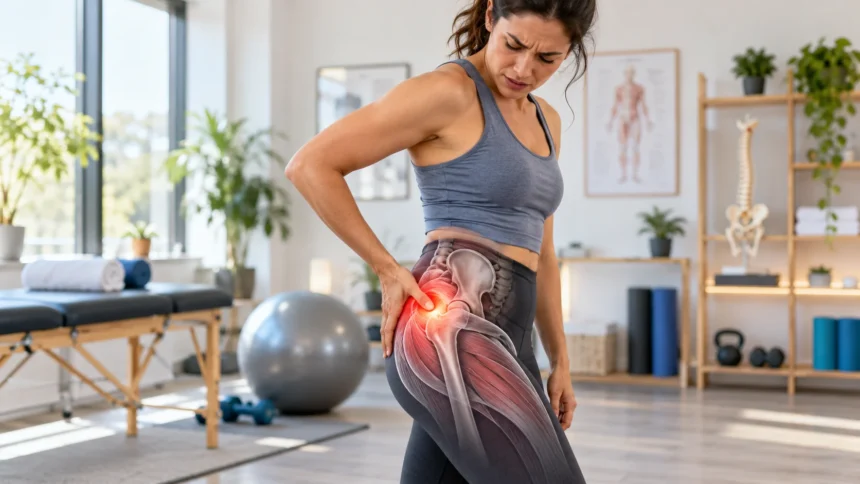
What Is Side Hip Pain?
Side hip pain refers to discomfort along the outer portion of the hip, usually around the bony prominence known as the greater trochanter. This area contains important muscles, tendons, and fluid-filled bursae that support movement and reduce friction. Pain may develop gradually or suddenly, affecting activities such as walking, climbing stairs, exercising, or sleeping on one side.
The discomfort can feel like a dull ache, sharp sensation, burning pain, or localized tenderness. Some individuals experience symptoms only during movement, while others notice persistent soreness after prolonged sitting or standing. Side hip pain may affect one hip or both, depending on the underlying cause and the activities placing stress on surrounding tissues.
Understanding why the outside of your hip hurts is important because several conditions can produce similar symptoms. Muscle strain, tendon problems, inflammation, and referred pain from the lower back are possible contributors. Identifying the location, intensity, and pattern of discomfort helps determine appropriate relief strategies and whether medical evaluation is necessary.
Common Symptoms of Side Hip Pain
The most recognizable symptom of lateral hip pain is discomfort over the outer side of the hip. Tenderness may become noticeable when pressing around the greater trochanter or lying directly on the affected side. Some people experience aching that extends toward the outer thigh, although the exact distribution varies depending on the underlying condition.
Movement-related discomfort is another common complaint, particularly during walking, stair climbing, or standing on one leg. Activities that increase pressure around the hip tendons may aggravate symptoms and make daily routines challenging. Stiffness after inactivity and soreness following exercise can also occur, especially when irritated tissues experience repeated loading without sufficient recovery.
Symptoms may become more noticeable at night when sleeping positions place pressure on the painful hip. Individuals sometimes change positions frequently because lying on either side causes discomfort. Although these symptoms often involve muscles or tendons, persistent pain accompanied by weakness, numbness, fever, or significant mobility problems deserves professional medical attention.
Greater Trochanteric Pain Syndrome
Greater trochanteric pain syndrome, commonly abbreviated as GTPS, is a frequent cause of pain along the outside of the hip. It describes symptoms involving structures around the greater trochanter, particularly the gluteal tendons and nearby bursae. Individuals commonly experience tenderness, discomfort during walking, and pain when lying on the affected side.
Gluteal tendinopathy is an important contributor to greater trochanteric pain syndrome. This condition involves changes or irritation affecting the tendons connecting certain buttock muscles to the upper thigh bone. Repeated loading and compression can aggravate sensitive tendons, especially during activities involving prolonged single-leg standing, stair climbing, or crossing the legs.
Treatment generally focuses on reducing aggravating movements while gradually improving the strength and loading tolerance of supporting muscles. Physical therapy often includes carefully selected exercises and advice about modifying daily activities. Recovery varies between individuals, and persistent symptoms may require additional assessment to distinguish tendon problems from other causes of hip discomfort.
Hip Bursitis and Outer Hip Inflammation
Hip bursitis occurs when a bursa around the hip becomes irritated or inflamed. Bursae are small, fluid-filled structures that help reduce friction between bones, tendons, and other tissues. Trochanteric bursitis can produce tenderness over the outer hip and discomfort during activities that place pressure on the affected region.
The condition may develop alongside tendon problems, repetitive loading, or prolonged pressure over the side of the hip. Symptoms often include localized aching, sensitivity to touch, and difficulty lying comfortably on the affected side. However, outer hip pain is not always caused by bursitis, even when people commonly use that term to describe their symptoms.
Relief may involve activity modification, pressure reduction, and appropriate rehabilitation exercises. Cold compresses can provide temporary comfort for some individuals experiencing localized irritation. Because bursitis and gluteal tendinopathy frequently produce overlapping symptoms, an accurate assessment can help determine whether additional treatment or a different rehabilitation approach is appropriate.
Muscle Strains and Gluteal Tendon Problems
Muscle strains can cause side hip pain when the tissues surrounding the hip experience excessive force or sudden stretching. Activities such as running, jumping, changing direction, or lifting heavy objects may contribute to muscular discomfort. Symptoms can include tenderness, temporary weakness, and pain when activating or stretching the affected muscles.
The gluteus medius and gluteus minimus are particularly important muscles for hip stability. They help control pelvic positioning during walking and other activities involving weight on one leg. When their tendons become irritated, individuals may experience discomfort near the outer hip, especially during repetitive physical activity or movements requiring sustained muscular effort.
Mild muscular strains often improve with appropriate recovery and gradual return to comfortable movement. Tendon-related symptoms may require a more structured strengthening program because complete inactivity does not necessarily improve long-term loading capacity. Avoiding sudden increases in exercise intensity and following individualized rehabilitation guidance can support recovery without unnecessarily aggravating sensitive tissues.
Arthritis and Referred Pain From the Lower Back
Although hip osteoarthritis commonly causes discomfort in the groin or front of the hip, some individuals experience pain along the outer hip. Arthritis can affect joint movement and contribute to stiffness, particularly after inactivity. Symptoms may become more noticeable during walking, standing, or activities requiring repeated hip bending and rotation.
Lower back conditions can also produce pain that appears to originate from the side of the hip. Irritation involving spinal joints, nerves, or surrounding tissues may create referred discomfort in the buttock or thigh. Additional symptoms such as tingling, numbness, or pain traveling farther down the leg may suggest a neurological contribution.
Distinguishing between hip joint problems and referred spinal pain requires attention to symptom patterns and physical examination findings. Healthcare professionals may assess hip movement, muscle strength, sensation, and spinal mobility. Appropriate treatment depends on the actual cause, making self-diagnosis less reliable when symptoms involve several body regions or persist despite basic care.
Why Side Hip Pain Gets Worse at Night
Side hip pain frequently becomes more noticeable at night because sleeping positions can compress sensitive tissues around the greater trochanter. Lying directly on the affected hip increases pressure over nearby tendons and bursae. This pressure may trigger aching or tenderness, making it difficult to maintain a comfortable sleeping position throughout the night.
Sleeping on the opposite side can also aggravate symptoms when the painful upper leg drops across the body’s midline. This position may increase compression around irritated gluteal tendons. Placing a pillow between the knees can help maintain more comfortable hip alignment and reduce unnecessary stress during side sleeping.
For some individuals, sleeping on the back with suitable support may provide additional comfort. Adjusting mattress firmness or using supportive pillows can also help distribute pressure more evenly. However, nighttime hip pain that becomes progressively worse, disrupts sleep consistently, or occurs alongside systemic symptoms should be evaluated rather than attributed entirely to sleeping posture.
How Side Hip Pain Is Diagnosed
Diagnosing side hip pain begins with reviewing medical history, symptoms, and everyday activities. A healthcare professional may ask when discomfort started, whether a particular movement triggers pain, and how symptoms affect walking or sleeping. Information about recent injuries, exercise routines, medications, and previous hip or back problems helps identify possible contributing factors.
The physical examination may include assessing hip mobility, muscle strength, balance, and tenderness around the greater trochanter. Clinicians may also observe walking patterns or evaluate discomfort during selected movements. These findings help distinguish gluteal tendon problems, muscular strains, hip arthritis, and referred pain from nearby structures.
Imaging is not always necessary when symptoms and examination findings suggest a common musculoskeletal condition. However, X-rays, ultrasound, or MRI may be appropriate when a fracture, significant tendon injury, or another underlying problem is suspected. Diagnostic decisions should reflect individual symptoms rather than assuming every episode of outer hip discomfort requires advanced testing.
Effective Treatment Options for Side Hip Pain
Treatment for side hip pain depends on the underlying cause, symptom severity, and impact on daily activities. Many individuals benefit from reducing movements that repeatedly aggravate irritated tissues while maintaining comfortable physical activity. Complete bed rest is generally unnecessary for routine muscular or tendon-related discomfort and may contribute to reduced strength over time.
Physical therapy is commonly recommended for persistent lateral hip pain, particularly when gluteal tendinopathy is suspected. Rehabilitation may involve strengthening the hip abductors, improving movement control, and gradually increasing tolerance to physical loading. A tailored program can address contributing factors without relying exclusively on passive treatments or temporary symptom relief.
Pain-relieving medications may be considered when appropriate, but they are not suitable for everyone and should be used according to professional guidance. In selected cases, clinicians may discuss additional interventions, such as injections, when conservative treatment has not provided sufficient improvement. The best approach balances pain management with addressing the underlying condition and restoring comfortable function.
Home Remedies to Relieve Outer Hip Pain
Simple home care strategies may reduce mild side hip discomfort associated with overuse or temporary irritation. Applying a wrapped cold pack for approximately fifteen to twenty minutes can provide short-term relief after aggravating activities. Protect the skin from direct contact with ice and discontinue the application if it creates excessive discomfort or unusual sensations.
Changing daily habits can also help reduce pressure around sensitive hip structures. Avoid sitting with your legs tightly crossed, leaning heavily onto one hip, or remaining in uncomfortable positions for extended periods. Short walking breaks and supportive sleeping arrangements may improve comfort while allowing surrounding muscles to remain active.
Gentle movement can be useful when it does not increase symptoms during or after activity. Comfortable walking, easy range-of-motion exercises, and gradual strengthening may support recovery. However, aggressive stretching across the outside of the hip can aggravate certain tendon conditions, so exercises should be selected according to symptoms and professional recommendations.
Best Exercises for Side Hip Pain Relief
Hip-strengthening exercises may improve muscular control and support recovery from certain causes of lateral hip pain. One beginner-friendly option involves standing beside a stable countertop and gently shifting weight between your legs. This movement encourages awareness of hip stability while allowing you to control how much pressure is placed on the affected side.
Another option is a seated hip abduction exercise using gentle outward pressure against a suitable resistance band, when recommended and tolerated. Sit upright, keep your feet supported, and slowly move your knees slightly apart without forcing the movement. Return to the starting position with control, and avoid continuing if the exercise causes sharp or worsening pain.
Supported standing hip abduction may also be introduced gradually as strength and comfort improve. Hold a stable surface and move one leg slightly outward while keeping your trunk upright and avoiding excessive leaning. Exercise selection, repetition counts, and progression should reflect individual ability, particularly when tendon irritation or significant pain is present.
How to Prevent Side Hip Pain
Preventing some forms of side hip pain involves maintaining appropriate lower-body strength and avoiding sudden increases in physical workload. Gradually progressing walking distances, running intensity, and resistance exercises allows muscles and tendons to adapt. Adequate recovery between demanding sessions can also reduce repeated irritation, particularly among individuals returning to exercise after inactivity.
Daily posture and movement habits may influence how pressure is distributed around the hips. Alternating sitting and standing positions, avoiding prolonged pressure on one hip, and using comfortable sleeping arrangements can help manage unnecessary compression. Supportive footwear and suitable movement techniques may also contribute to overall lower-body comfort during everyday activities.
Consistent strengthening of the hips, thighs, and surrounding muscles supports balance and movement control. Activities such as comfortable walking, appropriate resistance training, and mobility exercises can form part of a balanced routine. Prevention cannot eliminate every cause of hip pain, but sustainable exercise habits and early attention to persistent symptoms can support long-term joint health.
Conclusion
Side hip pain is a common problem that can affect walking, exercising, sleeping, and everyday comfort. Greater trochanteric pain syndrome, gluteal tendon irritation, bursitis, muscular strains, and referred discomfort are among the possible causes. Understanding where symptoms occur and which activities aggravate them can help guide appropriate care and determine when further assessment is necessary.
Relief often involves reducing unnecessary pressure, adjusting aggravating activities, and gradually strengthening the muscles surrounding the hip. Comfortable sleeping positions, appropriate movement, and individualized rehabilitation can support recovery. Because different conditions require different approaches, persistent symptoms should be assessed rather than treated with the same exercises or home remedies indefinitely.
Maintaining healthy movement habits and paying attention to changes in hip comfort can improve long-term physical function. Severe pain after injury, inability to bear weight, fever, or rapidly worsening symptoms require urgent medical evaluation. With appropriate treatment, practical activity adjustments, and professional support when needed, many people can return to comfortable daily movement.
Frequently Asked Questions (FAQs)
What is the most common cause of side hip pain?
Greater trochanteric pain syndrome is a common cause of outer hip pain. It frequently involves irritation or changes affecting the gluteal tendons and may produce tenderness during walking, stair climbing, or side sleeping.
Why does my hip hurt when I sleep on my side?
Side sleeping can increase pressure around sensitive tendons and bursae near the greater trochanter. Using a pillow between your knees or changing positions may reduce discomfort, depending on the underlying cause.
Is walking good for side hip pain?
Comfortable walking may help maintain mobility and muscle function, but excessive walking can aggravate certain tendon problems. Adjust walking duration and intensity according to symptoms, and seek guidance if discomfort continues.
How long does side hip pain take to heal?
Recovery depends on the underlying condition and symptom severity. Mild muscle strains may improve within several weeks, while persistent gluteal tendon problems can require months of carefully managed rehabilitation.
When should I worry about pain on the outside of my hip?
Seek urgent medical attention for severe pain after injury, inability to bear weight, fever, or a hot, swollen joint. Persistent pain, progressive weakness, or symptoms disrupting daily activities also deserve medical assessment.