

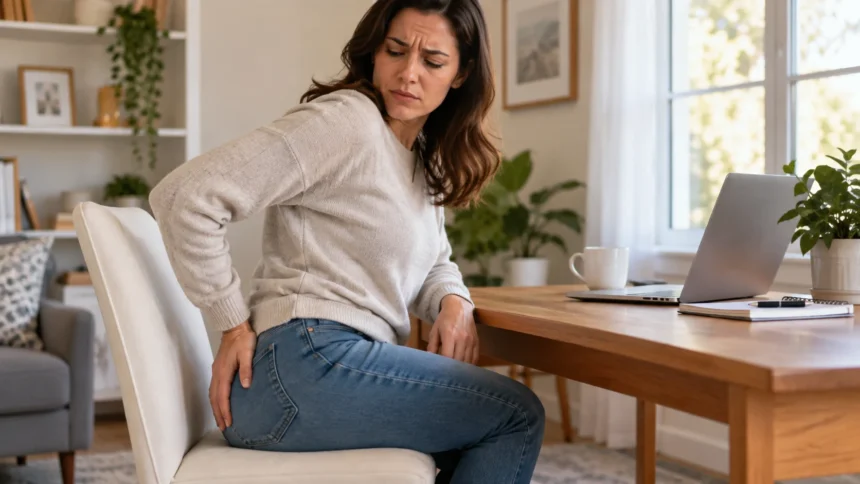
Buttock pain when sitting can range from a mild ache after a long workday to sharp, burning, or deep discomfort that makes sitting difficult. The cause may involve muscles, nerves, joints, the tailbone, or tissues around the pelvis. Where the pain occurs and what activities make it worse can provide useful clues.
Long periods of sitting can place sustained pressure on the gluteal muscles, tailbone, and other structures around the hips and pelvis. However, pain that appears every time you sit may have another explanation, particularly when it travels down the leg, causes numbness, or develops after an injury. Different conditions can produce surprisingly similar symptoms.
Occasional soreness may improve after changing position and moving more frequently, but persistent buttock pain should not simply be ignored. Understanding common causes can help you recognize when simple activity changes may be enough and when medical assessment is appropriate. Here are several reasons your butt may hurt when you sit.
Prolonged Sitting and Pressure on the Buttocks
Sitting for several hours can compress the soft tissues beneath the pelvis and reduce movement through the hips. Office workers, drivers, students, and people spending long periods gaming or watching television may notice a dull ache in one or both buttocks. Hard seating surfaces can make this pressure more noticeable.
Your position also matters. Slouching, leaning toward one side, sitting with a wallet in a back pocket, or remaining in exactly the same posture can create uneven pressure. Muscles may become stiff simply because they have not changed position for a long time rather than because they are injured.
Try standing or walking briefly throughout the day instead of waiting until significant discomfort develops. Adjust chair height so your feet are supported and avoid relying on one sitting position for hours. If pain disappears with movement and does not return frequently, prolonged pressure may be playing an important role.
Could It Be Sciatica?
Sciatica describes symptoms related to irritation or compression affecting the sciatic nerve or its nerve roots. Pain may begin in the lower back or buttock and travel down the back or side of the leg. Some people also experience tingling, burning, numbness, or weakness along the affected pathway.
Sitting can make sciatic symptoms worse for some people because certain positions place additional stress on the lower back and nerve tissues. The pain may feel different from ordinary muscle soreness, particularly when it follows a recognizable path into the thigh, calf, or foot. Coughing or bending may sometimes aggravate symptoms too.
Sciatica has several possible causes, so treatment depends on what is irritating the nerve. Staying completely inactive for long periods is not always helpful, but forcing painful stretches can also worsen symptoms. Persistent leg pain, significant numbness, or weakness should be evaluated by a qualified healthcare professional.
Piriformis and Deep Gluteal Pain
The piriformis is a small muscle located deep in the buttock near the sciatic nerve. Irritation in this region can produce deep buttock pain that becomes noticeable with sitting, walking, running, or certain hip movements. In some cases, symptoms may also extend into the back of the thigh.
Deep gluteal pain is more complicated than simply having a “tight piriformis.” Several muscles, tendons, and nerves occupy the same area, making it difficult to identify the exact structure without proper assessment. Aggressively stretching the buttock because it feels tight does not necessarily address the true cause.
If symptoms are mild, reducing aggravating activities and gradually restoring comfortable movement may help. Strengthening the hips and changing prolonged sitting habits can also be useful in some situations. Pain that repeatedly returns, spreads down the leg, or causes neurological symptoms deserves professional evaluation rather than self-diagnosis.
Tailbone Pain Can Make Sitting Uncomfortable
Tailbone pain, sometimes called coccydynia, is centered near the coccyx at the bottom of the spine. It can develop after a fall, prolonged sitting on hard surfaces, childbirth, or repeated pressure in the area. The discomfort is often most noticeable when sitting down, leaning backward, or standing up.
Some people describe tailbone pain as a sharp localized sensation, while others experience a persistent ache. Sitting on soft furniture does not always solve the problem because certain cushions can still direct pressure toward the coccyx. Leaning slightly forward may feel more comfortable for some people.
A cushion designed to reduce pressure around the tailbone can sometimes help during recovery. Avoiding unnecessarily long sitting periods may also reduce irritation. If the pain began after significant trauma, becomes progressively worse, or continues for several weeks, a healthcare professional can assess whether additional investigation is needed.
Hamstring Tendon Pain Near the Sitting Bone
The upper hamstring tendons attach near the sitting bones at the lower part of the pelvis. These tendons can become irritated after running, sprinting, repeated bending, or an increase in training volume. Because the attachment sits directly beneath the buttock, prolonged sitting may press on the sensitive area.
Pain is often felt near the crease where the buttock meets the upper thigh rather than in the center of the gluteal muscle. Running faster, climbing hills, lunging deeply, or bending forward with straight legs may also reproduce discomfort. The symptoms can develop gradually without one obvious injury.
Repeatedly stretching the hamstrings aggressively may not help when the tendon itself is irritated. Gradual strengthening and intelligent load management are often more useful than continuously trying to increase flexibility. Persistent symptoms should be assessed because other hip, nerve, or lower-back problems can produce pain in a similar location.
Glute Muscle Strain or Overuse
The gluteus maximus, medius, and smaller surrounding muscles help stabilize the pelvis and produce movement at the hip. A sudden sprint, heavy lift, awkward step, or unfamiliar workout can strain these muscles. Afterward, sitting may compress sore tissue and make the injury more noticeable.
Muscle pain usually has some relationship with movement or recent physical activity. You may notice tenderness when pressing the area, discomfort when climbing stairs, or soreness during hip extension and other movements. Mild exercise-related soreness often improves gradually over several days rather than becoming progressively more intense.
Give the area enough recovery time while maintaining comfortable movement when possible. Returning immediately to the same demanding workout may prolong symptoms if the muscle is genuinely strained. Significant bruising, weakness, swelling, or pain after a major injury deserves medical assessment, particularly when normal walking becomes difficult.
Hip Joint Problems Can Refer Pain to the Buttock
Not all buttock pain starts in the buttock itself. Problems involving the hip joint can sometimes produce pain around the groin, outer hip, or back of the hip. Sitting deeply, getting out of a low chair, crossing the legs, or rotating the hip may reproduce symptoms depending on the underlying issue.
Hip osteoarthritis is more common with age but is only one possible source of joint-related discomfort. Labral problems, inflammation, or other mechanical conditions can also affect younger adults. Symptoms may include stiffness, reduced hip movement, clicking, or pain that becomes more noticeable after prolonged positions.
Because several conditions produce overlapping symptoms, it is difficult to diagnose a hip problem from pain location alone. If buttock discomfort is accompanied by persistent groin pain, reduced movement, or difficulty with daily activities, professional evaluation can help identify whether the hip joint is contributing.
Pelvic Floor Tension and Pelvic Pain
Pelvic floor muscles sit at the base of the pelvis and can contribute to pain around the buttocks, tailbone, rectum, hips, or genital area when they remain excessively tense. Sitting may increase pressure through these tissues, making discomfort more noticeable during work, driving, or other prolonged seated activities.
Pelvic floor problems may occur alongside urinary symptoms, bowel discomfort, pain with sexual activity, or a sensation of pelvic pressure. For some people, symptoms are difficult to localize because the muscles and nerves in the pelvis share complex relationships. Related symptoms such as recurring cramping after sex may also provide useful context when discussing pelvic discomfort with a clinician.
Treatment depends on whether the pelvic floor is weak, overactive, poorly coordinated, or affected by another condition. Automatically performing more Kegel exercises is not always appropriate. A pelvic health professional can assess muscle function and recommend relaxation, movement, strengthening, or other treatment based on the individual problem.
Ischial Bursitis and Pain Over the Sitting Bones
Small fluid-filled sacs called bursae help reduce friction between tissues around joints and pressure points. A bursa near the sitting bone can become irritated and produce localized buttock pain, particularly when sitting on hard surfaces for long periods. This condition is sometimes referred to as ischial bursitis.
The discomfort may be focused directly over one sitting bone and feel worse when pressure is applied. Activities involving repeated hip movement can sometimes aggravate the area as well. Because the upper hamstring tendon attaches nearby, distinguishing tendon pain from bursal irritation can be difficult without an examination.
Reducing prolonged direct pressure may help mild symptoms settle. Gradual return to comfortable activity is generally preferable to repeatedly provoking the painful area. Persistent swelling, significant tenderness, or pain that does not improve should be professionally assessed so other causes around the sitting bone can be considered.
What Can You Do for Mild Buttock Pain?
Start by changing how long you remain seated rather than searching immediately for the perfect chair or cushion. Stand, walk, or gently move your hips at regular intervals throughout the day. Small movement breaks can reduce sustained pressure and may help identify whether prolonged sitting itself is the major trigger.
Review your workstation if you spend many hours at a desk. Your feet should have support, your chair should allow a comfortable hip position, and you should not need to lean constantly toward one side. Avoid carrying bulky items in a back pocket when sitting because they can create unnecessary asymmetry and pressure.
Gentle movement, adequate sleep, and temporary modification of painful exercises may be reasonable for mild symptoms. Avoid forcing deep stretches when you do not know the cause because nerve or tendon problems can sometimes become more irritated. If an activity repeatedly increases pain, reduce it until the underlying problem is clearer.
When Should Buttock Pain Be Checked by a Doctor?
Arrange medical assessment if pain persists for several weeks, repeatedly returns, interferes with sleep, or prevents normal sitting and walking. You should also seek advice if symptoms travel below the knee, include persistent numbness or weakness, or began after a significant fall or other injury.
Urgent assessment is important if buttock or back pain occurs with new loss of bladder or bowel control, numbness around the groin or saddle area, or significant weakness in both legs. These symptoms can indicate serious nerve compression and should not be managed simply by changing your sitting posture.
Fever, unexplained weight loss, severe nighttime pain, or symptoms associated with a history of serious illness also deserve medical attention. Most sitting-related buttock pain is not an emergency, but recognizing unusual warning signs helps ensure that potentially important underlying conditions are not overlooked.
Conclusion
Buttock pain while sitting can come from something as simple as prolonged pressure or muscle soreness, but nerves, tendons, the tailbone, hip joint, pelvic floor, and nearby bursae can also contribute. The location and character of the pain often provide useful clues, although they cannot confirm a diagnosis on their own.
Changing position regularly, avoiding prolonged pressure, and temporarily modifying painful activities can help when symptoms are mild. However, repeatedly stretching or strengthening the area without knowing what is causing the discomfort may not solve the problem. Different tissues require different approaches to recovery and rehabilitation.
If the pain becomes persistent, severe, or associated with numbness, weakness, pelvic symptoms, or significant injury, professional assessment is appropriate. The goal is not simply to make sitting tolerable but to identify why the pain is occurring so you can address the underlying issue safely and effectively.
FAQs
Why does only one side of my butt hurt when I sit?
One-sided pain can come from muscle irritation, sciatic nerve symptoms, hamstring tendon problems, hip issues, or prolonged uneven pressure. Persistent pain or symptoms traveling down the leg should be professionally assessed.
Can sitting too long cause buttock pain?
Yes. Prolonged sitting can place continuous pressure on the gluteal muscles, sitting bones, and surrounding tissues. Regular movement breaks and changing positions can help reduce pressure-related soreness.
How do I know if buttock pain is sciatica?
Sciatica often causes pain that begins in the lower back or buttock and travels down the leg. Tingling, numbness, burning, or weakness may also occur, but proper diagnosis requires assessment.
Is buttock pain from sitting serious?
Often it is related to pressure, muscle soreness, or other manageable conditions. Seek medical attention when pain is severe, persistent, progressively worsening, associated with weakness, or accompanied by bowel or bladder changes.
What type of doctor should I see for buttock pain?
A primary care doctor can provide an initial assessment and refer you if necessary. Depending on the suspected cause, you may also see a physical therapist, orthopedist, neurologist, sports medicine clinician, or pelvic health specialist.