
Baby oil is an affordable skincare product that many people use to soften dry skin, remove makeup or make body massage more comfortable. Its smooth texture can leave the skin looking glossy and feeling softer. However, whether baby oil is good for your skin depends on its ingredients, where you apply it and your individual skin type.
Most traditional baby oils are made primarily from highly refined mineral oil, sometimes with added fragrance. Mineral oil creates a protective layer over the skin that slows moisture loss. It does not directly add water to dehydrated skin, which is why baby oil usually works best when applied after bathing while the skin is still slightly damp.
Baby oil may be helpful for dry legs, elbows, knees and other rough areas of the body. However, a fragranced formula may irritate people with eczema, allergies or sensitive skin. Its rich texture may also feel uncomfortable on oily areas or contribute to breakouts in people who are particularly prone to clogged pores.
The key is to use baby oil according to your skin’s needs rather than assuming it is suitable for every concern. This guide explains baby oil benefits, possible side effects, facial use, application methods and safer alternatives. It will help you decide whether this simple body oil deserves a place in your skincare routine.
What Is Baby Oil Made From?
Traditional baby oil is usually made with mineral oil as its main ingredient. Mineral oil is a clear, colourless substance that is purified for use in cosmetic and personal-care products. Some formulas contain only mineral oil and fragrance, while others may include plant extracts, vitamins or additional moisturising ingredients.
The word “mineral” can make the ingredient sound harsh or unsuitable for skin, but cosmetic-grade mineral oil is highly refined. It is commonly used in moisturisers, ointments, cleansing products and haircare formulas. Its main skincare purpose is to create an occlusive layer that reduces the amount of water escaping from the skin.
Many baby oils also contain fragrance to give them a recognisable clean or powdery scent. Although the smell may be pleasant, fragrance does not improve hydration or strengthen the skin barrier. It can irritate certain people, especially those with reactive skin, eczema, rosacea or a known fragrance allergy.
Ingredient lists vary between brands, so it is important to read the label instead of judging every baby oil in the same way. A fragrance-free mineral oil product may be more suitable for sensitive skin than a heavily perfumed formula. Additional botanical oils can also cause irritation when someone is allergic to a particular plant.
How Does Baby Oil Work on the Skin?
Baby oil works mainly as an occlusive skincare product. An occlusive forms a thin layer over the skin’s surface and reduces the evaporation of water. This helps the skin retain moisture that is already present, making dry or rough areas feel softer and more comfortable for a period of time.
However, baby oil does not work in exactly the same way as a complete moisturising cream. Many moisturisers contain humectants, such as glycerin or hyaluronic acid, which attract water, as well as barrier-supporting ingredients such as ceramides. Baby oil mainly seals the surface rather than delivering all these different moisturising functions.
Applying oil to completely dry skin may improve smoothness, but it may not provide enough relief when the skin lacks water. Applying a small amount after a shower is generally more effective because the oil can help trap some of the moisture left on the skin. This creates a softer finish without requiring a thick layer.
People with severely dry, cracked or inflamed skin may need a richer fragrance-free cream or ointment instead. Baby oil can support an existing moisturising routine, but it is not a treatment for every skin condition. Persistent dryness may be related to eczema, psoriasis, medication, climate or another issue requiring individual care.
Is Baby Oil Good for Dry Skin?
Baby oil can be useful for mild dryness because it reduces moisture loss and softens the skin’s surface. It may work particularly well on areas that become rough after bathing, shaving, swimming or exposure to cold weather. The temporary shine it creates can also make dull, flaky skin appear smoother.
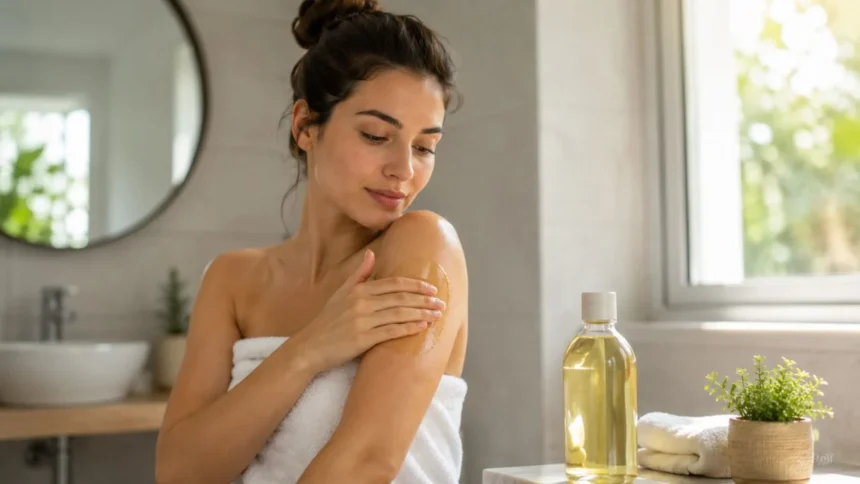
For better results, apply baby oil to damp rather than dripping-wet skin. After bathing, gently pat the body with a towel while leaving a small amount of moisture behind. Spread a few drops across each area and massage them in until the skin feels comfortable rather than excessively slippery.
Baby oil may not be enough when the skin is extremely dry or visibly cracked. In that situation, apply a fragrance-free moisturising cream first and use a small amount of oil over it. The cream supplies water-binding and barrier-supporting ingredients, while the oil helps reduce the loss of moisture from the surface.
Avoid applying a fragranced oil to inflamed, scratched or actively irritated skin. The damaged barrier may react more strongly to perfume and other additives. Choose a plain, fragrance-free emollient and seek professional advice when dryness is painful, widespread, infected or failing to improve with regular moisturising.
Benefits of Baby Oil for the Skin
One of the main baby oil benefits is its ability to leave rough skin feeling softer. Mineral oil spreads easily across the body and creates a smooth surface with relatively little product. This can be convenient for people who dislike thick body butters but still want protection from everyday moisture loss.
Baby oil can also reduce the uncomfortable pulling sensation that sometimes appears after a hot shower. Cleansing and prolonged exposure to water may remove some of the skin’s natural oils. Applying an occlusive product afterwards can help the surface feel less tight, especially during cold or low-humidity weather.
The product also creates slip, making it useful for gentle body massage. It allows the hands to move across the skin with less friction and pulling. Massage may feel relaxing, but the oil itself should not be expected to treat muscle injuries, improve circulation permanently or remove cellulite.
Another advantage is simplicity. A basic mineral oil formula may contain fewer ingredients than a complicated scented lotion. However, simplicity depends on the actual product label. People with sensitive skin should still choose fragrance-free options and perform a small patch test before applying the oil across a large area.
Can You Use Baby Oil on Your Face?
Baby oil can technically be applied to the face, but it is not the best facial moisturiser for everyone. Facial skin may produce more natural oil and develop clogged pores more easily than the arms or legs. A product that works comfortably on the body may therefore feel heavy when used around the forehead, nose or chin.
People with dry, non-acne-prone skin may tolerate a tiny amount of fragrance-free mineral oil. It can be applied as the final step over a normal moisturiser to reduce overnight moisture loss. Only one or two drops are usually needed because applying a thick layer may create unnecessary greasiness.
Avoid placing baby oil near the eyes unless the product label specifically permits that use. Oil can travel into the eyes and cause temporary blurred vision, watering or irritation. It may also make sunscreen or makeup move around when applied in excessive amounts during the daytime.
People with oily skin, recurring blackheads, facial folliculitis or active acne may prefer a moisturiser labelled oil-free and non-comedogenic. These products are designed to hydrate without leaving a heavy oily layer. Stop using baby oil on the face when you notice new bumps, itching, redness or increased breakouts.
Is Baby Oil Good for Acne-Prone Skin?
Baby oil is not an acne treatment and should not be used to replace ingredients such as benzoyl peroxide, salicylic acid or prescribed medication. Although highly refined mineral oil is used in many cosmetic products, the final baby oil formula may not have been designed or tested specifically for acne-prone facial skin.
Acne develops when pores become blocked with oil and dead skin cells and inflammation occurs around the hair follicles. Applying a heavy layer of any oily product may create an uncomfortable environment for someone who already develops frequent congestion. Fragrance can add another potential source of irritation.
Someone with body acne should also be careful when applying baby oil across the chest, shoulders or back. These areas commonly develop clogged pores and inflamed spots. Choose a lightweight, non-comedogenic body moisturiser instead and keep oily hair or massage products away from areas that frequently break out.
Individual reactions vary, so a product may work for one person and cause bumps for another. Test a small area for several days before using it widely. If breakouts increase, stop applying the oil and return to a simple acne-friendly routine containing a gentle cleanser, suitable treatment and non-comedogenic moisturiser.
Is Baby Oil Suitable for Sensitive Skin?
Baby oil may feel gentle, but the word “baby” does not guarantee that every formula is appropriate for sensitive adult skin. Many traditional products contain fragrance, which can cause stinging, itching, redness or contact dermatitis in susceptible people. Reactions may occur immediately or develop after repeated exposure.
A fragrance-free mineral oil product is generally a more sensible option when the skin is easily irritated. Check the ingredient list for perfume, fragrance, essential oils and botanical extracts. Products labelled “unscented” may still contain ingredients that disguise another smell, so fragrance-free wording is usually more useful.
Perform a patch test by applying a small amount to an area such as the inner arm. Leave the product in place and monitor the skin over the following day or two. A patch test cannot predict every reaction, but it may reveal obvious burning, redness, swelling or an itchy rash.
Stop using the product when it consistently causes discomfort. Do not continue because you believe the skin must adjust to the oil. Persistent sensitivity, unexplained rashes or repeated reactions to personal-care products should be discussed with a dermatologist, who may recommend formal allergy testing or a simpler skincare routine.
Can You Use Baby Oil on Eczema?
Eczema-prone skin needs regular moisturising because its protective barrier loses water more easily. An occlusive ingredient such as mineral oil may help reduce that loss. However, standard fragranced baby oil is not always the best choice because perfume can trigger irritation or worsen itching in some people with eczema.
Baby oil also lacks some of the ingredients included in complete eczema moisturisers. Fragrance-free creams and ointments often provide a more effective combination of hydration, softening and barrier protection. A dermatologist may recommend applying these products frequently, including immediately after washing while the skin remains slightly damp.
Do not apply baby oil over weeping, infected or severely inflamed eczema without medical guidance. Oil can make the surface feel more comfortable, but it does not treat inflammation or infection. Prescription topical treatments may be required when the skin is swollen, intensely itchy, cracked, painful or producing fluid.
When you already use a medicated cream, follow your healthcare professional’s instructions regarding product order and timing. Spreading oil immediately over medication may move or dilute the treatment. A fragrance-free medical emollient is generally more predictable than a cosmetic baby oil for ongoing eczema management.
Does Baby Oil Remove Makeup?
Baby oil can dissolve many oil-based and water-resistant makeup products, including foundation, lipstick and some mascaras. Oil cleansing works because oily substances can loosen pigments, waxes and sebum from the skin. This allows makeup to be wiped away without aggressive scrubbing that could irritate the face.
Place a small amount on clean fingertips or a soft reusable pad and gently massage it over the makeup. Avoid pulling the delicate skin around the eyes. Once the makeup has loosened, remove it carefully with a damp cloth or cotton pad rather than repeatedly rubbing the same area.
Follow with a gentle facial cleanser to remove oily residue, sunscreen and remaining makeup. This second step is especially useful for people with combination or acne-prone skin. Leaving a thick film on the face may feel uncomfortable and could interfere with the skincare products applied afterwards.
A dedicated cleansing oil or balm may be a better choice because it is formulated to mix with water and rinse away more easily. These products may also be available in fragrance-free, non-comedogenic formulas. Stop using any remover that creates burning, blurred vision, swelling or persistent redness.
Can Baby Oil Be Used for Shaving?
Baby oil can create a slippery surface that helps a razor move across the legs or other body areas. This may reduce friction for some people and leave the skin feeling smooth. However, the oil is transparent, making it harder to see where the razor has already passed.
Use only a thin layer and make sure the skin is wet before beginning. Apply the oil carefully because an excessive amount can make the bathtub, shower floor and hands dangerously slippery. Rinse the razor frequently, as thick oil and cut hairs can build up between the blades.
People who frequently develop razor bumps or folliculitis should monitor how their skin responds. A heavy oil may not suit areas that become congested easily. A fragrance-free shaving cream or gel designed for sensitive skin may provide better visibility while allowing the razor to glide comfortably.
Never dry-shave irritated or damaged skin simply because oil is present. Use a clean, sharp razor and move it gently in the direction that causes the least irritation. After shaving, rinse the area and apply a suitable fragrance-free moisturiser if the skin feels dry or uncomfortable.
Can Baby Oil Help With Stretch Marks?
Baby oil can moisturise the skin and make stretch marks look temporarily smoother or shinier. Massage may also make the area feel softer. However, baby oil cannot rebuild damaged collagen, remove scar tissue or permanently erase stretch marks that have already developed within the deeper skin.
Stretch marks commonly form during pregnancy, puberty, weight changes and rapid muscle growth. Their development is influenced by hormones, genetics and how quickly the body changes. Keeping the skin moisturised may improve comfort and itching, but it cannot guarantee that new stretch marks will be prevented.
Existing marks often fade naturally over time, changing from red, purple or brown lines into paler streaks. Dermatologist-supervised treatments such as prescription retinoids, microneedling or certain laser procedures may improve their appearance. The best option depends on the marks’ age, colour and location.
Retinoids should not be used during pregnancy without specific medical guidance. Anyone who is pregnant, breastfeeding or trying to conceive should discuss stretch mark products with a qualified professional. Baby oil may be used for moisturising when tolerated, but expectations should remain realistic.
Can Baby Oil Make Your Skin Glow?
Baby oil creates an immediate reflective finish that can make the skin appear smooth and glowing. This effect is mainly cosmetic because light reflects off the thin layer of oil. It does not mean the oil has permanently brightened the skin or corrected the underlying causes of dullness.
For a subtle glow, apply one or two drops to damp skin and spread them evenly. Concentrate on the shoulders, arms, collarbones or legs rather than covering the body with a thick film. Too much product can transfer onto clothes, collect dust and make the skin feel uncomfortably greasy.
Baby oil does not protect the skin from ultraviolet radiation unless the label specifically states that it is a tested sunscreen. A shiny surface should never be mistaken for sun protection. Use a broad-spectrum sunscreen with an appropriate SPF on exposed skin during the daytime.
Healthy-looking skin also depends on gentle cleansing, regular moisturising and sun protection. Products containing humectants and ceramides may provide longer-lasting hydration than oil alone. Baby oil can create a temporary glow, but it should be treated as an optional finishing product rather than a complete skincare routine.
How to Apply Baby Oil Correctly
Begin with clean, slightly damp skin after a lukewarm bath or shower. Pat away excess water without drying the body completely. Place a small amount of oil in your palm, rub your hands together and spread it gently across the area that needs additional softness.
Start with less product than you think you need. A few drops can cover a surprisingly large area because mineral oil spreads easily. Adding too much may leave the skin slippery, stain clothing and increase the chance of falling on a bathroom floor.
When your skin is very dry, apply a fragrance-free cream first. Follow with a thin layer of oil to help seal the moisturiser beneath it. This combination usually provides more complete hydration than applying baby oil alone to skin that is already dry and lacking water.
Wash your hands after application when you need to handle glass, stairs, a baby or another object requiring a secure grip. Clean any oil spilled on hard floors immediately. Store the bottle upright, keep it away from children and follow all warnings printed on its label.
Side Effects and Risks of Baby Oil
The most common problem associated with baby oil is irritation from fragrance or another added ingredient. Symptoms may include itching, burning, redness, swelling or a rough rash. Stop using the oil and gently wash the area when a reaction begins rather than applying additional scented products.
Baby oil may also contribute to spots, folliculitis or clogged pores in susceptible people, particularly when applied heavily to the face, chest or back. Sweating beneath tight clothing can increase discomfort. Choose non-comedogenic products when you regularly experience acne in the intended application area.
Oil can make showers, baths and floors extremely slippery. Apply it after stepping onto a dry, stable surface rather than pouring it into bathwater. Older adults, people with mobility difficulties and anyone responsible for holding an infant should take particular care to prevent falls.
Oily residue can transfer to clothing, towels and bedding, causing fabrics to ignite and burn more rapidly when exposed to cigarettes, candles, heaters or open flames. Keep oil-treated skin and contaminated fabrics away from ignition sources, and wash clothing and bedding regularly.
Common Baby Oil Mistakes to Avoid
One common mistake is applying a large quantity to completely dry skin and expecting deep hydration. Oil mainly reduces moisture loss, so it works more effectively over damp skin or a water-based moisturiser. A thick surface layer cannot fully replace the functions of a balanced cream.
Another mistake is using fragranced baby oil on every body area simply because the product appears gentle. Facial skin, eczema patches and recently shaved skin may react differently from healthy skin on the legs. Choose a fragrance-free alternative when irritation is likely.
Baby oil should not be used as sunscreen, tanning protection or treatment for a fresh sunburn. It does not provide reliable ultraviolet protection and may make it difficult to recognise worsening redness. Cool the skin, avoid further sun exposure and use appropriate medical care for severe blistering or pain.
Avoid using baby oil as a personal lubricant with latex condoms because oil-based products can weaken latex and increase the chance of breakage. It may also irritate sensitive genital tissue or disrupt comfort. Choose a lubricant specifically designed for the intended purpose and compatible with the barrier method being used.
Baby Oil Alternatives for Different Skin Types
For dry body skin, choose a fragrance-free cream containing glycerin, ceramides or hyaluronic acid. These ingredients help attract and retain water while supporting the protective skin barrier. A thin layer of petrolatum or mineral oil may then be added over particularly rough areas when needed.
For oily or acne-prone facial skin, look for a lightweight moisturiser labelled non-comedogenic, oil-free or unlikely to clog pores. Gel creams and light lotions may feel more comfortable than an oily film. Hydration remains important because harsh acne treatments can leave the skin dry and irritated.
For sensitive or eczema-prone skin, a plain fragrance-free ointment or medical emollient is often a safer option. The simplest formula is not always the most attractive, but it reduces exposure to perfume and unnecessary botanical extracts. A dermatologist can help select products for persistent or severe eczema.
For massage, a fragrance-free mineral oil or professionally formulated massage product may provide the same slip without a strong scent. Patch-test any formula before widespread use. People with nut allergies should read labels carefully because some massage and body oils contain almond or other food-derived oils.
Is Baby Oil Safe for a Baby’s Skin?
A product being marketed for babies does not mean it must be applied routinely to every infant. Newborn skin is thinner and more sensitive than adult skin, so simple care is usually best. Lukewarm water, gentle cleansing and a fragrance-free moisturiser may be enough for ordinary dryness.
When using baby oil, select a fragrance-free product and test a small amount first. Apply it sparingly to intact skin and keep it away from the mouth, nose, eyes and hands that the baby may suck. Never leave an open bottle within a child’s reach.
Baby oil may sometimes be used briefly to soften stubborn cradle-cap scales before gentle washing. However, the scalp should not be scratched or picked aggressively. Seek medical advice when the area is swollen, weeping, bleeding, producing an unpleasant smell or spreading beyond the scalp.
A healthcare professional should assess persistent dryness, widespread redness, severe itching, blisters or signs of infection. These symptoms may require more than cosmetic oil. Follow individual advice when the baby was born prematurely, has eczema or is receiving treatment for another skin condition.
Who Should Avoid Baby Oil?
People who have previously reacted to fragrance, mineral oil or another listed ingredient should avoid that particular product. Continuing to use an irritating formula can worsen inflammation and damage the skin barrier. A fragrance-free alternative may be tolerated, but patch testing remains sensible.
Those with active facial acne, body acne or recurring folliculitis may want to avoid applying baby oil across affected areas. A lightweight non-comedogenic moisturiser is usually easier to incorporate into an acne routine. Oil should not replace treatment recommended by a dermatologist or other qualified professional.
Do not apply baby oil to deep cuts, burns, infected skin or open wounds unless a healthcare professional recommends it. The product is designed for cosmetic external use rather than disinfecting or treating injuries. Seek care for spreading redness, warmth, swelling, pus, fever or increasing pain.
People who smoke, use candles frequently or receive home oxygen must be particularly careful with oily emollients. Residue transferred to clothes, bedding or furniture can make fabrics burn more easily near an ignition source. Use products only with appropriate fire-safety precautions.
Final Verdict: Is Baby Oil Good for Your Skin?
Baby oil can be good for normal or dry body skin when it is used correctly. Its mineral oil base forms an occlusive layer that reduces water loss and leaves rough areas feeling softer. It is affordable, widely available and particularly useful when applied lightly to damp skin after bathing.
However, baby oil is not a complete solution for every skin type. It does not directly hydrate the skin in the same way as a moisturiser containing water-binding ingredients. A fragranced formula may irritate sensitive skin, while its heavy texture may not suit areas affected by acne or folliculitis.
For the body, use a small amount over damp skin or a fragrance-free moisturising cream. For the face, consider your sensitivity and history of clogged pores before applying it. Stop use when you notice itching, burning, redness, bumps or worsening breakouts.
Ultimately, the best product is one that supports your skin barrier without creating irritation or congestion. Baby oil can be a useful optional step, but it is not essential for healthy skin. Gentle cleansing, an appropriate moisturiser and daily sun protection remain the foundation of an effective skincare routine.
Frequently Asked Questions
Can I use baby oil on my skin every day?
Baby oil can be used daily on normal or dry body skin when it does not cause irritation. Apply a small amount to damp skin and stop if you develop itching, redness, spots or folliculitis.
Does baby oil clog pores?
Baby oil may feel too heavy or contribute to congestion in some acne-prone people. Use a non-comedogenic moisturiser on the face, chest or back when these areas regularly develop blackheads and spots.
Is baby oil better than body lotion?
Baby oil is better at sealing in existing moisture, while lotion can supply water and humectant ingredients. For very dry skin, apply a fragrance-free lotion or cream first and use oil over it.
Can baby oil lighten dark skin or pigmentation?
Baby oil does not lighten natural skin colour or treat hyperpigmentation. Its reflective finish may create a temporary glow, but dark spots usually require sun protection and treatment selected for their underlying cause.
Should baby oil be applied before or after moisturiser?
Apply a water-based moisturiser first and baby oil afterwards. The moisturiser adds hydration, while the oil creates a surface layer that helps slow the loss of water from the skin.