

Starting a fitness journey can feel overwhelming, especially when you are unsure which exercises to perform or how to organize your sessions. A beginner workout routine at home provides a convenient way to improve strength, flexibility, endurance, and overall physical health. With simple movements and a consistent schedule, beginners can build healthy exercise habits without expensive equipment or gym memberships.
Home workouts are particularly useful for people who prefer exercising in a familiar environment. Basic bodyweight exercises, gentle cardio, and mobility movements can create an effective full-body fitness routine. Learning proper form, allowing enough recovery time, and gradually increasing activity are essential for enjoying exercise safely and comfortably.
What Is a Beginner Workout Routine at Home?
A beginner workout routine at home is a structured exercise plan designed for individuals who are new to regular physical activity. It typically includes simple movements that improve strength, cardiovascular fitness, flexibility, and coordination. Most exercises can be completed using body weight, making them accessible without specialized gym equipment or complicated training techniques.
Unlike advanced fitness programs, beginner routines emphasize learning correct movement patterns and developing confidence. Exercises are usually performed at a comfortable intensity, with rest periods that allow adequate recovery. This approach helps beginners understand how their bodies respond to activity while gradually improving their ability to perform everyday physical tasks.
An effective home workout program combines different types of exercise rather than focusing on one muscle group. Strength training supports muscles and bones, cardiovascular movements improve stamina, and stretching maintains comfortable joint mobility. Together, these activities create a balanced fitness foundation that can support long-term health and a more active lifestyle.
Benefits of Following a Home Workout Routine
One of the biggest advantages of home workouts is convenience. You can exercise without traveling to a gym, following complicated schedules, or purchasing expensive memberships. This flexibility makes regular movement easier to include in everyday life, whether you prefer exercising before school, after work, or during a quiet afternoon.
A consistent beginner exercise routine can improve muscular strength, coordination, cardiovascular endurance, and general energy levels. Physical activity also supports bone health and may improve sleep quality and concentration. These benefits develop gradually, making consistency and enjoyable movement more important than completing difficult workouts or chasing rapid physical transformations.
Home workouts can also help beginners feel more comfortable exploring different movements at their own pace. Exercising in a familiar setting allows time to learn techniques without feeling rushed or distracted. As basic movements become easier, individuals can explore new activities and build a positive relationship with regular exercise.
How to Prepare for Your First Home Workout
Preparing for your first workout begins with choosing a comfortable space where you can move freely. Clear away furniture, loose objects, and other obstacles that could interfere with exercise. A stable floor, adequate ventilation, and enough room to stretch your arms and legs provide a practical environment for safe movement.
Comfortable clothing and supportive footwear can make exercise more enjoyable, especially when performing standing movements. A yoga mat may provide cushioning for exercises completed on the floor, although it is not essential. Keep drinking water nearby and choose activities that match your current comfort level rather than copying advanced routines.
Before beginning a structured workout, consider your current activity level and any physical limitations. Individuals with injuries, ongoing health concerns, or symptoms during exercise may benefit from professional guidance. Starting with manageable movements allows beginners to develop confidence while reducing the likelihood of discomfort from attempting exercises beyond their present abilities.
Importance of Warming Up Before Exercise
A proper warm-up prepares the muscles, joints, and cardiovascular system for more demanding activity. Gentle movements gradually increase circulation and help the body transition from resting to exercising. Beginners who skip warm-ups may find their first exercises uncomfortable because their bodies have not adjusted to the increased movement demands.
Simple warm-up activities include marching in place, shoulder circles, controlled arm swings, and gentle hip movements. These exercises encourage comfortable joint motion without requiring intense physical effort. A warm-up lasting approximately five minutes is often a practical starting point, although some individuals may prefer additional preparation.
The best warm-up movements resemble the exercises planned for the main workout. For example, gentle bodyweight squats can help prepare for lower-body strengthening activities. Focus on smooth, controlled motion and comfortable breathing throughout the warm-up instead of rushing through movements or forcing joints beyond their natural range.
Beginner Full-Body Workout Routine at Home
A full-body workout is an effective starting point because it introduces movements involving several major muscle groups. Beginners can combine squats, wall push-ups, glute bridges, bird dogs, and gentle marching. These exercises support functional strength, balance, coordination, and endurance while requiring little equipment or preparation.
For an introductory session, select four or five comfortable exercises and perform approximately five to ten controlled repetitions of each. Rest whenever necessary and focus on maintaining good technique rather than completing a particular number. One round may be enough initially, especially for people who are completely new to structured physical activity.
As the movements become familiar, the routine can gradually include additional repetitions or another comfortable round. However, progress should depend on energy levels, recovery, and movement quality rather than a fixed deadline. Combining strengthening activities with enjoyable walking, cycling, or other movement creates a more balanced beginner fitness program.
Bodyweight Squats for Lower-Body Strength
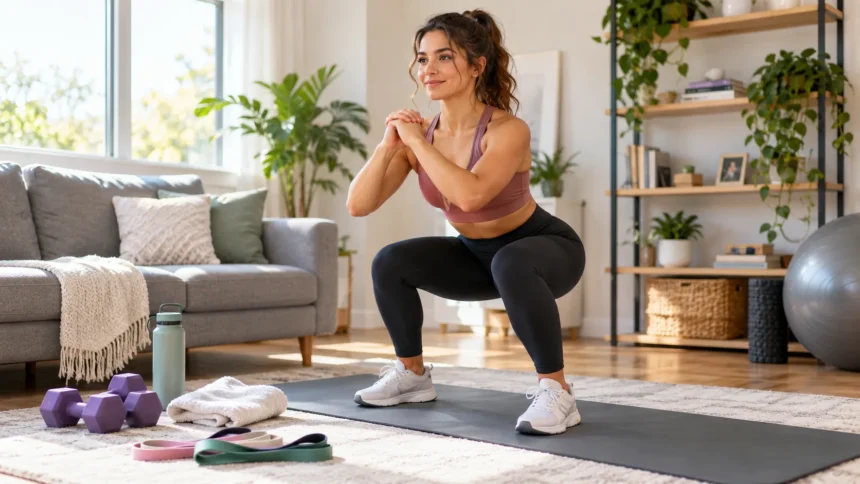
Bodyweight squats are a practical exercise for strengthening the thighs, hips, and gluteal muscles. These muscles support everyday movements such as standing from a chair, climbing stairs, and lifting objects. Because squats require no additional weights, beginners can practice the movement at home while learning balance and body control.
To perform a squat, stand with your feet approximately shoulder-width apart and keep your chest comfortably upright. Bend your hips and knees as though sitting back into a chair, then return to standing. Keep your movements smooth and controlled, allowing your knees to follow the direction of your toes without forcing unnecessary depth.
Beginners who find traditional squats difficult can practice sitting down and standing up from a stable chair. This modification provides a clear movement target and can make learning easier. Focus on comfortable repetitions, steady breathing, and maintaining balance rather than attempting deep squats before developing sufficient control.
Wall Push-Ups for Upper-Body Strength
Wall push-ups offer an accessible introduction to upper-body strengthening without requiring traditional floor push-ups. They primarily engage the chest, shoulders, and triceps while also involving muscles that stabilize the torso. The upright position reduces the amount of body weight supported by the arms, making the exercise manageable for many beginners.
Stand facing a sturdy wall and place your hands against it at approximately shoulder height. Walk your feet backward slightly, keeping your body aligned from head to heels. Bend your elbows to bring your chest toward the wall, then press gently through your hands to return to the starting position.
Maintaining controlled movements is more important than completing repetitions quickly. Avoid pushing your hips forward or allowing your shoulders to rise excessively toward your ears. As strength improves, adjusting your distance from the wall can change the exercise difficulty, while a higher hand position generally makes the movement easier.
Glute Bridges for Hip and Core Stability
Glute bridges strengthen the muscles around the hips and buttocks while encouraging coordination between the pelvis and trunk. These muscles help support walking, standing, and other everyday activities. The exercise is performed on the floor, making it suitable for home workouts when a comfortable, stable surface is available.
Lie on your back with your knees bent and feet resting flat on the floor. Keep your arms relaxed beside your body, gently engage your abdominal muscles, and lift your hips until your shoulders, hips, and knees form a comfortable line. Lower slowly without forcing your lower back into an exaggerated arch.
Beginners can start with a small range of movement and gradually increase it as control improves. Avoid holding your breath or lifting your hips higher than feels comfortable. If the exercise causes back pain or unusual discomfort, stop and consider a modified movement with guidance from a qualified exercise professional.
Bird Dog Exercise for Balance and Coordination
The bird dog is a gentle bodyweight exercise that challenges coordination and trunk stability. It involves the muscles of the abdomen, back, shoulders, and hips while encouraging controlled movement. Because it emphasizes balance rather than speed, the exercise can help beginners develop awareness of how different muscle groups work together.
Begin on your hands and knees with your hands beneath your shoulders and knees beneath your hips. Slowly extend one arm forward and the opposite leg backward while keeping your torso relatively steady. Return to the starting position, then repeat using the other arm and leg without twisting excessively through the spine.
If extending both limbs feels difficult, practice moving only one arm or one leg at a time. A folded towel beneath the knees may improve comfort on hard flooring. The goal is to maintain stable positioning and controlled breathing while building coordination through gradual, comfortable repetition.
Easy Cardio Exercises for Beginners at Home
Cardiovascular exercise helps strengthen the heart and lungs while improving stamina for everyday activities. Beginners do not need complicated equipment or intense workout programs to enjoy these benefits. Gentle marching, walking around the house, and comfortable step-touch movements can provide accessible ways to introduce aerobic activity into a home fitness routine.
Marching in place is particularly convenient because it requires very little space. Stand comfortably, lift your feet alternately, and allow your arms to move naturally. You can adjust the pace according to how you feel, aiming for movement that increases breathing slightly while still allowing comfortable conversation.
Other beginner-friendly cardio activities include dancing to music, walking outdoors, and using a stationary bicycle when available. Mixing different activities can help prevent boredom and support overall movement confidence. Choose exercises that feel enjoyable and sustainable instead of prioritizing movements simply because they appear intense or promise unusually fast results.
Stretching and Flexibility Exercises for Beginners
Stretching can complement a beginner workout routine by supporting comfortable movement and maintaining flexibility. Gentle stretches may help reduce temporary feelings of tightness after physical activity. However, stretching should not be forced, and greater flexibility is not automatically better when it comes to healthy joint function.
Common beginner stretches include gentle calf stretches, chest-opening movements, and comfortable seated hamstring stretches. Move slowly into each position until you notice a mild stretching sensation without pain. Keep breathing naturally and avoid bouncing, pulling forcefully, or attempting extreme positions that place unnecessary pressure on muscles and joints.
Flexibility exercises work well as part of a relaxing cool-down after a home workout. Combining gentle stretching with slow walking and controlled breathing allows activity levels to decrease gradually. Regular mobility practice may also help improve body awareness and make certain daily movements feel more comfortable over time.
How to Create a Weekly Beginner Workout Schedule
A weekly workout schedule helps beginners organize exercise without making fitness feel overwhelming. Rather than training intensely every day, choose a combination of strength exercises, enjoyable cardiovascular movement, and recovery opportunities. A flexible routine makes it easier to remain consistent when school, work, family responsibilities, or other activities change unexpectedly.
For example, beginners might practice a short full-body strength routine on Monday and Thursday, with enjoyable walking or dancing on Tuesday and Saturday. Wednesday and Friday can include gentle mobility or comfortable recreational movement. Sunday may be used for rest or another enjoyable activity, depending on energy levels and personal preferences.
The ideal schedule depends on individual fitness experience, recovery needs, and overall health. Some beginners prefer shorter sessions spread throughout the week, while others enjoy slightly longer workouts on fewer days. Gradually building activity is generally more sustainable than immediately adopting a demanding schedule that creates excessive tiredness or discomfort.
Common Beginner Workout Mistakes to Avoid
One common mistake is attempting advanced exercises before learning basic movement techniques. Difficult routines may appear appealing, but poor control can make exercises uncomfortable and increase injury risk. Beginners benefit more from practicing manageable movements consistently and improving their technique before exploring challenging variations or additional resistance.
Another mistake is ignoring recovery and continuing through pain. Muscles need opportunities to adapt, and persistent discomfort should not be treated as proof that a workout is effective. Taking appropriate breaks, sleeping adequately, and eating balanced meals all support recovery and help maintain a healthy relationship with physical activity.
Beginners may also lose motivation when they expect immediate improvements or compare their progress with others. Physical adaptation occurs at different rates, influenced by previous experience, consistency, and individual circumstances. Focusing on improvements in movement quality, confidence, and daily energy can provide more meaningful feedback than comparing workout performance with unrealistic expectations.
Tips for Staying Consistent With Home Workouts
Consistency becomes easier when exercise feels manageable and fits naturally into everyday routines. Choose a convenient time, prepare your workout space, and select movements you genuinely enjoy. Keeping sessions flexible helps prevent occasional schedule changes from becoming reasons to abandon physical activity altogether.
Setting practical goals can also make fitness progress more noticeable. Instead of concentrating entirely on physical appearance, consider goals such as learning a proper squat, improving balance, or feeling more comfortable during walks. These achievements encourage long-term motivation because they reflect useful changes in movement confidence and everyday physical ability.
Variety helps keep a beginner home workout routine interesting. Switching between strengthening exercises, gentle cardio, stretching, and recreational activities allows different movement skills to develop. Exercising with a friend or family member can also provide encouragement, although individual workouts remain equally valuable when performed safely and consistently.
How to Progress Your Beginner Workout Safely
Progressive exercise involves gradually increasing activity demands as strength, endurance, and coordination improve. For beginners, progression may simply mean performing movements with better control or feeling more comfortable during familiar exercises. Increasing difficulty is optional until basic movements feel manageable and recovery remains comfortable.
When ready, you can make small adjustments such as adding a few repetitions, slightly extending a comfortable session, or exploring a more challenging exercise variation. Change one element at a time rather than increasing every aspect simultaneously. This approach makes it easier to recognize how your body responds and identify modifications that may be necessary.
A successful fitness journey does not require constant increases in workout difficulty. Maintaining an enjoyable routine is valuable, even when exercise intensity remains unchanged for a period. Listening to your body, respecting recovery needs, and seeking professional guidance when appropriate can help support safe, lasting participation in regular physical activity.
Conclusion
A beginner workout routine at home provides a simple and accessible introduction to regular exercise. Bodyweight movements, gentle cardio, and stretching can improve strength, coordination, flexibility, and cardiovascular fitness. With minimal equipment and a comfortable space, beginners can develop useful movement skills while discovering activities that fit their individual interests.
Learning proper form and progressing gradually are essential parts of a successful routine. Exercises such as squats, wall push-ups, glute bridges, and bird dogs offer practical ways to build foundational strength. Combining these movements with recovery, balanced nutrition, and enjoyable physical activity helps create a sustainable approach to fitness.
The most effective beginner workout is one that remains comfortable, safe, and enjoyable over time. Rather than focusing on rapid transformations, prioritize consistency, improved movement confidence, and everyday well-being. Small, regular efforts can lead to meaningful improvements in physical fitness while supporting a positive attitude toward lifelong exercise.
Frequently Asked Questions (FAQs)
What is the best beginner workout routine at home?
A balanced beginner routine includes simple bodyweight exercises such as squats, wall push-ups, glute bridges, and bird dogs. Gentle cardio and stretching can complement strength training while supporting overall fitness and movement confidence.
How long should a beginner workout at home?
A beginner workout can start with approximately 10–20 minutes, depending on comfort and fitness experience. Shorter sessions are also useful, and workout duration can increase gradually as stamina and confidence improve.
Can beginners build strength at home without equipment?
Yes, bodyweight exercises can improve muscular strength and coordination without gym equipment. Squats, wall push-ups, and glute bridges provide accessible starting points, especially when performed with proper technique and gradual progression.
Should beginners exercise every day?
Beginners can enjoy some form of comfortable movement most days, but intense workouts are unnecessary. A balanced schedule includes strengthening activities, lighter movement, and sufficient recovery based on individual needs.
How long does it take to notice results from home workouts?
Improvements in coordination, movement confidence, and stamina may become noticeable after several weeks of consistent activity. Progress varies between individuals, so focusing on sustainable habits is more useful than expecting specific results by a deadline.