
Luxury Home Decor Ideas That Look Expensive
Creating a luxurious home does not always require designer furniture, rare materials, or a major renovation budget. Many expensive-looking interiors rely on thoughtful proportions, carefully selected finishes, layered lighting, quality textures, and a sense of visual restraint rather than simply filling rooms with costly objects. A well-organized space with cohesive colors and strong focal points can often feel more refined than a room containing many expensive pieces that do not work together. Luxury is usually created through consistency, balance, and attention to detail.
The most successful luxury home decor ideas focus on how a room feels as much as how it looks. Comfortable seating, elegant lighting, soft fabrics, carefully styled surfaces, and uncluttered layouts can make everyday spaces feel more sophisticated. You can also create a high-end atmosphere by emphasizing a few visually important areas rather than upgrading everything at once. Statement lighting, oversized artwork, full-length curtains, and a large rug can transform a room more effectively than dozens of small decorative purchases.
Another important part of luxury decorating is avoiding visual clutter. High-end interiors usually give furniture and artwork enough space to be noticed. Surfaces are styled intentionally, color palettes are controlled, and decorative materials are repeated throughout the room to create continuity. This does not mean your home should feel empty or impersonal. Personal photographs, books, vintage objects, and collected pieces can still add character when they are displayed with intention.
This guide explores practical ways to make your home look more expensive through color, furniture, lighting, textiles, wall treatments, materials, storage, and styling. You will also find ideas for living rooms, bedrooms, dining spaces, kitchens, bathrooms, and smaller homes. Whether you are redecorating one room or gradually improving your entire interior, these strategies can help you create a more polished and luxurious atmosphere without unnecessary spending.
Start With a Refined Neutral Color Palette
A sophisticated color palette is one of the strongest foundations for an expensive-looking interior. Warm white, cream, ivory, taupe, greige, camel, soft gray, chocolate brown, and muted beige can all create a calm background that makes furniture and artwork feel more intentional. These shades are especially effective because they allow materials such as wood, stone, brass, linen, and velvet to become more noticeable.
Instead of using one exact neutral throughout the room, layer several closely related tones. Cream walls can work beautifully with a beige sofa, taupe curtains, walnut furniture, and soft brown accessories. This subtle variation creates depth without making the room feel visually busy. Layering neutrals is one of the easiest ways to make a space feel sophisticated and professionally designed.
Deeper colors can be introduced through selected furniture or accents. Olive green, burgundy, navy, charcoal, rust, and dark brown can add richness without overwhelming the room. Use stronger shades on an accent chair, artwork, cushions, cabinetry, or one wall rather than distributing many unrelated colors throughout the space.
Before choosing paint, consider your flooring and fixed materials carefully. Warm wood flooring may look better with creamy walls than with cold blue-gray paint, while cooler stone surfaces may require slightly different undertones. Testing samples in natural and artificial light helps you avoid mismatched colors and creates a more polished overall effect.
Use Large-Scale Decor Instead of Many Small Pieces
One common feature of high-end interiors is confidence in scale. Large artwork, generous rugs, oversized mirrors, substantial lamps, and properly proportioned furniture often look more luxurious than collections of tiny decorative objects. Larger pieces create stronger visual impact while reducing clutter. They also make rooms feel more intentional because each item has a clear role.
Start with walls. One oversized artwork above a sofa can feel significantly more sophisticated than several small frames spaced too far apart. A large mirror can create similar impact while reflecting light and making the room appear more open. The scale should relate to the furniture below so the composition feels balanced.
Rugs should also be generous enough to connect the furniture. A small rug floating in the center of a large living room can make even expensive furniture look disconnected. Choose a rug large enough for major seating pieces to sit partly or fully on it. Properly sized rugs create a sense of abundance and help define the room.
The same principle applies to lamps and accessories. Instead of placing several tiny objects on a console, use one substantial lamp, a few books, and a sculptural vase. Fewer larger pieces usually create a cleaner and more expensive appearance than many small decorations competing for attention.
Add Statement Lighting for Instant Luxury
Lighting has an enormous influence on how luxurious a room feels. A sculptural chandelier, oversized pendant, elegant floor lamp, or decorative wall sconce can become a focal point even when the rest of the room is relatively simple. Statement lighting creates visual drama without requiring major structural changes.
Choose fixtures according to the scale of the room and furniture. A large dining table can support a substantial pendant or chandelier, while a small bedside table may look better with a slim wall-mounted light. Fixtures that are too small often look inexpensive because they appear disconnected from the surrounding architecture.
Layer several light sources throughout the room. Ceiling lights provide general illumination, table lamps create warmth, floor lamps support reading, and wall lights can highlight artwork or architectural details. High-end interiors rarely depend on one harsh overhead light. Multiple sources create depth and make the room more comfortable at different times of day.
Use warm or balanced bulbs rather than extremely cool light in living spaces. Warm lighting enhances wood, brass, stone, and textiles while creating a more relaxed atmosphere. Dimmers are particularly useful because they allow you to create softer evening lighting without changing fixtures.
Hang Curtains High and Wide
Curtains can dramatically change the perceived scale of a room. Hanging them close to the ceiling and extending the rod beyond the sides of the window makes windows appear larger and ceilings feel taller. This simple visual trick is frequently associated with professionally designed interiors because it emphasizes architectural height.
Choose full-length curtains that reach the floor rather than panels that stop awkwardly above it. Fabric that lightly touches or nearly touches the floor creates a more polished appearance. Extremely short curtains can make the room feel visually cut off and reduce the sense of luxury.
Select fabrics with enough weight to hang beautifully. Linen, cotton blends, velvet, and textured neutral fabrics can all look elegant depending on the room. If the fabric is lightweight, sufficient fullness helps the curtains look richer. Narrow, flat panels often appear less substantial even when the material itself is attractive.
Keep colors connected to the walls and upholstery. Tone-on-tone curtains can create a seamless designer look, while slightly darker fabrics add depth. Avoid overly busy patterns unless they are intentionally part of the room’s main design. Simple, well-proportioned curtains usually look more expensive than complicated window treatments.
Add Wall Molding and Architectural Detail
Architectural detail can make an ordinary room feel custom-built. Wall molding, paneling, picture-frame trim, ceiling medallions, and decorative cornices can create depth even when the underlying room is relatively simple. These features work especially well in living rooms, bedrooms, dining spaces, and entryways.
Picture-frame molding is particularly effective because it creates structure without taking up floor space. Simple rectangular panels painted the same color as the wall can add subtle elegance. The effect feels sophisticated because the visual interest comes from architecture rather than additional decorative clutter.
Ceiling details can also elevate statement lighting. A simple medallion around a chandelier adds a sense of history and craftsmanship, while decorative trim can make higher ceilings feel more complete. These elements should match the scale and style of the room rather than becoming overly ornate.
If major trim work is outside your budget, smaller architectural updates can still make a difference. Upgraded baseboards, door casings, or painted wall panels can improve the entire room. The goal is creating depth and proportion, not covering every surface with excessive decoration.
Introduce Natural Stone and Stone-Look Surfaces
Stone is strongly associated with luxury because it adds visual weight, texture, and natural variation. Marble, travertine, limestone, quartzite, and other stone surfaces can appear in coffee tables, countertops, side tables, trays, fireplace surrounds, or decorative objects. Even small amounts can make a room feel more refined.
You do not need to renovate the entire kitchen or bathroom to introduce stone. A marble tray, stone lamp base, or small side table can provide enough visual impact. Larger statement pieces should be chosen carefully because strong veining or unusual patterns can dominate the room.
High-quality stone-look materials can also create an elegant effect when real stone is impractical. The most convincing options use subtle variation rather than exaggerated patterns. Pair them with simple cabinetry, warm lighting, and natural wood so the overall design feels balanced rather than overly decorative.
Stone works particularly well when contrasted with softer materials. A marble coffee table beside a linen sofa, for example, creates a rich mix of hard and soft surfaces. This contrast is one of the reasons luxury interiors often feel layered without needing many colors.
Use Warm Wood to Make Luxury Feel Inviting
Luxury interiors can quickly feel cold when they rely too heavily on glass, metal, and polished stone. Natural wood adds warmth and prevents the space from feeling overly formal. Walnut, oak, ash, and darker stained woods can work beautifully in tables, cabinets, flooring, frames, and shelving.
Walnut is especially effective when you want a rich, sophisticated atmosphere. A walnut sideboard or dining table can create depth beside cream walls and stone surfaces. Lighter oak works well in spaces aiming for a softer contemporary luxury look. Both can feel expensive when the grain is allowed to remain visible.
Do not worry about matching every wood tone perfectly. A controlled mix usually looks more collected and natural. Choose one dominant finish and repeat it in several locations, then add one supporting wood tone through smaller furniture or accessories.
Combine wood with brass, linen, wool, leather, and stone for a more complete high-end effect. Luxury works best when the room feels tactile and layered. Wood helps connect the harder decorative materials with the softer furniture used for everyday comfort.
Style With Brass, Bronze, and Elegant Metal Finishes
Metal details can make a room feel more polished when they are used consistently. Brass, bronze, brushed nickel, chrome, and black metal can appear through lamps, cabinet hardware, furniture legs, mirror frames, and decorative objects. These small details often influence the overall impression more than people expect.
Warm brass and bronze finishes work particularly well with cream, taupe, brown, green, and walnut. They can add richness without requiring large amounts of decoration. Brushed or aged finishes often look more sophisticated than extremely shiny metals because they create softer reflections.
You do not need every metal in the house to match. One dominant finish and one supporting metal can create a more collected appearance. For example, brass lighting can coexist with black furniture details if both are repeated intentionally.
Avoid introducing many unrelated finishes in the same visual area. A room containing chrome, gold, black, copper, and brushed nickel in equal amounts can feel inconsistent. Luxury interiors generally look stronger when finishes are controlled and repeated.
Invest in a Few Statement Furniture Pieces
You do not need to replace every piece of furniture to create a luxurious home. Instead, focus on several visually important items such as the sofa, dining table, bed, coffee table, or sideboard. These pieces influence the overall impression more than small accessories, so thoughtful investment can make the entire room look more refined.
Statement furniture does not necessarily mean bold or unusual. A beautifully proportioned neutral sofa can feel luxurious because of its scale and upholstery, while a simple walnut dining table can create strong visual presence through material and craftsmanship. Quality usually looks more expensive than novelty.
Mix statement pieces with simpler supporting furniture. If every item is dramatic, the room loses hierarchy and begins to feel crowded. A sculptural coffee table can sit beside a restrained sofa, while an elegant dining table can work with understated chairs.
Consider long-term usefulness before spending more on furniture. A timeless sofa or table that works through several design changes can provide greater value than a highly trendy piece that becomes difficult to style. Expensive-looking interiors usually combine visual impact with practicality.
Use High-Quality Textures to Add Depth
Luxury is often perceived through texture. Velvet, linen, wool, leather, bouclé, silk-like fabrics, stone, and natural wood create richness even when the color palette remains simple. The room feels more expensive because the materials interact with light differently and create visual depth.
Begin with larger textile surfaces such as upholstery, rugs, curtains, and bedding. A textured neutral sofa can look more sophisticated than smooth low-quality fabric, while a wool rug can make the entire seating area feel more substantial. Layer these foundational materials before adding decorative accessories.
Mix smooth and textured surfaces deliberately. A velvet chair beside a stone table, for example, feels richer because of the contrast. Linen curtains can soften polished furniture, while leather can provide structure beside soft wool cushions.
Avoid adding too many highly textured materials in one area. Luxury should still feel controlled. Choose a few textures and repeat them in different ways throughout the room so the result feels cohesive rather than visually overwhelming.
Choose a Large Rug That Anchors the Room
A rug can instantly make furniture look more expensive when it is the correct size and positioned properly. Large rugs create a strong foundation beneath seating and make the entire arrangement feel intentional. Small rugs often have the opposite effect because they visually separate furniture into unrelated pieces.
In a living room, choose a rug large enough for at least the front legs of the sofa and chairs to sit on it. Larger rooms can often support all furniture legs on the rug. The result creates a complete zone rather than a small decorative island beneath the coffee table.
Dining-room rugs should extend beyond the table far enough for chairs to remain on the rug when pulled out. This improves both function and appearance. A rug that barely fits underneath the table often looks undersized and interrupts the overall proportions.
Neutral designs, subtle patterns, and traditional faded rugs can all look luxurious depending on the interior. Focus on material, scale, and color harmony rather than choosing the most complex design available. A simple large rug can create more impact than a small ornate one.
Use Oversized Artwork to Create Designer Impact
Large artwork creates confidence in a room because it fills visual space without cluttering it. One substantial painting or photograph above a sofa, bed, or console can instantly make the area feel more complete. It also creates a clear focal point that helps organize surrounding furniture.
Choose art based on personal taste rather than matching colors exactly. A room often feels more sophisticated when artwork introduces its own personality. Abstract work, photography, landscapes, or graphic prints can all look luxurious when the scale and framing are appropriate.
The frame should support the artwork rather than dominate it. Thin black, wood, brass, or neutral frames usually work well in refined interiors. Frameless canvases can also feel elegant when the work itself has enough presence.
If original large artwork is outside your budget, high-quality prints can still create strong impact. The key is using a generous size, good paper, and appropriate framing. Expensive-looking decor often comes from presentation rather than the price of the art itself.
Create a More Luxurious Living Room Layout
Furniture arrangement influences whether a room feels expensive because high-end interiors usually have strong proportions and clear visual zones. Begin by establishing a focal point, then position seating to support both conversation and circulation. Avoid pushing every piece against the walls unless the architecture genuinely requires it.
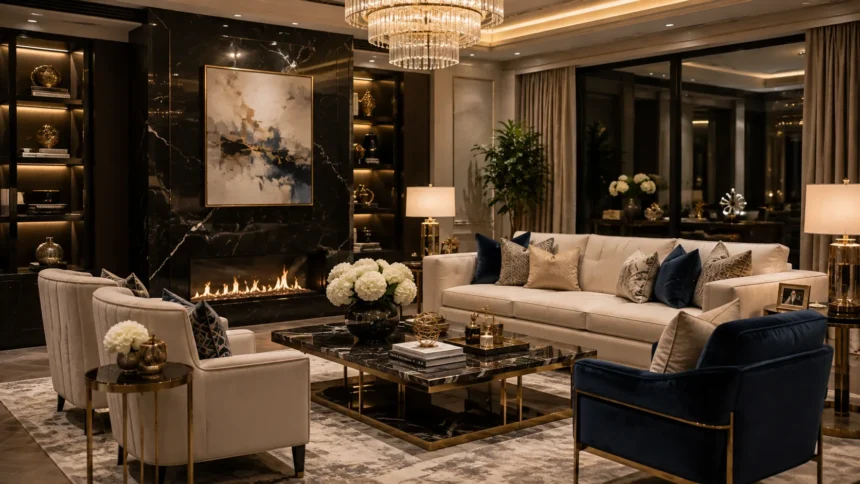
Bring furniture closer together to create a more intentional seating area. A sofa, two chairs, a generous coffee table, and a large rug can create a stronger luxury effect than several unrelated pieces scattered around the room. Proper spacing helps the furniture feel connected without making the area crowded.
Use side tables and lamps to complete the layout. These supporting pieces create functional comfort while filling visual gaps between larger furniture. Choose enough furniture to make the room useful, but do not fill every open area simply because space is available.
Leave clear pathways around the seating area. Luxury interiors often feel spacious because movement is easy and furniture has breathing room. A well-planned layout can make affordable furniture look considerably more sophisticated.
Style the Coffee Table Like a Designer
Coffee-table styling works best when it looks intentional but still leaves enough room for everyday use. Start with a tray or stack of books to create structure, then add a sculptural object, candle, vase, or small plant. Vary the height of the objects slightly so the arrangement feels balanced.
Use fewer pieces with stronger presence rather than many small accessories. One ceramic bowl, several art books, and a vase can look more expensive than a table covered with tiny decorative objects. Negative space is part of the composition and helps each item stand out.
Choose objects that relate to the room’s materials and palette. A stone tray can connect with a marble side table, while a brass candleholder can relate to nearby lighting. These repeated details create cohesion without requiring perfect matching.
Keep the arrangement flexible enough to move easily when the table is needed. A luxury home should still function comfortably. Styling that constantly needs to be removed before normal use can feel more staged than sophisticated.
Create Hotel-Like Luxury in the Bedroom
A luxurious bedroom begins with the bed as the main focal point. An upholstered headboard, elegant wood frame, or statement wall behind the bed can establish visual structure. The bed should appear substantial enough for the room rather than looking small and disconnected against a large wall.
Layer bedding with high-quality-looking textures and a controlled palette. Crisp sheets, a duvet, quilt, throw, and several cushions can create depth without requiring elaborate patterns. Neutral bedding often looks especially luxurious because attention shifts toward fabric, texture, and proportion.
Use matching or visually balanced bedside lighting. Table lamps, wall sconces, or hanging pendants on either side of the bed create symmetry and make the room feel intentionally designed. Symmetry is frequently associated with hotel interiors because it produces calm visual order.
Complete the bedroom with full-length curtains, a large rug, artwork, and clear bedside surfaces. Clutter quickly reduces the luxury effect, so use drawers or cabinets for everyday personal items. The room should feel restful, soft, and easy to maintain.
Add Luxury to the Dining Room
A dining room can feel expensive with relatively few well-selected elements because the table naturally becomes the center of the space. Choose a table with strong proportions and a material that suits the room, such as solid wood, stone, or a clean contemporary finish. The surrounding space should feel generous enough for chairs to move comfortably.
A large pendant or chandelier can create immediate visual impact above the table. Position the fixture so it feels connected to the table rather than floating too high. Warm lighting can make evening meals feel more intimate and sophisticated.
Keep the centerpiece restrained. A sculptural bowl, flowers, candles, or a large vase can provide enough decoration without reducing usable table space. High-end styling often relies on simplicity and scale rather than complicated arrangements.
Add artwork, curtains, or a sideboard to complete the room. A dining sideboard can provide storage while creating another surface for lamps or decorative objects. This makes the room feel layered and functional without requiring excessive furniture.
Give the Kitchen an Expensive Look Without Renovating Everything
Kitchen upgrades can quickly become costly, but selected details can create a more luxurious appearance without replacing every cabinet. Hardware, lighting, backsplash details, organization, and countertop styling can have a significant visual impact. Focus on the elements people notice most.
Replacing generic cabinet handles with brass, black, or brushed metal hardware can immediately change the character of the cabinetry. Keep the finish consistent with faucets and lighting where possible. Simple hardware often looks more sophisticated than overly decorative designs.
Clear countertops and group necessary objects intentionally. A wood cutting board, ceramic utensil holder, coffee setup, or stone tray can make practical items look styled. Removing unused appliances and packaging often creates a more expensive effect than buying additional decor.
Add warm task lighting under cabinets and statement pendants over islands if the layout allows. Lighting can make ordinary finishes look richer and improve the kitchen’s functionality at the same time. Luxury becomes more convincing when visual improvements also make the room easier to use.
Make the Bathroom Feel Like a Luxury Hotel
Bathrooms can feel considerably more luxurious when visual clutter is reduced and materials are coordinated. Begin with a clean palette using warm white, stone, beige, wood, and restrained metal finishes. These colors create a spa-like foundation and make even smaller bathrooms feel calmer.
Replace a basic mirror with a larger framed or sculptural design. Lighting placed around or beside the mirror can improve both functionality and atmosphere. A beautiful mirror and flattering lighting often have more visual impact than adding many decorative accessories.
Use thick coordinated towels, a soft bath mat, and attractive containers for frequently used products. Group items on a tray instead of spreading them across the counter. This creates visual order and makes ordinary routines feel more intentional.
Introduce natural wood or stone through a vanity, stool, tray, or accessories where suitable for moisture. A few well-chosen materials can create a high-end effect without requiring a complete remodel. The room should feel clean, organized, and calm rather than heavily decorated.
Use Mirrors to Create a Bigger, Brighter Interior
Mirrors can make a room feel more spacious and luxurious because they reflect both light and architectural detail. Large mirrors are particularly effective in smaller living rooms, entryways, dining rooms, and bedrooms. Their scale creates impact while helping the room feel less enclosed.
Position mirrors where they reflect something attractive. Natural light, artwork, greenery, or an uncluttered section of the room can all become more noticeable through reflection. Avoid positioning mirrors directly toward messy storage or visually busy areas.
Frame style can strengthen the luxury effect. Thin brass, black, wood, or antique-inspired frames can work depending on the rest of the decor. Oversized leaning mirrors can create a relaxed high-end look in bedrooms and living spaces.
Use mirrors selectively. Several large mirrors in one small space can become visually confusing. One strong piece usually creates a more sophisticated effect while allowing other wall decor to remain important.
Keep Surfaces Clean and Deliberately Styled
Visual clutter is one of the fastest ways to make an interior feel less expensive. Luxury spaces usually have enough storage to keep practical objects accessible without leaving everything visible. Clear surfaces allow the furniture, materials, and decorative pieces to make a stronger impression.
Begin by removing items that do not need to remain on coffee tables, consoles, nightstands, and countertops. Chargers, paperwork, remote controls, packaging, and miscellaneous household items can be stored in drawers, baskets, or cabinets. This alone can transform the appearance of the room.
Style visible surfaces with small groups rather than evenly spreading objects everywhere. A lamp, books, and vase can create a complete console arrangement while leaving open space around them. Grouping makes accessories feel more deliberate and easier to appreciate.
Develop simple storage habits that keep surfaces from becoming cluttered again. Luxury does not depend on having a perfectly empty home; it depends on creating visual order. When practical items have convenient storage, maintaining that order becomes much easier.
Hide Cables and Technology Where Possible
Visible cables, extension cords, routers, and charging accessories can interrupt an otherwise refined interior. Cable management is a relatively inexpensive improvement that can make a room look more polished immediately. Use cord covers, cable boxes, furniture channels, or concealed outlets where appropriate.
Media furniture can help hide television accessories and gaming equipment while still providing ventilation. A sideboard or closed console often looks more elegant than open shelving full of electronics. Make sure remote controls and frequently used items remain easy to access.
Charging stations can also be hidden inside drawers or decorative boxes. This reduces the number of cords spread across bedside tables and kitchen counters. Small organizational upgrades often create a larger visual improvement than additional decorative purchases.
Do not sacrifice safe installation in the name of appearance. Electrical cables and equipment should still have proper ventilation and access. The goal is thoughtful integration rather than hiding technology in ways that create maintenance or safety problems.
Add Built-In-Looking Storage
Built-in cabinetry is often associated with expensive custom interiors because it makes storage appear integrated with the architecture. Even when true custom millwork is outside the budget, furniture can sometimes be arranged or modified to create a similar floor-to-ceiling effect.
Tall bookcases or cabinets placed together and finished consistently can look more substantial than several unrelated storage pieces. Extending storage upward also uses vertical space efficiently and reduces visible clutter at floor level.
Keep doors and hardware simple if you want a more contemporary luxury appearance. Paint cabinetry in the same or a related color as the walls so it visually blends into the room. This technique can make storage feel architectural instead of simply added later.
Style open sections carefully. Books, artwork, ceramics, and a few decorative objects can provide personality, while less attractive household items remain behind doors. The combination of display and concealed storage creates both elegance and practicality.
Decorate With Fresh or Realistic Greenery
Greenery adds life and natural variation to sophisticated interiors. Large plants can soften corners and provide contrast against structured furniture, while branches or flowers can create a strong focal point on dining tables and consoles. Organic shapes prevent high-end spaces from feeling too formal.
Choose plants that suit the room’s actual light and maintenance conditions. Healthy greenery always looks more luxurious than plants struggling in unsuitable environments. Larger plants often provide more visual impact than many small pots.
Branches can be particularly effective because their sculptural shape creates height without requiring a large amount of color. A tall ceramic vase containing natural branches can make an empty console or dining table feel significantly more styled.
If living greenery is impractical, choose high-quality artificial pieces sparingly. Realistic scale and natural variation are more important than quantity. Avoid filling every room with identical artificial plants, as repetition can make the effect feel less convincing.
Mix Vintage and Contemporary Pieces
A room containing only brand-new matching furniture can sometimes feel less luxurious than one that appears collected over time. Introducing a vintage table, mirror, cabinet, artwork, or chair can add character and make the interior feel more individual.
The strongest mix usually combines one or two older statement pieces with simpler contemporary furniture. A vintage sideboard beneath modern artwork or an antique mirror above a clean-lined console can create a sophisticated contrast without turning the room into a historical theme.
Look for quality materials and useful proportions when shopping secondhand. Solid wood furniture, distinctive frames, and well-made decorative objects can provide tremendous visual value. Minor wear can contribute character as long as the piece remains structurally sound.
Connect old and new elements through color or material. Repeating a wood tone, brass finish, or upholstery color can help the room feel cohesive. Luxury often comes from thoughtful combinations rather than purchasing everything from the same collection.
Use Symmetry to Create a Polished Look
Symmetry creates immediate visual order and can make rooms feel more formal and composed. Matching lamps on a console, balanced bedside tables, paired chairs, or artwork centered over furniture can all contribute to a more high-end appearance.
Bedrooms are particularly suited to symmetry because the bed naturally creates a central axis. Matching lamps or sconces on either side can make even relatively simple furniture feel more luxurious. Similar principles work in living and dining rooms.
Symmetry does not mean every object must have an identical partner. You can balance visual weight rather than matching individual pieces exactly. A tall lamp on one side of a console may be balanced by artwork and a vase on the other.
Use asymmetry elsewhere to keep the home from feeling rigid. A luxurious interior should feel composed but not overly formal. Symmetry works best as one organizational tool rather than a rule applied to every surface.
Upgrade Small Details Such as Hardware and Switch Plates
Small details can influence the overall quality of a room more than their size suggests. Cabinet handles, door hardware, faucets, switch plates, and outlet covers are touched and seen constantly. Replacing obviously worn or mismatched pieces can create a more cohesive appearance.
Choose finishes that relate to the rest of the room. If you already use brass lighting and furniture details, repeating the same family of finish on cabinet hardware can create visual continuity. Consistency makes even inexpensive upgrades feel deliberate.
Door handles can also affect the perception of quality. Simple substantial hardware often looks more refined than highly decorative options made from lightweight materials. Focus on proportion, finish, and feel rather than complexity.
You do not need to replace every fixture in the home at once. Update the most visible rooms first and continue gradually. Small improvements can accumulate into a noticeable increase in overall polish.
Create an Expensive Look in a Small Home
Small homes can still feel luxurious when they are organized carefully and decorated with confidence. Avoid filling limited rooms with many undersized furniture pieces. A few correctly scaled items often create a more sophisticated result and make the space feel calmer.
Use larger mirrors, full-length curtains, and vertical storage to emphasize height and light. These elements visually expand the room while maintaining a polished appearance. A consistent color palette can also reduce visual fragmentation between connected spaces.
Closed storage becomes especially important in small homes because everyday clutter is more noticeable. Use cabinets, storage benches, baskets, and drawers to keep surfaces clear. When fewer items remain visible, important furniture and artwork receive more attention.
Choose one or two luxury details per room rather than attempting every design idea simultaneously. A dramatic pendant, large artwork, beautiful rug, or elegant mirror can provide enough impact. Controlled styling helps a small home feel intentional rather than crowded.
Make Your Home Smell as Luxurious as It Looks
Luxury involves several senses, and fragrance can influence how a home feels immediately. Clean textiles, fresh air, flowers, candles, or subtle diffusers can contribute to a refined atmosphere. The goal is a light pleasant scent rather than something overpowering.
Choose a consistent fragrance direction rather than using many strong scents at once. Woody, citrus, floral, or soft herbal notes can each work depending on your preferences. Keeping fragrances related from room to room creates a more cohesive sensory experience.
Kitchen and dining areas generally benefit from lighter fragrance because food already provides strong aromas. Living rooms, entryways, and bedrooms can support subtle scented candles or diffusers when household members enjoy them.
Cleanliness remains the most important foundation. Luxury fragrance should complement a fresh home rather than cover stale odors. Ventilation, clean fabrics, and well-maintained rooms create the background that allows subtle scent to feel genuinely sophisticated.
Avoid Common Luxury Decorating Mistakes
One common mistake is assuming that adding gold accessories automatically makes a home luxurious. Too much metallic decoration can quickly feel artificial. Use brass or gold selectively through lighting, hardware, or several strong accessories rather than distributing shiny objects everywhere.
Another mistake is buying furniture primarily because it looks expensive online. Scale, comfort, and quality matter more than decorative complexity. A simple, well-proportioned sofa can appear more luxurious than an ornate piece that is too large or uncomfortable for the room.
Excessive matching can also reduce sophistication. Purchasing complete bedroom or living-room sets creates consistency, but it can make the home feel less individual. Mix complementary pieces and repeat materials rather than making everything identical.
Finally, avoid overcrowding. Luxury requires visual breathing room. A room with beautiful furniture can still feel inexpensive when every wall and surface is filled. Editing is one of the most powerful design tools available and costs nothing.
Create Luxury on a Realistic Budget
Begin by improving the things that influence the largest visual areas. Paint, curtains, rugs, lighting, and furniture placement can dramatically change a room without requiring a complete renovation. These upgrades usually create more impact than purchasing many small decorative items.
Shop secondhand for furniture, mirrors, art frames, and decorative objects. High-quality older pieces can provide craftsmanship and character at lower prices than comparable new furniture. Focus on material and construction rather than whether the item follows a current trend.
Upgrade gradually instead of purchasing everything at once. Save for one strong light fixture or high-quality rug rather than buying several temporary items you expect to replace. Thoughtful purchasing can create a more refined result while reducing unnecessary spending.
Use styling and organization as free improvements. Rearrange furniture, remove clutter, group accessories, move artwork, and improve symmetry before buying anything new. Often, the home already contains attractive pieces that simply need stronger placement.
Final Thoughts
Creating an expensive-looking home is less about spending heavily and more about understanding scale, proportion, materials, lighting, and visual order. A controlled color palette, generous curtains, large rugs, statement lighting, natural materials, and well-selected furniture can make ordinary rooms feel significantly more refined.
The strongest luxury home decor ideas focus on quality rather than quantity. One oversized artwork, substantial lamp, beautiful table, or rich textile can create more impact than many inexpensive accessories. Giving each piece enough visual space also allows materials and craftsmanship to stand out.
Comfort should remain part of the design. A luxurious room that looks impressive but feels difficult to use will rarely remain enjoyable. Choose comfortable seating, practical storage, durable materials, and lighting suited to everyday routines. Real luxury combines beauty with ease.
Most importantly, build the home gradually and choose pieces that feel appropriate to your own style. Luxury does not require copying a hotel or designer showroom exactly. A home looks most sophisticated when it feels cohesive, personal, well maintained, and intentionally designed around the people who actually live there.
Frequently Asked Questions
How can I make my home look expensive without spending a lot?
Use large rugs, full-length curtains, oversized artwork, layered lighting, coordinated hardware, and uncluttered styling. Focusing on scale and visual consistency can create a high-end appearance without replacing everything.
What colors make a home look luxurious?
Warm white, cream, taupe, beige, camel, charcoal, deep green, navy, brown, and muted earthy tones often create a sophisticated palette. Layer related shades instead of using many unrelated colors.
What decor items make a room look more expensive?
Statement lighting, large mirrors, oversized artwork, substantial rugs, natural stone, quality-looking textiles, wood furniture, and elegant metal details can all create a more luxurious appearance.
How do I make a small living room look luxurious?
Use correctly scaled furniture, a large rug, full-height curtains, layered lighting, one statement artwork or mirror, and closed storage. Keep the palette cohesive and avoid excessive small accessories.
Does luxury home decor have to be expensive?
No. Expensive-looking interiors depend heavily on proportion, lighting, organization, material combinations, and thoughtful styling. Strategic upgrades and secondhand pieces can create a refined home on a realistic budget.