
15 Must-See Places in Rome for First-Time Visitors
Rome is the kind of city where history rarely stays behind museum glass. Ancient columns rise beside busy streets, Renaissance fountains decorate everyday squares, and church doors open onto interiors filled with centuries of art. For a first-time visitor, that richness is exciting but can also make planning difficult because almost every neighborhood seems to contain something important. Trying to see everything usually leads to rushed days and landmark fatigue. A better approach is to focus on a carefully chosen group of essential sights while leaving enough time to enjoy the streets connecting them. These must-see places in Rome provide an excellent introduction to the Eternal City without reducing the trip to a checklist.
Rome rewards travelers who understand that the experience happens between famous attractions as much as inside them. Walking from the Pantheon toward Piazza Navona can reveal narrow lanes, small churches, espresso bars, stone fountains, and unexpected archaeological remains. Crossing the Tiber toward Trastevere introduces a completely different rhythm from the monumental avenues around the Colosseum. Even a short pause on a piazza can become memorable when church bells ring or evening light changes the color of surrounding buildings. First-time visitors should therefore avoid scheduling every minute. Rome is most enjoyable when major sights are combined with enough breathing room to notice the city around them.
The historic center is relatively compact, but Rome is not a destination where every attraction sits comfortably beside the next one. Vatican City lies west of the Tiber, the Colosseum and Roman Forum occupy the southeastern side of the center, and places such as Villa Borghese require additional walking or transportation. Comfortable shoes are essential because cobblestones, stairs, uneven surfaces, and long museum corridors quickly add up. Public transportation can help, but walking often remains the best way to experience central Rome. Grouping attractions by neighborhood reduces unnecessary backtracking and creates a more relaxed itinerary. Early starts are especially useful at the most popular landmarks.
Advance planning matters for several major attractions. The Colosseum, Vatican Museums, Borghese Gallery, and other popular sites can have timed-entry systems or limited availability, especially during busy travel periods. Booking your highest-priority experiences before arrival can prevent disappointment while still leaving other parts of the itinerary flexible. Dress requirements also matter at important religious sites, including St. Peter’s Basilica and several churches. Weather should influence the pace as well, particularly during hot summer afternoons. Rome becomes far easier to enjoy when you alternate archaeological sites, museums, churches, shaded streets, restaurants, and outdoor squares instead of stacking similar attractions together.
This guide covers 15 must-see places in Rome for first-time visitors, including ancient landmarks, iconic fountains, historic piazzas, churches, museums, viewpoints, and neighborhoods. Each destination is explained with practical context so you can understand why it deserves time and how it fits naturally into a broader Rome itinerary. The list includes internationally famous attractions such as the Colosseum and Trevi Fountain alongside places that help reveal Rome’s everyday atmosphere. Whether you have three days or an entire week, these sights provide a strong foundation for understanding the city. The goal is not simply to collect photographs but to experience the layers of Rome at a pace you can actually enjoy.
1. Colosseum
The Colosseum is the landmark many travelers picture first when imagining Rome, and seeing it in person remains genuinely impressive. Built in the first century, the amphitheater once hosted large public spectacles and could accommodate tens of thousands of spectators. Its surviving stone arches reveal both the engineering skill and entertainment culture of ancient Rome. Walking around the exterior before entering helps you appreciate the scale of the structure and the way it dominates the surrounding area. Early morning light can make the stone particularly beautiful, while evening illumination creates a completely different atmosphere. For most first-time visitors, the Colosseum deserves a central place in the itinerary.
Inside, the structure becomes more interesting because you can see how different levels once organized spectators and performances. The arena was supported by a complex underground network known as the hypogeum, where animals, equipment, and participants could be prepared before appearing above. Some ticket options provide access to additional areas, while standard visits still offer strong views over the arena and surrounding architecture. Understanding these spaces makes the Colosseum feel less like a giant ruin and more like a functioning venue from another era. Guided tours can add context, but independent visitors can also appreciate the site by reading about its purpose before arrival.
Crowds can be significant, so advance planning makes the visit much smoother. Timed-entry systems are common, and popular periods can sell out well ahead of arrival. Reaching the area earlier than your scheduled entrance allows time for security procedures and avoids unnecessary stress. Bring water in warm weather, but expect restrictions on oversized bags or prohibited items. Comfortable footwear is important because ancient surfaces can be uneven. The surrounding area offers limited shade, making midday summer visits considerably more tiring than morning or late-afternoon appointments. Scheduling intelligently can improve the entire experience.
The Colosseum is usually best paired with the Roman Forum and Palatine Hill because the three sites form a connected introduction to ancient Rome. Avoid treating each as a quick photography stop. Together, they can easily occupy half a day or longer for travelers interested in history. A rushed schedule may leave you exhausted before reaching the Forum, which contains a large archaeological landscape of its own. Consider visiting the Colosseum first and then continuing into the Forum, or reverse the order depending on ticket structure and weather. Either way, keep the rest of that day relatively flexible.
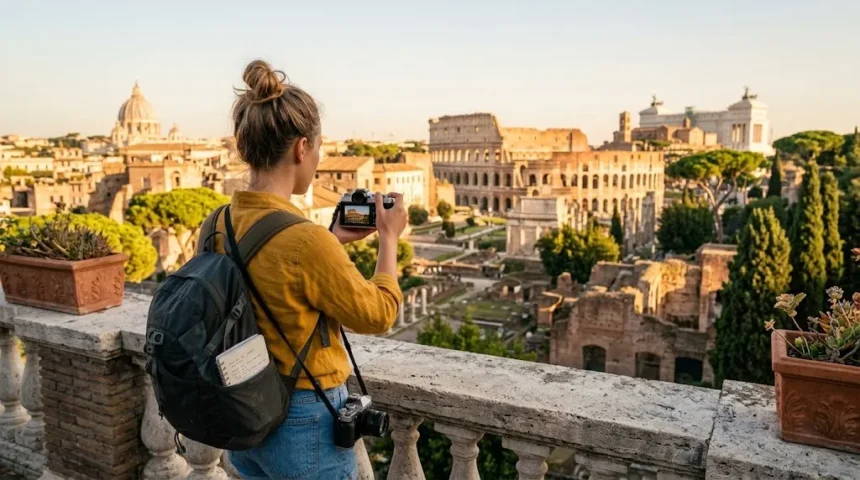
After your visit, walk away from the busiest surrounding streets to appreciate the monument from several perspectives. The nearby elevated areas provide excellent views where the Colosseum appears framed by trees, ruins, or neighboring buildings. Returning after dark can also be worthwhile even if you toured the interior earlier. The illuminated arches create one of Rome’s most recognizable nighttime scenes. You do not need another ticket to enjoy the exterior atmosphere. For first-time visitors, seeing the Colosseum both during the day and after sunset can make the landmark feel even more memorable.
2. Roman Forum
The Roman Forum is one of the most important places for understanding how ancient Rome actually functioned. Unlike the Colosseum, which represents one monumental building, the Forum contains the remains of temples, government spaces, basilicas, arches, and public gathering areas spread across a broad archaeological zone. It once formed the political, religious, commercial, and ceremonial heart of Roman life. Today, columns and fragmented walls can initially feel difficult to interpret without context. Taking time to understand what once stood in each area dramatically improves the visit. The Forum becomes much more compelling when you imagine it as a crowded urban center rather than a collection of disconnected ruins.
Several surviving monuments help visitors visualize the importance of the site. Triumphal arches, temple columns, ancient pathways, and large structural foundations reveal how monumental the central city once appeared. Walking along the Via Sacra provides a particularly strong sense of moving through the historic landscape. Some buildings survive only partially, so reconstructions or guide materials can help translate ruins into recognizable architecture. Do not expect the visual completeness of the Pantheon or Colosseum. The Forum requires imagination, but that effort is part of what makes it rewarding. It is one of Rome’s strongest places for connecting individual historical stories with physical space.
Heat can significantly affect the experience because much of the archaeological area is exposed. Summer visitors should consider entering early, carrying water, and wearing a hat. There are uneven stones, slopes, and stairways, so supportive shoes make a noticeable difference. Shade can be limited, particularly during the middle of the day. If your itinerary includes both the Colosseum and Forum, take a short break between them rather than trying to move continuously for several hours. A slower pace helps you notice architectural details and prevents ancient-site fatigue.
Photography opportunities are excellent because ruins appear against church domes, modern Rome, and the slopes of Palatine Hill. Wide-angle views reveal the scale of the site, while small details such as carved stone, worn inscriptions, and surviving decorative elements create more intimate images. The light becomes particularly attractive during the morning and later afternoon when harsh shadows soften. From certain elevated areas, you can see how the Forum sits between the Capitoline and Palatine hills. These perspectives make the ancient city easier to understand geographically. Even travelers without a deep interest in archaeology often find the overall setting impressive.
Allocate at least a couple of hours if you want more than a surface-level visit. Travelers fascinated by Roman history could spend considerably longer exploring individual ruins. Pairing the Forum with Palatine Hill creates a natural route because the sites are historically and physically connected. Avoid scheduling another major museum immediately afterward unless you know you enjoy very intensive sightseeing days. The Forum contains a remarkable amount of information to process. A relaxed lunch or slower neighborhood walk afterward can create a better rhythm and give you time to absorb what you have seen.
3. Palatine Hill
Palatine Hill rises above the Roman Forum and is traditionally associated with the earliest beginnings of Rome. Ancient legends connected the hill with Romulus and Remus, while later generations of emperors built enormous palace complexes across its slopes. The English word “palace” is connected historically with the name Palatine, reflecting the hill’s association with imperial residences. Walking through the site reveals foundations, walls, courtyards, gardens, and archaeological remains spread across a broad elevated area. The experience is quieter and greener than many visitors expect. After the dense ruins below, the hill offers a welcome sense of space.
One of the main reasons to visit Palatine Hill is the view. Elevated terraces overlook the Roman Forum, Circus Maximus, and sections of modern Rome, making the city’s geography much easier to understand. These viewpoints are especially valuable after walking through the ruins below because they reveal how important ancient sites relate to one another. The contrast between monumental archaeological remains and contemporary city buildings is distinctly Roman. Photographers should leave time to stop at several terraces rather than simply walking the fastest route through the site. Changing light can make the views especially beautiful later in the day.
The imperial palace ruins provide another reason to explore slowly. Emperors expanded residential and ceremonial complexes across the hill over centuries, creating enormous structures overlooking key parts of the city. Although many interiors no longer survive intact, the scale of foundations and brickwork still suggests the power concentrated here. Some areas contain remnants of decorative architecture and garden layouts. Reading a little about the imperial palaces before visiting can help make the fragmented remains easier to interpret. Without context, visitors sometimes walk past important sections without realizing what they once represented.
Palatine Hill also offers a useful break from some of Rome’s busiest tourist spaces. Parts of the archaeological zone can feel surprisingly peaceful even when the Colosseum area outside is crowded. Trees and open sections provide occasional shade, although visitors should still prepare for heat during warmer months. Bring water and comfortable shoes because exploring involves slopes and significant walking. The terrain is manageable for many visitors, but accessibility varies across historical surfaces. Those with mobility concerns should review current accessible routes before choosing how extensively to explore.
A well-planned ancient Rome day can combine Palatine Hill, the Roman Forum, and Colosseum without rushing. Many visitors prefer beginning with the Colosseum and gradually moving toward the Forum and hill, while others enjoy starting above and descending into the archaeological center. Whichever direction you choose, allow more time than you think you need. The area is physically larger than it appears on tourist maps. Once you leave, consider heading toward the Capitoline Hill or taking a longer lunch nearby. Ancient Rome is easier to appreciate when you resist the temptation to squeeze five unrelated attractions into the same afternoon.
4. Pantheon
The Pantheon is one of Rome’s most extraordinary ancient buildings because it survives with a completeness rarely seen in structures of similar age. From the outside, its massive columns and classical portico create a powerful first impression, but the interior is even more remarkable. Entering reveals a vast circular space covered by an enormous concrete dome. At the center of that dome is the oculus, a circular opening that allows natural light to enter directly from above. The changing beam of light makes the interior feel different throughout the day. Even visitors with limited interest in architecture usually understand immediately why the building is considered exceptional.
The Pantheon’s dome remains one of the great achievements of ancient engineering. Its proportions create a remarkable sense of harmony, and the structure demonstrates sophisticated understanding of materials and weight distribution. The oculus is not covered by glass, meaning rain can fall through it during wet weather. The floor includes drainage that allows water to be managed inside the building. This practical detail is a reminder that Roman architecture often combined beauty with engineering solutions. Standing beneath the dome provides a far stronger sense of its scale than photographs can capture.
The building later became a Christian church, which contributed to its continued use and preservation. Its interior therefore contains elements from different historical periods rather than functioning purely as an archaeological ruin. Several important figures are buried inside, including the Renaissance artist Raphael. Altars, paintings, decorative stone, and religious details create layers of history within the Roman structure. Visitors should remember that the Pantheon remains an active religious site. Respectful behavior and appropriate clothing are therefore important even when approaching it primarily as an architectural attraction.
Piazza della Rotonda outside the Pantheon adds significantly to the experience. The square contains a fountain, cafés, restaurants, and constant street activity that contrasts beautifully with the ancient facade. It is worth approaching the Pantheon through surrounding narrow lanes rather than arriving only by taxi. Turning a corner and suddenly seeing the monumental portico is one of central Rome’s classic urban moments. Early mornings can feel calmer, while evenings create a lively atmosphere. Even after visiting the interior, returning later for a drink nearby can be enjoyable.
The Pantheon is easy to combine with several other central attractions. Piazza Navona lies only a short walk away, and the Trevi Fountain can also be reached comfortably on foot. Campo de’ Fiori, churches, gelato shops, and small historic streets fill the surrounding area. This makes the Pantheon an ideal anchor for a half-day wandering through central Rome. Do not rush directly between headline sights using only the shortest route. Some of the most attractive streets in the city are hidden in this section of the historic center.
5. Trevi Fountain
The Trevi Fountain is one of Rome’s most famous landmarks and one of the most theatrical pieces of public art anywhere in Europe. The enormous Baroque fountain fills almost an entire side of a relatively compact square, creating a dramatic contrast with the narrow streets leading toward it. The central sculpture depicts Oceanus surrounded by figures, rocks, and flowing water arranged with extraordinary visual movement. Arriving for the first time can still be impressive even if you have seen countless photographs. The fountain’s size is difficult to appreciate until you stand in the piazza. It feels more like a stage set integrated into the city than a conventional fountain.
Crowds are the biggest practical challenge. The Trevi Fountain attracts visitors throughout the day, and the area directly in front can become extremely busy during peak periods. Early morning provides the best chance of experiencing the square with more space, although dedicated photographers and other early visitors may still be present. Late evening can also be attractive, but it is not necessarily quiet. If your schedule allows, visit twice: once in daylight and again after dark. The illuminated water and sculptures create a noticeably different atmosphere at night.
The tradition of tossing a coin into the fountain has become part of popular travel culture. Visitors typically stand with their back toward the water and toss a coin over one shoulder. Whether or not you participate, follow local rules around the monument and avoid climbing onto restricted areas. The fountain is an important historic structure rather than simply an interactive photo backdrop. Keeping pathways clear and respecting crowd controls makes the experience better for everyone. Even when the front area is packed, stepping farther back can provide a more complete view of the composition.
The surrounding neighborhood deserves exploration as well. Narrow streets connect the fountain with the Spanish Steps, Pantheon, Via del Corso, and other central landmarks. Gelato shops, cafés, small churches, stores, and hidden courtyards make this an excellent area for wandering. Because the fountain itself may require only a relatively short visit, combine it with a broader walk instead of planning an entire morning around one stop. Moving a few streets away from the immediate piazza often reduces crowds dramatically. Central Rome becomes more enjoyable once you alternate major monuments with quieter side streets.
Photography works best when you consider the entire setting rather than trying to capture only the central sculpture. Wider compositions show how the fountain fills the facade and interacts with the small square. Details of horses, stone textures, and moving water can also produce interesting images when crowds make wide shots difficult. Morning light can be softer, while evening illumination adds contrast. If taking photographs near the edge, remain aware of other visitors and personal belongings. Crowded iconic sites are precisely where distraction can make travelers careless about bags or phones.
6. Vatican Museums and Sistine Chapel
The Vatican Museums contain one of the world’s greatest collections of art, archaeology, sculpture, maps, tapestries, and religious treasures. First-time visitors sometimes imagine the experience as a short route leading directly to the Sistine Chapel, but the museums are enormous and deserve several hours. Galleries unfold through richly decorated corridors, courtyards, rooms, and historic papal spaces. Even ceilings and floors can be significant works of art. Trying to absorb every object is impossible, so choose a few sections that interest you and allow other rooms to remain part of the broader experience. Museum fatigue is real here, especially during crowded periods.
The Raphael Rooms are among the most important spaces for Renaissance art lovers. Their frescoes demonstrate the artistic ambition of the papal court and help place the Sistine Chapel within a broader cultural context. Elsewhere, classical sculptures reveal how ancient art influenced Renaissance artists. The Gallery of Maps offers a different experience entirely, with highly decorative geographic representations lining a magnificent corridor. These contrasts make the Vatican Museums more varied than visitors may expect. Moving slowly through selected highlights usually creates a richer experience than racing past everything to reach the final chapel.
The Sistine Chapel is the culmination of the museum route for many visitors. Michelangelo’s ceiling and Last Judgment are the most famous works, but the chapel also contains paintings by several important Renaissance artists. The visual density can be overwhelming, especially when the space is crowded. Take time to look upward and notice the overall composition rather than searching only for the most recognizable figures. Photography and behavior rules should be respected exactly as posted. The chapel is both an artistic monument and an active religious space, so the atmosphere deserves consideration beyond tourism.
Advance booking is highly recommended for first-time visitors, particularly during popular travel months. Long entrance lines can consume valuable sightseeing time and create a tiring start to an already extensive museum visit. Timed tickets help organize the day, although security and crowd movement can still require patience. Guided tours can be valuable because the collection is so large that expert interpretation helps identify what matters most. Independent visitors should consider planning a short list of priority galleries beforehand. Comfortable shoes are essential because the museum route involves considerable walking.
Avoid scheduling another demanding museum immediately after the Vatican Museums. Even travelers who love art can feel mentally saturated after several hours of monumental interiors. A lunch break, walk, or time around St. Peter’s Square provides a better transition. Many visitors combine the museums with St. Peter’s Basilica on the same day, which can work if the itinerary is paced realistically. Start early and keep the evening relatively relaxed. The Vatican experience is better when treated as one of the main events of the day rather than one stop among many.
7. St. Peter’s Basilica
St. Peter’s Basilica is one of the most important religious buildings in the world and one of Rome’s most impressive architectural spaces. Although located within Vatican City, it forms an essential part of most first-time Rome itineraries. The immense interior contains chapels, sculptures, tombs, mosaics, monuments, and works by major artists. Michelangelo’s Pietà is among the most famous pieces, while Bernini’s monumental baldachin dominates the area above the papal altar. The scale can be difficult to understand until you enter. Architectural details that appear moderately sized from the floor may actually be enormous because the entire building is so vast.
The basilica is an active place of worship, so visitors should dress and behave appropriately. Clothing requirements are taken seriously, particularly regarding shoulders and knees. Security screening is required before entry and lines can become long during busy periods. Arriving early generally improves the experience and allows more time before the largest tour groups appear. Religious ceremonies can affect visitor access to certain areas. Instead of becoming frustrated by restrictions, remember that tourism is secondary to the basilica’s religious function. Respectful flexibility is part of visiting.
Climbing the dome of St. Peter’s Basilica is worthwhile for travelers comfortable with stairs and confined spaces. Part of the ascent may be completed with an elevator depending on the chosen option, but additional stairs remain near the top. The route becomes narrower and curved as it follows the shape of the dome. From intermediate levels, visitors can gain unusual interior views down into the basilica. The final outdoor viewpoint reveals Vatican City and Rome spreading in every direction. On clear days, the panorama is one of the best in the city.
St. Peter’s Square is equally important to the overall experience. Bernini’s sweeping colonnades frame the enormous open space and create a powerful sense of arrival. Standing farther back allows you to appreciate the symmetry between the basilica facade, obelisk, fountains, and surrounding architecture. The square changes character depending on whether it is filled for an event or relatively open during quieter hours. Evening can be particularly beautiful when the facade is illuminated. Even visitors who do not enter immediately should spend time walking through the square rather than treating it only as an entrance queue.
A Vatican day can easily include the museums, Sistine Chapel, basilica, square, and nearby neighborhood, but avoid packing much more into the schedule. Have lunch or dinner in the surrounding Prati district, where moving several streets away from the major tourist route can reveal more relaxed restaurants and cafés. If you climb the dome after several hours in the museums, expect the day to feel physically demanding. Take breaks and stay hydrated. The Vatican contains enough major sights to justify a slower pace without adding distant attractions on the same afternoon.
8. Piazza Navona
Piazza Navona is one of Rome’s most beautiful public squares and a perfect example of how the city layered later architecture over ancient foundations. Its long oval shape follows the footprint of an ancient Roman stadium that once occupied the site. Today, Baroque churches, palaces, fountains, cafés, and street activity define the space. The square feels elegant without functioning like a formal museum. People cross it on ordinary errands while visitors stop to photograph architecture and fountains. This mixture of monumental design and everyday urban life gives Piazza Navona much of its charm.
The Fountain of the Four Rivers is the square’s central visual focus. Designed by Bernini, the fountain combines dramatic human figures, rock formations, flowing water, and an Egyptian obelisk rising above the composition. Each major figure represents a river associated with a different region known to seventeenth-century Europeans. Walking around the fountain reveals how carefully it was designed to be viewed from multiple directions. The surrounding space gives visitors enough distance to appreciate the entire structure. Evening light adds extra drama when water and stone are illuminated.
The Church of Sant’Agnese in Agone provides another architectural focal point along the square. Its curved facade and dome help define the Baroque character of Piazza Navona. Entering churches along your walking route can provide unexpected highlights, especially when interiors contrast dramatically with relatively restrained facades. Remember that active churches may close temporarily for services or other religious activities. Dress appropriately if you plan to enter. Even without visiting every interior, the relationship between church, fountain, palace, and piazza makes the square a rewarding place to study Rome’s urban design.
Piazza Navona works well at almost any time of day. Morning offers more space for photography and architectural observation, while afternoons become livelier with visitors and street activity. Evening can feel romantic when restaurant terraces fill and the fountains are illuminated. Restaurants directly on the square may charge more for the location, so travelers prioritizing food quality or value may prefer dining a few streets away. You can still return afterward for an evening walk. In Rome, separating the best sightseeing location from the best dining location is often a useful strategy.
The square is ideally positioned for combining with the Pantheon, Campo de’ Fiori, and nearby historic streets. Walking between these places can become one of the most enjoyable parts of a first Rome trip. Instead of using navigation only to find the shortest route, allow yourself to take occasional side streets. Small fountains, churches, courtyards, bakeries, and architectural fragments appear constantly in this district. Piazza Navona can serve as an anchor rather than an isolated destination. Give the surrounding neighborhood as much attention as the famous fountain itself.
9. Spanish Steps
The Spanish Steps connect Piazza di Spagna with the church of Trinità dei Monti above, creating one of Rome’s most recognizable urban scenes. The broad staircase rises elegantly between buildings and offers a strong visual connection from the busy square below toward the church at the top. For many visitors, the attraction is less about a specific historic interior and more about experiencing the composition of steps, fountain, architecture, and surrounding streets. Early morning is particularly attractive because the area can become extremely crowded later. The soft light and quieter atmosphere make photography much easier before shops and sightseeing groups fully arrive.
At the bottom sits the Fontana della Barcaccia, a boat-shaped fountain traditionally associated with the Baroque period. The fountain’s low profile allows the staircase to remain visually dominant while adding movement and sound to the square. From the base, look upward before beginning the climb because the perspective emphasizes the symmetry of the staircase. After reaching the upper levels, turn around for views over rooftops and surrounding streets. Although the panorama is not as expansive as several other viewpoints, it provides a pleasing sense of central Rome’s density.
Rules around the Spanish Steps are intended to protect the monument, so visitors should avoid treating the staircase like ordinary public seating. Follow posted guidance and instructions from local authorities. The area attracts large numbers of people, which means careless behavior can quickly create congestion or damage. You can still take photographs, walk the steps, and enjoy the architecture without blocking movement. Visiting outside the busiest hours makes respecting the space much easier. This is another Rome landmark where timing influences enjoyment more than the total amount of time spent there.
The surrounding neighborhood is important because it contains some of Rome’s most famous shopping streets. Luxury boutiques line nearby Via dei Condotti, while smaller streets contain cafés, shops, galleries, and historic buildings. Window-shopping can be enjoyable even when high-end fashion is not part of your travel budget. Walking north eventually brings you toward Piazza del Popolo and Villa Borghese, creating a natural sightseeing route. Heading south leads toward Trevi Fountain. The Spanish Steps therefore work particularly well as a connection point between several central areas.
Consider visiting once in the morning and passing through again after dark if your itinerary naturally returns to the neighborhood. Evening illumination creates a more romantic atmosphere, although crowds may remain substantial. Do not spend a large portion of a short Rome trip waiting for a perfectly empty photograph because complete emptiness is unrealistic during popular periods. Instead, focus on the architecture and energy of the place. The Spanish Steps are most enjoyable when included within a broader neighborhood walk rather than approached as a standalone attraction requiring hours.
10. Castel Sant’Angelo
Castel Sant’Angelo stands beside the Tiber River and provides one of Rome’s most distinctive combinations of ancient history, medieval defense, papal history, and panoramic views. The structure began as a mausoleum for Emperor Hadrian before being transformed over centuries into a fortress and papal refuge. Its massive cylindrical form immediately distinguishes it from nearby Renaissance and Baroque architecture. Walking across Ponte Sant’Angelo toward the castle provides one of the strongest approaches to any monument in Rome. Statues line the bridge while the fortress rises directly ahead, creating an excellent photographic composition.
Inside, visitors move through passages, courtyards, defensive spaces, decorated rooms, and terraces representing different periods of the building’s history. The transition from ancient mausoleum to fortress becomes easier to understand when experienced physically. Some interiors reveal the comfort created for powerful residents, while others emphasize military function. The variety makes Castel Sant’Angelo appealing even to travelers who have already visited several ancient ruins. It is not simply another Roman archaeological site. Instead, it demonstrates how buildings were repeatedly reused as the city changed.
The rooftop terrace is one of the main highlights. From above, visitors can see St. Peter’s Basilica, the Tiber, historic bridges, domes, rooftops, and central Rome. Late-afternoon light can be particularly attractive, although timing should account for seasonal closing hours. The view toward the Vatican is especially memorable because the dome of St. Peter’s dominates the skyline. Photographers may want to allow extra time rather than rushing directly back down. Even without perfect weather, the elevated perspective helps clarify the relationship between Vatican City and historic Rome.
Ponte Sant’Angelo deserves attention of its own. The bridge connects the fortress with the city center and is lined with dramatic angel statues. Walking across slowly allows you to notice the sculptural details and river views. Sunrise and evening are particularly atmospheric when traffic and crowds are lighter or the surrounding monuments become illuminated. Looking back toward the castle from the opposite bank provides one of Rome’s classic perspectives. The area can also be combined easily with a walk toward Piazza Navona or the Vatican.
Castel Sant’Angelo is particularly useful for travelers looking for a sight that feels substantial without requiring an entire day. Two or three hours can provide a satisfying visit, depending on interest and crowd levels. It pairs naturally with St. Peter’s Basilica because the two landmarks are relatively close. However, after an extensive Vatican Museums visit, adding the castle may create an overly demanding day. Consider placing it on a separate afternoon if your schedule allows. Rome becomes more enjoyable when major interiors are distributed rather than concentrated into one exhausting itinerary.
11. Trastevere
Trastevere is one of the best areas for first-time visitors who want to experience Rome beyond monumental sightseeing. Located across the Tiber from much of the historic center, the neighborhood is known for narrow streets, warm-colored buildings, ivy-covered facades, churches, small squares, restaurants, cafés, and lively evenings. It has become highly popular with visitors, so it should not be imagined as an untouched secret neighborhood. Nevertheless, wandering beyond the busiest restaurant lanes can reveal quieter streets and a more residential atmosphere. Trastevere works best when explored without a rigid route.
The Basilica of Santa Maria in Trastevere provides an important cultural anchor. Its mosaics and historic interior offer a strong reminder that the neighborhood contains far more than nightlife and restaurants. Piazza di Santa Maria in Trastevere outside the church becomes a social gathering space throughout the day. In the evening, people sit around the fountain while nearby streets become increasingly lively. The square provides an excellent place to pause before continuing through the neighborhood. Like many Roman churches, the basilica can reward travelers who enter with no expectation beyond escaping a busy street.
Food is one of the main reasons people visit Trastevere, but restaurant quality varies because the district attracts substantial tourism. Avoid assuming that the busiest terrace automatically serves the most authentic meal. Exploring several streets away from major gathering points can reveal smaller trattorias and neighborhood options. Roman specialties such as carbonara, amatriciana, cacio e pepe, and saltimbocca may appear on menus throughout the area. Reservations can be useful at highly regarded restaurants. Eating relatively early or later than the busiest dinner period can also create a more relaxed experience.
Morning and evening reveal very different versions of Trastevere. Early in the day, streets can feel quiet and almost village-like before restaurants set out tables and visitors arrive. Evening transforms the neighborhood into one of the city’s most social districts. Bars, restaurants, and squares attract students, residents, and travelers well into the night. If you prefer atmosphere without intense nightlife, visit in the late afternoon and stay through dinner. Travelers who enjoy busier social scenes can remain later.
For a broader experience, combine Trastevere with a walk up the Janiculum Hill. The climb provides elevated views across Rome and offers a useful break from crowded streets. Alternatively, cross the river from Campo de’ Fiori and explore the neighborhood before returning toward the historic center after dinner. Comfortable shoes matter because cobblestones can become tiring after a full sightseeing day. Trastevere is not about checking off individual attractions. Its value comes from walking slowly, eating well, noticing details, and experiencing a different scale of Roman city life.
12. Villa Borghese and Borghese Gallery
Villa Borghese provides a welcome change of pace after several days of dense streets, archaeological sites, and churches. The large landscaped park sits above central Rome and includes paths, gardens, viewpoints, museums, fountains, and recreational areas. Travelers can walk, relax beneath trees, rent bicycles where available, or simply enjoy a slower afternoon outdoors. The park works especially well after visiting the nearby Spanish Steps or Piazza del Popolo. During hot weather, shaded areas provide useful relief from exposed archaeological sites. For families, the open space can also help balance museum-heavy itineraries.
The Borghese Gallery is the park’s cultural highlight and one of Rome’s strongest art museums. Its collection includes masterpieces by Bernini, Caravaggio, Raphael, and other important artists displayed within richly decorated rooms. The relatively concentrated collection can feel more manageable than the enormous Vatican Museums. Sculptures are positioned so visitors can move around them and appreciate how form, movement, and expression change from different angles. Bernini’s works are particularly striking because marble appears almost impossibly soft and dynamic. Even travelers who normally find sculpture less engaging may reconsider after seeing these pieces.
Booking ahead is especially important because entry can be controlled through timed sessions. This makes spontaneous visits difficult during popular periods. Arrive early enough to complete any required ticket or security procedures without losing part of your reserved time. Large bags may need to be stored according to museum rules. Because the collection is substantial but not overwhelming, the Borghese Gallery can become one of the most satisfying museum experiences in Rome. It rewards focused attention rather than endurance.
After the gallery, remain in the park instead of immediately returning to crowded streets. Walk toward the Pincian Terrace for excellent views over Piazza del Popolo and the city beyond. Sunset can be particularly attractive when rooftops and domes catch warm light. Musicians and visitors often gather near viewpoints, creating a relaxed atmosphere. The park’s paths also provide opportunities for unstructured wandering. After several days of tightly scheduled attractions, this freedom can feel refreshing.
Villa Borghese and the gallery work best as a half-day combination. Spend your museum session indoors, then allow time outside without another urgent reservation. From the park, you can descend toward Piazza del Popolo, Spanish Steps, or nearby neighborhoods depending on your itinerary. Travelers with limited time should prioritize the gallery if art is a major interest and the park if they need a relaxed break. Those with four or more days in Rome can comfortably enjoy both. The combination reveals how well Rome balances world-class cultural collections with beautiful public spaces.
13. Piazza Venezia and Vittoriano
Piazza Venezia is one of central Rome’s busiest and most visually dramatic intersections. The square sits near several major historic routes and is dominated by the enormous white Vittoriano monument. Traffic, buses, historic buildings, archaeological remains, and monumental architecture all converge here, making the area feel energetic rather than peaceful. First-time visitors often pass through while moving between the Roman Forum, Capitoline Hill, and central shopping streets. Instead of treating it only as a traffic junction, stop long enough to understand its importance within Rome’s urban landscape.
The Vittoriano, also known as the monument associated with Victor Emmanuel II, is impossible to miss. Its bright white marble, broad staircases, columns, statues, and elevated terraces create a scale that contrasts strongly with nearby medieval and Renaissance buildings. Opinions about its architecture have always varied, but its visual impact is undeniable. Climbing to elevated areas provides excellent views toward ancient Rome and the surrounding city. From certain terraces, the Colosseum, Forum, domes, and rooftops appear together. This makes the monument surprisingly useful for understanding Rome’s geography.
The nearby Capitoline Hill can be reached easily from Piazza Venezia and deserves additional time if your schedule allows. Michelangelo’s design for Piazza del Campidoglio creates one of the city’s most elegant formal spaces. The Capitoline Museums contain important Roman sculptures, archaeological artifacts, and artworks. Travelers who do not have time for the museums can still walk through the square and enjoy elevated views over the Roman Forum from nearby areas. This short detour provides one of the best free perspectives onto the ancient city.
Because Piazza Venezia is so central, it works naturally as a connection point rather than an isolated attraction. Walk north toward Via del Corso and the historic center, east toward the Colosseum, west toward Largo di Torre Argentina, or climb toward the Capitoline. This flexibility makes the area easy to include without creating additional travel time. Be especially careful crossing streets because traffic patterns can feel overwhelming to visitors unfamiliar with Rome. Use designated pedestrian crossings and follow signals rather than simply following other people into the road.
Evening offers a different experience when major monuments become illuminated and daytime traffic begins changing character. The white marble of the Vittoriano stands out strongly after dark. Photographers can find useful perspectives from surrounding streets, although the busiest traffic areas require caution. If you are already walking between the Colosseum and central Rome after sunset, passing through Piazza Venezia provides a natural visual transition. It demonstrates something essential about Rome: ancient ruins, nineteenth-century monuments, churches, offices, traffic, and contemporary life constantly overlap within the same view.
14. Campo de’ Fiori
Campo de’ Fiori provides a lively contrast to Rome’s monumental squares. During the morning, the piazza is associated with market activity, while later in the day restaurants, cafés, and bars increasingly shape the atmosphere. The square’s name translates roughly to “field of flowers,” reflecting an older landscape that existed before the area developed into an urban space. Today, its central location makes it easy to combine with Piazza Navona, the Pantheon, Jewish Ghetto, and Trastevere. First-time visitors should treat Campo de’ Fiori as part of a neighborhood walk rather than expecting a major architectural monument.
The daytime market can be interesting for observing a mixture of produce, food products, spices, souvenirs, and tourist-oriented items. The exact character can feel more commercial than travelers expecting a purely local neighborhood market may imagine. Nevertheless, visiting early provides a useful glimpse of the square before the evening atmosphere takes over. Look beyond the main stalls toward nearby bakeries, food shops, and side streets. Rome’s food culture often becomes more interesting once you move away from the most visible tourist displays. A quick market visit can naturally lead into a broader culinary exploration.
At the center stands the monument to Giordano Bruno, whose presence gives the square a more serious historical dimension. Understanding why the statue occupies the piazza adds context to a place that can otherwise seem primarily social and commercial. Rome frequently layers difficult historical stories beneath everyday public spaces, and Campo de’ Fiori is a good example. You do not need to turn every square into a history lesson, but taking a moment to understand major monuments improves the experience. The city becomes more meaningful when its statues are not treated merely as background decoration.
Evening transforms the square as restaurant tables fill and nightlife begins. The atmosphere can be energetic, especially during busy travel seasons. Travelers looking for a quiet romantic dinner may prefer surrounding streets, while those who enjoy lively public spaces may appreciate remaining near the piazza. As with other tourist-heavy parts of Rome, restaurant quality varies. Check menus and consider walking a few blocks before deciding where to eat. The best evening may involve visiting the square for atmosphere and dining somewhere nearby.
Campo de’ Fiori also works as a convenient transition toward the Tiber. From here, you can walk toward Ponte Sisto and cross into Trastevere for the evening. This route creates an enjoyable progression from historic center streets to riverside views and then into a more intimate neighborhood. Alternatively, continue toward the Jewish Ghetto for another culturally significant part of Rome. The square itself may require only a short visit, but its central position makes it extremely useful within a walking itinerary. Sometimes the best Rome sights are valuable partly because of where they lead next.
15. Appian Way and Catacombs
The Appian Way, or Via Appia Antica, offers a completely different perspective on Rome from the crowded historic center. One of the most important roads of the ancient Roman world, it once connected Rome with southern parts of the Italian peninsula. Sections of the ancient route survive alongside ruins, tombs, countryside, trees, and archaeological sites. Walking or cycling here can create a sense of distance from modern city traffic even though you remain relatively close to central Rome. For first-time visitors staying several days, the Appian Way provides valuable variety after monumental urban sightseeing.
Ancient tombs and archaeological remains line sections of the route because Roman burial practices placed important funerary monuments outside the traditional city boundaries. Some structures survive as recognizable ruins, while others require more interpretation. The road surface itself becomes part of the experience, particularly where ancient paving stones remain visible. Comfortable footwear is essential because walking can be uneven. Cyclists should also be prepared for rough historic surfaces rather than expecting a smooth modern bike path everywhere. Moving slowly allows you to appreciate details that would disappear during a faster ride.
Several Roman catacombs are located in areas associated with the Appian Way and provide another important historical experience. These underground burial networks are generally visited through organized tours because navigation and preservation require controlled access. The atmosphere is very different from Rome’s monumental churches and museums. Narrow passages, burial spaces, and early Christian history create a more intimate sense of the past. Visitors uncomfortable with confined underground environments should consider whether the experience suits them. Those interested in religious or social history often find the tours particularly rewarding.
Reaching the Appian Way requires more planning than visiting central attractions. Public transportation, taxis, bicycles, or organized tours may be used depending on the section you want to explore. Because sites are spread out, identify two or three priorities rather than trying to walk the entire historic route. Weather also matters because much of the experience is outdoors. Hot summer afternoons can be uncomfortable, while rainy weather can make ancient surfaces slippery. A cooler morning is often ideal for walking or cycling.
The Appian Way works best for travelers who have at least four or five days in Rome and want an experience beyond the standard central route. It is not more important than the Colosseum, Vatican, Pantheon, or Trevi Fountain for a very short first visit. However, once those essential landmarks are covered, Via Appia Antica adds an entirely different dimension to your understanding of Roman history. Here, the ancient city feels connected to the wider landscape rather than contained within archaeological zones. That contrast makes it a memorable final addition to a first-time itinerary.
Conclusion
Rome can feel overwhelming at first because thousands of years of history are layered across almost every neighborhood. The easiest way to plan a first visit is to focus on several essential landmarks while leaving enough unscheduled time to walk between them. The Colosseum, Roman Forum, and Palatine Hill introduce ancient Rome, while the Pantheon demonstrates how successfully ancient architecture could survive into later centuries. Vatican City adds some of the world’s most important religious and artistic spaces. These attractions alone could fill several meaningful days without needing to rush.
Public squares and fountains reveal another side of the city. Trevi Fountain, Piazza Navona, Spanish Steps, Piazza Venezia, and Campo de’ Fiori demonstrate how architecture and everyday life overlap constantly in Rome. They are not simply objects to photograph before moving on. Spend time observing how people use the spaces, how lighting changes, and how surrounding streets connect them. Returning to major squares after dark can provide a completely different experience from daytime sightseeing. Rome’s public spaces become particularly memorable when you allow yourself to pause rather than constantly moving.
Neighborhoods and green spaces also deserve room in the itinerary. Trastevere introduces a more intimate urban atmosphere, while Villa Borghese provides greenery and a break from dense streets. Castel Sant’Angelo adds panoramic views and a fascinating mix of ancient, medieval, and papal history. The Appian Way shows how Rome extended beyond the monumental center into surrounding landscapes. These places help prevent a trip from becoming a repetitive sequence of museums and ruins. Variety makes historical sightseeing easier to absorb.
For most first-time visitors, four to five days creates a comfortable foundation, although a week allows considerably more flexibility. Group attractions geographically, reserve major timed-entry sites in advance, and avoid scheduling multiple enormous museums on the same day. Start early when visiting the most popular landmarks and use afternoons for slower neighborhoods or indoor breaks when weather becomes uncomfortable. Comfortable shoes, water, appropriate church clothing, and a flexible itinerary will improve daily life significantly. Rome rewards preparation, but it does not reward excessive scheduling.
Ultimately, the 15 must-see places in Rome for first-time visitors provide a framework rather than a rigid checklist. You may discover that sitting in a small piazza becomes more memorable than another famous monument, or that a church you entered spontaneously becomes your favorite interior. That unpredictability is part of Rome’s appeal. See the major landmarks, but allow yourself to wander, eat slowly, return to places after dark, and notice what happens between scheduled attractions. The Eternal City becomes most rewarding when history and ordinary city life are experienced together rather than separately.
Frequently Asked Questions About Visiting Rome
How many days do first-time visitors need in Rome?
Four to five days provides a comfortable introduction to Rome and allows time for the Colosseum, Roman Forum, Vatican City, historic center, Trastevere, and several additional attractions. A week is even better if you want museums, slower meals, neighborhood exploration, and fewer rushed sightseeing days.
What is the number one must-see place in Rome?
The Colosseum is usually the most iconic attraction for first-time visitors because it represents ancient Rome on an extraordinary scale. However, pairing it with the Roman Forum and Palatine Hill provides a much better understanding of the ancient city than visiting the amphitheater alone.
Can you walk to most major attractions in Rome?
Many central attractions, including the Pantheon, Trevi Fountain, Spanish Steps, Piazza Navona, and Campo de’ Fiori, are easily connected on foot. Vatican City, the Colosseum area, Villa Borghese, and the Appian Way may require longer walks or public transportation depending on where you are staying.
Do you need to book Rome attractions in advance?
Advance booking is particularly useful for popular timed-entry attractions such as the Colosseum, Vatican Museums, and Borghese Gallery. Reserving your highest-priority sights before arrival can save time and reduce the risk of finding your preferred entry period unavailable.
What is the best area to stay in Rome for first-time visitors?
The historic center is excellent for first-time visitors who want to walk to many famous attractions, while Monti offers convenient access to ancient Rome and Trastevere provides a more atmospheric neighborhood experience. The best choice depends on whether you prioritize sightseeing convenience, nightlife, restaurants, quiet evenings, or transportation access.