
El Calafate Travel Guide: Glaciers, Tours & Top Tips
El Calafate is one of Argentina’s most spectacular gateways to Patagonia, best known for dramatic glaciers, turquoise lakes, windswept steppe, and unforgettable outdoor experiences. Located in southern Patagonia near the shores of Lago Argentino, the town attracts travelers who want to see the famous Perito Moreno Glacier and explore the wider landscape of Los Glaciares National Park. Although the glacier is the headline attraction, El Calafate offers far more than a single day trip. Visitors can take boat tours among floating icebergs, walk along elevated viewing platforms, explore ranches, hike through Patagonian scenery, and enjoy regional food. With the right planning, the town works equally well for adventure travelers, photographers, couples, families, and first-time visitors to Patagonia.
One of the biggest advantages of using El Calafate as a travel base is accessibility. The town has its own airport, a good selection of hotels and hostels, restaurants, tour agencies, rental-car services, and transportation connections to other destinations in southern Patagonia. Travelers can reach major glacier attractions without camping or carrying expedition equipment, which makes the region approachable even for people who are new to outdoor travel. At the same time, Patagonia’s weather can change quickly, so flexibility remains important. Wind, rain, cold temperatures, and strong sunshine can sometimes appear within the same day. Layered clothing and realistic scheduling make the experience much more comfortable.
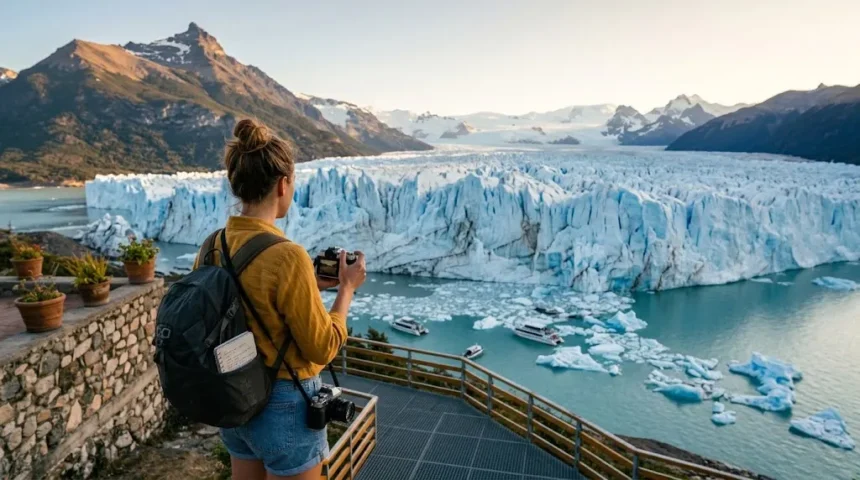
The Perito Moreno Glacier is the main reason many people travel to El Calafate, and it deserves its reputation. Unlike a distant glacier seen only from a viewpoint, Perito Moreno can be observed from an extensive network of walkways that provide dramatically different perspectives across its towering ice front. Visitors may hear deep cracks echo through the valley before sections of ice fall into the water. Boat trips can bring travelers even closer to parts of the glacier, while guided trekking experiences provide another perspective for eligible visitors. The scale becomes difficult to appreciate from photographs alone. Seeing the glacier surrounded by mountains and blue water is one of Patagonia’s defining travel experiences.
El Calafate is also an excellent starting point for exploring other glaciers and landscapes within the region. Navigation tours on Lago Argentino can reveal icebergs, remote glacier fronts, mountain valleys, and areas that cannot be reached easily by road. Estancia visits introduce travelers to Patagonian ranch culture, while nearby reserves provide opportunities for birdwatching and quieter walks. Travelers with more time often combine El Calafate with El Chaltén for hiking or continue toward Torres del Paine in Chile. This makes the town a natural hub within a larger Patagonia itinerary. How many days you need depends on whether you want only the highlights or a deeper exploration of the area.
This El Calafate travel guide covers glaciers, tours, transportation, weather, where to stay, what to eat, how many days to spend, packing advice, budgeting, and practical tips for planning a smoother trip. It also explains how different Perito Moreno experiences compare so you can decide whether to visit independently, join an organized tour, add a boat ride, or consider glacier trekking. The goal is to help you build an itinerary based on your interests rather than simply booking every activity available. Patagonia can be expensive and weather-dependent, so thoughtful planning matters. With enough time and flexibility, El Calafate can become one of the most memorable stops on an Argentina journey.
Why El Calafate Is Worth Visiting
El Calafate is worth visiting primarily because it provides unusually easy access to one of the world’s most impressive glacier landscapes. Many famous glaciers require demanding hikes, specialized transport, or remote expeditions, but Perito Moreno can be viewed from well-developed walkways within a national park setting. This accessibility allows visitors of different fitness levels to appreciate the glacier from multiple angles. You can spend hours moving between balconies and paths while watching the colors of the ice change with light and weather. The experience combines natural drama with practical infrastructure. That balance makes El Calafate attractive to travelers who want powerful scenery without requiring a highly technical adventure.
The town itself is compact enough to feel manageable after long travel days. Most visitor services are concentrated around central streets, making restaurants, shops, cafés, and tour agencies relatively easy to reach. Accommodation ranges from hostels and simple guesthouses to comfortable hotels and upscale properties overlooking Lago Argentino. El Calafate does not have the historic architecture of Buenos Aires or the hiking-town atmosphere of El Chaltén, but that is not its main role. It functions as a comfortable base for exploring the surrounding landscapes. Travelers who understand that purpose usually appreciate the town more than those expecting it to be the attraction itself.
Another reason to visit is the variety of glacier experiences available. Some travelers are satisfied spending a full day at the Perito Moreno walkways, while others add a short boat trip to see the ice wall from water level. Longer navigation tours can reach different sectors of Lago Argentino and provide views of remote glaciers and iceberg-filled channels. Guided ice trekking may appeal to travelers looking for a more physical experience. Each option presents the landscape differently, so you do not necessarily need to choose only one. A well-paced trip can combine observation, navigation, and hiking without repeating the same experience.
Wildlife and Patagonian landscapes add another layer to the destination. The region is not only ice and mountains; it also includes dry steppe, wetlands, lakeshores, and open grasslands. Travelers may encounter flamingos, condors, geese, foxes, and other wildlife depending on location and season. The contrast between arid terrain around the town and enormous ice fields farther west is particularly striking. Driving through the region reveals how quickly the environment changes. Photographers often appreciate these transitions as much as the major glacier viewpoints because they provide a broader sense of Patagonia’s scale and isolation.
El Calafate is also strategically useful when building a larger Patagonian route. Travelers can connect it with El Chaltén, southern Chile, or other parts of Argentina without treating every leg as a separate expedition. This allows you to combine glacier sightseeing with mountain hiking, road trips, or wildlife-focused experiences. A typical itinerary might spend several days around El Calafate before moving north to El Chaltén for trekking. Others use the town as a comfortable midpoint between flights and long overland journeys. Its transportation infrastructure gives travelers flexibility that many more remote Patagonian destinations cannot offer.
Visit Perito Moreno Glacier
The Perito Moreno Glacier is the essential attraction for most first-time visitors to El Calafate. Located within Los Glaciares National Park, the glacier extends into a branch of Lago Argentino and creates an enormous wall of blue-white ice visible from the opposite shore. The national park has a network of elevated walkways that lets visitors view the glacier from several heights and angles. These paths are one of the best features of the experience because you are not limited to a single crowded observation platform. Walking slowly between viewpoints helps you understand the glacier’s scale. Allow enough time to stop, listen, photograph, and simply watch the ice.
One of the most exciting parts of visiting Perito Moreno is hearing the glacier move. Ice is constantly under pressure, producing deep cracking sounds that can echo across the water. Occasionally, a section breaks away from the front and crashes into the lake in a process known as calving. The event can happen suddenly, so there is no reliable way to schedule your visit around a major collapse. Waiting patiently often becomes part of the experience. Even without dramatic calving, the glacier remains visually impressive because crevasses, peaks, shadows, and blue layers continuously change as light moves across the surface.
The walkways vary in length and difficulty, allowing travelers to choose routes according to available time and mobility. Some paths involve stairs and elevation changes, while others provide easier access to major viewing areas. Comfortable shoes are still important because a full visit can involve several hours of walking. Bring water and weather protection even if the forecast seems mild. Patagonia’s wind can make exposed sections surprisingly cold, while direct sunshine can feel strong when reflected from ice and water. Dressing in layers makes it easier to remain comfortable throughout the day.
Arriving earlier can provide a calmer experience, especially during periods of high visitor demand. Morning light can also be excellent for photography, although cloud cover and seasonal sun angles affect conditions. Organized tours often follow similar schedules, so independent travelers with a rental car may have more flexibility in deciding when to arrive and leave. If you are using shared transportation, make sure the allotted time at the walkways matches how slowly you like to explore. Some visitors are satisfied after two hours, while photographers and nature lovers may happily stay much longer.
Do not treat the glacier visit as something to rush through before another major activity. Perito Moreno is one of those places where slowing down improves the experience. Sit at several viewpoints instead of constantly moving, listen for cracking ice, and notice how the glacier appears different from each section of the trail. A short boat ride can be added if you want a water-level perspective, but the walkways alone already provide a remarkably complete view. For many travelers, this single day becomes the highlight of an entire Patagonia itinerary.
Choose the Best Perito Moreno Tour
There are several ways to experience Perito Moreno, and the best Perito Moreno tour depends on your budget, mobility, independence, and desire for adventure. The simplest option is transportation from El Calafate to the national park with enough time to explore the walkways independently. This works well for travelers who want the convenience of organized transport but do not need continuous guiding. A more traditional guided tour may include commentary about glaciers, wildlife, geology, and regional history. Both options can be satisfying. The main difference is whether you prefer structured information or the freedom to explore at your own pace.
A rental car provides the greatest scheduling flexibility. You can leave El Calafate early, stop at viewpoints along the road, spend as long as you want at the glacier, and return whenever you are ready. This can be particularly useful for photographers who want to wait for changing weather or quieter periods. The road journey itself becomes part of the sightseeing as the landscape shifts from Patagonian steppe toward forests and mountains. Driving conditions are generally manageable when weather is good, but wind and changing conditions still require caution. Always allow more time than a navigation estimate suggests.
Adding a boat tour near Perito Moreno creates a noticeably different perspective. From the water, the glacier wall appears taller and more imposing than it does from some elevated walkways. Boats maintain a safe distance from the ice because calving can create waves and falling fragments. These trips are usually relatively short compared with full-day glacier navigations elsewhere on Lago Argentino. They work well as an addition rather than a replacement for the walkways. If your budget allows only one major glacier experience, however, the walkways should remain the priority because they provide more viewing angles and time.
Glacier trekking experiences appeal to travelers who want to physically step onto the ice under controlled conditions. These excursions normally include transportation, safety instruction, specialized equipment, and professional guides. Participation can be limited by age, health, fitness, weather, and operator requirements, so eligibility should be checked before booking. The activity offers a completely different understanding of glacier texture, crevasses, meltwater, and surface formations. However, it is more expensive and physically demanding than standard sightseeing. You should book it because the ice-walking experience genuinely interests you, not because you feel pressured to choose the most adventurous package.
When comparing tours, pay attention to what is actually included. Transportation, national park entry, meals, boat trips, guide services, hotel pickup, and equipment may be priced separately depending on the product. A tour that initially appears cheaper can become similar in cost after required extras are added. Also consider how much time is allocated at the walkways. Some itineraries focus heavily on additional activities and leave less independent viewing time. The best tour is not necessarily the one with the most components. It is the one that gives enough time to experience the glacier without making the day feel rushed.
Take a Lago Argentino Glacier Cruise
A Lago Argentino glacier cruise is one of the best ways to understand how vast the ice-filled landscape around El Calafate really is. Perito Moreno is easily accessible by road, but many other glacier fronts and channels are best approached from the water. Navigation trips travel across the lake through areas surrounded by mountains, floating icebergs, and remote valleys. Routes vary depending on the tour and current conditions. Some focus on major glacier sectors, while others include landings or additional viewpoints. The experience feels very different from standing on the Perito Moreno walkways because the scale of the lake becomes much more obvious.
One highlight of a longer navigation is seeing icebergs scattered across the water. Their shapes, textures, and colors vary considerably, ranging from bright white to deep blue depending on density, light, and age. Boats must navigate safely around larger pieces, creating excellent photography opportunities without approaching them irresponsibly. Weather can transform the experience from hour to hour. Bright sun produces vivid water and ice colors, while low clouds create a more dramatic and remote atmosphere. Both conditions can be beautiful, so avoid judging the quality of a tour only by whether the sky remains clear.
Longer glacier cruises may provide views toward glaciers that cannot be appreciated easily from public roads. Upsala Glacier and other ice formations within the region demonstrate the enormous scale of the Southern Patagonian Ice Field system. Exact viewing access can vary because ice conditions, navigation safety, and seasonal circumstances change. This is why travelers should focus on the overall landscape experience rather than expecting one guaranteed photograph from a fixed point. The journey across the lake itself becomes an important part of the day. Mountains, forests, water, and floating ice continuously create new scenes.
Boat tours can feel cold even on otherwise pleasant days. Wind moving across the lake lowers the apparent temperature, and open observation decks are often where the best views are found. Bring a windproof outer layer, warm mid-layer, gloves, and a hat so you can remain outside comfortably. Sunglasses are useful because sunlight reflecting from water and ice can become intense. Keep camera batteries warm and carry a power bank if you rely heavily on your phone. A waterproof or resistant bag also helps protect electronics from spray and changing weather.
Consider a navigation tour if you have at least three days in El Calafate and want more than one major glacier experience. Travelers with only two days may prefer prioritizing Perito Moreno and leaving the second day flexible for another activity. Longer cruises can consume most of a day, and they should not be squeezed between important transportation connections. If you love landscapes, photography, or simply being on the water, the experience can justify the additional cost. It reveals a side of Los Glaciares National Park that cannot be understood entirely from land.
Explore More Things to Do in El Calafate
The town offers several worthwhile activities beyond glacier excursions. Laguna Nimez is one of the easiest places to experience local birdlife without leaving the immediate El Calafate area. The reserve sits close to Lago Argentino and provides walking routes through wetlands and open landscapes. Depending on the season, visitors may see flamingos and various other waterbirds. It is particularly attractive to photographers who want something quieter after busy glacier tours. The relatively flat terrain also makes it a good low-intensity activity when you need a break from long transportation days. Late afternoon light can be beautiful when wind conditions are manageable.
Walking along the lakefront is another simple but rewarding activity. Lago Argentino changes dramatically with weather and light, shifting between turquoise, grey, blue, and silver tones. The surrounding open landscape emphasizes Patagonia’s enormous sense of space. A lakeside walk can be particularly enjoyable on your arrival day when you do not want to commit to a major excursion. It also helps travelers become oriented before exploring farther afield. Bring a windproof layer because exposed sections can become much colder than central streets. Even short walks can feel surprisingly rugged when strong Patagonian winds develop.
Estancia experiences introduce travelers to a different side of regional history and culture. Patagonian ranches traditionally focused on livestock and developed in response to the region’s enormous open spaces and challenging climate. Modern estancia tours may include horseback riding, traditional meals, demonstrations, walking, or storytelling about rural life. Some properties are more tourism-focused than others, so choose according to whether you want cultural interpretation, outdoor activity, or simply an atmospheric lunch. An estancia visit works particularly well for travelers who want variety after several days focused entirely on glaciers.
Mountain biking, horseback riding, off-road tours, and kayaking may also be available depending on season and conditions. These activities allow visitors to explore the Patagonian steppe rather than remaining exclusively around established glacier viewpoints. Strong wind can significantly affect outdoor experiences, so operators may modify routes when necessary. Choose activities appropriate to your fitness level and comfort rather than assuming every adventure option needs to be completed. Patagonia rewards quality experiences more than quantity. A slow horseback ride through open scenery may be more memorable than trying to fit three rushed excursions into one day.
The town itself is pleasant for relaxed evenings. Avenida del Libertador and surrounding streets contain restaurants, chocolate shops, cafés, outdoor stores, souvenir shops, and tour agencies. El Calafate is not a destination where you need an extensive urban sightseeing checklist. Its strongest purpose is giving you a comfortable place to return after long days outdoors. Spend evenings eating well, reviewing photographs, checking weather conditions, and preparing for the next excursion. This slower rhythm helps balance the physically and mentally intense landscapes encountered during the day.
Best Time to Visit El Calafate
The best time to visit El Calafate for most travelers is during the Southern Hemisphere’s warmer months, roughly from late spring through early autumn. The period from November through March generally offers longer daylight hours, more comfortable temperatures, and the broadest access to outdoor activities. Summer is also the busiest season because international and domestic travelers take advantage of easier hiking and touring conditions. Longer daylight makes it possible to fit more into each day without rushing. However, Patagonia remains unpredictable even during summer. Cold rain, strong winds, and rapidly changing temperatures can occur at any time.
December through February usually provides the warmest overall conditions, although “warm” in Patagonia should be understood relatively. Daytime temperatures can feel pleasant in sunshine, but wind can quickly make the air feel much colder. Evenings remain cool, particularly outside town. These months also bring the highest demand for popular hotels, flights, glacier trekking, and major tours. Booking important activities in advance can therefore be sensible. Travelers who dislike crowds may prefer the edges of the main season while still benefiting from reasonable weather and good daylight.
November can be an attractive month because spring landscapes are developing and peak summer demand has not always reached its highest level. Weather can still be windy and variable, but that is true throughout much of the season. March is another appealing choice because autumn begins gradually and some vegetation starts changing color. Daylight remains useful while visitor numbers may begin decreasing. Photographers often appreciate transitional seasons because the landscape can feel more dramatic. Accommodation and tour availability should still be checked in advance, particularly around holiday periods.
Winter travel from roughly June through August creates a very different experience. Daylight is shorter, temperatures are colder, and some activities or services may operate on reduced schedules. Snow and icy conditions can affect roads and excursions. However, travelers seeking a quieter atmosphere may appreciate seeing Patagonia during its colder season. Perito Moreno remains a major attraction, but the overall trip requires more flexibility and stronger winter preparation. If you are planning a winter visit, verify each desired activity rather than assuming summer schedules continue unchanged.
Whenever you visit, monitor the short-term weather forecast rather than relying entirely on seasonal averages. Wind is one of the most important variables in Patagonia because it affects perceived temperature, navigation conditions, hiking, and photography. Pack so that one colder-than-expected day does not ruin your plans. A waterproof shell, insulating layer, sun protection, and sturdy shoes are useful throughout much of the main travel season. El Calafate rewards travelers who prepare for several types of weather within the same trip.
How Many Days Do You Need in El Calafate?
For most first-time visitors, three days in El Calafate provides a good introduction. One full day should be reserved for Perito Moreno Glacier because it deserves enough time for the walkways and optional boat experience. A second day can be used for a longer Lago Argentino navigation, estancia visit, or another outdoor excursion. The third day provides flexibility for local attractions, weather changes, or a less demanding activity. If arrival and departure times consume large portions of the first and last day, consider adding another night. Patagonia transportation can be slow enough that partial days should not automatically be treated as full sightseeing days.
Two days can work if your main objective is simply seeing Perito Moreno. Arrive with enough time to organize transportation, visit the glacier on the following day, and use the remaining hours for a lakefront walk or Laguna Nimez. This schedule is efficient but leaves little room for weather disruption. If your glacier excursion is affected by unusual conditions, there may be limited opportunity to reschedule. Travelers coming a long distance specifically for Patagonia may find that extra buffer worthwhile. Two days is therefore possible, but three feels much more comfortable.
Four or five days allows a deeper experience. You can visit Perito Moreno without rushing, take a full-day navigation, explore an estancia, walk around Laguna Nimez, and keep at least one flexible period. This length is particularly appealing to photographers because changing weather can create dramatically different light from one day to another. It also reduces the temptation to combine several expensive tours into exhausting back-to-back days. Patagonia is best appreciated when there is time to watch the landscape rather than constantly moving toward the next activity.
Travelers combining El Calafate with El Chaltén should distribute time according to priorities. El Calafate is stronger for glacier viewing and organized excursions, while El Chaltén is generally the better base for independent mountain hiking. A traveler with one week might spend three nights in El Calafate and four in El Chaltén. Those who want extensive trekking may shift more nights north, while glacier enthusiasts may stay longer in Calafate. Thinking of the two towns as complementary rather than competing destinations creates a more balanced Patagonia itinerary.
Extra days also provide insurance against unpredictable weather. A heavy cloud layer can hide mountain scenery, strong winds can make certain activities uncomfortable, and operational conditions can change. Travelers who schedule every major experience on consecutive fixed days have little room to adapt. Even one unstructured day can provide valuable flexibility. If everything runs perfectly, use it for a leisurely lunch, local walk, horseback ride, or spontaneous excursion. In Patagonia, schedule space is often as useful as another confirmed booking.
Where to Stay in El Calafate
Choosing where to stay in El Calafate depends mainly on whether you prioritize walkability, lake views, quiet surroundings, or budget. The central area around Avenida del Libertador provides the easiest access to restaurants, cafés, shops, supermarkets, tour agencies, and transportation services. First-time visitors without a rental car often find this location especially convenient. Being able to walk to dinner after a long glacier tour saves energy. Central accommodation can vary from hostels to comfortable hotels. The main compromise is that the busiest streets may feel more commercial and less scenic than properties closer to the lake or outskirts.
Lake-facing accommodation can provide beautiful views over Lago Argentino, especially during sunrise or changing evening light. Some hotels and guesthouses are positioned outside the busiest center, creating a quieter atmosphere. However, distances that look short on a map may involve hills, exposed wind, or longer walks than expected. Check whether the property provides transfers or whether taxis are readily available. A panoramic room can be worth paying extra for if you plan to spend meaningful time at the hotel. If every day begins early and ends late, central convenience may offer more practical value.
Budget travelers will find hostels and simple guesthouses offering dormitories, private rooms, communal kitchens, and social spaces. Hostels can be particularly useful for solo travelers who want to meet people or share advice about tours and onward transportation. Prices rise during high season, so booking ahead may provide better options. Pay attention to heating, luggage storage, breakfast schedules, and kitchen availability rather than evaluating accommodation only by bed price. Patagonia’s cold evenings make a warm, comfortable common area more valuable than it might seem when booking online.
Travelers with rental cars have greater flexibility because accommodation outside the center becomes easier to manage. Properties on the outskirts may provide quieter surroundings, parking, and wider views. Before booking, confirm road access and whether restaurants are nearby if you do not want to drive every evening. Alcohol and driving should obviously be kept separate, especially on unfamiliar roads. A vehicle also makes supermarket stops and independent trips easier. However, many visitors do not need a car at all if most excursions include hotel pickup or centralized meeting points.
No matter where you stay, choose accommodation according to the actual structure of your itinerary. If you are taking early tours, ask whether pickup includes your property or requires reaching another location. If your flight arrives late, confirm check-in procedures in advance. Travelers planning several nights may appreciate laundry services or somewhere to dry outdoor clothing. Reliable heating, a comfortable bed, and good breakfast can matter enormously after cold, windy days. El Calafate accommodation is not just a place to sleep; it functions as your recovery base between demanding outdoor experiences.
What to Eat in El Calafate
Patagonian lamb is one of the foods most closely associated with southern Argentina and is widely available in El Calafate. Traditional preparation often involves slow-roasting the meat so it develops a crisp exterior while remaining tender inside. Restaurants may serve it with potatoes, vegetables, salads, or regional sauces. Portions can be generous, so travelers with smaller appetites may want to ask about serving sizes before ordering. Trying lamb once can be an enjoyable part of the local experience even if you do not want heavy meals every night. Quality varies, making well-established restaurants worth considering for this particular dish.
Beef remains important as well because Argentine dining culture extends throughout the country. Steakhouses in El Calafate serve familiar cuts alongside wine and traditional side dishes. After a cold day near glaciers, a warm restaurant and substantial meal can feel particularly satisfying. However, travelers should not assume every restaurant in a tourist destination automatically provides exceptional meat. Menus and cooking styles differ significantly. Asking accommodation staff where they personally enjoy eating can sometimes lead to better choices than selecting the busiest restaurant on the main street.
The calafate berry gives the town its name and appears in jams, desserts, ice cream, sauces, chocolates, and liqueurs. The small berry has become closely associated with regional travel culture and makes an easy flavor to try without committing to a large meal. Visitors will encounter many products marketed around it, particularly in souvenir and chocolate shops. Some are more artisanal than others. Trying calafate ice cream or a locally prepared dessert can be a simple way to connect the destination’s name with an actual regional ingredient.
Chocolate shops and cafés are popular throughout town, partly because Patagonia’s cold climate makes warm drinks and sweets especially appealing. Travelers may find hot chocolate, pastries, cakes, ice cream, and handmade chocolates along central streets. Café stops provide useful downtime between tours and can become part of the daily routine. If you arrive before hotel check-in or have several hours before an evening transfer, a café is an easy place to relax. Patagonia itineraries can become activity-heavy, so sitting down without a sightseeing objective is often valuable.
Vegetarian and international options are increasingly available because El Calafate serves travelers from around the world. Pizza, pasta, salads, sandwiches, empanadas, vegetarian dishes, and casual food can provide a break from heavier meat-focused meals. Supermarkets and bakeries are also useful for preparing snacks before excursions. Some full-day tours offer food while others do not, so check inclusions before leaving. Carrying water and a small snack is sensible even when lunch is provided. Outdoor days can become longer than expected, particularly when transportation or weather causes delays.
What to Pack for El Calafate
Packing for El Calafate weather is mainly about layering. Patagonia can move quickly between sunshine, cold wind, clouds, and rain, making a single heavy coat less flexible than several layers. Start with a comfortable base layer, add a fleece or insulated mid-layer, and carry a waterproof, wind-resistant shell. This combination allows you to remove clothing during warmer periods and add protection when conditions change. Even summer visitors should not assume that short sleeves will be enough all day. Exposed glacier viewpoints can feel much colder than sheltered streets in town.
A windproof outer layer is especially important. Patagonian wind can turn an otherwise moderate temperature into something that feels genuinely cold, particularly on boat decks and open viewpoints. Lightweight waterproof trousers can also be useful during poor weather or longer outdoor excursions. Bring gloves and a warm hat even if the daytime forecast appears comfortable. These items take little luggage space and can make a dramatic difference. A neck gaiter or scarf can provide additional protection without requiring bulky clothing.
Comfortable walking shoes are essential for the glacier walkways and other outdoor activities. Full hiking boots are not always necessary for standard Perito Moreno sightseeing, but shoes should provide reliable grip and support. Glacier trekking tours may have specific footwear requirements or equipment provisions. Check those details before packing specialized gear unnecessarily. If you plan hiking elsewhere in Patagonia, sturdier shoes become more important. Whatever footwear you choose should already be broken in because vacation is a poor time to discover that new boots cause blisters.
Sun protection matters more than many visitors expect. UV exposure can remain strong even when temperatures are cool, and reflection from water or ice can increase brightness. Bring sunglasses, sunscreen, and lip protection. A cap can help on calmer days, although strong wind may make loose hats impractical. Carry a refillable water bottle so you remain hydrated during long excursions. Cold weather sometimes reduces the sensation of thirst, but physical activity and dry air still increase fluid needs.
Photography equipment should also be prepared for outdoor conditions. Bring spare batteries because cold temperatures can reduce battery performance. Keep backup batteries in an inner pocket when possible so they remain warmer. A lens cloth is useful for spray, rain, and condensation. If you are joining boat tours, a water-resistant bag provides additional protection. Avoid carrying more camera equipment than you can comfortably manage all day. The best photography setup is the one that lets you respond quickly without making every walk feel like transporting professional cargo.
Combine El Calafate With El Chalten
Combining El Calafate and El Chaltén creates one of the strongest Patagonia itineraries for travelers who want both glaciers and hiking. El Calafate provides straightforward access to Perito Moreno and Lago Argentino, while El Chaltén sits closer to famous mountain trails and dramatic peaks. The towns have very different personalities despite being within the same broader region. El Calafate feels more tour-oriented and developed, while El Chaltén revolves around hiking conditions and trail access. Visiting both prevents the trip from becoming too focused on only one type of scenery.
Overland buses commonly connect the two towns, making the journey manageable without renting a car. The route crosses wide Patagonian landscapes that can be beautiful in their own right. Travel times can vary with conditions, so avoid scheduling a major hike immediately after arrival in El Chaltén unless timing is generous. Likewise, do not plan an international flight too closely after returning to El Calafate. Leaving buffer time protects against transport delays. Advance tickets can be helpful during high season when many travelers follow similar routes.
El Chaltén deserves several nights if hiking is an important part of your trip. Trails range from shorter viewpoints to demanding full-day routes. Weather conditions can dramatically affect visibility, so having multiple days increases the chance of seeing major peaks clearly. Travelers who allocate only one day may arrive during rain or heavy cloud and miss the scenery they came to experience. A flexible hiking schedule is particularly valuable. Choose the clearest day for your most important trail rather than following a rigid order established before arrival.
A balanced one-week itinerary might include three nights in El Calafate and four nights in El Chaltén. This allows enough time for Perito Moreno, another El Calafate excursion, and several hiking opportunities farther north. Travelers less interested in strenuous walking might reverse that balance or stay longer around the glaciers. Those continuing into Chile may need to adjust the route according to border transportation. The most important consideration is avoiding excessive transfers. Patagonia distances are large, and moving accommodation every night quickly becomes exhausting.
Think of El Calafate as the glacier hub and El Chaltén as the hiking hub. This simple distinction makes planning much easier. You do not need to search for the best mountain trek around El Calafate if your itinerary already includes El Chaltén, and you do not need to chase glacier experiences elsewhere if Perito Moreno is already planned. Allow each destination to do what it does best. Combining them creates contrast, variety, and a much richer understanding of southern Patagonia.
El Calafate Travel Costs and Booking Tips
Traveling in Patagonia can be relatively expensive compared with many other parts of South America. El Calafate travel costs include accommodation, glacier tours, national park entry, restaurant meals, transportation, and potentially several premium outdoor activities. Glacier trekking and full-day navigation tours can become significant expenses, particularly for couples or families. Building a budget before arrival helps prevent every tour decision from becoming stressful. Decide which experiences matter most and prioritize them. You do not need to book every excursion simply because it appears on a tour-agency menu.
Accommodation prices vary greatly according to season and comfort level. High-demand summer dates can reduce availability at well-located properties, making early booking useful. Hostels and guesthouses help control costs, while boutique and lake-view hotels can become substantially more expensive. Staying central may save taxi expenses and simplify dining. Travelers with flexible dates should compare several nights because prices can change around holidays or periods of strong demand. Always examine cancellation policies when weather-sensitive travel is involved.
Tours should be compared based on inclusions rather than headline price. Check transportation, entrance fees, meals, guide services, equipment, boat trips, and hotel pickup individually. A premium tour may provide better value if several extras are included, while a cheaper tour might require significant additional payments. Read the activity description carefully so you know how much time is actually spent at the main attraction. An itinerary packed with stops can sound impressive but provide less time at the glacier than a simpler excursion.
Book limited-capacity experiences earlier than activities that can be arranged easily after arrival. Glacier trekking is a good example because participation limits and eligibility requirements can restrict availability. Standard transportation to Perito Moreno may offer more flexibility. Boat tours can also become popular during high season, so securing a place in advance may be sensible when the activity is central to your trip. At the same time, avoid scheduling every hour before you have seen the weather forecast. Leaving at least some flexibility is valuable in Patagonia.
Carry more than one payment method and confirm current payment practices shortly before traveling. Economic and pricing conditions in Argentina can change, so travelers should avoid relying on outdated assumptions about cash, cards, or exchange value. Keep emergency funds separate from everyday spending money. ATMs may involve limits or fees depending on the network and card. The practical goal is redundancy rather than carrying large amounts of cash. Financial flexibility helps when a restaurant, tour operator, or transportation provider accepts fewer payment options than expected.
Practical El Calafate Travel Tips
Reserve your most important El Calafate tours early if you are visiting during the busiest travel months. Perito Moreno itself is accessible to many visitors, but limited-capacity experiences such as glacier trekking can sell out. Booking essential activities first also helps determine how many nights you genuinely need. Leave at least one flexible period rather than committing every day. Weather changes can make it useful to swap a boat day with a local activity. A little schedule freedom can significantly improve the trip.
Start major outdoor activities early whenever practical. Morning conditions may provide clearer views and sometimes calmer wind, although Patagonia never offers guarantees. Earlier departures also give you more daylight if transportation runs slowly. Keep evening plans relatively simple after demanding excursions because full days near glaciers can be more tiring than expected. Cold wind, walking, boat travel, and constant sensory stimulation add up. A relaxed dinner is often more enjoyable than trying to fit another attraction after returning to town.
Do not underestimate distances. El Calafate may look close to glaciers and other Patagonia destinations on a small map, but road journeys still take meaningful time. Perito Moreno requires a dedicated drive from town, while El Chaltén is another substantial transfer. Airports, bus terminals, and excursion pickup points also require planning. Always confirm departure times the day before important connections. Building extra time around transportation is one of the easiest ways to reduce travel stress.
Keep your phone prepared for low-connectivity moments. Download maps, tickets, accommodation addresses, and important booking information before leaving reliable Wi-Fi. Carry a portable battery because navigation and photography can drain power quickly. If you are crossing into Chile later in your journey, make sure connectivity arrangements cover both countries if needed. Do not depend entirely on one digital copy of your passport or itinerary. Basic redundancy is especially valuable when moving through remote landscapes.
Finally, let the weather influence how you experience Patagonia rather than expecting every day to match promotional photographs. Clouds can create dramatic glacier scenes, wind can transform the lake, and changing light often produces the most interesting photography. A less-than-perfect forecast does not automatically mean a wasted day. Dress correctly, follow safety guidance, and remain flexible. El Calafate is impressive precisely because the landscape feels powerful and unpredictable. Approaching it with patience usually produces a better trip than trying to control every detail.
Conclusion
El Calafate is one of the best destinations in Patagonia for travelers who want dramatic glacier scenery without committing to a highly technical expedition. The town provides comfortable access to Perito Moreno Glacier, Lago Argentino, boat tours, estancia experiences, wildlife areas, and other outdoor activities. Its airport, accommodation range, and tourism infrastructure make it practical for first-time Patagonia visitors. At the same time, the surrounding landscape still feels enormous and wild. That combination of accessibility and scale is one of El Calafate’s greatest strengths.
Perito Moreno should remain the central experience for most first visits. Give it a full day rather than treating it as a short photography stop. Explore different walkway sections, listen for the glacier’s movement, and add a boat ride if you want another perspective. Glacier trekking offers a more adventurous option for travelers who meet participation requirements and are comfortable with the additional cost. Longer lake cruises provide access to landscapes that cannot be appreciated from roads. Each experience reveals a different part of Patagonia’s ice environment.
Three days provides a solid introduction, while four or five days allows greater flexibility and a broader selection of tours. Travelers continuing to El Chaltén can create an excellent combined itinerary by dividing time between glacier sightseeing and mountain hiking. Avoid moving too quickly simply because the destinations appear relatively close on a map. Patagonia rewards slower travel because weather and distances influence every day. Extra time also allows you to recover between demanding excursions.
Packing correctly makes a major difference. Bring layers, a waterproof and wind-resistant shell, gloves, sun protection, comfortable footwear, and clothing suitable for rapidly changing conditions. Keep electronics protected on boat tours and carry spare battery power. Never underestimate Patagonian wind simply because the forecast shows moderate temperatures. The right clothing allows you to remain outside longer and enjoy viewpoints instead of constantly searching for shelter. Comfort is one of the simplest ways to improve an outdoor-focused trip.
Ultimately, the best El Calafate travel experience comes from balancing glacier adventures with enough flexibility to appreciate the town and surrounding landscape at a natural pace. Prioritize the tours that genuinely interest you, leave room for changing weather, and avoid filling every day simply because activities are available. Spend time watching the ice, walking beside Lago Argentino, enjoying Patagonian food, and allowing the scale of the region to sink in. El Calafate is more than a gateway to a famous glacier. It is an ideal introduction to the vast, dramatic character that makes southern Patagonia unforgettable.
Frequently Asked Questions About El Calafate
How many days do you need in El Calafate?
Three days is a good minimum for most first-time visitors because it allows one full day for Perito Moreno Glacier, another major excursion, and some flexible local sightseeing. Four or five days is better if you want a glacier cruise, estancia experience, or extra buffer for changing weather.
What is the best time to visit El Calafate?
November through March is generally the most convenient period because daylight is longer and most outdoor activities operate frequently. December through February brings the highest demand, while November and March can provide a useful balance between seasonal accessibility and somewhat lighter crowds.
Can you visit Perito Moreno Glacier without a tour?
Yes, independent visitors can reach the national park by rental car or other transportation and explore the glacier walkways without joining a fully guided sightseeing tour. An organized transfer can still be convenient if you do not want to drive.
Is glacier trekking at Perito Moreno worth it?
Glacier trekking can be worth the additional cost for travelers who want a more active experience and meet the operator’s age, health, and fitness requirements. It provides a completely different perspective from the walkways, but it is not essential for enjoying Perito Moreno.
Should I visit El Calafate or El Chaltén?
Visit El Calafate if glaciers and scenic tours are your priority, while El Chaltén is generally better for independent mountain hiking. If your schedule allows, combining both destinations provides one of the most complete Patagonia travel experiences.