

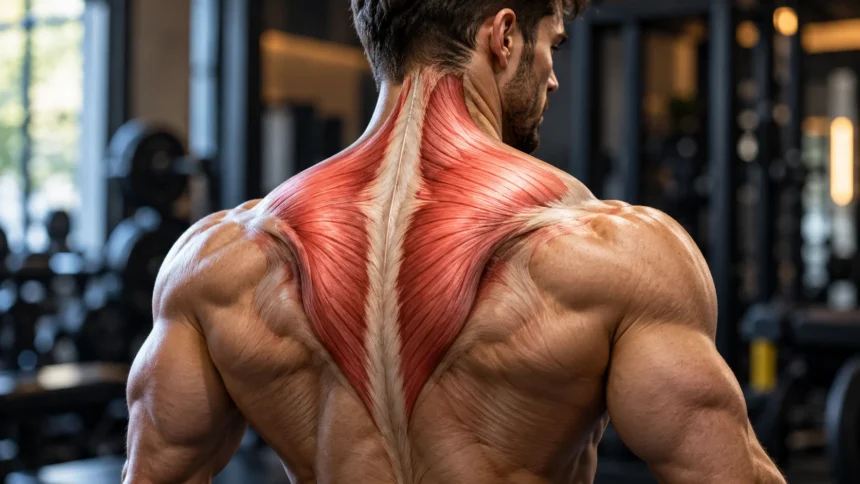
The traps muscles play an important role in supporting your neck, shoulders, and upper back. These muscles help you lift your shoulders, move your shoulder blades, and maintain control during everyday activities. Whether you are carrying groceries, reaching overhead, or exercising, your trapezius muscles contribute to comfortable and coordinated upper-body movement.
The trapezius is a large, flat muscle extending across the upper back and neck. It consists of three functional regions known as the upper, middle, and lower trapezius. Each region performs different movements while working together to support shoulder stability, posture, and upper-body strength.
Understanding traps muscle anatomy can help you recognize how your shoulders function, choose appropriate strengthening exercises, and improve movement awareness. This guide explains the structure, location, functions, common problems, and practical ways to maintain healthy trapezius muscles.
What Are the Traps Muscles?
The traps muscles, medically known as the trapezius muscles, are large skeletal muscles located across the neck, shoulders, and upper back. Their name comes from their trapezoid-like shape when viewed together across both sides of the body. These muscles connect the spine and skull to important structures of the shoulder girdle.
The trapezius is considered a superficial back muscle because it lies relatively close to the skin. It covers portions of deeper muscles involved in neck movement, spinal support, and shoulder control. Its broad arrangement allows different muscle fibers to produce several movements rather than performing one simple action.
The trapezius is essential for everyday upper-body function because it helps position and stabilize the shoulder blades. It works during lifting, pulling, reaching, and many movements involving the arms. Healthy trapezius function depends on coordinated activity with nearby muscles, appropriate strength, and comfortable movement throughout the neck and shoulders.
Where Are the Trapezius Muscles Located?
The trapezius muscles extend from the back of the skull and neck down toward the middle of the upper back. They also spread outward toward the shoulders, creating a broad muscular surface across the posterior upper body. This location allows the trapezius to connect movements of the neck, spine, and shoulder blades.
Each trapezius muscle begins along several attachment points near the skull, neck ligaments, and spinal processes. Its fibers extend toward the collarbone, acromion, and spine of the scapula. These connections allow the muscle to move and stabilize the shoulder girdle during activities that require coordinated upper-body movement.
You can often feel the upper trapezius between the side of your neck and the top of your shoulder. The middle and lower regions extend farther across the upper back and toward the spine. Although these sections share one overall muscle structure, their different fiber directions influence the movements they produce.
The Three Parts of the Trapezius Muscle
The trapezius is commonly divided into three functional sections: upper trapezius, middle trapezius, and lower trapezius. These regions are distinguished by the direction of their muscle fibers and their contribution to shoulder blade movement. All three work together to position the scapula during reaching, lifting, and other upper-body activities.
The upper fibers primarily help elevate the shoulder blade and contribute to its upward rotation. The middle fibers assist with scapular retraction, which moves the shoulder blade toward the spine. The lower fibers support scapular depression and upward rotation, helping coordinate shoulder movement during activities involving raised arms.
Although each region has a primary function, the trapezius does not operate as three completely independent muscles. Different fibers may become more active depending on the direction and demands of a movement. Understanding these differences can help explain why exercises such as shrugs, rows, and certain arm raises challenge different areas of the traps.
Upper Trapezius: Anatomy and Function
The upper trapezius occupies the region between the back of the neck and the outer shoulders. Its fibers originate from structures around the occipital bone and the nuchal ligament before extending toward the lateral clavicle. This arrangement allows the upper traps to influence shoulder blade positioning and contribute to certain neck movements.
One major function of the upper trapezius is scapular elevation, which occurs when you raise your shoulders toward your ears. The upper fibers also contribute to upward rotation of the scapula, particularly when working with the lower trapezius and serratus anterior. This coordinated action is important for comfortable overhead reaching.
The upper trapezius can become sensitive or fatigued during sustained tasks involving the neck and shoulders. Activities such as prolonged computer work or repetitive lifting may contribute to discomfort in some individuals. However, upper trap tightness is not always caused by poor posture, and symptoms may involve several muscles or other nearby structures.
Middle Trapezius: Anatomy and Function
The middle trapezius is located across the upper back, roughly between the shoulder blades and spine. Its fibers extend horizontally from the upper thoracic spinous processes toward the acromion and spine of the scapula. This orientation makes the middle traps particularly important for moving the shoulder blades backward toward the spinal column.
Scapular retraction is the primary movement associated with the middle trapezius. This action occurs when you gently bring your shoulder blades toward one another during certain pulling exercises. The muscle also contributes to stabilizing the scapula, helping maintain controlled shoulder positioning during arm movements and activities requiring upper-body strength.
Exercises such as supported rows and controlled scapular retractions can strengthen the middle trapezius. These movements involve several back muscles, including the rhomboids and other scapular stabilizers. Practicing controlled movement rather than aggressively squeezing the shoulder blades can help develop coordinated upper-back strength without unnecessary neck tension.
Lower Trapezius: Anatomy and Function
The lower trapezius extends from the middle and lower thoracic spine toward the spine of the scapula. Its fibers travel upward and outward, creating a different pulling direction from the upper and middle regions. This anatomical arrangement allows the lower traps to contribute to scapular depression, upward rotation, and controlled shoulder positioning.
One important function of the lower trapezius is supporting upward rotation of the shoulder blade during arm elevation. It works alongside the upper trapezius and serratus anterior to position the scapula as the arm moves overhead. The lower fibers also help stabilize the shoulder blade during activities that require controlled upper-body movement.
Lower trapezius exercises often involve controlled arm raises, supported movements, and activities emphasizing scapular coordination. Prone Y raises are one example commonly used in strengthening programs. These exercises should be performed with manageable resistance and comfortable shoulder movement rather than forcing the arms into positions that produce pain.
Trapezius Muscle Origin and Insertion
In human anatomy, a muscle’s origin and insertion describe its attachment points to bones or connective tissues. The trapezius has broad origins along the posterior skull, neck, and thoracic spine. These multiple attachments help explain how one large muscle can influence several movements involving the shoulder girdle.
The trapezius originates from the medial superior nuchal line, external occipital protuberance, nuchal ligament, and spinous processes extending from C7 through T12. These structures provide a broad attachment area along the back of the head and spine. Individual fiber regions arise from different portions of these attachments.
The trapezius inserts on the lateral third of the clavicle, the acromion, and the spine of the scapula. When its fibers contract, they transfer force through these attachment points to move or stabilize the shoulder blades. This relationship between muscle structure and movement is central to understanding trapezius anatomy and function.
What Is the Main Function of the Traps Muscles?
The main function of the trapezius is controlling movement and stability of the scapula, commonly called the shoulder blade. Depending on which fibers are active, the muscle can elevate, retract, depress, or upwardly rotate the scapula. These actions help position the shoulder joint during lifting, reaching, pulling, and other upper-body activities.
The trapezius also contributes to certain movements of the neck and head when the shoulder girdle is relatively stable. Bilateral activity of some fibers can assist with neck extension, while unilateral activity may contribute to side bending or rotation. These movements involve several muscles working together rather than the trapezius acting independently.
Another important function is maintaining coordinated shoulder blade positioning during arm movement. The traps work closely with the serratus anterior, rhomboids, levator scapulae, and surrounding shoulder muscles. This cooperation supports efficient upper-body movement and helps distribute muscular demands across several structures instead of relying on one muscle alone.
How the Trapezius Supports Shoulder Movement
The shoulder complex includes several joints and structures that work together to move the arm. The scapula must rotate and reposition as the humerus moves during reaching or lifting. The trapezius helps control this scapular movement, making it an important part of comfortable and coordinated shoulder function.
During overhead arm elevation, the upper and lower trapezius cooperate with the serratus anterior to produce upward rotation of the scapula. This movement helps position the shoulder blade as the arm rises. The middle trapezius contributes to scapular stability and control, especially during movements involving pulling or changes in arm position.
The contribution of the trapezius changes according to shoulder angle, resistance, and movement speed. Healthy shoulder mechanics do not require keeping the shoulder blades rigidly pulled backward at all times. Instead, the scapula should be able to move naturally while surrounding muscles provide appropriate support and control.
Trapezius Muscles and Their Role in Posture
The trapezius contributes to upper-body posture by helping position the shoulder blades and supporting certain neck movements. Its activity changes as you sit, stand, reach, and perform different physical tasks. Rather than holding the shoulders in one fixed position, the traps help the upper body adapt to changing movement demands.
People often associate rounded shoulders or forward-head posture with tight or weak trapezius muscles. However, posture varies naturally between individuals, and no single sitting or standing position guarantees freedom from pain. Muscle discomfort may depend on activity duration, workload, stress, strength, and other factors beyond posture alone.
Maintaining comfortable upper-body function usually involves regular movement, suitable strength training, and adjusting positions when necessary. Changing tasks or taking brief movement breaks can help reduce prolonged muscular demands. Strengthening the trapezius and nearby muscles may also improve movement capacity without requiring constant conscious correction of shoulder positioning.
What Causes Tight Traps Muscles?
Tight traps muscles may produce a feeling of stiffness, pressure, or discomfort around the neck and upper shoulders. These sensations can occur after unfamiliar exercise, prolonged activity, or periods of increased muscular demand. In some cases, stress and fatigue may contribute to muscle tension, although the relationship varies between individuals.
Repetitive tasks involving the shoulders can place sustained demands on the upper trapezius. Carrying heavy objects, working with the arms elevated, or remaining in one position for extended periods may contribute to temporary discomfort. However, feeling tight does not necessarily mean that a muscle is physically shortened or requires aggressive stretching.
Trapezius discomfort can also overlap with symptoms originating from the cervical spine, shoulder joints, or nearby nerves. For this reason, persistent tightness should not automatically be treated as a simple muscle flexibility problem. Understanding the pattern of symptoms can help determine whether changes in activity, exercise, or professional assessment are appropriate.
Common Symptoms of Trapezius Muscle Problems
Trapezius-related discomfort commonly affects the upper back, shoulder region, or base of the neck. Some individuals experience tenderness when pressing on the muscle, while others notice stiffness during shoulder movement. Symptoms may appear after physical activity or develop gradually during repetitive tasks involving the upper body.
A trapezius muscle strain can produce pain, sensitivity, and difficulty performing movements that require the affected fibers. Mild strains may cause localized discomfort, while more significant injuries can interfere with ordinary activities. Muscle strains are only one possible explanation, however, because several neck and shoulder conditions can create similar symptoms.
Pain spreading into the arm, numbness, tingling, or unusual weakness may suggest involvement of structures beyond the trapezius muscle. Persistent symptoms or substantial movement limitations deserve medical evaluation. Sudden severe symptoms after an injury, especially when accompanied by neurological changes, should receive prompt professional attention.
Best Exercises to Strengthen the Traps Muscles
Trapezius strengthening exercises can help develop upper-back strength, shoulder blade control, and tolerance for everyday physical demands. Different movements challenge the muscle from various directions because its fibers perform several actions. A balanced routine may include shrugs, rows, and controlled arm raises rather than focusing exclusively on one section.
Shoulder shrugs primarily challenge the upper trapezius by requiring controlled scapular elevation. Rows involve the middle trapezius alongside other back muscles, while supported Y raises can emphasize lower trapezius activity. All these exercises recruit additional muscles, so they should be understood as coordinated movement patterns rather than complete isolation exercises.
Beginners can start with light resistance and focus on steady, comfortable movement. Gradually increasing exercise difficulty allows muscles and connective tissues to adapt to greater demands. Avoid forcing painful movements or using excessive weight that makes it difficult to control shoulder and neck positioning throughout each repetition.
How to Stretch the Trapezius Muscles Safely
Gentle stretching may help improve neck mobility and reduce the sensation of temporary muscle tightness. The upper trapezius is commonly targeted because it extends between the shoulder girdle and neck. Stretching should remain comfortable and should not involve pulling aggressively on the head or forcing the cervical spine into extreme positions.
For a gentle upper trapezius stretch, sit upright with your shoulders relaxed. Slowly tilt your head toward one shoulder while allowing the opposite shoulder to remain comfortably lowered. You may feel a mild stretch along the side of the neck, but the movement should not produce sharp pain, dizziness, or radiating symptoms.
Hold the position for approximately 15 to 30 seconds if comfortable, then slowly return your head to the center. Repeat on the opposite side without bouncing or adding excessive pressure with your hand. People with recent neck injuries, neurological symptoms, or persistent pain should seek professional guidance before attempting targeted neck stretches.
Common Trapezius Exercises and Their Benefits
Dumbbell shrugs are a familiar exercise for training the upper trapezius. Hold manageable weights at your sides and slowly raise your shoulders upward before lowering them with control. Avoid rotating the shoulders aggressively or swinging the weights, because a straightforward lifting movement is generally sufficient to challenge the upper trap fibers.
Seated or chest-supported rows can strengthen the middle trapezius while involving several other upper-back muscles. Pulling the resistance toward the torso encourages coordinated shoulder blade movement. Supported variations may help reduce unnecessary body momentum, allowing you to focus on a comfortable pulling motion and controlled return.
Prone Y raises are commonly used to challenge the lower trapezius and surrounding shoulder stabilizers. Lie face down on a suitable support and lift your arms into a comfortable Y-shaped position using light resistance or no weights. Keep the movement controlled and avoid forcing excessive shoulder elevation if it creates discomfort.
Common Mistakes When Training the Trapezius
One common mistake is using excessive resistance during shoulder shrugs or other upper-back exercises. Heavy weights can encourage sudden movements, altered technique, and unnecessary strain when muscular control is limited. Choosing a manageable load helps you perform repetitions smoothly while allowing the trapezius and surrounding muscles to contribute effectively.
Another mistake is training only the upper trapezius while overlooking the middle and lower regions. Although shrugs can improve strength in one movement pattern, they do not provide every type of scapular control. Including rows and suitable arm-raising exercises can support a more balanced upper-back routine without requiring complicated training methods.
Ignoring discomfort is another problem during trapezius training. Mild muscular effort is normal, but sharp pain, increasing neck symptoms, or unusual tingling should not be treated as a necessary part of exercise. Modifying the movement and seeking appropriate guidance when symptoms persist can help protect upper-body function and support consistent progress.
Trapezius Muscle Strain: Causes and Recovery
A trapezius muscle strain occurs when muscle fibers experience more force or stretching than they can tolerate. This may happen during sudden lifting, unexpected movements, or activities involving high muscular demands. Symptoms can include localized pain, tenderness, stiffness, and discomfort when moving the neck or shoulder.
Recovery depends on the severity of the injury and the individual’s overall health and activity requirements. Many mild strains improve with temporary activity modification and gradual return to comfortable movement. Complete inactivity is not always necessary, but exercises that clearly worsen pain should generally be reduced until the affected region tolerates movement better.
More significant injuries may require assessment by a healthcare professional to determine the appropriate recovery plan. Physical therapy can include controlled mobility exercises, progressive strengthening, and guidance on returning to normal activities. If symptoms worsen, persist unexpectedly, or include weakness or neurological changes, further evaluation may be necessary.
Trapezius vs. Rhomboids: What’s the Difference?
The trapezius and rhomboids are upper-back muscles that contribute to shoulder blade movement. The trapezius is a broad superficial muscle extending across the neck, shoulders, and thoracic spine. The rhomboid major and minor lie deeper, connecting portions of the spine to the medial border of the scapula.
The trapezius performs several scapular actions, including elevation, retraction, depression, and upward rotation. The rhomboids primarily assist with scapular retraction, downward rotation, and stabilization. Although their functions overlap during some movements, their different attachments and fiber directions allow them to contribute differently to shoulder mechanics.
Exercises such as rows commonly activate both the middle trapezius and rhomboids. This cooperation helps position the shoulder blades during pulling activities and other upper-body movements. Understanding the distinction can help explain why strengthening the upper back involves several interconnected muscles rather than focusing on a single anatomical structure.
Important Facts About the Trapezius Muscles
The trapezius receives its primary motor nerve supply from the spinal accessory nerve, also known as cranial nerve XI. Sensory and proprioceptive contributions are associated with cervical spinal nerves, particularly C3 and C4. These neural connections are important because normal muscle activation depends on effective communication between the nervous system and muscle fibers.
Another important fact is that the trapezius contributes to both movement and stability. Its upper, middle, and lower regions have different fiber directions, allowing them to perform several scapular actions. This arrangement makes the muscle particularly useful during overhead reaching, pulling, lifting, and activities that require coordinated shoulder control.
The trapezius also demonstrates why muscular function cannot always be understood by looking at size or appearance alone. Strength, coordination, activity tolerance, and surrounding joint function all influence performance. A healthy trapezius works with other muscles to support natural movement rather than keeping the shoulders in a permanently fixed position.
Conclusion
The traps muscles are important structures that support movement throughout the neck, shoulders, and upper back. The trapezius consists of three functional regions known as the upper, middle, and lower fibers. Together, these sections help move and stabilize the shoulder blades during everyday activities and physical exercise.
Understanding trapezius anatomy explains why different movements involve different areas of the muscle. The upper fibers contribute to shoulder elevation, the middle fibers assist with retraction, and the lower fibers support depression and upward rotation. Coordinated activity among these sections and nearby muscles helps maintain comfortable shoulder function.
Maintaining healthy trapezius muscles involves appropriate strength training, regular movement, and attention to persistent discomfort. Gentle stretching may help temporary tightness, while balanced strengthening supports functional capacity. Learning how the trapezius works can help you make informed decisions about upper-body exercise, posture, and long-term shoulder health.
Frequently Asked Questions
What are the three parts of the traps muscles?
The trapezius has three functional regions: upper, middle, and lower trapezius. Each section contributes differently to shoulder blade movement, including elevation, retraction, depression, and upward rotation.
What is the main function of the trapezius muscle?
The trapezius primarily moves and stabilizes the shoulder blades. Its different fibers help elevate, retract, depress, and upwardly rotate the scapula while also contributing to certain neck movements.
Why do my traps muscles feel tight?
Trapezius tightness may be associated with prolonged activity, repetitive movement, muscle fatigue, or stress. Persistent discomfort can have several causes, so recurring or worsening symptoms should be professionally assessed.
What exercises strengthen the trapezius muscles?
Common trapezius exercises include shoulder shrugs, rows, and prone Y raises. These movements challenge different functional regions while also involving other upper-back and shoulder muscles.
Can weak trapezius muscles cause shoulder problems?
Reduced trapezius strength or coordination may contribute to altered shoulder blade control in some individuals. However, shoulder problems have multiple possible causes and cannot automatically be attributed to weak traps.