
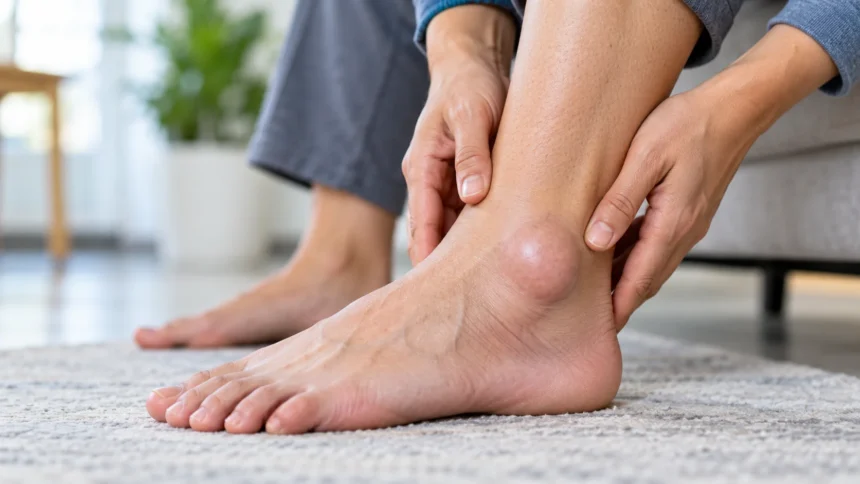
A fluid-filled lump around the ankle bone can be surprising, especially when it appears without an obvious injury. Some people notice a soft bump near the inner or outer ankle, while others experience tenderness, swelling, stiffness, or discomfort when wearing shoes. Although many causes are relatively minor, persistent or painful swelling deserves proper attention.
What people describe as a “fluid sac on ankle bone” can have several possible explanations. It may involve an irritated bursa, a ganglion cyst, swelling after an injury, inflammation around a tendon, or another condition affecting the soft tissues near the joint. The appearance and symptoms can vary depending on the underlying cause.
Understanding what may be happening can help you make sensible decisions about activity, footwear, home care, and medical evaluation. This guide explains common causes, symptoms, treatment approaches, warning signs, and practical tips. It is intended for general education rather than diagnosing a specific ankle lump.
What Is a Fluid Sac on the Ankle Bone?
A fluid sac on the ankle bone generally refers to a soft or rounded swelling containing fluid near the ankle joint. The ankle has several small structures, including bursae, tendons, ligaments, joint capsules, and surrounding tissues. When one of these structures becomes irritated or develops a cyst, a noticeable bump may appear beneath the skin.
A bursa is a small fluid-filled sac that helps reduce friction between tissues such as skin, tendons, and bones. When a bursa becomes irritated, it may produce more fluid and enlarge, creating a visible swelling. This condition is called bursitis and can occur when repeated pressure or friction affects the ankle area.
However, not every fluid-filled ankle lump is bursitis. Ganglion cysts may develop from tissues surrounding a joint or tendon and can also create a smooth, movable bump. Other possibilities include swelling from a sprain, joint inflammation, tendon irritation, infection, or less commonly another soft-tissue condition.
Common Causes of a Fluid-Filled Lump Near the Ankle
Repeated friction is one of the most common reasons swelling develops near a prominent ankle bone. Shoes that rub against the same area every day can irritate underlying tissues and potentially contribute to bursitis. Tight boots, stiff footwear, skates, or shoes with rigid ankle support may create additional pressure around the ankle.
Injury can also cause localized fluid and swelling. An ankle sprain, minor impact, or repeated stress may irritate tissues surrounding the joint and produce inflammation. Sometimes the original injury seems insignificant, yet swelling remains because the ankle continues to experience pressure through walking, running, exercise, or occupational activities.
Ganglion cysts are another potential explanation for a painless or mildly uncomfortable lump. These cysts contain thick, jelly-like fluid and commonly develop close to joints or tendon coverings. Their exact cause is not always clear, and their size may increase, decrease, disappear temporarily, or change depending on movement and activity.
Could Ankle Bursitis Cause the Fluid Sac?
Ankle bursitis occurs when one of the small cushioning sacs around the ankle becomes inflamed. The affected area may look rounded or swollen and can feel soft, tender, or slightly warm. Symptoms often become more noticeable when shoes press against the lump or when repetitive ankle movement continues irritating the tissues.
Pressure-related bursitis may develop gradually rather than appearing suddenly. Someone who wears tight footwear, spends long periods in work boots, or participates in activities involving repetitive ankle motion may be more susceptible. Reducing pressure on the area can sometimes help mild irritation settle, although ongoing swelling may require professional assessment.
Bursitis should not automatically be assumed whenever a fluid-filled bump appears. Similar-looking swelling can come from cysts, tendon problems, injuries, or infections. If the lump persists, becomes increasingly painful, or changes noticeably, a healthcare professional can examine it and determine whether bursitis or another condition is responsible.
Signs and Symptoms to Pay Attention To
The most obvious sign is usually a visible lump or swollen area around the inner or outer ankle bone. It may feel soft and compressible, firm and rubbery, or somewhere between the two. Some fluid-filled lumps move slightly when touched, while others remain fixed because they are connected to deeper tissues.
Pain can range from completely absent to significant enough to interfere with walking. You may notice tenderness when pressing the area, discomfort when bending the ankle, or irritation when footwear rubs against the swelling. Redness and warmth may also occur if inflammation is present, although these symptoms require additional caution when they are pronounced.
Pay attention to changes in size and associated symptoms. Rapid enlargement, severe pain, fever, skin discoloration, drainage, numbness, weakness, or an inability to bear weight can indicate a problem requiring prompt medical evaluation. Keeping track of when the swelling started and what makes it better or worse can also help during assessment.
How a Fluid Sac on the Ankle Is Diagnosed
Diagnosis usually begins with a physical examination. A healthcare professional may look at the size, exact location, texture, tenderness, mobility, and appearance of the swelling. They may also ask about recent injuries, footwear, exercise routines, previous ankle problems, medical conditions, and how quickly the lump developed.
Imaging is not always necessary, particularly when the cause appears straightforward. However, an ultrasound may help determine whether a lump contains fluid or solid tissue and can show its relationship with nearby tendons and joints. X-rays may be considered when bone injury, arthritis, or another structural problem is suspected.
In some situations, additional testing may be recommended. Magnetic resonance imaging can provide detailed pictures of soft tissues when the diagnosis remains uncertain or symptoms persist. If infection or another inflammatory condition is suspected, a clinician may also consider blood tests or examine fluid removed from the swollen area.
Tips for Managing Mild Ankle Swelling at Home
Reducing unnecessary pressure is often a sensible first step when the swelling appears related to friction or minor irritation. Choose comfortable shoes with enough room around the ankle, and temporarily avoid footwear that repeatedly presses against the lump. Soft padding may also reduce direct rubbing, provided it does not make your shoes tighter.
Resting from activities that aggravate the ankle may help irritated tissues recover. If walking, running, jumping, or certain exercises increase discomfort, temporarily reducing those movements can prevent repeated aggravation. Applying a wrapped cold pack for short periods may also help with pain and swelling following minor irritation or injury.
Keeping general health habits balanced can support recovery as well. Nutrition, sleep, hydration, healthy body weight, and regular movement all contribute to musculoskeletal wellness. Different body changes have different causes, however, so localized ankle swelling should not be confused with broader body-composition changes discussed in resources such as this meno belly guide.
Treatment Options for Persistent Fluid-Filled Ankle Lumps
Treatment depends heavily on what is causing the swelling. Mild bursitis may improve after reducing pressure, modifying activity, changing footwear, and allowing enough recovery time. A clinician may also suggest appropriate pain-relief strategies or physical therapy when stiffness, weakness, or movement patterns contribute to ongoing irritation.
If a ganglion cyst is responsible and causes no symptoms, observation may sometimes be appropriate. Cysts that become painful, restrict movement, press on nearby nerves, or repeatedly return may require additional treatment. A medical professional can discuss whether aspiration, monitoring, or another procedure is appropriate based on the cyst’s location and symptoms.
Surgery is generally considered only in selected situations where conservative approaches fail or a structural problem requires correction. Treatment should always target the underlying cause rather than simply the appearance of the lump. Trying to puncture, squeeze, or drain a fluid-filled ankle swelling at home can introduce infection or damage nearby tissues.
When Should You See a Healthcare Professional?
Arrange an evaluation if the swelling remains for several weeks, continues growing, repeatedly returns, or interferes with normal walking. Persistent pain, reduced ankle motion, unexplained tenderness, or difficulty wearing ordinary shoes are also reasonable reasons to seek professional advice. A proper diagnosis helps prevent unnecessary treatments based on guesswork.
More urgent attention is appropriate if the area becomes very red, hot, severely painful, or begins draining fluid. Fever, chills, rapidly spreading redness, or feeling generally unwell alongside ankle swelling can raise concern about infection. An injury accompanied by major swelling, deformity, or inability to bear weight should also be assessed promptly.
Sudden swelling of the ankle or leg, particularly when accompanied by calf pain, chest discomfort, or breathing difficulty, should not be treated as an ordinary fluid sac. Those symptoms may have causes requiring urgent medical care. When symptoms change rapidly or feel unusually severe, seeking timely evaluation is safer than relying solely on home treatment.
Can You Prevent a Fluid Sac From Coming Back?
Preventing recurrence begins with identifying what irritated the ankle in the first place. If footwear caused repeated friction, switching to better-fitting shoes with softer materials around the ankle can make a meaningful difference. Avoid continually wearing shoes that create pressure on the same prominent area, particularly during long periods of standing or walking.
Gradual exercise progression can also help protect ankle tissues. Suddenly increasing running distance, training intensity, or repetitive jumping may place more stress on the ankle than it is prepared to tolerate. Building strength and mobility gradually gives muscles, tendons, and supporting structures more time to adapt to increased physical demands.
If you frequently experience ankle swelling or lumps, pay attention to recurring patterns. Note whether symptoms follow particular exercises, footwear choices, long working days, or previous injuries. Addressing the trigger early may prevent minor irritation from becoming persistent, while repeated unexplained swelling should be discussed with a qualified healthcare professional.
Everyday Foot and Ankle Care Tips
Keeping your feet and ankles comfortable starts with properly fitting footwear. Shoes should provide support without squeezing the ankle or creating concentrated pressure on bony areas. When buying new shoes, check how they feel around both ankles because even small differences in shape can cause friction after several hours of wear.
Regular movement can help maintain ankle mobility and general function when no injury or medical restriction is present. Gentle ankle circles, walking, calf strengthening, and balance exercises may support normal movement and stability. However, exercises should not be forced through sharp pain or performed directly against a tender swelling that becomes more irritated afterward.
Recovery deserves attention too. Give your ankle time to settle after demanding activities, especially if you notice soreness or mild swelling. Combining sensible exercise, appropriate footwear, adequate rest, and early attention to recurring symptoms provides a practical approach to maintaining healthier feet and ankles over the long term.
Conclusion
A fluid sac on the ankle bone can develop for several reasons, including bursitis, ganglion cysts, repeated friction, minor injuries, or inflammation around nearby tissues. The appearance alone cannot always reveal the exact cause. Observing the lump’s size, tenderness, location, and associated symptoms can provide useful clues.
Mild swelling related to pressure or irritation may improve by resting the ankle, avoiding aggravating activities, wearing better-fitting footwear, and using simple comfort measures. Persistent lumps should be assessed rather than repeatedly squeezed or drained at home. Correct treatment depends on identifying the structure responsible for the swelling.
Seek medical attention sooner when swelling becomes rapidly larger, extremely painful, red, hot, or associated with fever, drainage, numbness, serious injury, or difficulty walking. Most importantly, treat a persistent ankle lump as a symptom that deserves an accurate explanation rather than assuming every fluid-filled swelling has the same cause.
FAQs
Is a fluid sac on the ankle bone serious?
Many fluid-filled ankle lumps are related to relatively minor problems such as bursitis or ganglion cysts. However, rapidly growing, painful, red, hot, or persistent swelling should be examined by a healthcare professional.
Can a fluid-filled ankle lump go away on its own?
Some mild swelling and certain ganglion cysts may decrease without invasive treatment, particularly when irritation is removed. However, a lump that persists, repeatedly returns, or causes pain should be medically evaluated.
Should I pop or drain a fluid sac on my ankle?
No. Attempting to puncture or drain the lump yourself can cause infection, bleeding, or tissue damage. A healthcare professional should first determine what the swelling is and whether drainage is appropriate.
Does ankle bursitis feel like a soft lump?
It can. An inflamed bursa may appear as a soft or somewhat firm swelling near a bony area and may feel tender when pressed or irritated by shoes and repetitive movement.
When should ankle swelling be treated as urgent?
Seek prompt care for severe pain, rapidly increasing swelling, redness, warmth, fever, drainage, inability to bear weight, or major injury. Sudden leg swelling with chest pain or breathing difficulty requires urgent medical attention.