

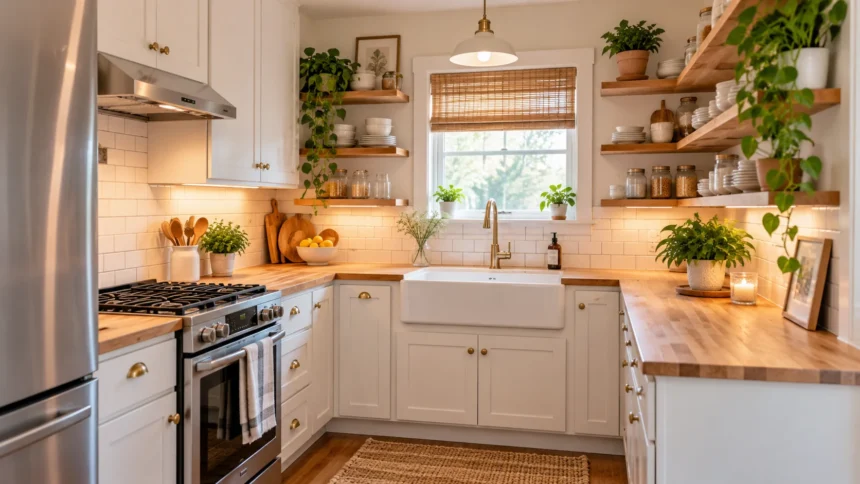
Remodeling a small kitchen does not have to involve expensive construction or a complete redesign. With thoughtful planning, affordable materials, and practical storage solutions, you can transform a compact cooking space into a more attractive and functional area. Even simple improvements such as repainting cabinets, updating lighting, and changing hardware can make a noticeable difference.
Small kitchens present unique challenges because limited floor space, narrow countertops, and insufficient storage can make everyday cooking difficult. However, working with an existing layout and choosing space-saving upgrades can help reduce remodeling expenses. The goal is to improve functionality without making the kitchen feel crowded or increasing construction costs unnecessarily.
This guide explores the best small kitchen remodel ideas on a budget, including affordable cabinets, countertops, backsplashes, flooring, lighting, and organization solutions. You will also learn how to maximize kitchen space, estimate renovation costs, and avoid common remodeling mistakes while creating a comfortable cooking environment.
1. Plan Your Small Kitchen Remodel Before Spending Money
Planning is the most important step when remodeling a small kitchen on a budget. Before purchasing cabinets, countertops, or appliances, identify the problems that make your current kitchen difficult to use. Limited counter space, poor lighting, cluttered storage, and outdated finishes are common concerns in compact kitchens. Addressing these problems first helps keep your investment focused on practical improvements.
Measure the kitchen carefully and record the dimensions of walls, cabinets, appliances, and available walking areas. Determine which existing features function well and which require improvement. Preserving functional cabinets and plumbing connections may allow you to spend more on upgrades that provide meaningful everyday benefits. Accurate measurements also reduce the likelihood of ordering unsuitable materials.
Create a renovation checklist that separates essential repairs from decorative changes. Include expected material expenses, labor charges, and possible additional costs. A clear remodeling plan helps prevent unnecessary purchases, reduces expensive design changes, and keeps the project focused on improving your kitchen’s functionality. Review the plan before construction begins to confirm that proposed upgrades fit your available budget.
2. Set a Realistic Budget for Your Small Kitchen Remodel
A realistic budget allows you to make renovation decisions without creating unnecessary financial pressure. Small kitchen remodeling costs vary depending on space, materials, labor rates, and existing conditions. Cosmetic improvements may cost a few thousand dollars, while projects involving new cabinetry, appliances, or plumbing can become substantially more expensive. Establishing a spending limit helps you compare options confidently.
Divide your budget into major categories such as cabinets, countertops, flooring, lighting, fixtures, and labor. Obtain local contractor quotations instead of relying entirely on general online estimates. Remember to include delivery charges, waste disposal, and any required permits. Comparing detailed costs reveals where affordable alternatives might provide similar practical benefits.
Keep approximately 10% to 20% of your planned remodeling budget available for unexpected expenses. Older kitchens sometimes contain hidden moisture damage, outdated wiring, or deteriorating plumbing connections. These problems should be addressed before installing new decorative finishes. A contingency allowance helps prevent essential repairs from interrupting the entire kitchen renovation.
3. Paint Existing Kitchen Cabinets Instead of Replacing Them
Painting kitchen cabinets is one of the most affordable ways to refresh a small cooking space. If the existing cabinet boxes remain structurally sound, replacing them may be unnecessary. A carefully selected paint color can modernize outdated surfaces without changing the original layout. This approach also reduces demolition and material disposal.
White, cream, light gray, and muted green are popular cabinet colors for compact kitchens. Lighter finishes can reflect available light and create a brighter appearance. Darker colors may work well as accents when balanced with adequate lighting. Choose a finish suitable for frequent cleaning, kitchen moisture, and everyday wear.
Proper surface preparation is essential for long-lasting painted cabinets. Cleaning, repairing minor defects, using compatible primer, and following product instructions can improve the result. Homeowners without refinishing experience may prefer professional help for damaged or complicated surfaces. Well-maintained painted cabinets can extend the usefulness of existing kitchen storage.
4. Replace Cabinet Hardware for an Instant Update
Changing cabinet handles and knobs is a simple kitchen improvement that requires relatively little investment. Older hardware may make otherwise functional cabinets appear outdated. Replacing worn pieces with coordinated designs can refresh the room without buying new cabinetry. This upgrade is particularly useful when the cabinet finish remains attractive.
Choose handles that complement your kitchen’s color scheme and existing fixtures. Brushed nickel, matte black, and warm metallic finishes can create different visual effects. Before purchasing replacements, measure the distance between existing screw holes. Selecting compatible hardware helps avoid unnecessary drilling, repairs, or installation complications.
Consistency is important when updating cabinet hardware in a compact room. Using similar finishes across drawers and cabinet doors can create a cohesive appearance. However, practicality should remain a priority when choosing handle shapes and sizes. Comfortable, durable hardware improves everyday kitchen use while keeping renovation expenses manageable.
5. Install Budget-Friendly Kitchen Countertops
Countertops have a major influence on kitchen appearance and functionality. Replacing worn surfaces can refresh a small kitchen without changing its cabinet layout. Laminate countertops offer an affordable alternative to many natural stone products. Modern designs can resemble wood, marble, or other popular finishes at lower material prices.
Butcher block and selected solid-surface countertops may also suit smaller kitchen renovation budgets. Each option has different cleaning, moisture-resistance, and maintenance requirements. Compare installation expenses as well as purchase prices before making a decision. Durable materials that match your cooking habits generally provide better long-term value.
Before ordering new countertops, confirm cabinet condition and obtain accurate measurements. Existing cabinets must adequately support the selected material. Consider retaining your current sink position to avoid additional plumbing modifications. Careful planning allows homeowners to improve their preparation areas without turning a modest upgrade into extensive construction.
6. Refresh the Kitchen Backsplash Without Expensive Tiles
A kitchen backsplash can improve the appearance of a small space while protecting appropriate wall areas from everyday splashes. Replacing an outdated backsplash is often less expensive than remodeling the entire kitchen. Simple ceramic tiles, suitable backsplash panels, and selected peel-and-stick products provide different affordable options. Material choice should reflect the installation location.
Subway tiles remain a versatile option for homeowners who prefer a simple, clean appearance. Light-colored designs can coordinate with many cabinet and countertop finishes. Decorative patterns may create visual interest when used sparingly. Avoid overwhelming a compact kitchen with too many competing colors or textures.
When choosing adhesive backsplash products, check the manufacturer’s moisture and heat limitations. Some materials are unsuitable near cooking equipment or frequently wet surfaces. Existing walls should also be sound and appropriately prepared before installation. Selecting compatible products helps prevent peeling, discoloration, and premature replacement.
7. Improve Kitchen Lighting on a Small Budget
Poor lighting can make a small kitchen feel cramped and difficult to use. Upgrading existing fixtures and adding suitable task lighting can improve visibility without changing the room’s layout. Bright, well-positioned lighting helps illuminate preparation surfaces and frequently used storage areas. It can also highlight new cabinets and wall finishes.
Under-cabinet LED lighting is a practical option for improving countertop visibility. Plug-in or appropriately rated battery-powered products may offer affordable alternatives to extensive electrical modifications. Ceiling fixtures should provide adequate general lighting throughout the room. Combining different light sources creates a more flexible cooking environment.
Choose energy-efficient bulbs with brightness and color temperatures suited to kitchen activities. Consider whether shadows fall across the sink, stove, or food preparation areas. Qualified electricians should handle permanent wiring changes and fixture installations when necessary. Suitable lighting can deliver noticeable functional benefits without major remodeling expenses.
8. Use Open Shelving to Create More Visual Space
Open shelving can make a small kitchen feel less visually crowded when used thoughtfully. Replacing selected upper cabinet doors or adding a few shelves creates space for frequently used items. This approach may cost less than installing additional cabinetry. However, the shelves should complement existing storage rather than introduce unnecessary clutter.
Display everyday dishes, suitable containers, or a limited number of decorative items. Keeping shelves organized helps maintain an open appearance. Avoid filling every available surface because excessive items can make the kitchen look busier. Choose shelf dimensions that provide adequate clearance around counters and appliances.
Before installing wall-mounted shelving, confirm that the wall and fasteners can support the intended load. Heavy cookware and breakable items require particularly careful placement. Homeowners should also consider cleaning requirements because exposed surfaces collect dust and cooking residue. Properly planned shelving can combine convenient access with attractive design.
9. Add Pull-Out Organizers to Existing Cabinets
Small kitchens often suffer from poorly organized cabinets rather than an absolute lack of storage. Deep cupboards can make everyday items difficult to reach, leaving usable space underutilized. Pull-out organizers and sliding baskets can improve accessibility without replacing the entire cabinet system. These additions are especially useful beneath countertops.
Drawer dividers, adjustable racks, and tiered shelf inserts provide affordable storage improvements. Organizing cookware, utensils, and pantry supplies according to frequency of use helps reduce clutter. Select organizers that match existing cabinet dimensions. Products that fit correctly are usually more practical than expensive systems requiring major modifications.
Measure cabinet interiors carefully before purchasing storage accessories. Account for hinges, plumbing connections, and other obstacles that may affect installation. Choose materials suitable for kitchen humidity and expected loads. Improving existing storage often delivers greater functional value than installing additional cabinets in a limited space.
10. Choose Affordable Flooring for a Small Kitchen
Updating kitchen flooring can significantly change the appearance of a compact cooking area. Luxury vinyl, selected ceramic tiles, and suitable laminate products offer different price and performance options. Installation costs depend on the selected material and the condition of the existing subfloor. Comparing complete project expenses helps identify practical choices.
Water-resistant flooring is particularly important in kitchens where spills and frequent cleaning occur. Luxury vinyl flooring is available in various wood-look and stone-look designs. Ceramic tile can offer durable performance when installed correctly. Some laminate products may also be suitable when their moisture limitations are carefully considered.
Avoid installing new flooring over damaged or unstable surfaces. Uneven subfloors, moisture problems, and deteriorating materials should be investigated before work begins. Repairing the underlying surface supports better installation and durability. In some kitchens, cleaning or restoring existing flooring may be more affordable than replacement.
11. Maximize Counter Space With Smart Organization
Limited countertop space is a common challenge in small kitchens. Appliances, utensils, and food containers can occupy valuable preparation areas. Organizing these items thoughtfully may improve functionality without changing the kitchen layout. Start by identifying which objects need daily access and which can be stored elsewhere.
Wall-mounted utensil holders, suitable hanging racks, and compact appliance storage can free up counter space. Drawer organizers may provide convenient alternatives to countertop containers. Keep frequently used items near relevant work areas while maintaining safe clearances around cooking equipment. Small organizational changes can make meal preparation easier.
Avoid purchasing additional kitchen gadgets without considering storage requirements. Multifunctional equipment may be more practical than several appliances performing similar tasks. Regularly reviewing countertop organization helps prevent clutter from returning. A clear preparation surface makes a small kitchen feel more manageable and comfortable.
12. Consider Compact Kitchen Appliances
Appliance size matters when remodeling a small kitchen. Oversized refrigerators, ranges, or dishwashers may restrict movement and reduce storage opportunities. Compact appliances can provide a practical alternative when their capacity meets household needs. Choosing suitable dimensions helps make better use of limited floor space.
Before replacing appliances, evaluate the condition and performance of existing equipment. A functional refrigerator or oven may not need immediate replacement simply because its design looks outdated. If new appliances are necessary, compare energy performance, operating features, warranties, and available installation space. Avoid paying for features you rarely use.
Confirm utility requirements and clearance specifications before making a purchase. Ventilation, electrical supply, and water connections must match the appliance’s installation instructions. Some compact appliances still require professional installation. Selecting equipment that fits the existing kitchen arrangement can reduce remodeling complexity and additional expenses.
13. Use Light Colors to Make a Small Kitchen Feel Brighter
Color selection can influence how spacious a small kitchen appears. Light wall finishes, neutral cabinets, and coordinated countertops can create a brighter visual environment. These choices reflect available lighting and may reduce the feeling of crowding. However, darker colors can also work effectively when incorporated thoughtfully.
Consider using a simple color palette with two or three complementary tones. White cabinets paired with natural wood accents create a clean appearance without excessive decoration. Soft gray, cream, or muted blue may also work well. Keeping finishes consistent across connected surfaces helps create a more unified interior.
Painting existing walls is usually less expensive than replacing large decorative surfaces. Choose washable finishes appropriate for kitchen conditions and prepare surfaces carefully. If you prefer bold colors, consider introducing them through removable accessories or a small accent area. This provides flexibility without committing to costly design changes.
14. Keep the Existing Kitchen Layout to Reduce Costs
Preserving the existing kitchen layout is one of the most effective ways to control remodeling expenses. Moving sinks, stoves, or major appliances can involve plumbing, electrical, and ventilation modifications. These changes may also require additional construction work. Keeping essential connections in place reduces complexity and helps shorten installation schedules.
Focus on improving the efficiency of the current arrangement before considering structural changes. Better storage, improved task lighting, and updated work surfaces can make an existing layout more functional. Small changes to cabinet interiors may also improve accessibility. These improvements often cost considerably less than moving walls or utility connections.
However, preserving the layout is not always the right choice. Severely restricted access, unsafe arrangements, or persistent functional problems may justify a more extensive redesign. Discuss major concerns with a qualified remodeling professional. Evaluating practical benefits against construction costs helps prevent unnecessary spending.
15. Make Use of Unused Wall Space
Vertical space can provide valuable storage opportunities in a compact kitchen. Empty wall sections may accommodate suitable shelves, organizers, or narrow storage units. Using these areas reduces pressure on existing cabinets and countertops. Thoughtful placement helps create a more organized cooking environment without expanding the room.
Magnetic organizers, wall-mounted racks, and suitable rails can hold selected kitchen accessories. Keep frequently used items accessible while avoiding crowded work areas. Ensure storage arrangements do not interfere with electrical outlets, ventilation, or appliance operation. Practical placement is more important than filling every available wall.
Choose wall-mounted products according to surface condition and intended weight. Shelves and racks require appropriate fasteners and secure support. Avoid placing heavy objects where they could fall into preparation areas. When installed properly, vertical storage can make a small kitchen easier to use and maintain.
16. Upgrade Your Kitchen Sink and Faucet
Replacing a worn faucet or improving the sink area can refresh a small kitchen without extensive remodeling. Choose fixtures that suit the existing countertop opening and plumbing arrangement. Maintaining compatible dimensions helps avoid unnecessary modifications. A reliable faucet can also improve everyday washing and cleaning activities.
Consider whether your kitchen would benefit from a pull-down sprayer, an appropriately sized basin, or a more convenient handle arrangement. Water-efficient fixtures may help reduce unnecessary consumption. Compare product durability and maintenance needs instead of selecting designs solely for appearance. Practical features often provide the greatest long-term benefit.
Before purchasing a replacement sink, check cabinet clearance and plumbing compatibility. Some installations require professional assistance, particularly when existing connections are damaged. Addressing leaks and deteriorated sealant is more important than decorative upgrades. Correct installation protects surrounding cabinets and countertops from moisture problems.
17. Add a Small Rolling Kitchen Cart
A compact rolling cart can provide additional storage and temporary preparation space in some kitchens. This solution may be less expensive than installing a permanent island. Carts are available with shelves, drawers, and work surfaces. Their mobility allows homeowners to reposition them when extra floor space is needed.
Choose a cart that fits comfortably without blocking doors, appliance access, or normal movement. Consider wheel locks and the stability of the work surface before purchasing. Avoid overloading lightweight furniture with heavy equipment. A properly sized cart can serve several functions while keeping the kitchen flexible.
Not every small kitchen has enough room for an additional cart. Measure walking areas and review how the furniture will affect daily activities. In particularly narrow spaces, wall storage or compact shelving may be more practical. Select solutions that improve usability rather than simply adding more furniture.
18. Refresh Kitchen Walls With Simple Decorative Improvements
Kitchen wall improvements can create visual interest without substantial remodeling expenses. Fresh paint, suitable removable wallpaper, and selected decorative accents provide affordable options. These upgrades may help connect cabinets, countertops, and other finishes. Keeping decorations simple is particularly useful in compact spaces.
Choose wall treatments appropriate for moisture exposure and cleaning requirements. Products installed near cooking areas should also meet relevant heat and fire-safety guidance. Decorative materials that are unsuitable for kitchen conditions may deteriorate quickly. Reviewing manufacturer specifications helps prevent unnecessary replacement costs.
Avoid covering functional areas with excessive decoration. A single framed print, attractive clock, or small accent section may be sufficient. Coordinating decorative choices with existing finishes helps the kitchen feel balanced. Simple design decisions can refresh the space without demanding a major renovation budget.
19. Improve Kitchen Storage Under the Sink
The cabinet beneath a kitchen sink often contains unused or poorly organized space. Plumbing connections can make conventional shelves difficult to install, but compact organizers may improve accessibility. Suitable storage can help keep routine cleaning supplies arranged without occupying valuable countertop space. Careful measurement is essential.
Choose organizers that fit around plumbing components and allow easy access for maintenance. Avoid storing items where leaks could damage them or interfere with shutoff valves. Moisture-resistant storage products are generally more suitable in this area. Check regularly for signs of dripping or dampness.
Safety should remain an important consideration when organizing under-sink cabinets. Cleaning products should be stored according to their labels and kept inaccessible to children and pets. Do not combine incompatible chemicals or transfer them into unmarked containers. Practical organization improves convenience while protecting household safety.
20. Consider DIY Kitchen Improvements Carefully
Completing suitable DIY projects can help reduce small kitchen remodeling expenses. Painting walls, replacing compatible cabinet handles, and organizing storage are common examples. These tasks may be manageable for homeowners with basic experience. However, careful preparation and realistic expectations are important for achieving satisfactory results.
Before beginning any project, evaluate the necessary tools, time, and skills. Incorrect measurements or unsuitable materials can turn an inexpensive improvement into a costly repair. Follow product instructions and choose projects appropriate for your abilities. Professional assistance may be worthwhile when surfaces are badly damaged or installation requirements are complex.
Electrical modifications, gas connections, structural alterations, and major plumbing work should be handled by qualified professionals. These activities can create significant safety risks when completed incorrectly. Combining appropriate DIY improvements with professional services offers a practical balance between affordability and construction quality. Saving money should never require compromising essential safety standards.
21. Avoid Common Small Kitchen Remodeling Mistakes
One common mistake is purchasing new cabinets or appliances before confirming accurate kitchen measurements. Oversized equipment can restrict movement and reduce usable storage. Incorrect dimensions may also require expensive changes during installation. Creating a detailed floor plan before purchasing major items helps prevent these problems.
Another mistake is prioritizing appearance over everyday functionality. Open shelves, decorative lighting, or trendy materials may look attractive but fail to meet practical needs. Consider cleaning requirements, storage capacity, and workflow before making design decisions. A functional kitchen is usually more valuable than one designed only for photographs.
Homeowners should also avoid overlooking ventilation, moisture protection, and essential maintenance. Installing decorative finishes over unresolved plumbing leaks can lead to repeated repairs. Keeping a realistic contingency fund helps manage unexpected expenses. Careful preparation supports better results and reduces the likelihood of overspending.
22. Choose Kitchen Upgrades That Provide Long-Term Value
Budget kitchen remodeling should focus on improvements that remain useful beyond the initial renovation. Durable countertops, reliable fixtures, convenient storage, and appropriate lighting can improve everyday activities. These features may also support the property’s overall appeal. However, their financial return depends on renovation costs and local housing conditions.
Avoid assuming every expensive upgrade will increase resale value by an equal amount. Custom finishes and premium appliances may provide personal enjoyment without delivering equivalent financial returns. Moderate improvements that address existing problems can be more practical. Consider how long you expect to remain in the property before choosing major upgrades.
Prioritize repairs and functional improvements before purchasing luxury materials. A kitchen that is easy to clean, comfortable to use, and properly maintained offers lasting benefits. Comparing total costs and expected usefulness helps homeowners make informed decisions. Thoughtful remodeling can improve the space without creating unnecessary financial pressure.
Conclusion
Small kitchen remodeling does not have to involve expensive construction or a complete change in layout. Affordable improvements such as painting cabinets, updating hardware, improving lighting, and adding storage can refresh compact cooking spaces. Planning carefully allows homeowners to focus on the changes that deliver the greatest practical benefits.
Choosing durable materials, preserving functional fixtures, and maintaining existing plumbing connections can help control renovation expenses. Countertop updates, budget-friendly backsplashes, and suitable flooring can also improve the kitchen’s appearance. The most effective upgrades balance functionality, maintenance requirements, and available financial resources rather than following expensive design trends.
Whether you are renovating an older kitchen or improving a small apartment cooking area, thoughtful decisions can make a noticeable difference. Start with a realistic budget, identify the main problems, and complete improvements according to priority. With practical planning and suitable materials, you can create an attractive, organized, and comfortable kitchen without overspending.
Frequently Asked Questions
What Is the Cheapest Way to Remodel a Small Kitchen?
Painting existing cabinets, replacing hardware, improving lighting, and organizing storage are among the cheapest kitchen upgrades. Keeping the original layout and functional fixtures can also reduce expensive plumbing and electrical modifications.
Can You Remodel a Small Kitchen for $5,000?
Yes, a $5,000 budget may cover selected cosmetic improvements such as cabinet painting, basic hardware, lighting, and affordable backsplash updates. Actual costs depend on kitchen condition, material choices, and local labor rates.
How Can I Make My Small Kitchen Look Bigger on a Budget?
Use lighter colors, improve lighting, reduce countertop clutter, and organize cabinet storage. Coordinating wall and cabinet finishes can create a more unified appearance without requiring structural changes or expensive remodeling.
What Is the Most Expensive Part of a Small Kitchen Remodel?
Cabinet replacement, countertop installation, appliance upgrades, and plumbing relocation can represent major remodeling expenses. Costs increase further when structural changes, custom materials, or extensive electrical work become necessary.
Is It Better to Repaint or Replace Kitchen Cabinets?
Repainting is often more affordable when existing cabinets are structurally sound and functional. Replacement may be more appropriate when cabinetry has significant water damage, deteriorated materials, or a layout that no longer meets household needs.