

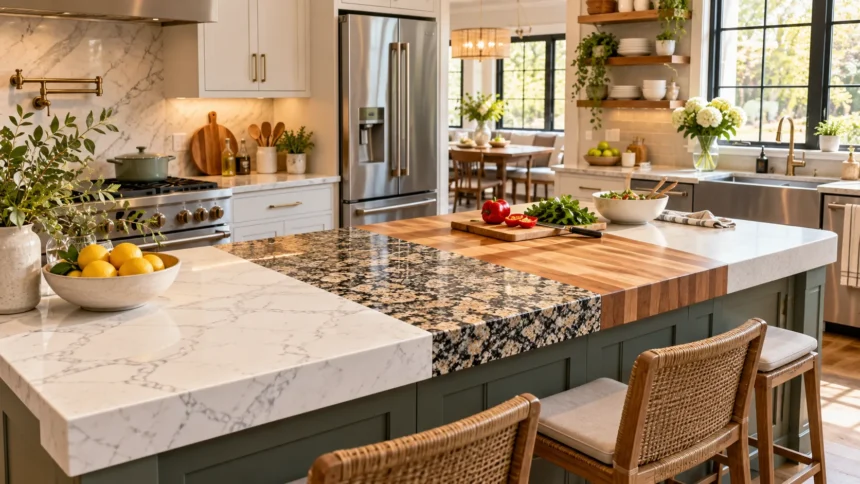
Choosing the right kitchen countertop material is an important decision for homeowners with busy households. Kitchen counters handle everyday cooking, food preparation, spills, cleaning, and frequent use, so durability matters just as much as appearance. The best countertops should provide a practical balance of strength, maintenance requirements, affordability, and attractive design.
Families often struggle to choose between popular countertop materials such as quartz, granite, laminate, butcher block, and porcelain. Each option offers different benefits related to scratch resistance, heat tolerance, moisture protection, and long-term maintenance. Understanding these differences helps homeowners avoid expensive mistakes when renovating or upgrading their kitchens.
This guide explores the best kitchen countertop materials for busy homes, including their advantages, disadvantages, cleaning requirements, and overall value. You will also learn which materials work well for families, how to compare durability, and what to consider before selecting a countertop that can handle daily kitchen activities.
What Makes a Kitchen Countertop Suitable for Busy Homes?
A countertop suitable for a busy home should withstand frequent food preparation, everyday spills, and regular cleaning. Durability is especially important in households where several people use the kitchen throughout the day. Materials that resist stains, moisture, and normal wear can help reduce maintenance and preserve their appearance.
Ease of cleaning is another important factor when selecting kitchen countertop materials. Nonporous surfaces generally require less routine maintenance because liquids are less likely to penetrate them. However, every countertop material has specific cleaning recommendations, and even durable surfaces can become damaged when exposed to unsuitable chemicals or excessive heat.
Homeowners should also consider appearance, installation costs, and long-term value. A countertop that looks beautiful in a showroom may require more maintenance than your household prefers. Comparing real-world performance with your cooking habits helps you choose a surface that remains practical and attractive over time.
Quartz Countertops for Durability and Easy Maintenance
Quartz is one of the most popular countertop materials for homeowners seeking durability and low maintenance. Most engineered quartz countertops combine mineral particles with resin binders and pigments, creating a dense surface. Their nonporous construction helps resist many everyday stains without requiring routine sealing.
Quartz countertops are available in numerous colors, patterns, and finishes, including designs inspired by natural stone. They work well in modern and traditional kitchens because they provide a consistent appearance. Routine cleaning is generally straightforward, making quartz appealing for families who prepare meals frequently.
However, engineered quartz is not completely resistant to heat or physical damage. Hot cookware can damage resin-based surfaces, so trivets and protective pads are recommended. Homeowners should also avoid harsh chemicals and follow manufacturer guidance to protect the finish and maintain long-term performance.
Granite Countertops for Natural Strength and Beauty
Granite is a natural stone countertop material valued for its distinctive patterns and long-lasting performance. Each slab has unique mineral variations, giving kitchens a natural appearance. Granite can withstand normal food preparation activities and offers good scratch resistance compared with many softer countertop materials.
Many granite countertops require periodic sealing, depending on the stone’s porosity and finish. Proper sealing helps reduce liquid absorption and makes routine cleaning easier. Homeowners should wipe spills promptly, particularly when dealing with oils, acidic foods, and strongly colored liquids that may leave marks.
Granite can tolerate heat better than many resin-based countertop products, but sudden temperature changes may still create problems. Using protective pads beneath hot cookware remains a sensible precaution. With appropriate installation and maintenance, granite can be a practical option for busy kitchens.
Quartzite Countertops for a Premium Natural Stone Finish
Quartzite is a natural stone that appeals to homeowners who want an elegant appearance combined with strong surface performance. Genuine quartzite can offer excellent scratch resistance and often features attractive veining. Its natural patterns make it particularly appealing for kitchens with classic or upscale interior designs.
Unlike engineered quartz, quartzite is quarried natural stone and has different maintenance requirements. Many quartzite countertops benefit from sealing to reduce the possibility of staining. The degree of porosity varies, so homeowners should discuss the specific stone with a knowledgeable supplier before purchasing.
Quartzite generally costs more than several common countertop alternatives, especially when uncommon colors or complex installation are involved. Its hardness can also make fabrication more demanding. Homeowners should verify the stone’s identification because some commercially labeled products have different properties from genuine quartzite.
Laminate Countertops for Affordable Everyday Use
Laminate countertops are a popular budget-friendly choice for homeowners who want attractive kitchen surfaces without paying premium stone prices. Modern laminate products offer numerous colors and patterns, including realistic wood and marble-inspired finishes. Their relatively affordable installation costs make them suitable for economical kitchen renovations.
Laminate surfaces are generally easy to clean with suitable household products and do not require routine stone sealing. They can perform well during everyday food preparation when treated appropriately. However, sharp objects, excessive heat, and prolonged moisture exposure can cause damage.
Particular attention should be given to seams, cutouts, and edges, where moisture can affect the underlying substrate. Using cutting boards and heat-resistant pads helps protect the surface. Laminate can provide good practical value for homeowners who prioritize affordability and simple maintenance.
Solid Surface Countertops for Seamless Kitchen Designs
Solid surface countertops are manufactured from blends of resins and mineral fillers. They are available in many colors and can often be installed with inconspicuous seams. Their smooth, nonporous surfaces are appealing in busy kitchens because routine cleaning is relatively straightforward.
Another advantage is that certain scratches and surface marks can be repaired through approved refinishing methods. Some installations also allow integrated sinks, reducing visible joints around washing areas. These features make solid surface countertops attractive for homeowners who prefer a simple, coordinated appearance.
However, solid surface materials generally have lower heat resistance than granite or porcelain. Hot pans can damage the finish, and sharp utensils may leave visible scratches. Proper cleaning and protective accessories help maintain appearance while reducing unnecessary repairs.
Porcelain Countertops for Heat and Stain Resistance
Porcelain countertops are manufactured from specially processed ceramic materials and are increasingly used in residential kitchens. Quality porcelain slabs offer excellent resistance to many stains, scratches, and high temperatures. Their dense surfaces can provide practical benefits for households that cook frequently and need straightforward cleaning.
Porcelain is available in finishes resembling marble, concrete, natural stone, and other popular materials. Some products have relatively thin profiles that complement contemporary kitchen designs. The material’s resistance to many household chemicals also contributes to its appeal in active kitchens.
Despite these advantages, porcelain countertop edges can chip when subjected to strong impacts. Fabrication and installation require experienced professionals familiar with large-format slabs. Homeowners should compare edge designs and installation quality before choosing porcelain for high-use kitchen areas.
Butcher Block Countertops for a Warm Natural Appearance
Butcher block countertops are made from joined pieces of wood that create a warm, natural kitchen appearance. Common materials include maple, oak, and walnut, although availability varies. Wood countertops can work well in family kitchens when homeowners appreciate natural finishes and are willing to perform regular maintenance.
Wood surfaces require careful protection against standing water, excessive moisture, and staining. Different finishes have different care requirements, so homeowners should follow product-specific instructions. Scratches and worn areas may be repairable through suitable refinishing, depending on countertop construction and finish.
Butcher block is generally more demanding to maintain than quartz or laminate. It can also develop marks from sharp utensils and hot cookware. Homeowners who choose wood should consider whether its appearance and repairability outweigh the additional cleaning and maintenance responsibilities.
Stainless Steel Countertops for Heavy Kitchen Use
Stainless steel countertops are commonly found in professional kitchens because they provide durable, nonporous work surfaces. They resist moisture, tolerate high temperatures, and are generally easy to clean. These qualities make stainless steel an option for households that frequently prepare meals and prefer practical kitchen finishes.
The smooth surface does not require sealing and can withstand repeated cleaning with appropriate products. Stainless steel also complements modern appliances and contemporary cabinetry. However, fingerprints, water spots, and scratches can become visible, particularly on polished finishes. Brushed finishes may help make everyday marks less noticeable.
Stainless steel countertops can be relatively expensive when custom fabrication is necessary. Homeowners should also consider the appearance and sound of metal surfaces during daily use. Choosing an appropriate thickness, finish, and installation method can improve long-term satisfaction while supporting frequent cooking activities.
Concrete Countertops for Custom Kitchen Designs
Concrete countertops provide a distinctive appearance and can be customized with different colors, textures, and shapes. They are particularly popular in industrial, minimalist, and contemporary kitchens. Their versatility allows homeowners to create unique surfaces that complement existing cabinetry and interior finishes.
Although concrete is strong, countertop surfaces may develop cracks or stains when improperly installed or maintained. Many concrete countertops require suitable sealing to reduce moisture absorption and protect against common household spills. Acidic foods and certain cleaning products can also affect some finishes.
Concrete countertops can be heavy and may require additional support or specialized installation. Custom fabrication and finishing can increase costs compared with standard countertop materials. Before choosing concrete, homeowners should consider its maintenance requirements, potential for visible imperfections, and compatibility with their kitchen’s existing structure.
Marble Countertops for Elegant Kitchen Interiors
Marble is a natural stone known for its distinctive veining and elegant appearance. It is frequently selected for kitchens where visual design is a major priority. Different varieties offer unique colors and patterns, allowing homeowners to create attractive countertops that complement traditional or contemporary interiors.
However, marble is generally more vulnerable to scratching, staining, and etching than several other countertop materials. Acidic ingredients such as lemon juice and vinegar can affect its surface. Routine sealing may reduce staining risks, but sealing does not prevent acid etching or physical damage.
Busy households should carefully evaluate whether marble’s maintenance requirements match their daily routines. Prompt spill cleanup, cutting boards, and protective accessories can help preserve its appearance. Homeowners seeking a similar look with easier maintenance may prefer certain quartz or porcelain alternatives.
Soapstone Countertops for a Natural and Practical Finish
Soapstone is a natural stone recognized for its smooth texture and distinctive appearance. It is naturally nonporous and does not generally require sealing to resist common kitchen spills. Its resistance to many household chemicals makes it an interesting option for homeowners seeking practical natural stone countertops.
Soapstone also has good heat resistance, although protective pads remain sensible for everyday use. Its relatively soft surface can develop scratches, dents, and other marks more easily than granite or quartzite. Some homeowners appreciate the changing appearance of soapstone as it develops a natural patina.
Minor surface marks can sometimes be addressed using appropriate restoration methods. However, homeowners should understand the material’s characteristics before selecting it for a busy household. Soapstone may be attractive for those who value natural materials and accept visible signs of everyday use.
Compare Countertop Materials Based on Your Household Needs
Choosing between countertop materials becomes easier when homeowners identify their main priorities. Families who prefer minimal maintenance may appreciate quartz or porcelain, while those seeking affordable renovations may favor laminate. Granite and quartzite appeal to homeowners who prefer natural stone and are comfortable with appropriate upkeep.
Consider how often your household cooks, which cleaning products you use, and whether the countertop will experience heavy daily activity. Heat tolerance, stain resistance, and scratch resistance should all influence your decision. No countertop material is completely resistant to every type of damage.
Compare product samples in your actual kitchen before making a final selection. Lighting, cabinet finishes, and flooring can affect how colors and patterns appear. Reviewing maintenance instructions, warranty conditions, and installation requirements helps homeowners choose countertops that match both their practical needs and design preferences.
How Much Do Different Kitchen Countertop Materials Cost?
Kitchen countertop prices vary considerably depending on material quality, thickness, fabrication, and regional labor rates. Laminate is often among the most affordable options, while premium quartzite, marble, and custom stone installations can be significantly more expensive. The total cost also depends on kitchen size and countertop configuration.
Installed laminate countertops may cost approximately $20 to $60 per square foot in the United States. Engineered quartz often ranges from $50 to $150 per square foot installed, while granite and porcelain pricing varies widely. These are broad planning estimates rather than guaranteed 2026 quotations.
Homeowners should request detailed estimates covering material supply, fabrication, delivery, installation, and necessary modifications. Sink cutouts, decorative edges, and complicated layouts can increase expenses. Comparing complete project prices helps prevent unexpected charges and makes it easier to balance countertop quality with the renovation budget.
How to Maintain Kitchen Countertops in Busy Homes
Regular maintenance helps extend the useful life of kitchen countertops, regardless of the selected material. Clean everyday spills promptly and use products recommended by the manufacturer. Avoid assuming that a cleaning solution suitable for one countertop material will work safely on another.
Cutting boards, trivets, and protective mats can reduce damage from sharp utensils and hot cookware. Natural stone surfaces may require sealing according to their specific characteristics and professional recommendations. Engineered quartz, solid surface, and laminate products generally do not require the same sealing procedures.
Inspect countertop edges, seams, and sink connections for signs of damage or moisture intrusion. Addressing minor problems early can prevent deterioration of cabinets and underlying materials. Establishing simple cleaning habits helps busy families maintain attractive kitchen surfaces without unnecessary restoration expenses.
Common Mistakes to Avoid When Choosing Kitchen Countertops
One common mistake is selecting countertop materials based entirely on appearance. A beautiful natural stone surface may require more care than a busy household can comfortably provide. Understanding maintenance requirements before purchasing helps avoid disappointment after installation.
Another mistake is overlooking fabrication and installation expenses when comparing materials. Countertop prices may not include cutouts, edge finishing, delivery, or removal of existing surfaces. Homeowners should request complete written quotations and confirm that existing cabinets can support the selected material.
Choosing an unsuitable material for the way a kitchen is used can also lead to unnecessary repairs. Consider moisture exposure, heat tolerance, and cleaning habits before making a decision. A practical countertop should support everyday activities while complementing the overall kitchen design.
Conclusion
The best kitchen countertop materials for busy homes combine durability, manageable maintenance, and suitable everyday performance. Quartz, granite, porcelain, laminate, and solid surface countertops each offer different advantages. Understanding their limitations helps homeowners choose materials that suit frequent cooking, cleaning, and household activities.
Quartz and porcelain are appealing options for homeowners seeking low-maintenance surfaces, while granite and quartzite provide attractive natural stone alternatives. Laminate offers budget-friendly choices, and butcher block creates a warm appearance for households comfortable with regular maintenance. The ideal material depends on personal preferences, kitchen usage, and available funds.
Before purchasing new countertops, compare material samples, installation expenses, warranty conditions, and ongoing care requirements. Protecting surfaces from excessive heat, sharp objects, and prolonged moisture exposure helps preserve their appearance. With thoughtful selection and proper maintenance, durable kitchen countertops can remain functional and attractive for years.
Frequently Asked Questions
What Is the Most Durable Kitchen Countertop Material?
Porcelain, quartzite, granite, and engineered quartz are among the most durable countertop choices. Each offers different resistance to scratches, stains, and heat, so the best option depends on your household’s cooking habits.
Which Kitchen Countertop Is Easiest to Maintain?
Engineered quartz is among the easiest countertop materials to maintain because its nonporous surface generally does not require sealing. Routine cleaning with suitable products helps preserve its appearance during everyday kitchen use.
What Is the Best Budget-Friendly Kitchen Countertop Material?
Laminate is one of the most affordable countertop materials for busy kitchens. It offers many decorative finishes and relatively simple maintenance, although homeowners should protect it from excessive heat, sharp objects, and moisture damage.
Are Quartz Countertops Better Than Granite for Busy Families?
Quartz often requires less maintenance because it generally does not need sealing. Granite offers natural patterns and good heat resistance but may require periodic sealing, depending on the stone’s characteristics.
Which Countertop Material Is Best for Homes With Children?
Engineered quartz, porcelain, and quality laminate can be practical options for families with children because their surfaces are relatively easy to clean. Rounded edges and proper installation also deserve consideration.