
Choosing the right rug size for a queen bed can make a bedroom feel more comfortable, balanced, and welcoming. A well-placed area rug adds warmth, protects flooring, and helps connect furniture with the overall room design. However, selecting the wrong size can make the space feel awkward, especially when the rug is too small or extends too far beneath nearby furniture.
So, what size rug for queen bed works best? An 8×10-foot rug is generally the most versatile option because it provides comfortable coverage around the bed. A 6×9-foot rug can work in smaller bedrooms, while a 9×12-foot rug offers more generous coverage for spacious layouts. This guide explains common rug dimensions, placement options, measuring tips, and practical bedroom decorating ideas.
What Size Rug for Queen Bed Works Best?
An 8×10-foot rug is one of the most popular choices for a queen-size bed. A standard queen mattress measures approximately 60 inches wide and 80 inches long, leaving enough room for a larger rug to extend beyond the bed. This creates a comfortable area for your feet when getting up and helps visually anchor the sleeping space.
A 6×9-foot rug is another practical option, particularly when the bedroom has limited floor space. It generally works best when positioned beneath the lower portion of the bed rather than the entire frame. This arrangement allows the rug to remain visible along the sides and foot. However, the exact coverage depends on the placement.
For larger bedrooms, a 9×12-foot rug can create a more expansive and coordinated appearance. It may accommodate the bed and nearby furniture while leaving generous exposed rug space. This size works particularly well in rooms with enough clearance around the furniture. The ideal option depends on your room dimensions, bed frame, and preferred layout.
Understanding Queen Bed Dimensions Before Buying a Rug
Understanding the dimensions of a queen bed is essential before choosing an area rug. A standard queen mattress measures 60 inches wide and 80 inches long, or approximately five feet by six feet eight inches. However, the complete bed frame may be larger. Upholstered headboards, platform edges, and decorative frames can increase the overall measurements.
The position of the bed also affects how much rug coverage is needed. A bed placed against the center of a wall usually has walking space on both sides. This layout benefits from a rug that extends beyond the mattress edges. Beds positioned in corners or compact rooms may require a different arrangement.
Before purchasing a rug, measure the full bed frame rather than relying only on mattress dimensions. Include any furniture you want to place on the rug, such as nightstands or a bench. These measurements help establish realistic space requirements. Accurate planning reduces the chance of choosing a rug that looks too small or interferes with movement.
Is an 8×10 Rug Good for a Queen Bed?
An 8×10 rug is generally an excellent choice for a queen bed because it provides balanced coverage without requiring an exceptionally large bedroom. When the rug’s 10-foot side runs across the bed’s width, it can extend beyond both sides. This creates a comfortable landing area and helps define the sleeping zone.
One common placement method involves positioning the rug beneath the lower two-thirds of the bed. The headboard and nightstands remain on the exposed floor, while the rug extends beyond the foot. This arrangement highlights the rug without hiding too much of its design. It is especially useful when the bedroom has a simple furniture layout.
An 8×10 rug may also work beneath more of the bed frame when sufficient floor space is available. However, placement should be planned carefully to ensure adequate coverage. If the rug extends too far toward the headboard, less may remain visible at the foot. Testing the layout with measurements helps identify the most balanced position.
Can You Use a 6×9 Rug Under a Queen Bed?
A 6×9 rug can work well beneath a queen bed, especially in smaller bedrooms where a larger rug might overwhelm the available floor space. Its nine-foot width provides room for the rug to extend beyond the sides of a standard queen mattress. However, this coverage is more limited than an 8×10 rug.
The most practical placement is often beneath the lower portion of the bed. Positioning the rug closer to the foot allows more of the material to remain visible around the sleeping area. This arrangement can create a comfortable decorative feature without covering the entire floor. It also leaves room for nightstands to stand separately.
A 6×9 rug may feel too small if you want all bedroom furniture to sit on one large area rug. The exact result depends on the bed frame and room proportions. For a compact space, however, it can provide an attractive balance between coverage and simplicity. Measuring before purchasing remains important.
When Should You Choose a 9×12 Rug for a Queen Bed?
A 9×12 rug is a suitable option for larger bedrooms that have generous floor space around a queen bed. Its dimensions allow the rug to extend farther beyond the mattress and bed frame. This creates a spacious visual effect and can connect several furniture pieces. The larger surface also provides more soft flooring.
This rug size works particularly well when you want the bed and nightstands positioned within the same defined area. Depending on their dimensions, additional furniture may also fit comfortably on the rug. However, the room must be large enough to prevent the rug from reaching awkwardly into doorways or other functional spaces.
A 9×12 rug is not automatically better simply because it provides more coverage. In a compact bedroom, it may leave very little visible flooring around the edges. This can make the rug feel closer to wall-to-wall carpeting. Choosing an appropriately sized rug helps preserve balance between furniture, exposed flooring, and the surrounding walls.
Best Rug Placement Under a Queen Bed
Rug placement is just as important as selecting the correct size. A beautifully designed rug can lose its visual impact when most of it remains hidden beneath the bed. Positioning should allow enough material to remain visible around the sides or foot. The goal is to create a comfortable, coordinated sleeping area.
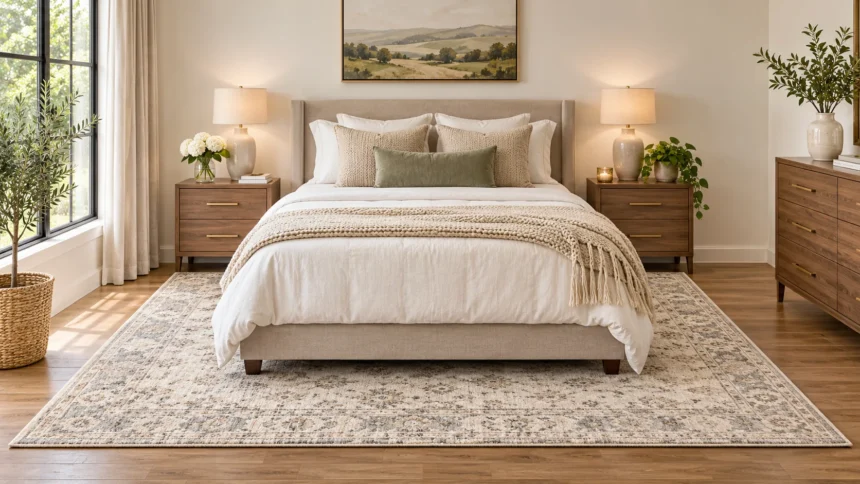
One popular arrangement places the rug beneath approximately two-thirds of the bed, leaving the upper section uncovered. The rug extends along both sides and beyond the foot, creating a defined area. This works well with many 6×9 and 8×10 rugs. Nightstands can remain on the floor without affecting the overall appearance.
Another approach involves placing the entire bed frame on a larger rug. This option can create a unified arrangement when the bedroom has sufficient space. It is often more suitable for 9×12 rugs or similarly generous dimensions. Choose the arrangement that supports comfortable movement and complements the surrounding furniture.
Should a Rug Go Under the Entire Queen Bed?
A rug does not have to extend beneath the entire queen bed to create an attractive bedroom design. Many well-balanced layouts position the rug under only the lower portion of the bed. This allows more of the material to remain visible while keeping the headboard area simple. The arrangement is particularly practical in smaller rooms.
Placing the whole bed on a rug can create a more unified appearance when the room is spacious. It may also help connect nightstands and other furniture within one decorative area. However, the rug should extend far enough beyond the bed to remain noticeable. A rug almost completely hidden beneath furniture provides limited visual benefit.
The choice depends on your preferred decorating style and the amount of available space. A partial placement often feels lighter and more flexible, while full placement can create a more expansive look. Neither approach is universally correct. Measuring the visible rug area can help you decide which arrangement works best.
How Far Should a Rug Extend Beyond a Queen Bed?
A common decorating guideline is to allow approximately 18 to 24 inches of rug coverage beyond the sides of a queen bed. This provides a comfortable area for placing your feet when getting up. Larger bedrooms may accommodate even more visible rug space. The appropriate distance depends on room proportions and furniture placement.
An 8×10 rug can provide generous side coverage when its longer dimension runs across the bed. With a standard queen mattress, a 10-foot-wide rug extends approximately 30 inches beyond each side if centered. A wider bed frame reduces that amount slightly. These measurements explain why the 8×10 size is commonly recommended.
The rug should also extend beyond the foot of the bed enough to remain visually noticeable. The exact distance depends on whether the rug begins beneath the headboard or lower portion. Aim for a balanced appearance rather than following one rigid measurement. A simple floor plan can help you compare different positions.
What Rug Size Works for a Small Bedroom With a Queen Bed?
Small bedrooms require careful planning because the bed often occupies a large portion of the floor. A 6×9 rug may provide enough coverage without extending too close to the walls. Positioning it beneath the lower section of the bed can create a cozy appearance. This approach also keeps the room visually organized.
In very compact spaces, a smaller rug near the foot of the bed or narrow runners beside the bed may be more practical. These alternatives provide softness where it is needed without requiring one large rug. However, the arrangement should still feel intentional. Coordinating colors and textures can help separate rugs work together.
Light-colored rugs can create a soft appearance in smaller bedrooms, especially when paired with neutral bedding and furniture. However, color alone does not determine whether a rug looks suitable. Dimensions and placement have a greater influence on balance. Always measure available walking space before deciding on a particular size.
Best Rug Size for a Large Bedroom With a Queen Bed
Large bedrooms offer greater flexibility when selecting a rug for a queen bed. An 8×10 rug may still work beautifully, particularly when you want to define the sleeping area without covering too much flooring. However, a 9×12 rug can provide additional coverage. The larger size may help connect the bed with nearby furniture.
A spacious room may include a bench, reading chair, or other decorative furniture. Choosing a rug that relates to these pieces can make the bedroom feel more coordinated. However, furniture does not always need to sit entirely on the rug. The layout should preserve comfortable walking paths and allow doors to open freely.
In especially large bedrooms, a rug larger than 9×12 may be appropriate depending on the room and furniture arrangement. Oversized rugs can create a comfortable, unified area beneath the bed. However, they require careful measuring and may be more expensive. Choosing the size should involve both practical needs and the desired appearance.
Should Nightstands Sit on the Bedroom Rug?
Nightstands do not have to sit on the rug for a queen bed arrangement to look balanced. Many popular layouts place the rug beneath the lower two-thirds of the bed, leaving nightstands on exposed flooring. This keeps furniture placement simple and allows the rug to remain visible. It is particularly effective with 8×10 rugs.
For a more expansive design, nightstands can sit on a larger rug alongside the bed. This approach may create a more connected furniture arrangement, especially when using a 9×12 rug. However, all furniture should stand securely without awkward changes in height. Thick rugs may affect how lightweight tables or narrow furniture legs rest.
Consider the distance between the nightstands and the bed before choosing a rug size. A layout that looks balanced on paper may feel crowded when furniture is positioned too closely. Testing measurements helps prevent these problems. The most practical arrangement allows comfortable access to drawers, lamps, and the surrounding walking area.
How to Choose the Best Rug Material for a Bedroom
Rug material affects comfort, maintenance, durability, and overall appearance. Wool rugs are valued for their softness and natural resilience, while cotton rugs may offer a lighter, more casual feel. Synthetic materials such as polypropylene can provide practical alternatives for some households. The best choice depends on personal preferences and expected use.
Bedrooms often benefit from rugs with a comfortable texture because people may step onto them without shoes. Low-pile rugs are generally easier to vacuum and may work well beneath furniture. Higher-pile designs provide a softer surface but can require more maintenance. Consider how the rug feels and how easily it can be cleaned.
People with allergies or sensitivities may prefer materials that can be cleaned regularly and maintained according to their needs. Regardless of material, routine vacuuming and appropriate care help reduce accumulated dust. Always follow the manufacturer’s cleaning recommendations. Choosing a practical material can make your bedroom rug easier to enjoy over time.
Best Rug Colors and Patterns for a Queen Bedroom
Rug color can influence the atmosphere of a bedroom and how well the furniture feels connected. Neutral shades such as beige, cream, gray, and taupe work with many bedding colors. These options create a soft appearance without competing with decorative details. Darker colors can introduce contrast and help define the sleeping area.
Patterned rugs are another useful option, particularly when the bedding and furniture are relatively simple. Geometric designs, traditional motifs, and subtle abstract patterns can add personality. Choose a pattern that complements the overall color palette. A rug does not need to match every accessory exactly to create a coordinated appearance.
For a more expressive bedroom, consider using the rug as a primary decorative feature. A colorful rug beneath neutral furniture can introduce warmth and visual interest. However, strongly patterned bedding and an elaborate rug may compete for attention. Balancing decorative details helps the room feel intentional rather than overly crowded.
Common Rug Size Mistakes to Avoid With Queen Beds
One common mistake is selecting a rug that is too narrow for the bed. When little or no rug remains visible along the sides, the arrangement can feel disconnected. A small rug may also provide limited comfort when stepping out of bed. Measuring the mattress and frame helps prevent this problem before purchasing.
Another mistake involves ignoring the position of nearby furniture. A rug may fit beneath the bed but interfere with doorways, nightstands, or other furniture. This can create uneven surfaces or awkward walking areas. Planning the complete bedroom layout helps ensure the rug supports everyday function instead of creating new inconveniences.
Choosing a rug based only on appearance can also lead to disappointment. A beautiful design may not suit the room if its dimensions or material are impractical. Consider maintenance, thickness, and placement before making a decision. Using painter’s tape to outline the proposed size can help you visualize the rug.
How to Measure Your Bedroom for the Right Rug
Measuring your bedroom before buying a rug is one of the most reliable ways to choose the correct size. Start by recording the length and width of the room. Next, measure the full queen bed frame and nearby furniture. These figures establish how much floor space is available for the rug.
Decide whether you want the rug beneath the lower portion of the bed or the complete furniture arrangement. Measure the intended coverage along both sides and beyond the foot. Consider how much exposed flooring you want to preserve. This makes it easier to compare 6×9, 8×10, and 9×12 options.
Use painter’s tape or paper markers to outline the proposed rug dimensions on the floor. Walk around the room and check whether doors, drawers, and furniture remain accessible. You can also compare how different rug sizes affect the overall layout. This simple planning method helps reduce uncertainty before making a purchase.
Conclusion
Choosing the right rug size for a queen bed depends on bedroom dimensions, furniture placement, and personal decorating preferences. An 8×10 rug is generally the most versatile choice because it provides generous coverage around a standard queen mattress. A 6×9 rug can suit smaller bedrooms, while a 9×12 rug works well in spacious layouts.
Placement also influences how the rug looks and functions. Positioning it beneath the lower two-thirds of the bed creates a balanced arrangement, while placing the entire bed on a larger rug provides a more unified appearance. Measuring the visible coverage helps ensure the rug remains practical and visually connected to the room.
Before buying, consider the bed frame, nightstands, walking areas, rug material, and preferred colors. A well-chosen rug can make the bedroom feel warmer and more comfortable without requiring major changes. With accurate measurements and thoughtful placement, you can create a sleeping space that feels coordinated, welcoming, and practical.
Frequently Asked Questions
What size rug is best for a queen bed?
An 8×10-foot rug is generally the best all-around choice for a queen bed. It provides generous side coverage and works well beneath the lower portion of the bed.
Is a 6×9 rug big enough for a queen bed?
Yes, a 6×9 rug can work with a queen bed, particularly in smaller bedrooms. It is usually most effective beneath the lower portion rather than the entire bed.
Can you put a 9×12 rug under a queen bed?
Yes, a 9×12 rug can create generous coverage around a queen bed. It is especially suitable for larger bedrooms where the bed and nearby furniture need a unified area.
How far should a rug extend beyond a queen bed?
A common guideline is approximately 18 to 24 inches beyond each side of the bed. Larger rugs may provide additional coverage depending on the room layout.
Should a rug go under the nightstands?
A rug can extend beneath nightstands, but it is not necessary. Many attractive queen bedroom layouts place the rug beneath the lower two-thirds of the bed, leaving nightstands on exposed flooring.