

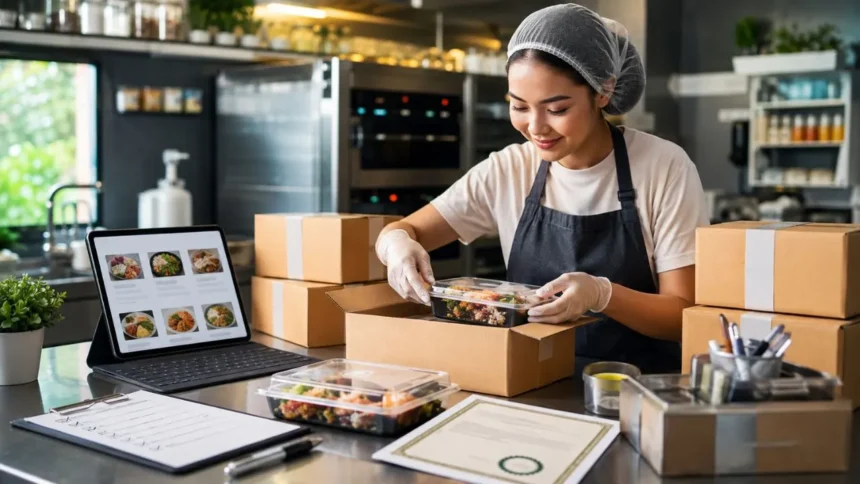
How to Sell Food Online Legally
Selling food online can turn a home recipe, bakery product or speciality meal into a real business. A website, social media page or delivery app can help you reach customers without opening a traditional storefront. However, accepting online payments does not remove the legal responsibilities connected to producing and selling food.
The rules that apply depend on what you sell, where you make it and where your customers live. Shelf-stable cookies may be regulated differently from cheesecakes, meat dishes, sauces or frozen meals. A business delivering within one city may also face different requirements from one shipping products across regional or national borders.
Before launching, you may need to register the business, obtain food permits, use an approved kitchen and create compliant labels. You must also control allergens, storage temperatures, online advertising, tax collection and customer information. Missing one requirement can lead to rejected products, fines, refunds or a forced pause in trading.
This guide explains how to sell food online legally using a practical, step-by-step approach. It provides general information rather than country-specific legal advice, so you should confirm every requirement with the food, health, tax and business authorities responsible for your location.
Key Takeaways
Begin by identifying the exact product, production location and delivery area. These three details determine which food laws are likely to apply. Do not purchase large quantities of packaging or advertise nationwide until you know whether your product can legally be made and shipped that way.
Home-based food laws often allow only specific low-risk products, such as certain breads, cookies or dry mixes. Foods that require refrigeration, contain meat or support rapid bacterial growth may need an inspected commercial kitchen. The permitted product list differs significantly between jurisdictions.
Online sellers must provide truthful information about ingredients, allergens, quantities, storage and delivery. Packaged products may need formal labels, while made-to-order meals may require allergen information through menus or another approved system. Never rely on informal descriptions when the law requires specific disclosures.
Treat compliance as part of your business model rather than a final task. Permit fees, laboratory testing, approved packaging and commercial kitchen access can affect your startup budget. Confirming these costs early helps you choose an online food product that can be sold safely and profitably.
Decide Exactly What Food You Will Sell
Write down every product you plan to offer before contacting a regulator. Include its ingredients, preparation process, packaging, storage temperature and expected shelf life. A general statement such as “homemade snacks” may not provide enough information for an authority to classify your business.
Separate shelf-stable products from foods that need refrigeration or freezing. Cookies, dry spice blends and some candies may create fewer temperature-control challenges than meat dishes, cream desserts or prepared meals. This does not mean shelf-stable products are automatically exempt from permits or labeling rules.
Consider whether the product contains meat, poultry, seafood, dairy, eggs or other highly regulated ingredients. Special rules may govern how those ingredients are processed, inspected and shipped. A sauce containing meat may face different requirements from a vegetable sauce made with a similar method.
Start with a short product range while researching compliance. Every additional item can introduce new allergens, processes and storage requirements. Approving three carefully selected products is usually easier than trying to legalise a large menu at once.
Identify Where the Food Will Be Produced
Your production location is one of the most important legal details. Food prepared in a private home may fall under cottage-food or home-processing rules. Food prepared in a restaurant, shared kitchen, factory or catering facility may follow another regulatory pathway.
Do not assume that a clean home kitchen is automatically approved for commercial use. Some jurisdictions allow only particular low-risk foods to be produced at home. Others require registration, inspection, training, zoning approval or a separate food-preparation area.
An approved shared kitchen can be a practical solution when your product is not permitted under home-food rules. These facilities rent commercial preparation space by the hour or shift. Confirm that the kitchen’s approval covers your product and that your business is allowed to operate under its licence arrangement.
Keep written evidence of your right to use the production location. This may include a lease, kitchen-use agreement, inspection certificate or landlord approval. Online marketplaces, wholesale customers and regulators may request these documents before allowing you to sell.
Determine Where Your Customers Will Be Located
Selling locally is different from shipping food across state, provincial or national borders. Local delivery may be regulated mainly by city or regional authorities, while wider distribution can introduce federal rules, customs requirements and additional facility obligations.
Define your first delivery area before applying for permits. You might begin with collection from your kitchen, delivery within one city or shipping within a single region. A smaller service area makes it easier to test packaging, delivery times and regulatory requirements.
Do not enable worldwide or nationwide delivery simply because your website allows it. Each destination may have its own restrictions on ingredients, labeling, food imports and temperature-controlled products. Accepting an order does not make the shipment legally permissible.
Review your sales area whenever you expand. A permit that covers local retail sales may not allow wholesale distribution or interstate shipping. Obtain written guidance before changing from local delivery to a broader ecommerce food business.
Understand Cottage-Food Laws
Cottage-food laws allow certain foods to be prepared in a private residence and sold to consumers. These laws are intended to create a legal pathway for small producers, but they do not permit every type of homemade food. The exact product list and sales limits depend on the jurisdiction.
Commonly permitted products may include some baked goods, dry mixes, candies, jams or shelf-stable snacks. Products needing refrigeration, controlled acidity or specialised processing may be excluded. Never copy another seller’s product list without checking whether the same rules apply to you.
Cottage-food businesses may face restrictions on annual revenue, delivery methods and sales locations. Some laws allow direct sales to local consumers but prohibit shipping, wholesale supply or sales through third-party retailers. An online order may be allowed only when the final handoff occurs within the approved area.
Additional conditions may include food-safety training, home inspections and specific label statements. Some businesses must display wording explaining that the food was prepared in a home kitchen. Confirm the exact format instead of creating your own disclaimer.
Check Whether Your Product Is Shelf-Stable
A shelf-stable food can remain safe under normal room-temperature storage when it is produced and packaged correctly. Shelf stability is not determined by appearance or personal experience. Moisture, acidity, ingredients, processing and packaging all influence microbial growth.
Products such as sauces, pickles and filled baked goods may require professional testing before being treated as shelf-stable. Guessing an expiry date or relying on a family recipe can create a serious safety risk. A product that smells normal can still contain harmful microorganisms.
Ask the relevant authority whether you need pH testing, water-activity testing or process approval. A qualified food laboratory or process specialist may need to evaluate the recipe. Keep the final formulation consistent because changing ingredient quantities can invalidate earlier results.
When testing is unaffordable, consider selling a simpler product with a clearer regulatory pathway. Dry spice blends, plain cookies or other approved low-risk products may be easier to launch legally. You can add more complex foods after the business has resources for proper validation.
Register the Food Business
Most online food sellers need some form of business registration, even when they operate from home. Registration creates a legal identity and may be necessary for permits, banking, tax accounts, supplier agreements and insurance. The required process depends on your business structure and location.
Choose whether to operate as a sole owner, partnership or limited-liability entity where those structures are available. Each option can affect ownership, taxes, paperwork and personal liability. Consider professional advice when partners, employees or significant product risks are involved.
Check whether your proposed business name is available before printing labels. Search company registers, trademarks, website domains and social platforms. Using a name that belongs to another business can create customer confusion and potential legal disputes.
Store registration certificates and renewal dates securely. Some registrations must be renewed annually or updated when your address, owners or activities change. Failing to maintain accurate records can affect other licences connected to the business.
Obtain the Required Food Licences
A business registration does not automatically give you permission to prepare and sell food. You may also need a food establishment licence, health permit, home-processing approval or manufacturer registration. Different agencies may regulate different parts of the operation.
Contact the food or health authority and describe your complete process. Explain the ingredients, kitchen, packaging, storage, online ordering and delivery method. Ask for written confirmation of the approvals required before you begin selling.
Record application fees, processing periods and inspection conditions. Some permits must be approved before production starts, while others require an inspection after equipment is installed. Build these waiting periods into your launch plan.
Display permits where required and keep digital copies available. Online marketplaces, payment providers or commercial customers may request evidence that you are authorised to trade. Never edit, borrow or reuse another business’s licence.
Confirm Local Zoning and Home-Business Rules
Food regulations are not the only laws affecting a home-based online business. Zoning or residential rules may control commercial cooking, customer collection, signage, employees and delivery traffic. Landlords and housing associations may also impose restrictions.
Contact the local planning or municipal authority before creating a collection point at your home. Several customers or couriers arriving each day can create parking, security and neighbour concerns. An online-only business can still affect the surrounding property.
Review your rental agreement or mortgage conditions when applicable. A landlord’s approval does not replace government permission, but it may still be required. Obtain consent in writing rather than relying on an informal conversation.
When home operation is prohibited, consider a shared kitchen with an off-site collection or courier service. This may cost more than using your home, but it provides a clearer legal foundation. Include kitchen rent in your pricing before committing to the model.
Complete Food-Safety Training
Many locations require at least one owner or employee to complete approved food-safety training. Even where training is voluntary, it helps you understand contamination, allergens, temperature control and employee illness. Online customers deserve the same protection as restaurant customers.
Select a course recognised by the authority issuing your permit. A random internet certificate may not meet official requirements. Confirm the accepted training provider, course level, examination method and renewal period before paying.
Train anyone who helps prepare, package or deliver the food. Family members working occasionally can still introduce contamination when they do not understand procedures. Keep training records and explain each task using written instructions.
Refresh training when your products or processes change. A person experienced in baking shelf-stable cookies may need additional knowledge before preparing chilled meals. Food-safety competence should grow with the complexity of the business.
Create a Food-Safety Management Plan
A food-safety plan explains how you will control hazards from receiving ingredients to delivering finished orders. It should cover supplier checks, storage, preparation, cooking, cooling, packaging and transport. The required format depends on your product and jurisdiction.
Map the complete journey of each food item. Identify stages where bacteria, allergens, chemicals or foreign objects could enter the product. Then establish practical controls, monitoring steps and corrective actions for each important risk.
Create daily or batch records where appropriate. Temperature logs, cleaning schedules, production dates and supplier information can help demonstrate control. Records also make it easier to investigate a complaint or recall affected products.
Keep the plan realistic for the size of your business. A small home bakery may not need the same documents as a large factory, but it still needs consistent safety procedures. Follow the system every day rather than producing paperwork only for an inspection.
Use Approved and Traceable Suppliers
Purchase ingredients from reputable suppliers that can provide invoices and accurate product information. Traceable purchasing helps you verify allergens, expiry dates and batch details. It also allows you to respond when a supplier announces a recall.
Avoid buying commercial ingredients from unknown sellers simply because the price is lower. Poor storage, counterfeit packaging or missing labels can create safety and legal problems. Your finished product is only as reliable as the materials used to make it.
Keep invoices, delivery notes and product specifications for an appropriate period. Record which ingredient batches were used in each production batch when your product risk or regulations require it. This creates a basic traceability system.
Create an approved substitute list for important ingredients. When a product becomes unavailable, employees should not purchase a replacement without checking its allergens and specifications. A seemingly minor brand change can alter the safety and label accuracy of your food.
Separate Personal and Business Food Storage
Business ingredients should be clearly identified and protected from household use. Separate storage reduces confusion, contamination and missing inventory. Some home-food permits may require dedicated shelves, cupboards or refrigeration space.
Use sealed, food-grade containers with labels showing the ingredient and date. Keep raw animal products below ready-to-eat foods to prevent leaks. Cleaning chemicals, pet supplies and personal medicines should remain away from business ingredients.
Monitor refrigerator and freezer temperatures with suitable thermometers. Do not assume that an appliance is cold enough because the food feels cool. Overfilled household refrigerators may also struggle to maintain a consistent temperature.
Apply an organised stock-rotation system. Use older suitable ingredients before newer deliveries and remove damaged or expired products. Record business waste rather than returning questionable food to personal storage.
Develop Standardised Recipes
A standardised recipe lists the exact ingredients, quantities, method, yield and portion size. It ensures that every batch has the same taste, cost and allergen profile. Informal measurements can create serious problems when labels and customer information depend on accuracy.
Measure ingredients by weight when practical. Instructions such as “a handful” or “a little sauce” do not provide reliable control. Accurate measurements also help you calculate the cost and expected number of sellable units.
Control recipe changes through a documented approval process. Adding a new topping or switching flour can introduce an allergen or affect shelf stability. Update the label and product listing before selling the revised version.
Keep one master recipe and make sure everyone follows it. Unauthorised substitutions can make your published ingredient information incorrect. Consistency protects both your brand and your legal compliance.
Prepare Legally Compliant Food Labels
Packaged food may need a product name, net quantity, ingredient list and business information. Nutrition information, date markings, storage instructions or origin statements may also be required. The details depend on the jurisdiction, product and business size.
Ingredients are commonly listed according to their weight in the recipe, starting with the largest amount. Compound ingredients such as chocolate chips or sauces may require their own components to be disclosed. Use official ingredient names rather than marketing descriptions.
Make required information easy to read. Text size, placement, measurement units and label language can be regulated. A beautiful minimalist label can still be non-compliant when essential details are too small or missing.
Review label requirements before ordering thousands of printed packages. Begin with short print runs or approved removable labels while testing the business. Have a regulator or qualified labeling specialist review complicated products.
Declare Food Allergens Accurately
Food allergens can cause severe or life-threatening reactions. Identify every allergen in the recipe, including ingredients inside flavourings, sauces, decorations and processing aids. Do not depend only on the name of the finished ingredient.
Follow the allergen list recognised in each market where you sell. Countries do not always define or display allergens in the same way. A label prepared for one country may not meet the rules of another.
Assess cross-contact risks from shared utensils, mixers, fryers, worktops and storage containers. A product made without peanuts, for example, may still become contaminated when equipment is shared. Never claim that a product is allergen-free unless your controls support that promise.
Train staff to answer allergen questions without guessing. Keep written ingredient records available and update them whenever a supplier changes. When you cannot safely accommodate an allergy request, explain that limitation honestly.
Provide Accurate Online Product Information
Your product page should match the food that customers receive. Show the correct name, quantity, ingredients, allergen information, price and storage needs. A customer should not discover an important ingredient only after opening the package.
Use photographs that accurately represent the portion and appearance. Avoid digitally enlarging the product or showing garnishes that are not included. Misleading images can lead to complaints, refunds and consumer-protection concerns.
State whether the food is delivered chilled, frozen, hot or at room temperature. Include reheating, preparation and use-by instructions when needed. Customers must understand how to handle the food safely after delivery.
Update every sales channel when a product changes. Your website, social media, marketplace listing and printed label should not provide conflicting information. Assign one person to check all versions before a revised recipe goes live.
Avoid Unproven Health and Nutrition Claims
Food advertising must be truthful and supported by appropriate evidence. Claims such as “boosts immunity,” “cures diabetes” or “guarantees weight loss” can create regulatory problems. Testimonials do not automatically prove that a claim is accurate.
Terms such as low-fat, sugar-free, high-protein, organic and gluten-free may have legal definitions. Do not use them based only on personal interpretation. Confirm the qualifying conditions and maintain evidence showing that the product meets them.
Be especially careful with disease-related wording. Describing a product as suitable for a preference is different from claiming that it treats or prevents an illness. When nutrition is central to the business, consult a qualified labeling or regulatory professional.
Influencer posts and customer reviews used in your marketing can also create claims. Do not repost exaggerated statements simply because a customer wrote them. Your business may still be responsible for the overall advertising message.
Determine Whether Nutrition Facts Are Required
Some small businesses or specific products may qualify for exemptions from full nutrition labeling. However, an exemption should be confirmed rather than assumed. Making a nutrition or health claim can also change which information must be provided.
Ask the responsible authority whether your sales volume, business size or product type qualifies for relief. Keep evidence supporting the exemption. Retailers and online marketplaces may still request nutrition data even when the law provides an exemption.
When nutrition information is required, use an accepted calculation or laboratory method. A free recipe calculator may be useful for internal planning but may not meet official standards. Accuracy depends on the recipe, ingredient data and serving-size determination.
Review the nutrition panel whenever the recipe or portion changes. A new supplier or larger serving can make the old values inaccurate. Keep records explaining how the declared information was calculated.
Set Safe Shelf-Life and Date Marking
Shelf life is the period during which the product remains safe and maintains acceptable quality under stated storage conditions. It should be based on evidence rather than guesswork. Copying a competitor’s date is not a valid assessment.
Low-risk foods may be evaluated through recipe controls and practical quality testing. Perishable, vacuum-packed, fermented or acidified foods may require specialist assessment. Ask whether laboratory analysis or challenge testing is necessary.
Choose the correct type of date wording required in your market. A safety-based use-by date may carry different meaning from a quality-based best-before date. Staff and customers should understand the difference.
Store retention samples when appropriate so you can monitor the product over time. Record packaging condition, texture, smell and any other relevant changes. Never extend a date simply because you have unsold inventory.
Plan Safe Local Delivery
Local delivery must protect food from contamination, damage and unsafe temperatures. Select packaging based on the product and expected journey. A container that works for customer collection may not survive a forty-minute motorcycle delivery.
Keep chilled products cold and hot products appropriately hot according to local requirements. Use insulated boxes, suitable cold sources or heated carriers when necessary. Test the temperature at the end of a realistic delivery route.
Separate allergens, raw foods and ready-to-eat products during transport. Packages should remain closed, clean and protected from personal items. Delivery vehicles and reusable bags need regular cleaning.
Create rules for delays and failed deliveries. Perishable food should not remain outside a customer’s door for an uncontrolled period. Tell customers when someone must be available to receive the order.
Ship Perishable Food Correctly
Shipping chilled or frozen food is more complicated than local delivery. The package must maintain a safe temperature throughout transit, including sorting facilities and unexpected delays. Ordinary cardboard without insulation is rarely suitable for highly perishable products.
Use tested insulation, gel packs, dry ice or another approved cooling method. Follow carrier rules for hazardous materials such as dry ice. Mark the parcel with required handling and temperature instructions.
Choose a delivery speed that matches the product’s validated packaging performance. Avoid dispatch schedules that could leave food in a warehouse over a weekend or holiday. Track every shipment and communicate delivery expectations to the customer.
Test the complete shipping system before selling widely. Send trial packages over the longest planned route and measure the arrival temperature. When safe shipping is too expensive, limit the product to local sales or choose a shelf-stable alternative.
Check Rules for Meat, Poultry, Seafood and Dairy
Animal-based products often face stricter production and inspection requirements. Homemade meat dishes may not qualify under cottage-food rules. Processing or shipping across regional borders can introduce additional government oversight.
Purchase meat, poultry, seafood and dairy from approved sources. Keep invoices and inspection information where applicable. Do not use home-slaughtered or uninspected animal products in commercial food unless the law specifically allows that activity.
Confirm whether your facility may process, package and resell the product. A general food permit may not cover specialised meat or dairy processing. Ask the regulator about each activity rather than assuming that ingredient purchase makes the final product legal.
When the rules are too complex for your startup budget, begin with another product category. A shelf-stable plant-based snack may provide a simpler entry into online food sales. You can add regulated products after developing the required facility and expertise.
Understand Sales Tax and Business Taxes
Online food sales can create several tax obligations. You may need an income-tax account, sales-tax registration or value-added tax registration. The treatment of food can vary according to product type, preparation and delivery location.
Prepared meals may be taxed differently from basic groceries. Delivery fees and packaging charges may also receive different treatment. Do not copy another business’s checkout settings without checking whether its products are classified like yours.
Your website or marketplace may calculate some taxes automatically, but you remain responsible for correct setup and reporting. Platform collection does not necessarily remove every filing obligation. Save settlement reports and transaction records.
Speak with a qualified accountant or tax authority before expanding into new regions. Online sales can create obligations where customers are located, particularly after the business reaches certain thresholds. Build potential tax into your pricing from the beginning.
Use Clear Terms and Conditions
Your online store should explain payment, cancellation, delivery, refunds and product-handling responsibilities. Clear terms reduce disputes and help customers understand what happens when an order is delayed or changed.
Create special rules for customised and perishable products. A personalised cake cannot always be resold after cancellation, while chilled food may not be suitable for return. Your policies must still respect local consumer-protection laws.
Explain delivery windows rather than promising an exact time you cannot control. State what customers should do when a parcel arrives damaged or warm. Provide a clear contact method for reporting problems.
Do not hide important conditions in difficult language. Terms should be readable and displayed before the customer completes payment. Have a legal professional review them when your order value, delivery range or risk increases.
Protect Customer Data and Payments
An online food business collects names, phone numbers, addresses and payment information. Protect this data using reputable ecommerce and payment providers. Avoid storing full card details yourself unless you have the necessary security systems.
Use strong, unique passwords and enable multi-factor authentication where available. Limit staff access to only the information needed for their roles. Remove access immediately when someone leaves the business.
Publish a privacy notice explaining what information you collect and how it is used. Rules differ by location, particularly when selling to customers in other countries. Email marketing may also require consent and an easy unsubscribe method.
Prepare for data incidents. Know how to change passwords, contact providers and inform affected customers when legally required. A small company can still suffer serious damage from weak account security.
Obtain Appropriate Business Insurance
Food sellers face risks involving allergic reactions, foodborne illness, damaged property and delivery accidents. Product liability insurance may help protect the business from certain customer claims. General business or property coverage may also be relevant.
Describe your operation accurately to the insurance provider. Mention home production, online sales, delivery, catering and interstate shipping when applicable. A policy may not cover activities that were never disclosed.
Check the coverage limits, exclusions and geographic area. A policy covering local sales may not protect products shipped internationally. Marketplace requirements can also demand a specific level of insurance.
Keep certificates and renewal dates organised. Update the insurer when you add products, employees, premises or new sales channels. Insurance does not replace safe practice, but it can reduce the financial impact of an unexpected incident.
Set Up a Product Recall Procedure
A recall removes food from customers when it may be unsafe, incorrectly labelled or otherwise non-compliant. Even a very small online food business should know how to contact buyers and identify affected batches.
Assign a batch or production code to packaged products. Record the production date, ingredient batches and customers who received each batch. This information helps you target the affected products instead of recalling everything.
Create a contact list for regulators, suppliers, marketplaces and customers. Prepare a basic message explaining what the product is, why it should not be consumed and what the customer should do. Communicate quickly without minimising the concern.
Test the system with a mock recall. Choose one batch and see whether you can identify its ingredients and buyers. Fix missing records before a real emergency occurs.
Keep Essential Business Records
Maintain records of permits, inspections, training, recipes and supplier invoices. Also keep production, temperature, cleaning, allergen and complaint records when relevant. Organised documentation supports both compliance and daily decision-making.
Store financial records separately from food-safety records but make both easy to retrieve. Digital copies can protect against damaged or lost paper. Use secure backups rather than relying on one phone or laptop.
Set a retention period according to legal requirements and product shelf life. Certain records may need to remain available long after the product was sold. Ask the regulator or accountant when you are unsure.
Review documents on a fixed schedule. Remove outdated procedures, renew certificates and update contact details. Compliance records should reflect the way the business currently operates.
Choose Online Marketplaces Carefully
Social media, delivery apps and ecommerce marketplaces can help you find customers, but each platform has its own seller rules. Some require permits, insurance, tax information or an approved business address before activating food listings.
Read the platform’s policy for homemade, perishable and regulated products. A listing being technically possible does not mean the product is permitted. Accounts may be suspended when sellers breach restricted-product rules.
Calculate commissions, payment charges and refund costs before setting prices. A platform can increase sales while reducing profit. Include its fees in the cost of every online order.
Keep your own customer and order records where legally allowed. Do not depend entirely on a platform that can change its policies or close an account. Building a direct website or permitted customer list can reduce long-term dependence.
Complete a Soft Launch Before Expanding
Begin with a controlled number of local orders. A soft launch allows you to test labels, payments, packaging and delivery without handling more customers than your system can support. Treat these as real sales rather than informal samples.
Ask customers whether the product page matched what they received. Check portion accuracy, packaging condition and delivery temperature. Record complaints and identify whether they reveal an individual mistake or a system weakness.
Review your permit conditions after the test. Make sure actual production matches what you described in the application. Contact the authority before introducing a new process or delivery area.
Expand only when the compliance system works consistently. More orders increase both revenue and legal exposure. Strong records and reliable procedures make growth safer.
Common Legal Mistakes Online Food Sellers Make
One common mistake is assuming that selling through social media is informal and therefore unregulated. Food laws generally focus on the production and sale, not whether the order came through a website, app or private message.
Another mistake is using a home kitchen for products that require an approved commercial facility. A cottage-food permit may cover cookies but not cream cakes or cooked meat. Review every product separately.
Incorrect labels create additional risk. Missing allergens, unsupported claims and inaccurate ingredients can harm customers and lead to regulatory action. Update both printed and online information when recipes change.
Shipping perishable food without testing the cold chain is also dangerous. A package may leave your kitchen frozen and arrive at an unsafe temperature. Validate the packaging before accepting long-distance orders.
Final Legal Checklist Before Your First Sale
Confirm that your product is allowed, your production location is approved and your target delivery area is covered. Obtain business registration, food licences, zoning approval and food-safety training where required.
Finalise standard recipes, supplier records and allergen controls. Make sure the label and online listing accurately describe the ingredients, quantity, storage, shelf life and business information.
Test ordering, payment, packaging and delivery from beginning to end. Check the arrival condition and temperature of perishable products. Create clear cancellation, refund and complaint procedures.
Arrange suitable insurance, tax registration, recordkeeping and recall systems. Keep written evidence of approvals and update them as the business changes. Do not launch until every essential requirement has been confirmed.
Final Thoughts
Learning how to sell food online legally begins with understanding that no single permit covers every business model. Your product, kitchen, customer location and delivery method work together to determine the rules.
Start locally with a small, legally permitted product range. This makes compliance, delivery and traceability easier to manage. Expand only after confirming what additional approvals wider distribution requires.
Accurate labels, allergen controls and safe shipping protect customers as well as your reputation. Cutting corners may save money initially, but one serious complaint can cost far more than proper preparation.
Contact the responsible authorities before accepting orders. Written guidance from local regulators, supported by qualified legal, tax and food-safety advice, gives your online food business the strongest foundation for sustainable growth.
Frequently Asked Questions
Do I need a licence to sell food online?
Most businesses need registration or food-related approval, but the exact licence depends on the product, kitchen and location. Contact your local health and business authorities before selling.
Can I legally sell homemade food online?
You may be able to sell approved low-risk foods under cottage-food rules. Refrigerated meals, meat products and cream desserts often require an inspected commercial kitchen.
Can I ship homemade food to another state?
It depends on the product and the laws of both locations. Some cottage-food permits allow only local direct sales and do not permit interstate shipping.
What information should be on a food label?
Requirements may include the product name, net quantity, ingredients, allergens and business details. Nutrition, dates and storage instructions may also be required.
Can I sell food through social media without registering?
Using social media does not normally remove food-business obligations. You must still follow the registration, licensing, tax, food-safety and labeling rules that apply locally.