

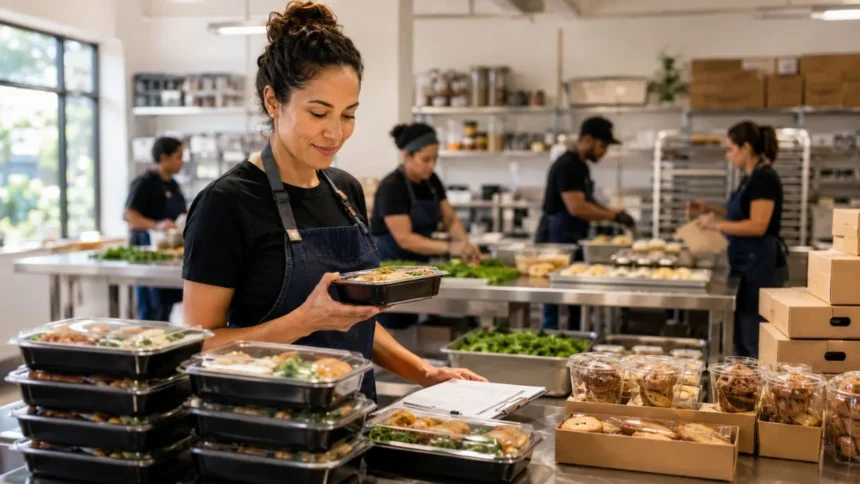
How to Scale a Food Business Without Losing Quality
Growing a food business is exciting because it proves that customers value what you sell. More orders can create higher revenue, stronger brand awareness, and opportunities to enter new markets. However, rapid growth can also place pressure on production, employees, ingredients, delivery, and customer service. Without the right systems, the quality that attracted customers may begin to disappear.
Scaling a food business means increasing its capacity without allowing costs and complexity to grow at the same speed. It is different from simply producing more food or adding more locations. Sustainable scaling requires repeatable recipes, trained employees, reliable suppliers, strong quality controls, and accurate financial information. Every additional order should strengthen the business rather than create operational confusion.
Food quality can decline when owners rush into expansion before their existing operation is stable. Portions may become inconsistent, ingredients may change, orders may arrive late, or customer complaints may receive less attention. These problems can damage trust because regular customers expect the same experience every time. Growth becomes dangerous when sales increase faster than the business can maintain its promises.
The safest approach is to scale gradually, measure each change, and protect the qualities that make your brand valuable. This guide explains how to scale a food business without losing quality, profitability, or customer loyalty. It covers production systems, supplier management, employee training, food safety, technology, menu design, and financial control. These steps can help you grow with greater confidence and fewer expensive mistakes.
Understand What Scaling a Food Business Really Means
Scaling means building a food business that can serve more customers without depending on the owner for every task. The operation should produce consistent results through documented processes, trained employees, dependable equipment, and clear responsibilities. Revenue should grow faster than unnecessary costs and operational problems. If every new order requires the owner to work additional hours, the business is growing but not truly scaling.
Growth may include selling more products, increasing production, entering retail stores, expanding delivery areas, or opening another location. Each option creates different demands on cash, staff, inventory, and quality assurance. A catering company may need better scheduling, while a packaged-food brand may require longer shelf life and stronger distribution. Understanding the type of growth you want helps you prepare the correct systems.
Successful scaling should improve efficiency while protecting customer satisfaction. Larger production volumes may lower ingredient or packaging costs, but they can also introduce new risks. Recipes may behave differently in bigger batches, employees may interpret instructions differently, and transportation may affect freshness. Every efficiency improvement should therefore be tested against product quality.
Before expanding, define what successful scaling will look like for your business. You may want to double monthly orders, enter ten retail stores, or reduce the owner’s daily production role. Set measurable goals for revenue, profit margin, order accuracy, customer reviews, waste, and delivery time. Clear targets help you determine whether expansion is improving the business or simply making it busier.
Make Sure Your Current Operation Is Ready to Scale
A food business should not scale until its existing operation is reasonably stable and profitable. Strong demand is encouraging, but demand alone does not prove that the business is ready. You should understand your product costs, production limits, staffing requirements, and customer retention rate. Expanding an unstable operation usually makes its existing problems larger and more expensive.
Review whether your products are consistently profitable at their current prices. Include ingredients, packaging, labor, rent, utilities, delivery fees, marketing, waste, and owner compensation in your calculations. A product that loses money at a small scale will usually lose even more money when sales increase. Profitability should be confirmed before investing in equipment, facilities, or additional employees.
You should also examine the consistency of your customer experience. Review complaints, refunds, late orders, product returns, and negative feedback from recent months. Occasional mistakes are normal, but repeated issues indicate that important processes remain weak. Fixing those problems before expansion protects your reputation when more customers begin interacting with the brand.
Evaluate how much the operation depends on the founder. If employees cannot produce, package, sell, or deliver products without constant supervision, scaling will be difficult. Begin transferring knowledge into recipes, checklists, training documents, and clear job roles. A scalable business must function reliably even when the owner is not present for every decision.
Standardize Every Recipe and Production Method
Recipe standardization is one of the most important steps in scaling food production. A recipe should include exact ingredient quantities, preparation steps, cooking temperatures, cooking times, portion sizes, and storage instructions. Vague directions such as adding ingredients until the mixture looks right are difficult for employees to repeat. Precise instructions protect consistency across different people and production periods.
Test each recipe using the equipment and batch sizes you expect to use during expansion. Multiplying a small recipe does not always create the same flavor, texture, or cooking result. Heat distribution, mixing time, moisture loss, and ingredient reactions can change at larger volumes. Conduct controlled production trials before accepting large orders or signing retail agreements.
Create a master recipe for every product and control who can update it. Employees should always work from the latest approved version rather than personal notes or memory. Record changes to ingredients, preparation methods, yields, and expected results. This process prevents accidental variations and helps the business investigate quality problems more accurately.
Standardization should cover presentation as well as preparation. Define the expected weight, appearance, texture, packaging, garnish, and serving temperature of every product. Use photographs or visual examples when written instructions are not enough. Customers should receive a recognizable experience regardless of who prepared or packaged their order.
Create Clear Standard Operating Procedures
Standard operating procedures explain how important tasks should be completed throughout the business. They can cover receiving ingredients, cleaning equipment, opening the kitchen, preparing orders, packaging products, handling complaints, and closing the facility. Written procedures reduce confusion and make employee performance more consistent. They also help the business maintain standards as the team becomes larger.
Each procedure should be clear, practical, and easy to follow during a busy working day. Long documents filled with technical language may be ignored by employees. Use short steps, checklists, photographs, diagrams, and examples where helpful. Store the procedures in a location that team members can access whenever they need guidance.
Assign responsibility for each process instead of assuming someone will complete it. Employees should know who checks temperatures, approves finished products, counts inventory, or responds to delivery problems. Clear ownership prevents important tasks from being forgotten during busy periods. It also makes it easier to identify where a process failed and how to correct it.
Review procedures whenever equipment, recipes, suppliers, regulations, or sales channels change. An old system may no longer protect quality after production volume increases. Ask employees which instructions are confusing or difficult to follow in practice. Procedures should evolve with the business while preserving the standards customers expect.
Build a Reliable Food Quality Control System
Food quality control should occur at every stage rather than only after a product is finished. Inspect ingredients when they arrive, monitor preparation conditions, check cooking results, and review packaging before orders leave. Problems are easier and cheaper to correct when they are identified early. A final inspection cannot always repair damage caused during production.
Define measurable quality standards for each product. These may include weight, size, temperature, texture, color, freshness, appearance, or packaging condition. Employees should understand what an acceptable product looks like and what must be rejected. Clear standards reduce personal interpretation and protect consistency.
Use quality-control checklists and keep simple records of important results. Documentation can reveal patterns involving certain suppliers, shifts, machines, products, or production days. For example, repeated texture problems may be connected to one mixing method or ingredient batch. Records turn isolated complaints into information that can support permanent solutions.
Encourage employees to report quality concerns before products reach customers. Team members should not feel pressured to hide mistakes to protect production targets. Reward attention to quality rather than measuring success only by speed or quantity. A strong quality culture protects the brand even when managers are not watching every task.
Invest in Equipment That Supports Consistency
The right equipment can increase production capacity while improving speed, accuracy, and product consistency. Larger mixers, ovens, refrigeration units, filling machines, or packaging tools may reduce manual variation. However, expensive equipment should solve a clear operational problem rather than serve as a symbol of growth. Every purchase should support demand, quality, efficiency, or food safety.
Measure your current production process before choosing new equipment. Identify where delays, errors, waste, or physical strain occur most frequently. A faster oven will not solve a packaging bottleneck, while an automated filler may be unnecessary if demand remains uncertain. Purchase decisions should be based on real production data.
Test equipment with your actual recipes and packaging materials whenever possible. Different machines can change texture, temperature, portion accuracy, or product appearance. Employees also need enough time to learn the correct settings and maintenance procedures. A rushed equipment change can temporarily reduce quality instead of improving it.
Create a preventive maintenance schedule for every important machine. Unexpected breakdowns can delay orders, damage ingredients, and force employees to use inconsistent manual methods. Keep maintenance records and identify backup options for critical equipment. Reliable machinery supports reliable food quality during periods of high demand.
Choose Suppliers That Can Grow with Your Business
A supplier that works well for a small operation may struggle to support larger and more frequent orders. Before scaling, ask whether your suppliers can maintain quality, availability, delivery times, and pricing as your demand increases. Sudden ingredient substitutions can change the flavor or appearance of your products. Supplier reliability is therefore directly connected to brand consistency.
Evaluate suppliers using more than the lowest available price. Consider ingredient specifications, traceability, communication, lead times, minimum orders, payment terms, and problem resolution. A slightly more expensive supplier may provide better value through consistent deliveries and fewer production disruptions. Total reliability often matters more than a small difference in unit cost.
Create written specifications for your most important ingredients and packaging materials. Include details such as size, quality level, variety, origin, texture, color, or required certifications. These standards help suppliers understand what the business will accept. They also make it easier to compare alternative suppliers during shortages.
Develop approved backup suppliers before a supply problem occurs. Test their ingredients in your recipes and confirm their delivery capabilities in advance. Depending entirely on one supplier creates unnecessary risk during rapid growth. A prepared alternative allows production to continue without making untested substitutions that could reduce quality.
Improve Inventory Management Before Expanding
Scaling increases the amount of ingredients, packaging, and finished stock moving through the business. Poor inventory management can quickly lead to shortages, spoilage, excess purchasing, and cash-flow pressure. Owners need accurate information about what is available and how quickly it is used. Guessing becomes increasingly dangerous as production volume grows.
Set minimum and maximum stock levels for essential items. Minimum levels help prevent production delays, while maximum levels reduce unnecessary purchasing and waste. These limits should reflect sales forecasts, supplier lead times, storage capacity, and product shelf life. Review them as customer demand changes.
Use inventory software, spreadsheets, or structured count sheets to record incoming and outgoing stock. The system should identify usage patterns, waste, damaged products, and unusual differences. Employees must follow the same recording process for the information to remain reliable. A sophisticated system is not helpful when data is entered inconsistently.
Organize storage areas so older suitable inventory is used before newer stock. Label ingredients with receiving, preparation, opening, or expiration dates as required. Clear organization saves time and prevents products from being forgotten behind other items. Inventory discipline protects food quality while reducing avoidable costs.
Hire and Train Employees for Consistent Quality
The employees you hire will eventually represent the product and customer experience without direct founder supervision. Recruitment should therefore consider reliability, attention to detail, communication, and willingness to follow procedures. Technical skills can often be taught, but careless attitudes are harder to correct. Hiring quickly to fill shifts can create long-term quality problems.
Training should cover recipes, equipment, portion control, hygiene, allergen handling, packaging, customer service, and quality standards. Do not assume employees understand a process after watching it once. Demonstrate the task, allow supervised practice, and evaluate whether it can be completed independently. Repetition builds confidence and reduces mistakes.
Use the same training materials for every employee performing the same role. Standardized training prevents one team member from teaching personal shortcuts to another. Include written guides, videos, checklists, and product examples when appropriate. Employees should always know where to find accurate information.
Continue training after the initial hiring period. Introduce short refreshers when procedures change or recurring mistakes appear. Provide constructive feedback based on clear standards rather than personal preference. Employees are more likely to protect quality when expectations are understandable and consistently enforced.
Develop Strong Managers and Team Leaders
A growing food business cannot depend on the founder to supervise every shift and approve every decision. Trusted managers and team leaders create a connection between business standards and daily execution. They should understand production, food safety, customer service, and employee communication. Strong leadership helps maintain consistency as the organization becomes larger.
Choose leaders based on judgment and responsibility rather than technical speed alone. The fastest employee may not be the best person to train others or resolve problems. Effective managers remain calm, communicate clearly, and correct mistakes respectfully. They must protect both quality expectations and team performance.
Give managers clear authority to reject poor products, adjust workflows, or stop unsafe practices. Responsibility without decision-making power creates delays and confusion. Leaders should also know which situations require the owner’s involvement. Defined limits help the business respond quickly without losing control.
Measure managers according to quality, waste, employee performance, customer satisfaction, and operational efficiency. Production volume should not be the only success indicator. A leader who increases output while creating more complaints is not supporting sustainable scaling. Balanced performance measures protect the long-term health of the brand.
Protect Food Safety During Rapid Growth
Food safety risks can increase when production volumes, employees, suppliers, and delivery distances grow. Processes that felt manageable during small-batch production may become difficult to control at scale. Temperature monitoring, sanitation, cross-contamination prevention, and traceability require stronger systems. Safety must remain a priority even during periods of high demand.
Review your food safety plan before entering a new facility, market, or distribution channel. Different products and locations may create additional regulatory or operational requirements. Employees should understand the controls that apply to their specific tasks. General safety training should be supported by product-specific procedures.
Maintain accurate records for ingredient sources, production batches, storage conditions, and distribution where appropriate. Traceability allows the business to respond more effectively if a quality or safety concern appears. Without records, identifying affected products can become difficult. Strong traceability protects customers and reduces the possible impact of a recall.
Never allow sales targets to override safe production limits. Delaying an order is better than rushing cooling, cleaning, cooking, or storage procedures. Employees should know they will be supported when they raise a genuine safety concern. A business can recover from a late delivery more easily than from a serious food safety incident.
Simplify the Menu or Product Range
A large product range can make a food brand appear impressive, but it often creates operational complexity. Every item requires ingredients, preparation time, storage space, packaging, employee training, and quality checks. When demand increases, that complexity can slow production and increase mistakes. A focused range is usually easier to scale consistently.
Identify your hero products using sales, profit, customer feedback, and production data. These are the products that customers value and the operation can produce reliably. Give them priority when investing in equipment, marketing, and distribution. Strong hero products can build brand recognition more effectively than a long list of average items.
Review low-selling products that create waste or interrupt efficient workflows. Some may need better pricing or promotion, while others should be removed. Keeping an item because a few customers occasionally request it may not justify its operational cost. Menu engineering helps the business protect both quality and profitability.
Introduce new products gradually and test them before a wide launch. Measure demand, contribution margin, preparation time, waste, and customer satisfaction. New items should use existing capabilities where possible rather than requiring completely separate systems. Controlled product development prevents expansion from weakening the core business.
Use Technology to Reduce Errors and Delays
Technology can help a growing food business manage orders, recipes, inventory, scheduling, customer communication, and financial reporting. Automation reduces repetitive administrative work and allows employees to focus on production and service. However, technology should solve specific problems rather than create additional complexity. Choose tools that fit the size and needs of your operation.
An integrated ordering system can reduce mistakes caused by handwritten notes or disconnected sales channels. Orders should move clearly from the customer to production, packaging, and delivery. Accurate information about customizations and allergens is especially important. Fewer manual transfers mean fewer opportunities for details to be misunderstood.
Inventory and production software can improve forecasting and purchasing decisions. These tools may identify ingredient usage, stock shortages, recipe costs, and waste trends. The data remains useful only when employees record information correctly. Training and accountability should accompany every new system.
Avoid introducing several new technologies at the same time. Employees may become overwhelmed, and operational problems may be difficult to trace. Test one system, measure its results, and correct its weaknesses before adding another. Gradual technology adoption supports quality without disrupting daily operations.
Maintain a Consistent Customer Experience
Customers judge more than the taste of your food when deciding whether to purchase again. They also notice ordering convenience, communication, packaging, delivery speed, service, and problem resolution. Each part of the experience should remain dependable as the business grows. A larger operation should not feel less caring or organized.
Create clear service standards for employees and sales channels. Define response times, order confirmation procedures, delivery updates, refund policies, and complaint-handling steps. Customers should receive similar treatment regardless of which employee or platform they contact. Consistency builds confidence and reduces confusion.
Pay particular attention to packaging and transportation during expansion. Products that look perfect inside your kitchen may arrive damaged after travelling longer distances. Test temperature, movement, stacking, moisture, and delivery time under realistic conditions. Packaging should protect both the product and the brand presentation.
Continue communicating with customers in a human and helpful manner. Automated messages can improve speed, but they should not replace personal support when a problem occurs. Customers are more likely to remain loyal when they feel heard and respected. Growth should make service more reliable rather than distant.
Collect and Use Customer Feedback
Customer feedback can reveal quality changes that internal teams no longer notice. Regular buyers may quickly identify differences in portion size, flavor, freshness, or packaging. Encourage them to share honest experiences through surveys, reviews, emails, or direct conversations. Accessible feedback helps the business identify problems before they affect a larger audience.
Ask specific questions rather than requesting general opinions. Customers may provide more useful answers when asked about taste, temperature, delivery, packaging, or value. Compare feedback across locations, products, dates, and sales channels. Patterns are more reliable than one isolated complaint.
Respond quickly when several customers mention the same problem. Investigate the relevant recipe, supplier, employee shift, equipment, or delivery process. Make one controlled change and monitor whether the issue improves. This approach turns feedback into measurable quality improvement.
Do not change a successful product after every personal preference expressed by a customer. Different people naturally have different tastes. Prioritize repeated concerns from your target audience and issues affecting safety or consistency. Balanced decision-making protects the product identity while allowing meaningful improvement.
Track the Right Quality and Growth Metrics
Revenue alone cannot show whether a food business is scaling successfully. Sales may increase while profit margins, product consistency, or customer satisfaction decline. Owners need a balanced set of financial and operational measurements. These numbers should reveal whether growth is strengthening or weakening the business.
Track food cost percentage, labor cost, waste, gross margin, net margin, and cash flow. These measurements show whether higher volume is creating sustainable profit. Unexpected cost increases may reveal inefficient production, weak purchasing, or excessive overtime. Financial monitoring helps prevent growth from consuming more cash than it generates.
Operational metrics may include order accuracy, preparation time, rejected products, late deliveries, equipment downtime, and customer complaints. These figures highlight processes that are struggling under higher demand. A rising complaint rate can be an early warning that quality controls are weakening. Corrective action should begin before the problem becomes part of the brand’s reputation.
Review customer retention, repeat-purchase rates, ratings, and refund requests. New customers may temporarily hide declining loyalty among existing buyers. Repeat customers provide valuable evidence that quality remains dependable. Sustainable scaling should increase total demand without reducing the trust of the original customer base.
Expand into New Sales Channels Carefully
New sales channels can include retail stores, online marketplaces, wholesale distribution, catering, subscriptions, or delivery platforms. Each channel creates different pricing, packaging, production, and customer-service requirements. A product that succeeds through direct local sales may face difficulties in national shipping. Expansion should begin with careful testing.
Calculate the complete cost of each channel before committing to it. Include commissions, wholesale discounts, packaging, transportation, storage, returns, promotions, and additional labor. Higher sales do not always create higher profit. Channel-level financial analysis prevents the business from accepting unprofitable growth.
Test one retailer, delivery area, or wholesale customer before expanding widely. A limited trial allows you to evaluate demand, shelf life, logistics, communication, and product condition. Use the findings to improve the process before adding more partners. Small experiments reduce the risk of widespread quality problems.
Maintain control over how partners store, display, prepare, or deliver your products where possible. Their performance can affect your reputation even when you do not directly manage their employees. Provide clear handling instructions and monitor customer feedback. Choose partners who respect your quality standards rather than accepting every available opportunity.
Open Additional Locations Only When Ready
Opening a second location can increase revenue and brand visibility, but it also multiplies management challenges. The first location should operate consistently without constant founder intervention before another is added. Recipes, training, purchasing, reporting, and quality controls must be repeatable. Expansion will expose every weakness that remains unresolved.
Study whether customer demand is strong enough in the proposed area. A successful location does not guarantee that another neighborhood will respond in the same way. Review competition, customer demographics, delivery patterns, rent, labor availability, and local buying behavior. Location decisions should be based on evidence rather than excitement.
Decide which processes should remain centralized and which should happen locally. Central production may improve consistency, while local preparation may support freshness and flexibility. Each model has transportation, staffing, equipment, and food safety implications. Choose the structure that best protects the core product promise.
Use the new location as a controlled test before planning further expansion. Compare its quality, profitability, waste, labor efficiency, and customer satisfaction with the original site. Do not hide weak results behind increasing sales. One stable second location provides stronger evidence for future scaling than several inconsistent locations.
Protect Cash Flow While Scaling
Scaling usually requires spending money before additional revenue arrives. Equipment, employees, ingredients, packaging, facilities, and marketing may create immediate expenses. Retailers or wholesale customers may also pay later than direct customers. A profitable growth plan can still fail when the business runs out of available cash.
Create a cash-flow forecast that includes best-case, expected, and difficult scenarios. Estimate when money will enter and when important payments must be made. Include taxes, deposits, loan repayments, maintenance, and seasonal changes. Regular forecasting helps you identify funding gaps before they become emergencies.
Avoid committing all available cash to one expansion opportunity. Keep a reserve for supplier problems, equipment failure, slower sales, and unexpected compliance costs. Growth rarely follows the exact plan created at the beginning. Financial flexibility gives the business time to solve problems without sacrificing quality.
Expand in stages whenever possible. Add one production shift, employee, machine, location, or channel before making the next investment. Measure the financial and operational results of each stage. Controlled spending protects cash flow and creates opportunities to adjust the strategy.
Know When to Say No to Growth
Not every large order, retailer, partnership, or expansion proposal is suitable for your business. An opportunity may require prices, deadlines, or production volumes that weaken quality and profitability. Saying yes to every request can overwhelm employees and damage existing customer relationships. Strategic refusal is sometimes necessary for sustainable growth.
Evaluate whether the opportunity fits your brand, capacity, financial goals, and product standards. Consider the resources required and the effect on current customers. A large but low-margin order may prevent you from serving loyal buyers. Revenue should not be accepted without understanding its complete operational cost.
Negotiate conditions when an opportunity is attractive but unrealistic in its original form. You may adjust quantities, timelines, product choices, payment terms, or delivery areas. A smaller pilot can protect both businesses while testing the relationship. Good partners should understand the importance of reliable quality.
Create clear criteria for accepting major growth opportunities. These may include minimum profit margin, production lead time, payment conditions, and quality requirements. Predefined standards reduce emotional decision-making. They allow the business to pursue growth that supports its long-term direction.
Create a Step-by-Step Scaling Plan
Begin by identifying the production, staffing, inventory, or sales limitation preventing further growth. Solve the most important bottleneck before investing in unrelated areas. For example, marketing will not help when the kitchen cannot complete existing orders accurately. Scaling becomes more manageable when problems are addressed in the correct order.
Set realistic goals for the next three, six, and twelve months. Connect each goal with required equipment, employees, suppliers, funding, and quality controls. Assign responsibility and define how success will be measured. A written scaling plan keeps the team focused during busy periods.
Test every major change on a small scale before full implementation. Larger batches, new packaging, equipment, suppliers, software, and sales channels should all be evaluated carefully. Compare quality and financial results with the original process. Testing reduces the chance that one decision will affect every customer.
Review the scaling plan regularly and update it with real business data. Customer demand, costs, staffing, and production capacity may change faster than expected. A flexible plan allows the business to respond without abandoning its core standards. Sustainable growth requires direction combined with continuous learning.
Final Thoughts on Scaling Without Losing Quality
Learning how to scale a food business without losing quality begins with understanding that growth must be controlled. Higher sales are valuable only when products remain consistent, customers remain satisfied, and the business remains profitable. Expanding too quickly can damage the exact qualities that created demand. Strong preparation makes growth safer.
Standardized recipes, written procedures, trained employees, dependable suppliers, and quality-control systems form the foundation of scalable food production. These systems reduce dependence on memory and individual working styles. They also make problems easier to identify and correct. Consistency becomes a business process rather than a personal achievement.
Owners should measure quality as carefully as they measure sales. Complaints, waste, rejected products, repeat purchases, and order accuracy provide valuable information. These metrics reveal whether expansion is creating hidden weaknesses. Early action protects customer trust and prevents small problems from spreading.
Scale one stage at a time and protect your product promise during every change. You may update equipment, packaging, suppliers, locations, or sales channels as the business develops. However, the value customers expect should remain recognizable. The best food businesses grow larger without making their original customers feel forgotten.
Frequently Asked Questions
When is a food business ready to scale?
A food business is ready when it has consistent demand, profitable pricing, repeatable production, trained employees, and controlled cash flow. Existing quality problems should be corrected before expansion begins.
How can a restaurant grow without reducing food quality?
Standardize recipes, portions, cooking methods, employee training, and quality checks. Expand gradually so the kitchen, suppliers, and service team can manage additional demand reliably.
What is the biggest risk when scaling food production?
The biggest risk is increasing volume faster than your systems and employees can handle. This can cause inconsistent products, waste, safety problems, delayed orders, and customer complaints.
Should a food business reduce its menu before scaling?
A smaller, focused menu can make scaling easier by reducing ingredients, waste, training needs, and production complexity. Keep profitable hero products and review items that create unnecessary operational pressure.
How do you maintain consistency across multiple locations?
Use the same approved recipes, supplier specifications, training materials, equipment standards, and quality-control procedures. Regular audits and centralized reporting can reveal differences before they affect customers.