

Types of Spider Bites: Identify Symptoms and Get Help
Spider bites can cause anything from a small itchy bump to severe pain, muscle cramps or tissue damage. The reaction depends on the spider species, the amount of venom released and the person’s health. Fortunately, most spiders do not cause serious illness, and many suspected bites are actually caused by insects, infections or other skin conditions.
Understanding the different types of spider bites can help you recognise warning signs and choose the right response. Common bites usually create temporary redness and swelling, while black widow venom mainly affects the nervous system. Brown recluse venom can damage skin tissue, and Australian funnel-web bites may cause rapidly developing, life-threatening symptoms.
It is difficult to identify a spider bite by appearance alone. A confident diagnosis normally requires someone to witness the bite and safely identify the spider. Skin infections, allergic reactions, tick bites and inflammatory conditions can produce similar marks, so photographs and online symptom lists should not replace an examination by a healthcare professional.
This guide explains common spider bite symptoms, black widow bites, brown recluse bites, tarantula bites, funnel-web bites and redback bites. It also covers spider bite stages, first aid, medical treatment and prevention. Seek urgent help for breathing difficulty, severe muscle cramps, rapidly worsening pain or any reaction involving the whole body.
What Are Spider Bites?
A spider bite occurs when a spider’s fangs puncture the skin and may inject venom. Spiders generally bite defensively when they are trapped, pressed against the body or disturbed in a protected space. Bites may happen while someone puts on stored clothing, moves firewood, works in a shed or reaches into an undisturbed container.
Most spider venom is designed to affect small prey rather than humans. Many spiders cannot penetrate human skin effectively, while others inject too little venom to cause serious illness. The resulting reaction may involve mild pain, itching, redness or swelling that remains close to the bite and gradually improves with basic wound care.
Medically important bites can be grouped by how their venom affects the body. Widow spider venom can cause nerve and muscle symptoms, while recluse venom may damage skin and blood cells. Funnel-web venom can rapidly affect the nervous system, breathing and muscles, making immediate emergency treatment essential in regions where these spiders live.
Location is an important part of spider bite identification because dangerous species do not live everywhere. Brown recluse spiders are mainly associated with parts of the central and southern United States, while widow spiders have a wider distribution. Funnel-web and redback spiders are especially relevant in Australia, where local first-aid recommendations differ by species.
Common Mild Spider Bites
Most ordinary spider bites cause a local skin reaction rather than severe poisoning. The area may become red, itchy, tender or slightly swollen, similar to a mosquito or other insect bite. A small raised bump may appear, but the mark often lacks a distinctive pattern that can reliably identify the spider responsible.
Mild discomfort may begin immediately or develop during the following hours. The affected area can feel warm, irritated or sensitive when touched. Symptoms that remain small and steadily improve are generally less concerning than pain, redness or swelling that spreads rapidly or is accompanied by fever, vomiting, breathing problems or muscle cramps.
Wolf spiders, house spiders and many garden spiders may bite when trapped against the skin, but their bites generally cause limited local symptoms. The appearance alone cannot confirm which spider was involved. Even two small puncture marks are not reliable proof because many bites, scratches and inflamed hair follicles can produce a similar pattern.
Basic care usually includes washing the skin, applying a wrapped cold pack and elevating the affected limb. Monitor the area during the next day or two instead of repeatedly touching or squeezing it. Seek medical advice when pain becomes severe, the mark expands, pus appears or symptoms fail to settle as expected.
Black Widow Spider Bite
A black widow bite may cause immediate pain, although the initial skin mark can look small. The venom primarily affects nerves and muscles, so the most important symptoms may develop away from the bite. Pain can spread into the chest, back or abdomen, depending on where the person was bitten.
Severe muscle cramps are a major warning sign of black widow envenomation. Other possible symptoms include sweating, nausea, vomiting, restlessness, headache, weakness, high blood pressure and difficulty breathing. Abdominal or chest pain may become intense enough to resemble appendicitis, gallbladder problems or a heart-related emergency.
The bite area may develop redness, swelling, numbness or tingling, but severe tissue destruction is not the typical effect. This helps distinguish widow bites from recluse bites, which are more strongly associated with blistering and skin injury. However, symptoms overlap, and identifying the spider or obtaining professional medical assessment remains important.
Contact a poison centre or healthcare professional immediately when a black widow bite is suspected. Children, older adults, pregnant women and medically vulnerable people may face greater risks. Hospital treatment can include pain control, medicines for muscle spasms, intravenous fluids, breathing support and carefully selected antivenom in serious cases.
Brown Recluse Spider Bite
A brown recluse bite may initially feel like a sharp sting, but some people feel nothing when it happens. Pain commonly develops during the following hours and may become severe. The bite area can change from mild redness to a reddish or purple region with blistering, tenderness and a darker centre.
Some bites remain mild and heal without major tissue damage. More serious reactions can produce an ulcer as venom injures the surrounding skin and fatty tissue. A dark scab called an eschar may develop before the damaged tissue separates, and a deep wound can take weeks or months to heal.
Systemic brown recluse symptoms are uncommon but can be serious. They may include fever, chills, nausea, sweating, weakness, blood in the urine, jaundice, seizures or kidney problems. Children can experience more severe reactions, so suspected bites accompanied by illness, dark urine or rapidly changing skin require urgent medical evaluation.
Many wounds labelled as brown recluse bites are actually bacterial infections or other skin conditions. A recluse diagnosis is especially doubtful outside the spider’s natural range unless the bite was witnessed and the spider identified. Avoid applying unproven chemicals or cutting the wound because these actions may worsen injury or delay correct treatment.
Tarantula Spider Bite
Tarantulas are large and intimidating, but their bites usually produce local pain, redness and swelling rather than severe poisoning in a healthy person. The physical puncture from their fangs may be painful, and symptoms should still be assessed carefully. Recovery from an uncomplicated tarantula bite often occurs within about one week.
Some tarantulas defend themselves by releasing tiny irritating hairs from their bodies. These hairs can become embedded in the skin and cause burning, itching or inflammation. They are particularly concerning when they enter the eyes, nose or airways, where professional medical assessment may be needed to prevent ongoing irritation.
When loose tarantula hairs contact the skin, sticky tape may help remove them. Press the tape gently over the affected area and lift it away, repeating with clean pieces as necessary. Wash the skin afterward and avoid rubbing it, because friction may push remaining hairs deeper into the surface.
Wash a tarantula bite with soap and water and apply a wrapped cold pack for short intervals. Seek medical advice for severe pain, spreading swelling, breathing difficulty or eye exposure. People who keep exotic spiders should learn the specific risks associated with their species and avoid handling them without suitable training.
Funnel-Web and Redback Bites
Australian funnel-web spiders are among the most medically dangerous spiders. A bite can cause severe pain, heavy sweating, nausea, vomiting, abdominal discomfort, drooling, muscle twitching, confusion and difficulty breathing. Symptoms may progress rapidly, so a suspected funnel-web or other large black spider bite should be treated as an emergency.
Keep the affected person lying down and as still as possible while emergency services are contacted. Australian guidance recommends a pressure-immobilisation bandage and splint for funnel-web or mouse spider bites. The bandage should slow venom movement without cutting off circulation and should remain in place until trained professionals take over.
Redback spiders belong to the same broader widow-spider group and can cause strong pain, sweating, headache, weakness and muscle spasms. Their bites are usually managed differently from funnel-web bites. Australian guidance recommends washing the site and applying a wrapped cold pack, while pressure immobilisation should not be used for a redback bite.
Spider species and emergency procedures differ between countries, so follow advice from the local poison centre or ambulance service. Do not copy a pressure-bandage technique intended for one venomous species and apply it to every bite. When the spider is unknown and symptoms are severe, limit movement and seek immediate professional instructions.
Spider Bite Appearance and Stages
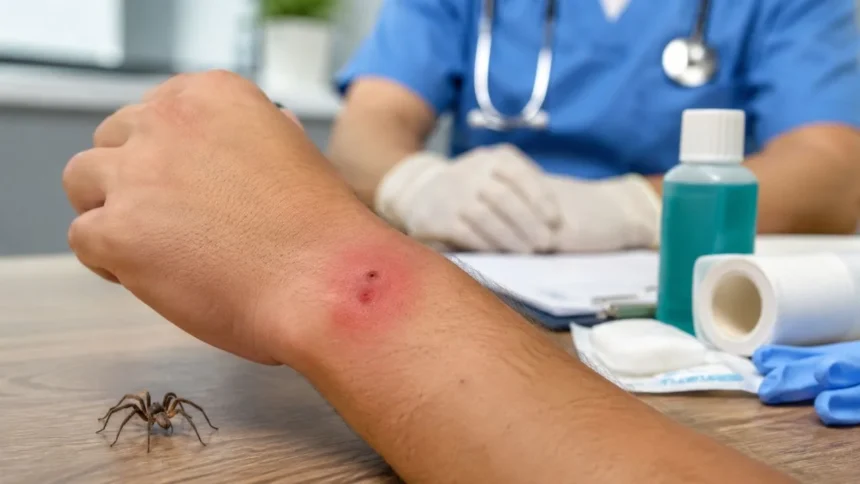
A new spider bite may appear as a small red bump with mild swelling, tenderness or itching. Some bites create a blister or an area of reddish-purple colour. These features are not unique to spiders, and the absence of a dramatic wound does not rule out venom effects that primarily involve muscles or nerves.
During the following hours, a mild bite should remain limited or begin improving. A widow bite may produce increasing cramps, sweating and widespread pain even when the skin mark remains unimpressive. A recluse bite may become more painful and develop colour changes, blistering or a growing area of tissue injury.
Over several days, an uncomplicated local reaction usually becomes less red and uncomfortable. A severe recluse-type wound may instead form an ulcer or dark centre. Redness that rapidly spreads, increasing warmth, pus and worsening tenderness can also indicate a bacterial infection rather than a direct effect of spider venom.
Photograph the area in consistent lighting and note the time when symptoms started. You can draw a small line around the edge of redness to observe whether it expands, but do not depend on home monitoring when serious symptoms are present. Rapid progression, severe pain or whole-body symptoms require professional assessment.
How to Identify a Spider Bite
The most reliable evidence is witnessing the spider bite and having the animal identified by someone with appropriate expertise. Even experienced clinicians may be unable to name the species from the wound alone. If the spider can be contained without touching it, a secure container or clear photograph may support identification.
Do not chase, handle or crush a dangerous spider against bare skin. Personal safety is more important than collecting a specimen. Record the time, location and activity occurring when the bite happened, because this information can help a clinician consider which spiders live in the area and whether exposure was realistic.
Skin infections are among the most common conditions mistaken for spider bites. One emergency-department study found that most patients who believed they had a spider bite were diagnosed with a skin or soft-tissue infection instead. Allergic reactions, bedbug bites, tick bites, shingles and inflammatory disorders can also resemble a spider-related wound.
A painful bump that drains pus or continues expanding should not automatically be treated as a venomous bite. Medical professionals may evaluate the wound, surrounding redness, fever and other symptoms before deciding whether tests or antibiotics are needed. Correct identification matters because treatments for infection and venom effects are not interchangeable.
Spider Bite First Aid
For an ordinary suspected bite, move away from the spider and remain calm. Wash the area thoroughly with soap and water to reduce contamination. Remove rings, watches or tight clothing near the bite before swelling increases, and keep the affected arm or leg elevated when this can be done comfortably.
Wrap ice or a cold pack in a clean cloth and apply it for approximately ten minutes, followed by a ten-minute break. Never place ice directly against the skin because it can cause a cold injury. People with poor circulation should use cold treatment cautiously and follow advice from a medical professional.
Do not cut the wound, squeeze it, burn it or attempt to suck out venom. Do not apply a tight tourniquet, electric shock or harsh household chemical. These approaches have not been shown to improve ordinary spider bites and may create additional tissue damage, infection or dangerous delays in obtaining appropriate care.
The main exception involves suspected funnel-web or mouse spider bites in Australia, for which local authorities recommend pressure immobilisation. Follow emergency instructions instead of improvising the technique. For all potentially dangerous bites, keep the person still, contact emergency services and avoid giving food or medicine unless a healthcare professional recommends it.
When to Seek Medical Help
Call the local emergency number immediately when the person has trouble breathing, throat or tongue swelling, collapse, confusion or loss of consciousness. These symptoms may indicate a severe allergic reaction or dangerous venom effect. Do not leave the person alone while waiting for emergency help, and begin CPR if instructed and required.
Urgent assessment is also needed for severe muscle cramps, chest pain, abdominal rigidity, uncontrolled vomiting, heavy sweating or rapidly worsening weakness. These symptoms can occur after widow or funnel-web bites. They may also resemble unrelated medical emergencies, making professional examination more important than trying to identify the cause at home.
Seek prompt care for a wound that becomes purple or black, forms a growing blister, develops an ulcer or spreads quickly. Fever, chills, dark urine, jaundice or severe fatigue after a suspected recluse bite may indicate a systemic reaction. Children with suspected venomous bites should be evaluated especially carefully.
People who are pregnant, elderly, immunocompromised or living with serious heart, lung or kidney conditions should seek advice early. Medical care is also appropriate when the spider is known to be dangerous, symptoms continue worsening after 24 hours or the bite affects the face, eye, mouth or another sensitive area.
Spider Bite Treatment
Healthcare professionals begin by reviewing the symptoms, exposure location and possible spider identification. They may monitor breathing, heart rate, blood pressure and temperature. Blood or urine tests can be needed when there are signs of severe envenomation, blood-cell damage, kidney problems or another condition that could explain the wound.
Mild bites are usually managed with wound cleaning, cold application, elevation and pain control. A clinician may recommend an antihistamine for itching or swelling when appropriate. Antibiotics do not neutralise spider venom and are generally reserved for wounds showing evidence of bacterial infection rather than prescribed automatically for every bite.
Serious widow bites may require strong pain medicines, treatment for muscle spasms, intravenous fluids and breathing support. Antivenom is available in some locations and may be considered for severe or selected moderate cases. Because antivenom can cause allergic reactions, specialists weigh its risks and benefits for the individual patient.
Brown recluse treatment mainly focuses on careful wound care, pain relief and monitoring for complications because there is no routinely used antidote. Surgery, when necessary, is generally delayed until the damaged area becomes clearly defined. Unproven remedies such as electric shock, early cutting or high-risk medicines may cause harm without improving recovery.
How to Prevent Spider Bites
Wear gloves, long sleeves, trousers and closed footwear when gardening, moving firewood or handling stored materials. Spiders often hide in dark, protected areas where objects remain undisturbed. Protective clothing creates a physical barrier when a spider is accidentally pressed against the hands, arms, legs or feet.
Shake out shoes, gloves, towels, bedding and work clothing before using them, particularly when they have been stored in garages, sheds or outdoor buildings. Keep rarely used items in sealed plastic containers instead of open cardboard boxes. Avoid reaching into dark spaces where you cannot see your hand.
Reduce clutter, debris and stacked materials around homes and workplaces. Seal cracks around doors, windows and foundations where practical, and move firewood away from living areas. Regular cleaning removes webs and hiding places, although spiders should never be handled directly when their species or risk is uncertain.
Teach children not to touch spiders and supervise them around wood piles, sheds and outdoor equipment. People who work in agriculture, construction, warehouses or landscaping should learn which medically important spiders live locally. Knowing the regional risks makes prevention more effective and helps workers respond appropriately after a possible bite.
FAQs
What does a spider bite look like?
A spider bite may look like a red, swollen or itchy bump, sometimes with a blister. Appearance alone cannot reliably identify the spider because infections and other bites can look similar.
What are the most dangerous types of spider bites?
Widow and recluse bites are medically important in the United States, while funnel-web bites are a major emergency in Australia. Dangerous species vary by country and region.
How long does a spider bite take to heal?
A mild local bite may improve within several days. A severe brown recluse wound can take weeks or months to heal and may leave a scar.
Should I squeeze a spider bite?
No. Squeezing, cutting or attempting to remove venom can damage the skin and increase infection risk. Wash the area and use a wrapped cold pack instead.
When is a spider bite an emergency?
Seek emergency help for breathing difficulty, throat swelling, collapse, severe cramps, confusion or rapidly worsening symptoms. A suspected funnel-web bite also requires an immediate ambulance response.
Types of Spider Bites: Final Takeaways
The main types of spider bites include mild local bites, nervous-system reactions from widow spiders, tissue-damaging recluse bites and rapidly dangerous funnel-web envenomation. Tarantula bites usually cause local symptoms, although their irritating hairs can create additional skin or eye problems.
Do not diagnose a bite from its shape, colour or puncture marks alone. Many presumed spider bites are bacterial infections or other skin conditions. The strongest evidence is a witnessed bite combined with safe identification of the spider, but medical treatment should never be delayed while someone attempts to capture it.
Wash mild bites with soap and water, apply a wrapped cold pack and monitor the symptoms. Do not cut, squeeze or attempt to suck out venom. Australian funnel-web bites require a different pressure-immobilisation response, demonstrating why regional poison-centre or emergency advice is essential.
Seek urgent care when symptoms spread beyond the skin or become rapidly worse. Breathing problems, severe cramps, vomiting, confusion, dark urine and expanding tissue damage are important warning signs. Early assessment can identify venom effects, infection or another medical problem and ensure that the person receives the correct treatment.