

Trench Foot: Symptoms, Treatment and Prevention
Trench foot is a cold-related injury that develops when the feet remain wet and cold for a prolonged period, even when temperatures stay above freezing. Unlike frostbite, trench foot does not require tissue to freeze. Instead, prolonged moisture and cold interfere with normal blood circulation, damage nerves and affect the skin and deeper tissues of the feet. The condition is also called non-freezing cold injury or immersion foot. Although the name comes from soldiers who developed the condition while standing for long periods in wet trenches, trench foot can still occur today among hikers, outdoor workers, campers, military personnel, people experiencing homelessness and anyone unable to keep their feet warm and dry.
Early recognition is important because trench foot can progress from numbness and pale skin to swelling, severe pain, blisters and tissue damage. Some people continue to experience cold sensitivity, tingling or nerve pain long after the initial injury has healed. The condition is usually preventable when wet footwear is changed promptly and the feet are allowed to warm and dry. If symptoms have already developed, treatment focuses on careful rewarming, keeping the feet clean and dry, protecting damaged tissue and monitoring for complications such as infection. Severe symptoms, significant swelling, skin breakdown or loss of sensation should be medically assessed rather than managed entirely at home.
What Is Trench Foot?
Trench foot is a type of environmental injury caused by prolonged exposure to cold and damp conditions. The feet do not need to become frozen for damage to occur, which separates trench foot from frostbite. Moisture causes the skin and tissues to lose heat more rapidly, while cold temperatures cause blood vessels to narrow and reduce circulation. When this happens for many hours, tissues receive less oxygen and nutrients than normal. Nerves can also become irritated or damaged, contributing to numbness, tingling and later burning pain. The severity depends on temperature, duration of exposure, footwear, circulation and the person’s overall health.
The term became widely known during World War I because soldiers frequently stood in wet, muddy trenches for long periods without being able to change their socks or dry their boots. Many developed swollen, numb and painful feet that sometimes became infected or severely damaged. Similar injuries had been recognized before then, but wartime conditions made the problem especially common. Today, improved footwear and awareness have reduced the frequency in many settings, but the condition has not disappeared. Long-distance hikers, festival attendees, disaster survivors and people working outdoors in persistent cold rain can still develop trench foot.
Trench foot most often affects the toes, soles and entire foot, although the extent varies. At first, the feet may feel unusually cold or numb, and the skin may become pale, blotchy or slightly red. As the feet are rewarmed, pain can become more noticeable rather than immediately improving. This happens because circulation returns to damaged tissues and irritated nerves begin sending stronger signals. Swelling can also increase during this stage, making shoes or boots feel tight. The appearance may change significantly over several hours, which is why monitoring progression is important.
The condition is categorized as a non-freezing cold injury because the tissue temperature generally remains above the point at which ice crystals form. This is important medically because the mechanisms and treatment differ somewhat from frostbite. Aggressive rubbing, direct high heat and walking excessively on damaged feet can worsen injury. Controlled rewarming and protection are safer. People sometimes underestimate trench foot because they know the temperature never fell below freezing, but prolonged dampness can still cause significant tissue injury when conditions are cold enough.
Trench foot can range from mild and reversible to severe and prolonged. Mild cases may improve with drying, warming and rest, while severe cases can lead to blisters, skin breakdown, infection and long-lasting nerve sensitivity. In uncommon advanced cases, tissue damage may become serious enough to threaten parts of the foot. Prompt action therefore matters even when symptoms initially seem manageable. The sooner moisture exposure ends and the feet are protected, the better the chance of avoiding complications.
What Causes Trench Foot?
The main cause of trench foot is prolonged exposure to wet and cold conditions. Moist socks, damp boots, standing water, snowmelt, rain and excessive sweating can all keep the feet wet. The temperature does not need to be extremely low. Cool conditions combined with constant moisture can be enough to interfere with circulation, especially when exposure lasts for many hours. Water conducts heat away from the skin more efficiently than dry air, which means wet feet cool faster than dry feet in the same environment. This continuous heat loss is a major reason trench foot can develop even when the air temperature feels only moderately cold.
Tight footwear can increase the risk because it further restricts blood flow. Boots that compress the toes or feet make it harder for circulation to compensate for cold-related narrowing of the blood vessels. Wet socks can also swell and create additional pressure inside footwear. People may be tempted to wear several layers of socks in cold conditions, but if the layers make the boots excessively tight, the result can be counterproductive. Proper insulation works best when there is enough room for circulation and when the socks remain dry.
Inactivity is another important contributor. Standing still for long periods reduces the muscular pumping action that normally helps move blood through the legs and feet. Soldiers in trenches, security workers, outdoor event staff and people waiting in cold environments may therefore be vulnerable even if they are wearing reasonable footwear. Regular movement can improve circulation, although movement alone cannot protect feet that remain saturated. The combination of cold, moisture, pressure and poor circulation creates the greatest risk.
Certain health conditions can increase susceptibility. People with diabetes, peripheral artery disease, neuropathy or other circulation problems may have reduced blood flow or impaired sensation in the feet. This can make it harder to notice the early warning signs and may slow recovery from tissue injury. Smoking and nicotine use can also narrow blood vessels and reduce circulation. People with known vascular or nerve problems should take cold and wet exposure especially seriously and inspect their feet carefully after outdoor activity.
Exhaustion, dehydration, poor nutrition and inadequate shelter can further increase vulnerability during prolonged outdoor exposure. The body prioritizes maintaining core temperature when cold, which can reduce blood flow to the hands and feet. A person who is already cold, hungry or fatigued may therefore have less capacity to protect the extremities. Trench foot is ultimately not caused by one single factor but by a combination of environmental exposure and reduced ability to maintain healthy tissue circulation. Prevention requires addressing all of these factors rather than focusing only on temperature.
Early Symptoms of Trench Foot
The earliest trench foot symptoms are often subtle, which is why the condition can progress before someone realizes anything is wrong. The feet may initially feel cold, heavy or unusually numb. Tingling or pins-and-needles sensations can appear as circulation and nerve function begin to change. Some people describe their feet as feeling wooden or difficult to control. Because numbness reduces discomfort temporarily, it can create a false sense that the feet are tolerating the conditions well. In reality, losing normal sensation during prolonged cold and wet exposure should be treated as a warning sign.
Skin color can also change during the early stage. The feet may look pale, white, grayish or blotchy because blood vessels have narrowed and circulation has decreased. In some people, the skin may appear red or slightly blue depending on circulation and skin tone. Color changes are easier to recognize when both feet are compared under good lighting. However, color alone cannot determine how severe the injury is. Changes in sensation and swelling are equally important.
Swelling may begin as tissues react to prolonged moisture and impaired circulation. Socks can leave deeper marks than usual around the ankles, and boots may suddenly feel tighter. The feet can feel puffy even if the swelling is not dramatic visually. Removing wet socks and footwear becomes important at this point because continued pressure can worsen blood-flow restriction. A person should not force a swollen foot back into a tight boot unless absolutely necessary for safety.
Pain is not always strong at first. In fact, early trench foot can be relatively painless because the nerves have become numb. This distinguishes it from many ordinary foot problems where pain appears immediately. The absence of pain should therefore not be reassuring if the foot is cold, wet and numb. Once rewarming begins, pain may increase substantially. Burning, throbbing and hypersensitivity during rewarming can be signs that nerves and circulation are responding after prolonged exposure.
Early intervention can prevent progression. If someone notices numbness, abnormal color or swelling after hours in wet cold footwear, they should get to a dry environment, remove wet items and begin gentle rewarming. Waiting until blisters or severe pain appear can mean more tissue damage has already occurred. Outdoor groups should also watch one another because people who are exhausted or distracted may ignore early symptoms. Regular foot checks during wet cold trips can detect problems before they become serious.
Advanced Symptoms and Skin Changes
As trench foot progresses, symptoms can become much more uncomfortable. Once the feet are removed from cold conditions and circulation returns, the skin may become bright red, hot and swollen. Pain can intensify rapidly, often changing from numbness to burning or throbbing. Some people experience severe sensitivity where even light contact from socks or bedding feels painful. This stage reflects irritation and damage in small blood vessels and nerves. The transition can be surprising because the feet may feel worse after warming than they did while they were cold.
Blisters can develop in more serious cases. These may contain clear or blood-stained fluid and can appear on the toes, soles or other pressure areas. Blistered skin is vulnerable to infection because the protective outer layer has been damaged. Blisters should generally be protected rather than deliberately broken. If they rupture on their own, the area should be kept clean and covered with an appropriate dressing. Large, painful or infected-looking blisters deserve professional medical care.
The skin can become dry, cracked or begin peeling as healing progresses. In more severe injury, areas of tissue may become dark or develop ulcers. Blackened tissue is not considered a normal mild trench foot symptom and needs urgent medical assessment. Dark discoloration may indicate severe tissue injury, poor blood flow or another condition that requires treatment. The appearance should not be judged solely from online photographs because frostbite, infection and vascular disease can produce overlapping skin changes.
Changes in sweating can occur because nerve damage affects the small nerves that regulate sweat glands and blood vessels. Some people notice that their feet sweat excessively after the injury, while others experience unusually dry skin. Cold sensitivity may become pronounced, making previously comfortable temperatures feel painful. These problems can persist even after visible skin damage has healed. Long-term nerve symptoms are one reason severe trench foot can affect quality of life well beyond the original exposure.
Walking can become difficult because swelling, pain and altered sensation make weight-bearing uncomfortable. Continuing to hike or work on badly affected feet can create additional pressure injuries and delay recovery. When possible, rest and elevation should be used until the extent of the damage is clearer. People who must evacuate from remote environments should reduce unnecessary walking while still prioritizing overall safety. Severe mobility problems after a cold-wet exposure should be professionally evaluated.
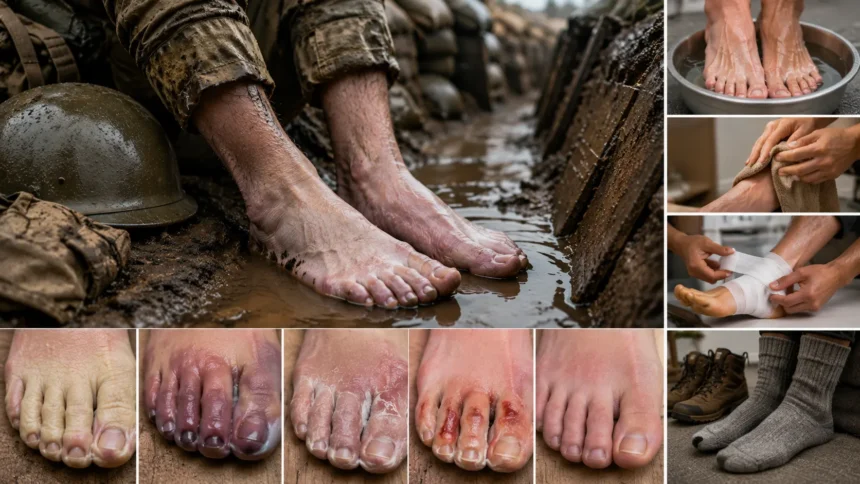
What Does Trench Foot Look Like?
There is no single appearance that identifies trench foot at every stage. Early in the injury, the feet can look pale, waxy, gray, blotchy or mildly swollen. The toes may appear slightly wrinkled from prolonged moisture, similar to skin after being in water for a long time. This wrinkling alone does not mean trench foot is present, but it becomes more concerning when combined with coldness, numbness or unusual color. The skin can feel cold and clammy rather than simply wet. Comparison with the person’s normal foot appearance can be helpful.
After rewarming, the appearance often changes dramatically. The feet may become redder and more swollen as circulation returns. The skin may feel warm even though the person still experiences numbness, burning or tingling. This can make the condition look inflammatory or infectious. The timing and exposure history therefore matter. A clinician will usually want to know how long the feet were wet, how cold the environment was and when color changes appeared relative to rewarming.
More advanced cases can show blisters, peeling skin and areas of significant inflammation. The feet may look shiny from swelling, and the skin may feel tight. Pressure points beneath the toes or heels can become particularly sore. If bacterial infection develops, redness may expand, warmth may increase and drainage or pus may appear. Fever or red streaks extending upward from the foot suggest complications that require medical evaluation.
Severe tissue injury can cause dark purple, blue or black discoloration. These findings are uncommon in ordinary mild trench foot and should be treated as urgent warning signs. They may indicate serious damage, compromised circulation or another cold injury such as frostbite. A person should not attempt to treat extensive dark tissue changes with home remedies alone. Medical professionals may need to assess blood flow, infection and tissue viability.
Photographs can help document progression but should not replace evaluation. Skin tone, camera lighting and stage of injury can make two cases look very different. If symptoms are worsening, increasing pain and swelling are more important than whether a lesion exactly resembles an online example. Taking one photograph when the problem is first noticed and another several hours later may help demonstrate whether redness or swelling is spreading. This can be useful information when speaking with a healthcare professional.
How Is Trench Foot Different From Frostbite?
Trench foot and frostbite are both cold-related injuries, but they occur through different mechanisms. Frostbite develops when skin and deeper tissues actually freeze, usually during exposure to temperatures below freezing. Ice crystals form within tissues and damage cells and blood vessels. Trench foot, in contrast, occurs when tissue remains cold and wet for prolonged periods without necessarily freezing. Because freezing is not required, trench foot can occur in temperatures where someone might not expect a major cold injury.
The appearance can overlap, especially early on. Frostbite can cause numbness, pale or waxy skin and later swelling or blisters during rewarming. Trench foot can also cause numbness, discoloration and blisters. The environmental history is therefore critical. Exposure to extreme subfreezing temperatures raises concern for frostbite, while prolonged immersion or wet footwear in cool above-freezing conditions is more typical of trench foot. Mixed injuries are also possible when someone experiences changing environmental conditions.
Rewarming recommendations differ in important ways. Suspected frostbite is generally rewarmed rapidly in a controlled warm-water bath when there is no danger that the tissue will refreeze. Trench foot is usually managed with slower, gentler rewarming and drying. Extremely hot water, heating pads or direct flames should be avoided for both because numb tissue can burn without the person realizing it. Forceful rubbing is also discouraged because injured skin and small blood vessels are fragile.
Frostbite has a greater potential for immediate severe tissue freezing and tissue loss, particularly in deep injuries. Trench foot can still produce serious long-term nerve and circulation problems, but its course is often less dramatic initially. This difference can lead people to underestimate it. The absence of freezing temperatures does not mean the feet are safe after a night or day in soaked footwear. Prolonged non-freezing cold injury deserves respect because recovery can sometimes take weeks or months.
When it is unclear whether an injury is frostbite, trench foot or a combination, medical evaluation is the safest option. This is especially important when the feet are extremely numb, blistered, darkly discolored or very swollen. Treatment decisions may depend on distinguishing between different cold injuries and ruling out circulation problems or infection. In remote settings, the priority is to prevent additional cold and moisture exposure while arranging appropriate care.
How Is Trench Foot Diagnosed?
Trench foot is usually diagnosed based on symptoms and the environmental history rather than one specific laboratory test. A healthcare professional will ask how long the feet were exposed to moisture, how cold the conditions were and whether the person could change socks or boots. They may also ask when numbness, swelling and pain began and how the symptoms changed during rewarming. This timeline helps distinguish trench foot from frostbite, infection, allergic reactions and other foot conditions. Accurate exposure details can therefore be just as important as the visual examination.
The clinician will inspect skin color, swelling, blisters and areas of breakdown. They may check temperature differences between the two feet and assess capillary refill to get a basic sense of circulation. Pulses in the feet may also be examined. Sensation can be tested gently to determine whether numbness, tingling or abnormal sensitivity is present. Severe pain or absent sensation can suggest more significant nerve involvement.
Medical history can influence assessment. Diabetes, peripheral vascular disease, neuropathy, smoking history and previous cold injuries can all affect circulation and healing. People with these risk factors may need closer monitoring even when the initial skin changes appear mild. The clinician may also ask about medications that affect circulation or immune function. A complete assessment helps determine whether the environmental injury is the only problem present.
Blood tests are not usually necessary for a straightforward mild case, but they may be ordered if infection, dehydration or another systemic problem is suspected. Imaging is also not routinely required. However, severe swelling, suspected tissue damage or uncertainty about blood flow may lead to additional testing. The goal is to identify complications rather than confirm the basic diagnosis with a scan.
One of the challenges is that people may not seek care until after the feet have warmed and the appearance has changed. By that time, the initial pale numb phase may have disappeared. This makes the person’s description of what happened earlier particularly useful. Photos taken during the exposure or early rewarming can sometimes help if they are available. Even without them, a detailed history combined with physical findings is usually enough to guide management.
Trench Foot Treatment
The first priority in trench foot treatment is to stop the cold and wet exposure. Move to a dry, sheltered environment and remove wet footwear and socks carefully. If the feet are swollen, boots may need to be loosened rather than pulled forcefully. Wet socks should be replaced with dry, clean ones. The feet should be gently dried, including between the toes, without aggressive rubbing. The goal is to reduce additional tissue stress while beginning safe warming.
Rewarming should be gradual. The feet can be exposed to warm room air and covered loosely with dry material. Very hot baths, open flames, heaters or heating pads should be avoided because numb skin can burn easily. Sudden intense heat may also worsen discomfort and swelling. Gentle warming allows circulation to return more naturally. A person may experience considerable pain during this stage, which does not necessarily mean the warming itself is harmful.
Elevation can help manage swelling. Resting with the feet raised slightly above heart level may reduce fluid accumulation and throbbing. Excessive walking should be avoided in significant cases because injured tissues are more vulnerable to pressure and friction. If movement is unavoidable for evacuation or safety, footwear should be as loose and dry as possible. Once safe shelter is reached, weight-bearing should be minimized until pain and swelling have improved.
Pain relief may be needed because rewarming can trigger severe burning or aching. Appropriate over-the-counter pain medication may help some adults, but medical history should be considered before using anti-inflammatory medicines or other drugs. Severe nerve pain may require prescription treatment. Antibiotics are not automatically needed for trench foot because the injury itself is not a bacterial infection. They may become necessary if broken skin develops a secondary infection.
Professional wound care may be required when blisters, ulcers or skin breakdown appear. Dressings should protect the area without creating excessive pressure. Damaged tissue should be monitored for infection and circulation problems. Severe trench foot can require specialist follow-up because nerve pain and temperature sensitivity may persist long after the skin appears healed. Treatment is therefore not always finished when the initial redness and swelling disappear.
What Not to Do When Treating Trench Foot
Do not rub or massage severely affected feet. It may seem intuitive to rub cold feet to increase circulation, but injured blood vessels, nerves and skin can be damaged further by vigorous friction. Numbness also makes it difficult to judge how much pressure is being applied. Gently drying the skin is different from aggressively massaging it. Keep handling minimal until sensation and circulation have improved.
Avoid direct high heat. Placing feet against a radiator, fire, hot-water bottle or electric heating pad creates a significant burn risk. A person with numb feet may not realize the temperature is damaging the skin until a burn has already occurred. Very hot water should also be avoided. Warmth should feel comfortable to unaffected skin, not painfully hot.
Do not deliberately break blisters. The skin over an intact blister provides a natural barrier against bacteria. Puncturing it with a needle or cutting it open increases infection risk. If a blister ruptures naturally, clean the area gently and protect it with an appropriate dressing. Large or blood-filled blisters should be medically evaluated, especially when pain or swelling is significant.
Do not immediately put swollen feet back into tight wet boots. Pressure can further restrict circulation and cause friction against already vulnerable skin. If footwear must be worn temporarily, loosen laces and use dry socks whenever possible. Forcing swollen toes into narrow shoes can create pressure sores that complicate the original injury. Recovery requires both warmth and relief from unnecessary compression.
Avoid alcohol as a supposed warming method. Alcohol can create a feeling of warmth by dilating blood vessels near the skin while actually increasing heat loss from the body. It can also impair judgment and make it harder to notice worsening symptoms. During a cold exposure emergency, shelter, dry clothing, food and nonalcoholic fluids are safer ways to support warming. The same principle applies when managing trench foot.
How Long Does Trench Foot Take to Heal?
Recovery time varies considerably according to the severity of the injury. A mild case identified early may improve over several days once the feet are warm and dry. Swelling and tenderness often decrease gradually, and normal sensation may return without lasting problems. However, complete comfort may take longer than the visible skin changes suggest. The feet can remain sensitive to pressure or cool temperatures after the main swelling has resolved.
Moderate cases can take several weeks to settle. Burning pain, tingling and hypersensitivity may persist because nerve tissues recover more slowly than superficial skin. A person may find that ordinary shoes feel uncomfortable or that standing for long periods causes throbbing. Gradual return to activity is important rather than immediately resuming long hikes or physically demanding work. Repeated stress can aggravate symptoms.
Severe cases may produce symptoms lasting months or longer. Long-term cold sensitivity is especially common after significant non-freezing cold injury. Some people develop chronic neuropathic pain, numbness or excessive sweating. These symptoms can interfere with sleep, work and outdoor activities. Medical treatment may be required even after the skin has healed because the remaining problem involves nerves rather than an open wound.
Repeated trench foot injuries can potentially worsen long-term outcomes. Tissue that has already experienced significant cold injury may be more vulnerable during future exposure. People who have had trench foot before should be especially careful about foot protection during cold wet activities. They may notice pain or numbness earlier than others and should respond promptly rather than trying to tolerate the conditions.
Recovery should be judged by function as well as appearance. A foot that looks normal but remains numb or extremely sensitive has not necessarily fully recovered. Persistent symptoms should be discussed with a healthcare professional, particularly when they affect walking or sleep. Physical rehabilitation, pain management or specialist evaluation may be needed in prolonged cases. Patience is important because nerve recovery can be slow.
Possible Complications of Trench Foot
Secondary infection is one of the most important complications. Wet damaged skin loses some of its protective barrier, and blisters or cracks create openings for bacteria. Signs of infection include spreading redness, increasing warmth, pus-like drainage, worsening swelling and fever. Red streaks extending upward from the foot are particularly concerning. Infection can progress quickly when circulation is already impaired, so these symptoms require medical attention.
Nerve damage can lead to long-term numbness or pain. Some people develop burning, electric or stabbing sensations even after visible healing. Others experience areas of reduced sensation and may not notice small injuries to the foot. Loss of sensation creates additional risk because pressure sores or burns can develop without much warning. Regular skin inspection becomes important when numbness persists.
Cold sensitivity can continue for months or years after significant trench foot. Temperatures that previously felt comfortable may trigger pain, tingling or color changes. This can make winter activities difficult and may require more aggressive insulation than the person used before the injury. Re-exposure to cold and wet conditions can also provoke symptoms rapidly. People with persistent cold intolerance may need medical advice about returning to outdoor occupations or sports.
Tissue breakdown is possible in severe cases. Ulcers can form when skin and deeper tissues have been badly damaged, particularly if pressure and infection are also present. Healing may be slow when circulation remains poor. In extreme untreated cases, tissue death can develop and surgical treatment may be required. This outcome is uncommon when the condition is recognized and treated promptly but demonstrates why severe discoloration should never be ignored.
Psychological effects can also occur after serious or prolonged injury. Chronic pain, sleep disruption and inability to return to work or outdoor activities can affect mood and quality of life. Persistent symptoms deserve comprehensive care rather than being dismissed because the original environmental exposure has ended. Pain management, rehabilitation and mental health support may all be useful when recovery becomes prolonged.
When to See a Doctor for Trench Foot
Medical evaluation is appropriate when numbness, swelling or pain is significant or does not begin improving after the feet are dried and gently warmed. Mild discomfort after a short exposure may resolve with careful home care, but persistent neurological symptoms deserve attention. A foot that remains numb for many hours can indicate more substantial nerve or circulation injury. People with diabetes or known circulation problems should generally seek care earlier because complications can develop more easily.
Blisters, open wounds or skin breakdown should also lower the threshold for professional care. These injuries create infection risk and may require specialized dressings. Large blood-filled blisters, extensive peeling or ulcers are not features to manage casually. A clinician can determine whether damaged skin should remain intact, whether wound care is needed and how weight-bearing should be modified.
Seek prompt medical help for signs of infection such as fever, pus, spreading redness or worsening warmth. Increasing pain after several days can also indicate infection or another complication. Antibiotics should be prescribed only when an infection is actually suspected rather than taken preventively without guidance. Proper wound examination helps avoid both undertreatment and unnecessary medication.
Dark purple, blue or black tissue requires urgent assessment. These color changes may indicate severe cold injury, impaired circulation or tissue death. The same is true when pulses seem absent, the foot becomes extremely cold compared with the other side or the person cannot move the toes normally. These findings go beyond a mild case of trench foot and require medical evaluation.
Emergency assessment is appropriate if trench foot occurs alongside severe hypothermia, confusion, loss of consciousness or other signs that the entire body has become dangerously cold. Treating the feet alone is not enough when core body temperature is also affected. Overall warming and emergency care take priority. Environmental injuries can occur together, particularly during prolonged exposure, so the full condition of the person should always be considered.
How to Prevent Trench Foot
The most effective trench foot prevention strategy is keeping the feet dry. Carry spare socks during hiking, camping, military exercises or outdoor work in wet conditions. Change socks as soon as they become saturated rather than waiting until the end of the day. If possible, dry used socks before wearing them again. Rotating between two or more pairs is often more practical than carrying only one extra pair.
Choose footwear appropriate for the environment. Waterproof boots can keep rain and standing water out, but they also need enough breathability to manage sweat. Feet can become dangerously damp from perspiration even when no external water enters the boot. Moisture-wicking socks can help move sweat away from the skin. Avoid cotton when prolonged cold-wet exposure is expected because cotton holds moisture and dries slowly compared with many wool or synthetic options.
Boots should fit properly. Tight footwear reduces circulation and becomes even tighter when socks and feet become wet or swollen. There should be enough room to move the toes while still maintaining stability. Adding multiple thick socks is not helpful if doing so compresses the foot. Insulation and circulation need to work together. People buying winter or hiking boots should try them with the socks they expect to wear outdoors.
Take regular opportunities to air and inspect the feet. During prolonged wet conditions, removing boots briefly in a dry shelter allows moisture to escape and provides an opportunity to look for pale skin, numbness or swelling. Dry carefully between the toes before putting on fresh socks. These checks are particularly valuable on multi-day trips because early changes can be missed when attention is focused on distance or weather.
Maintain overall warmth, hydration and nutrition. A body that is cold, dehydrated and exhausted has more difficulty maintaining circulation to the extremities. Eat enough food during prolonged outdoor activity, drink appropriate fluids and protect the core with dry insulating layers. Avoid smoking or nicotine when circulation is already compromised by cold. Preventing trench foot is much easier than recovering from it, and relatively simple foot-care habits can make a major difference.
Trench Foot Prevention for Hikers and Campers
Hikers are particularly vulnerable because they may walk for hours in rain, cross streams or continue using damp footwear for several days. Waterproof footwear can help, but it should not create the illusion that feet cannot get wet. Sweat often accumulates inside waterproof boots during strenuous activity. At rest stops, check socks and change them if they are soaked. This routine becomes especially important when temperatures are cool and the weather remains wet throughout the day.
Pack socks in waterproof bags so spare pairs remain genuinely dry. Carrying extra socks is useless if they become soaked inside the backpack. Lightweight dry bags or sealed plastic bags can protect essential clothing. At camp, remove wet footwear as soon as possible and allow it to ventilate. If boots cannot be dried completely overnight, at least begin the next day with dry socks.
Camp footwear can be helpful after a wet day. A separate dry pair of loose shoes or insulated booties allows the feet to rest while hiking boots dry. Do not walk barefoot around cold wet campsites because the feet continue losing heat and may become injured by rocks or debris. The goal during camp is warmth, dryness and circulation. Dry sleeping socks reserved only for nighttime can be especially valuable.
Monitor weather conditions before and during the trip. A route that seems safe in mild dry weather can become much more challenging after several days of rain and falling temperatures. Turnaround decisions should consider foot condition as well as distance and daylight. Continuing simply because the temperature remains above freezing ignores the possibility of non-freezing cold injury. Persistent wetness itself is a meaningful hazard.
Group leaders should encourage regular foot checks rather than leaving everyone to manage privately. People sometimes hide foot pain because they do not want to slow the group down. Early trench foot can often be managed by drying and warming before it becomes severe, while delayed reporting can create a medical evacuation problem. A short preventative stop can save hours or days of difficulty later.
Trench Foot Prevention for Outdoor Workers
Outdoor workers may face wet conditions repeatedly rather than during one recreational trip. Construction workers, agricultural workers, security staff, emergency responders and military personnel can spend long shifts in rain, mud or snowmelt. Employers and workers should treat dry foot care as part of occupational safety. Waterproof footwear, appropriate socks and access to dry replacements are basic protective measures. Long shifts require more planning than a short commute through rain.
Changing socks during the workday can be surprisingly effective. Workers who sweat heavily may need to change even when boots are externally waterproof. Keeping spare socks in a dry locker, vehicle or sealed bag makes this practical. Used socks should be dried completely before reuse when possible. Repeatedly putting damp socks back on increases cumulative exposure.
Scheduled warming breaks can help when workers remain relatively stationary in the cold. Standing at a gate, checkpoint or outdoor station for hours reduces lower-leg muscle activity and can worsen circulation. Short periods of walking and indoor warming can support blood flow and give workers a chance to inspect their feet. Breaks should be more frequent when conditions become colder or wetter.
Footwear policies should consider fit, not just waterproof ratings. Workers may wear thick winter socks that make standard-size safety boots too tight. Employers should allow appropriate sizing and encourage workers to report pressure or numbness rather than tolerating it. Steel or composite safety footwear also behaves differently in cold conditions, so insulation needs to be considered. Comfortable circulation is part of thermal protection.
Workers with diabetes, vascular disease or previous cold injuries may need individualized precautions. Occupational health professionals can help determine whether additional protective equipment or modified exposure is appropriate. Ignoring a known circulation problem can lead to more severe injury and longer time away from work. Prevention is both a health issue and a productivity issue when outdoor exposure is unavoidable.
The Bottom Line on Trench Foot
Trench foot is a non-freezing cold injury caused by prolonged exposure to wet and cold conditions. It can occur even when temperatures remain above freezing, which is why people often underestimate the risk. Wet footwear, tight boots, poor circulation and long periods of inactivity increase the likelihood of injury. Early symptoms include numbness, tingling, pale or blotchy skin and swelling. Once the feet begin warming, pain and redness can become more noticeable as circulation returns.
Treatment starts by ending the exposure. Remove wet socks and footwear, dry the feet gently and move to a warm environment. Rewarming should be gradual rather than aggressive. Direct heat, hot water, vigorous rubbing and unnecessary walking can worsen tissue injury. Elevating the feet can reduce swelling, while pain relief may be appropriate depending on the person’s medical history.
Most mild cases improve with prompt treatment, but moderate or severe trench foot can take weeks or months to recover fully. Nerve symptoms such as burning, numbness and sensitivity to cold may persist even after the skin appears normal. Blisters and open wounds increase infection risk. Severe discoloration, tissue breakdown or inability to feel or move the toes normally needs professional assessment.
Prevention is straightforward in principle: keep the feet warm, dry and able to circulate blood properly. Carry spare socks, choose well-fitting footwear, take breaks from wet boots and inspect the feet during prolonged exposure. Avoid letting several layers of socks make footwear tight. Good hydration, nutrition and overall body warmth also support circulation.
The most important lesson is that a foot does not have to freeze to suffer a serious cold injury. Anyone spending hours in cold rain, mud, snowmelt or wet boots should take numbness seriously. Acting when early signs appear is far easier than treating severe swelling, blisters or chronic nerve pain later. Dry feet, appropriate footwear and regular monitoring remain the best defense against trench foot.
Frequently Asked Questions
What are the first signs of trench foot?
Early symptoms usually include coldness, numbness, tingling, pale or blotchy skin and mild swelling. Pain may become stronger when the feet begin to warm.
How long does trench foot take to heal?
Mild cases may improve over several days, while moderate injuries can take weeks. Severe trench foot can cause nerve pain and cold sensitivity lasting for months or longer.
Can you get trench foot without freezing temperatures?
Yes. Trench foot is a non-freezing cold injury and can develop in cool, wet conditions above 0°C or 32°F. Prolonged moisture is one of the main risk factors.
Should you use hot water for trench foot?
No. Very hot water can burn numb or damaged tissue. The feet should be dried and rewarmed gradually using a comfortably warm environment rather than intense direct heat.
When should you see a doctor for trench foot?
Seek medical care for severe pain, persistent numbness, significant swelling, blisters, open wounds, infection signs or dark blue, purple or black skin. People with diabetes or circulation problems should seek care sooner.