

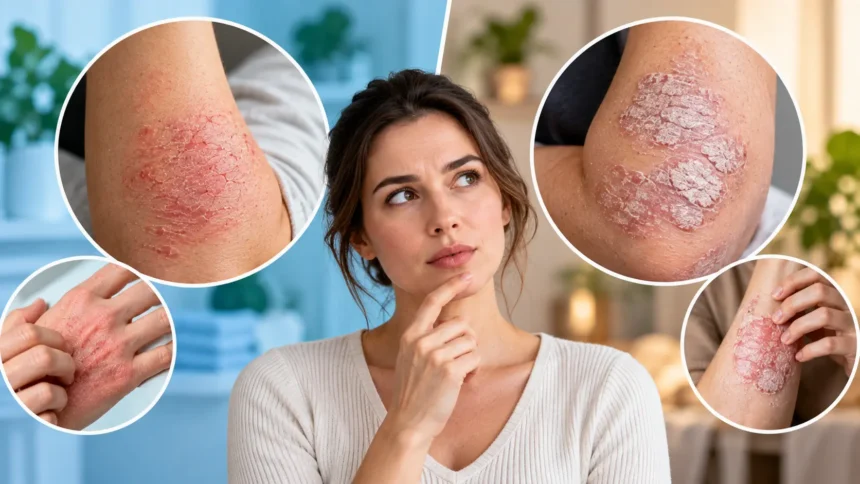
Eczema vs Psoriasis: Key Differences & Pictures
Eczema and psoriasis are two common skin conditions that can cause redness, discoloration, itching, scaling, dryness, and recurring patches of irritated skin. Because they sometimes appear in similar areas of the body, it can be difficult to tell which condition is causing a rash based on appearance alone. However, eczema and psoriasis develop through different biological processes and often have differences in texture, location, symptoms, age of onset, and triggers. Eczema frequently produces intensely itchy, inflamed skin and may be associated with allergies or asthma, while psoriasis usually creates more sharply defined, thickened, scaly plaques. Both conditions can range from mild to severe and may come and go over time. An accurate diagnosis matters because treatment strategies are not always the same.
Pictures of eczema and psoriasis can be useful for recognizing general patterns, but skin conditions do not look identical on every person. On lighter skin, inflammation may appear pink or red, while on brown or Black skin it can appear purple, gray, dark brown, or deeper than the surrounding skin. Psoriasis scales may look silvery-white, while eczema can appear dry, rough, cracked, weepy, or thickened after repeated scratching. Several other conditions, including fungal infections, contact dermatitis, seborrheic dermatitis, and certain drug reactions, can also resemble eczema or psoriasis. For that reason, photographs should be used for general comparison rather than self-diagnosis. This guide explains the major differences between eczema and psoriasis, common appearances, symptoms, causes, affected body areas, triggers, treatment options, and when to see a healthcare professional.
What Is Eczema?
Eczema is a broad term for inflammatory skin conditions that can cause itching, dryness, irritation, and changes in skin color or texture. Atopic dermatitis is the most common form and is often what people mean when they simply say eczema. It develops partly because of changes in the skin barrier and an overactive inflammatory response. When the skin barrier does not work effectively, moisture escapes more easily and irritants or allergens may penetrate the skin more readily. This can lead to repeated cycles of dryness, inflammation, and itching. Eczema is not contagious and cannot be passed from one person to another through ordinary contact.
Atopic eczema often begins during infancy or childhood, although adults can develop it as well. Some children experience significant improvement as they grow older, while others continue having symptoms into adulthood. Adult-onset eczema is also possible, particularly on areas such as the hands, face, eyelids, or skin folds. A personal or family history of asthma, hay fever, or other allergic conditions may occur alongside atopic dermatitis. However, having eczema does not mean a person will necessarily have allergies or asthma. Genetics, immune activity, skin-barrier function, environment, and everyday exposures all contribute to the condition.
Eczema commonly produces intense itching, which is one of its most characteristic symptoms. Scratching can temporarily relieve the sensation but often damages the skin barrier and increases inflammation. This creates an itch-scratch cycle in which irritation leads to scratching, scratching worsens the skin, and damaged skin becomes even itchier. Repeated rubbing may eventually make affected skin thicker and more leathery, a change known as lichenification. Cracks and open areas can also make bacterial or viral skin infections more likely. Managing itching is therefore an important part of eczema treatment rather than simply a comfort measure.
There are several types of eczema besides atopic dermatitis. Contact dermatitis occurs when the skin reacts to an irritant or allergen, while dyshidrotic eczema can cause small, intensely itchy blisters on the hands or feet. Nummular eczema produces round or coin-shaped patches, and seborrheic dermatitis commonly affects oilier areas such as the scalp and face. Stasis dermatitis can develop around the lower legs when poor circulation contributes to inflammation. These forms can look quite different from one another. The broad variety of eczema appearances is another reason visual diagnosis can sometimes be challenging.
Treatment usually focuses on restoring the skin barrier, reducing inflammation, controlling itching, and avoiding known triggers. Regular use of fragrance-free moisturizers is a cornerstone of care because well-hydrated skin is less likely to crack and become irritated. Topical corticosteroids are frequently used during flares, while other prescription creams or ointments may help control inflammation without steroids. Moderate or severe atopic dermatitis may require phototherapy, biologic medications, or other systemic treatments. Treatment should be adjusted according to age, body location, severity, and previous response. Persistent or severe eczema deserves professional assessment rather than indefinite experimentation with over-the-counter products.
What Is Psoriasis?
Psoriasis is a chronic immune-mediated condition that causes skin cells to build up more rapidly than usual. Instead of being shed gradually through the normal skin renewal process, cells accumulate at the surface and contribute to thickened, scaly areas known as plaques. Plaque psoriasis is the most common form and typically causes well-defined patches covered with white, gray, or silvery scale. The condition can occur anywhere on the body but commonly affects the elbows, knees, scalp, and lower back. Psoriasis is not caused by poor hygiene and is not contagious. Touching a psoriasis plaque cannot spread the condition to another person.
The immune system plays a central role in psoriasis by driving inflammation that accelerates skin-cell turnover. Genetics also contribute substantially, although not everyone with a family history develops the disease. Symptoms may begin at almost any age, but certain age ranges are more commonly affected. Some people experience mild patches that remain relatively stable, while others develop widespread disease with significant discomfort or emotional impact. Psoriasis usually follows a long-term pattern of flares and quieter periods. Effective treatment can control symptoms very well, but there is currently no simple permanent cure.
Plaque psoriasis usually has clearer, more sharply defined borders than many eczema rashes. The affected skin may feel thick, raised, dry, or rough and can crack or bleed when severe. Itching can occur, but some people describe burning, soreness, or tenderness instead. On lighter skin, plaques often appear red with silvery scale, while on darker skin they may look purple, violet, gray, or deep brown with grayish scale. Dark or light marks may remain after a flare improves, especially in people with more deeply pigmented skin. These color differences can make psoriasis easier to miss if someone expects it always to look bright red.
Psoriasis has several forms beyond plaque psoriasis. Guttate psoriasis causes many small drop-shaped lesions and sometimes appears after infections such as streptococcal throat infection. Inverse psoriasis develops in skin folds and may look smooth and shiny rather than heavily scaly because moisture and friction alter its appearance. Pustular psoriasis causes pus-filled bumps that are not infectious, while erythrodermic psoriasis can produce widespread severe redness or discoloration and requires urgent medical attention. Nail psoriasis can cause pits, thickening, discoloration, or separation of the nail from its bed. Different types can occur in the same person over time.
Psoriasis is more than a cosmetic skin condition because inflammation can also affect other parts of the body. Some people develop psoriatic arthritis, which may cause joint pain, swelling, stiffness, or changes in fingers and toes. Psoriasis is also associated with certain metabolic and cardiovascular health conditions, although the degree of individual risk varies. Treating moderate or severe psoriasis may therefore involve dermatologists and other healthcare professionals rather than skin creams alone. Modern treatments include topical medications, phototherapy, oral therapies, and biologic medicines targeting specific immune pathways. Early recognition of joint symptoms can be particularly important for preventing lasting joint damage.
Eczema vs Psoriasis: What Do They Look Like?
Eczema often appears as inflamed patches that are dry, rough, cracked, or intensely itchy. During an acute flare, affected skin may become swollen, develop tiny bumps, or release clear fluid after scratching. As eczema becomes chronic, repeated rubbing can make the area thicker and accentuate normal skin lines. The borders may be less sharply defined than those of classic psoriasis plaques. In lighter skin tones, eczema commonly appears pink or red, while in darker skin it may appear purple, gray, reddish-brown, or very dark brown. After inflammation improves, temporary darker or lighter discoloration may remain.
Plaque psoriasis generally produces thicker and more clearly outlined patches. The surface often develops layers of scale that can appear white, silver, or gray. Removing or scratching the scale may expose tender skin and sometimes cause pinpoint bleeding. Psoriasis plaques can vary from small isolated spots to larger areas that merge together. On deeply pigmented skin, the underlying plaque may appear dark brown, purple, or violet rather than the bright red appearance commonly shown in older medical photographs. Scale can also appear more gray than silver depending on skin tone and moisture level.
Texture is often one of the most useful visual differences between the conditions. Psoriasis tends to feel thicker and more raised because of the accumulation of skin cells, while eczema frequently feels dry, irritated, cracked, or leathery from repeated scratching. However, chronic eczema can become very thick, and psoriasis occurring in moist skin folds may have little visible scale. These exceptions make appearance alone imperfect for diagnosis. A dermatologist may examine the distribution, medical history, symptoms, and changes over time to distinguish them. Occasionally, a small skin biopsy is used when the diagnosis remains uncertain.
When comparing eczema vs psoriasis pictures, pay attention to more than redness or discoloration. Look at whether the edges are sharply defined, whether thick scale covers the patch, whether the skin is weeping or crusted, and where the rash occurs. Also consider which symptom is most prominent because severe itching is particularly common with eczema. Psoriasis may itch too, but thick plaques, scalp scale, nail changes, or joint symptoms can point more strongly toward psoriasis. Pictures should always be compared across different skin tones when possible. Images based only on light skin can make inflammatory skin disease harder to recognize in people with darker complexions.
Neither condition has one appearance that applies to every person or every stage of disease. Moisturizers, scratching, infection, medications, sun exposure, and body location can all change how a rash looks. Eczema and psoriasis can even coexist in uncommon situations, further complicating self-diagnosis. Ringworm, allergic reactions, scabies, and other conditions can also resemble one or both diseases. Starting strong treatments based entirely on internet photographs can mask the actual problem. Pictures are most useful as educational examples that help someone decide when professional evaluation may be worthwhile.
Eczema vs Psoriasis Symptoms
Itching is usually one of the strongest symptoms associated with eczema. Some people describe the itching as intense enough to interfere with sleep, concentration, or daily activities. Heat, sweating, dry air, rough clothing, and irritants can make the sensation worse. Scratching may produce raw skin, bleeding, crusting, or areas that become thicker over time. Children may scratch unconsciously while sleeping, causing significant damage by morning. Because itching drives much of the skin damage, treatments often focus on inflammation and barrier repair rather than simply telling someone not to scratch.
Psoriasis can also itch, sometimes severely, but other sensations are commonly reported. Plaques may burn, sting, feel tight, or become painful when cracks form through thick dry skin. Scalp psoriasis may produce heavy scaling and itching around the hairline, behind the ears, or across much of the scalp. Nail involvement can cause tenderness and difficulty using the fingers or toes in more severe cases. People with psoriatic arthritis may experience morning stiffness, swollen joints, heel pain, or sausage-like swelling of a finger or toe. These joint symptoms do not occur as a typical feature of eczema.
Dryness occurs in both conditions but may have different patterns. Eczema is strongly associated with a weakened skin barrier, so even unaffected-looking skin can be unusually dry and sensitive. Psoriasis dryness is often particularly noticeable within thick plaques, where scale builds up and cracks may develop. Both conditions can worsen during colder months when indoor heating reduces humidity. Applying thick fragrance-free moisturizer regularly can help reduce dryness in either condition. However, moisturization alone may not adequately control the underlying inflammation when disease is active.
Both eczema and psoriasis can interfere with sleep and emotional well-being. Visible patches may cause embarrassment or unwanted attention, while persistent itching or pain can make rest difficult. Stress can then worsen symptoms in some people, creating a cycle in which skin disease affects mental well-being and emotional stress contributes to additional flares. Neither condition should be dismissed as “just a rash” when it significantly affects daily life. Effective treatment can improve both physical symptoms and quality of life. People struggling emotionally because of chronic skin disease can benefit from discussing those effects openly with their healthcare team.
Signs of infection are especially important in eczema because scratching and skin-barrier damage can allow microorganisms to enter. Increasing pain, warmth, swelling, pus, yellowish crusting, or rapidly worsening redness or discoloration may indicate bacterial infection. Groups of painful blisters or rapidly worsening sores in someone with eczema can occasionally represent a more serious viral infection requiring urgent treatment. Psoriasis can also develop secondary infection when skin is cracked, although it is less characteristic. Fever or significant illness with a rapidly spreading rash should not be managed solely at home. New concerning symptoms deserve prompt medical evaluation.
Where Eczema and Psoriasis Commonly Appear
Body location can provide useful clues when distinguishing eczema from psoriasis. In babies, atopic dermatitis commonly affects the cheeks, scalp, and outer surfaces of the arms and legs. As children get older, eczema often becomes prominent in skin folds such as the inside of the elbows and behind the knees. Adults may develop eczema on the hands, face, eyelids, neck, and flexural areas. Hand eczema is particularly common when repeated washing, chemicals, gloves, or occupational exposures damage the skin barrier. Nevertheless, eczema can occur almost anywhere on the body.
Classic plaque psoriasis commonly affects the outer elbows and knees rather than the inner folds that are characteristic of many cases of atopic eczema. The scalp, lower back, and area around the belly button are also frequent sites. Plaques may appear symmetrically, meaning similar areas are affected on both sides of the body. Psoriasis can extend beyond the hairline onto the forehead, neck, or behind the ears. Scalp disease is sometimes confused with severe dandruff or seborrheic dermatitis. Thick, well-defined scale and psoriasis elsewhere on the body can help support the diagnosis.
Skin folds are more complicated because both conditions can occur there. Inverse psoriasis may affect the armpits, groin, under the breasts, or other areas where skin touches skin. Because these areas remain warm and moist, inverse psoriasis often lacks the thick scale seen on elbows and knees. Instead, it may appear smooth, shiny, and sharply defined. Eczema can also occur in folds and may be very itchy, cracked, or irritated. Fungal and yeast infections are additional possibilities in these areas, so persistent fold rashes can require clinical examination.
Hands and feet can also be challenging locations. Eczema may produce dry cracked palms, itchy blisters along the sides of the fingers, or irritation associated with repeated contact with water and chemicals. Psoriasis of the palms and soles can cause thick scaling, deep cracks, pain, and difficulty walking or using the hands. Both conditions can become severe enough to interfere with work and everyday activities. Fungal infections can mimic both disorders in these locations. A clinician may perform fungal testing when the appearance is uncertain or treatment is not working.
Nails provide another useful clue because psoriasis commonly affects them. Small pits in the nail surface, yellow-brown discoloration, thickening, crumbling, or separation of the nail from the nail bed may occur. These changes can sometimes appear even when skin psoriasis is relatively limited. Eczema around the nail can also alter nail growth, particularly when inflammation affects the surrounding skin, but classic nail pitting and separation often raise greater suspicion for psoriasis. Fungal nail infections can look similar and may coexist with inflammatory conditions. Persistent nail changes should therefore be diagnosed rather than treated solely from photographs.
Causes and Triggers of Eczema vs Psoriasis
Eczema develops through a combination of genetics, immune-system activity, environmental factors, and impaired skin-barrier function. Certain genetic changes can reduce proteins that help the outer skin maintain moisture and protection. When this barrier becomes less effective, the skin loses water more easily and becomes more vulnerable to irritants and allergens. Immune responses can then produce recurring inflammation. This does not mean eczema is simply an allergic reaction or that one specific food is responsible. Different biological pathways contribute to disease in different individuals.
Common eczema triggers include dry weather, heat, sweating, fragrances, harsh soaps, detergents, wool, repeated hand washing, and certain workplace chemicals. Stress may also worsen symptoms in some people. Allergens can contribute for certain individuals, but broad allergy avoidance without evidence can create unnecessary restrictions. Food allergies and eczema can coexist, especially in some children, yet eliminating major foods without professional guidance may cause nutritional problems. Identifying triggers usually requires observing consistent patterns rather than blaming every flare on the most recent meal. Daily skin care remains important even when a specific trigger cannot be identified.
Psoriasis is driven by immune activity that accelerates inflammation and skin-cell turnover in genetically susceptible people. Flares can be influenced by infections, stress, skin injuries, smoking, alcohol use, certain medications, and changes in general health. A phenomenon called the Koebner response can cause new psoriasis lesions to form in areas of skin injury such as scratches, cuts, or sunburn. Streptococcal infections are particularly associated with guttate psoriasis in some people. Triggers do not create psoriasis from nothing in everyone. They tend to reveal or worsen disease in someone who is already susceptible.
Weather can influence both conditions, although individual responses differ. Cold dry air commonly worsens eczema because low humidity increases moisture loss from the skin. Psoriasis may also worsen during colder seasons, while carefully controlled ultraviolet light can improve symptoms for some patients. Too much sunlight can still cause burns and increase skin-cancer risk, so deliberately burning the skin is not a treatment. Heat and sweat may irritate eczema, whereas some people with psoriasis notice seasonal improvement in warmer weather. Personal symptom patterns are more useful than assuming everyone reacts in the same way.
Neither eczema nor psoriasis is caused by being unclean. Excessive washing can actually make eczema worse by stripping natural oils from the skin, while aggressive scrubbing of psoriasis plaques can cause injury and irritation. Both conditions are also noncontagious, despite sometimes dramatic visible symptoms. People cannot “catch” eczema or psoriasis by touching, sharing furniture, swimming together, or ordinary social contact. Correcting this misconception can reduce stigma for people living with chronic skin disease. Treatment should focus on inflammation and skin health rather than repeated attempts to disinfect affected areas.
How Eczema and Psoriasis Are Diagnosed
Doctors can often diagnose eczema or psoriasis by examining the skin and asking about symptoms. Important details include when the rash began, which areas are affected, how severe the itching is, what makes symptoms worse, and whether there is a family history of skin or allergic conditions. The appearance and distribution of lesions provide additional clues. Psoriasis plaques on the elbows, knees, scalp, and nails can create a recognizable pattern. Eczema affecting flexural areas with intense itching may suggest atopic dermatitis. However, not every case follows these classic patterns.
Medical history can help distinguish between conditions that look similar. Childhood eczema, asthma, or hay fever may support an atopic dermatitis diagnosis, although none is required. Joint pain or a family history of psoriasis may raise suspicion for psoriatic disease. Occupational exposure to chemicals or frequent hand washing can point toward contact dermatitis. Recent infection may be relevant when numerous small psoriasis spots suddenly appear. Asking detailed questions prevents diagnosis from relying solely on one snapshot of the skin.
A skin biopsy is occasionally performed when the diagnosis remains uncertain. During this procedure, a healthcare professional removes a very small sample of affected skin for examination under a microscope. The microscopic patterns of eczema and psoriasis are different enough to provide useful information in difficult cases. Most people do not need a biopsy because clinical examination is usually sufficient. Testing may also be used to exclude other conditions rather than prove one diagnosis directly. Fungal scraping, for example, can help determine whether ringworm is responsible for a scaly patch.
Patch testing may be considered when allergic contact dermatitis is suspected. Small amounts of common allergens are applied to the skin under controlled conditions and checked for delayed reactions. This is different from tests used for immediate food or environmental allergies. Patch testing can help identify ingredients such as fragrances, preservatives, metals, or chemicals that trigger contact eczema. It does not diagnose psoriasis. Choosing the right test depends on the history and appearance of the rash rather than performing broad testing on everyone.
Online pictures can help someone recognize similarities but cannot replace an examination when a rash is persistent or unclear. Lighting, camera quality, skin tone, moisturizers, and stage of disease can substantially alter appearance in photographs. Some infections can worsen if mistakenly treated with certain anti-inflammatory creams. Conversely, undertreated inflammatory disease can continue for months because someone assumes it is simply dry skin. Seek professional assessment when a rash repeatedly returns, spreads, becomes painful, interferes with sleep, or fails to improve with basic care. An accurate diagnosis makes treatment much more targeted.
Eczema vs Psoriasis Treatment
Moisturizers are important for both eczema and psoriasis, but they are especially central to eczema management because skin-barrier dysfunction is a major feature. Thick fragrance-free creams or ointments generally retain moisture better than thin lotions. Applying moisturizer after bathing can help trap water within the outer skin layer. Gentle cleansers, lukewarm water, and avoiding irritating fragrances may further reduce eczema flares. Moisturizers do not directly suppress severe inflammation, but they can reduce dryness and improve barrier function. Consistency matters more than using an expensive or heavily marketed product.
Topical corticosteroids are commonly used for both eczema and psoriasis because they reduce inflammation. Different strengths are chosen according to disease severity and body location. Thin skin areas such as the face or skin folds usually require greater caution than thicker areas such as the palms or soles. Long-term unsupervised use of strong steroids can cause side effects including skin thinning and visible blood vessels. Using the correct product for the correct duration is therefore important. People needing frequent treatment should work with a clinician to develop a maintenance strategy.
Eczema can also be treated with nonsteroid topical medicines that influence immune signaling or inflammation. Prescription options may be particularly useful on delicate areas or when repeated steroid use is undesirable. Moderate or severe atopic dermatitis can require phototherapy, biologic injections, or oral medications that target immune pathways. Treatment choices have expanded substantially in recent years, allowing therapy to be more individualized. Infection may require additional treatment when bacteria or viruses complicate eczema. The goal is long-term control rather than repeatedly treating only the worst flares.
Psoriasis treatment depends heavily on the extent and location of disease. In addition to topical corticosteroids, vitamin D-related topical medicines and other prescription products can help slow excess skin-cell production and reduce inflammation. Scalp psoriasis may require medicated solutions, foams, shampoos, or oils designed to reach the skin through the hair. More extensive psoriasis can be treated with phototherapy, oral systemic medications, or biologic therapies. Biologics target specific components of the immune system involved in psoriasis. People with psoriatic arthritis may require treatment that controls both skin and joint inflammation.
Home remedies should be used carefully for either condition. Fragrance-free moisturizers, gentle bathing, cool compresses, and avoiding known irritants can provide useful supportive care. Harsh acids, undiluted essential oils, bleach applied directly to skin, aggressive exfoliation, and unproven “detox” treatments can worsen irritation or cause chemical injury. Natural products can also trigger contact dermatitis. A remedy that helps one person’s dry skin may not be appropriate for an infected or severely inflamed rash. Evidence-based treatment becomes particularly important when symptoms interfere with sleep, work, mobility, or emotional well-being.
When to See a Doctor for Eczema or Psoriasis
A healthcare professional should evaluate a rash that persists despite regular moisturizing and appropriate over-the-counter care. Repeated flares may indicate eczema, psoriasis, allergy, fungal infection, or another condition requiring more targeted treatment. An examination is particularly useful when the rash covers a large area or affects sensitive locations such as the face, eyes, genitals, palms, or soles. These sites can require different medication strengths and treatment approaches. Early diagnosis may also prevent months of trial-and-error self-treatment. Dermatologists specialize in distinguishing inflammatory skin conditions that look similar.
Signs of infection require faster attention. Increasing warmth, swelling, tenderness, pus, yellow crusting, rapidly spreading inflammation, or fever can suggest a bacterial complication. People with eczema can occasionally develop widespread viral infections involving clusters of painful blisters or punched-out sores. These situations may require urgent antiviral treatment rather than routine eczema creams. Anyone who feels significantly unwell while a skin eruption is rapidly worsening should seek prompt care. Infection should not be interpreted as an ordinary flare without assessment.
People with psoriasis should mention joint symptoms even if the skin disease seems mild. Persistent joint pain, morning stiffness, swelling, heel pain, or a swollen finger or toe can indicate psoriatic arthritis. Early treatment matters because ongoing inflammation can eventually damage joints. Nail psoriasis may also be associated with a greater likelihood of joint involvement in some people. Joint symptoms should not be dismissed simply as aging or exercise soreness when psoriasis is present. A dermatologist, primary-care clinician, or rheumatologist can help determine whether further assessment is needed.
Urgent evaluation is also appropriate for widespread severe psoriasis accompanied by fever, dehydration, chills, or significant illness. Rare forms such as generalized pustular or erythrodermic psoriasis can affect large areas of skin and disrupt temperature and fluid regulation. These conditions look very different from a few stable plaques and can become medically serious. Sudden widespread skin peeling, extensive redness or discoloration, or numerous pustules deserves immediate attention. People should not attempt to manage severe rapidly changing disease with moisturizers alone. Emergency symptoms require appropriate medical services.
Finally, seek help when either condition significantly affects quality of life. Chronic itching, sleep loss, embarrassment, anxiety, difficulty working, or avoiding social activities are valid reasons to discuss stronger treatment. Disease severity is not determined only by the percentage of skin covered. A small patch on the hands, face, genitals, or feet can have a major practical impact. Modern treatments can often provide substantially better control than people expect. Living with recurring symptoms does not mean someone has to simply tolerate them without exploring additional options.
Frequently Asked Questions
What is the main difference between eczema and psoriasis?
Eczema usually causes intensely itchy, dry, irritated skin and is strongly associated with skin-barrier dysfunction and inflammation. Psoriasis more often produces sharply defined, thick, scaly plaques caused by immune-driven acceleration of skin-cell turnover.
How can you tell eczema from psoriasis by looking at pictures?
Psoriasis often appears as thicker, well-defined plaques with white, silver, or gray scale, while eczema may look more diffusely inflamed, cracked, rough, weepy, or thickened from scratching. Appearance varies considerably by body location and skin tone, so pictures cannot provide a definite diagnosis.
Which is more itchy, eczema or psoriasis?
Both conditions can itch, but eczema is particularly known for intense itching and the itch-scratch cycle. Psoriasis may also cause significant itching along with burning, soreness, tightness, or pain.
Can you have eczema and psoriasis at the same time?
It is possible for features of eczema and psoriasis to occur in the same person, although this is less common than having either condition alone. A dermatologist can help distinguish overlapping disease from other rashes that mimic both conditions.
Is eczema or psoriasis contagious?
Neither eczema nor psoriasis is contagious. You cannot catch either condition by touching someone’s skin, sharing everyday objects, swimming together, or having normal physical contact.