

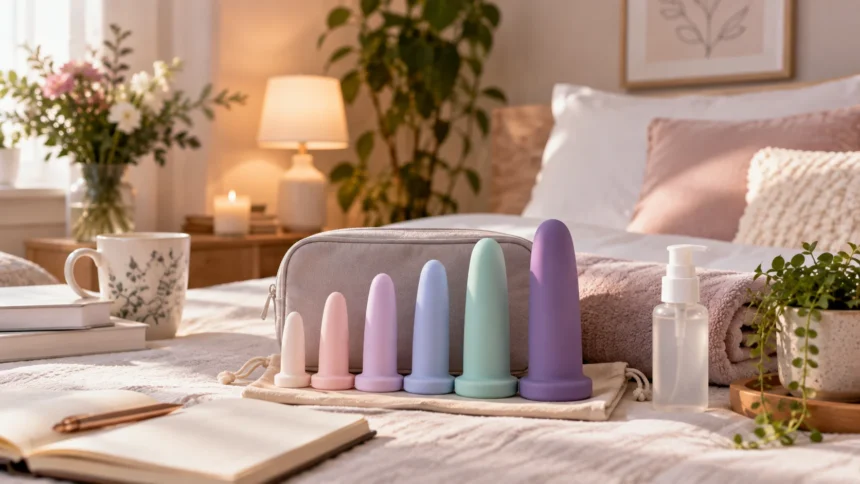
Vaginal dilators are smooth, tube-shaped devices designed to help people gradually become more comfortable with vaginal insertion and gentle stretching. They are often available in sets that increase in size step by step, allowing users to progress at a pace that feels manageable. Dilators may be recommended for pelvic floor tension, pain with penetration, vaginal narrowing, or recovery after certain treatments.
Using a vaginal dilator is not about forcing the body to tolerate discomfort. The goal is usually to combine gentle insertion with relaxed breathing, pelvic floor awareness, and gradual exposure so that the muscles and tissues can adapt without excessive guarding. Progress can take time, and the experience can differ significantly from one person to another.
Some people use dilators with guidance from a pelvic floor physical therapist, gynecologist, or another qualified healthcare professional. This can be especially useful when symptoms involve persistent pelvic pain, vaginismus, post-surgical changes, menopause-related discomfort, or the effects of cancer treatment. Understanding proper technique can make the process safer, more comfortable, and easier to continue consistently.
What Are Vaginal Dilators?
Vaginal dilators are medical or therapeutic devices that come in different widths and sometimes lengths. They are usually made from smooth materials such as medical-grade silicone or firm plastic and are designed for gradual insertion. Most sets begin with a relatively small size and progress toward larger sizes as comfort and tolerance improve.
The purpose of a dilator is not simply to stretch the vagina mechanically. It can also help a person practice relaxing the pelvic floor while becoming more familiar with sensations that may previously have caused fear, pain, or involuntary muscle tightening. This combination of physical and nervous-system adaptation is often an important part of the process.
Dilators may be used for several reasons, including pain with penetration, pelvic floor overactivity, vaginal stenosis, or changes following pelvic surgery or radiation therapy. They may also be suggested when examinations, tampon use, or sexual activity are difficult because of discomfort. The exact reason for using them should guide the technique, frequency, and progression.
How Vaginal Dilators Work
Vaginal dilators work through gradual exposure and gentle tissue accommodation. A smaller dilator allows the body to experience insertion with less pressure, which may help reduce protective muscle guarding over time. As comfort improves, some people progress to a slightly larger size while continuing to focus on slow breathing and relaxation.
The pelvic floor muscles surround and support structures at the base of the pelvis. When these muscles remain overly tense, insertion can feel painful, restricted, or impossible even when the tissues themselves are healthy. Dilator practice may help teach the muscles that insertion can occur without the need for a strong protective contraction.
Progress is usually gradual rather than immediate. Some sessions may feel easier than others depending on stress, hormonal changes, fatigue, pain levels, or general muscle tension. Rather than measuring success only by reaching a larger size, it can be more useful to notice improvements in comfort, control, breathing, and the ability to relax during insertion.
Benefits of Vaginal Dilator Therapy
One potential benefit of vaginal dilators is reduced fear and tension around penetration. When someone has experienced pain repeatedly, the body may begin tightening before penetration even occurs. Practicing in a controlled setting can help build confidence and allow the person to stop, adjust, or slow down whenever sensations become uncomfortable.
Dilators may also support improved pelvic floor coordination. Instead of repeatedly contracting the muscles, users can practice recognizing when the pelvic floor is gripping and learn how to soften it. This awareness may be useful alongside pelvic floor therapy, breathing exercises, gentle stretching, and other techniques recommended for overactive or painful pelvic muscles.
In some medical situations, vaginal dilators may be used to help maintain vaginal flexibility and openness after treatment that can cause narrowing or scar-related changes. The goals can differ from those of dilator use for pelvic floor tension, which is why individualized guidance matters. The same device may be used differently depending on the underlying reason for treatment.
How to Choose the Right Dilator Size
Most people begin with the smallest size that can be inserted without sharp pain or significant resistance. The correct starting size should feel manageable enough that you can continue breathing normally and allow the pelvic floor to relax. Starting with a dilator that is too large may increase guarding and make future sessions feel more intimidating.
A smaller size is not a failure or a sign that progress is poor. Dilator therapy works best when your nervous system experiences the practice as controlled and tolerable rather than threatening. If the smallest dilator in a set still feels too uncomfortable, a healthcare professional may be able to recommend a different product or an alternative starting approach.
Move to the next size only when the current one feels consistently comfortable. You should generally be able to insert and hold the dilator without increasing pain or repeatedly tightening against it. There is no need to rush through the sizes, and some people may not need to reach the largest dilator to achieve their individual treatment goals.
How to Use Vaginal Dilators Safely
Begin in a private, comfortable position where your body feels supported. Many people lie on their back with their knees bent and legs relaxed, although side-lying or another position may work better for you. Take several slow breaths before insertion and allow your abdomen, inner thighs, buttocks, and pelvic floor to soften as much as possible.
Apply a generous amount of compatible lubricant to the dilator and vaginal opening to reduce friction. Insert the dilator slowly, following the natural angle of the vaginal canal rather than pushing straight upward. Stop if you experience sharp pain, strong burning, bleeding, or resistance that does not improve when you pause and relax.
Once the dilator is comfortably inserted, you may simply hold it in place while breathing slowly. Some treatment plans also include very gentle movement or pressure in specific directions, but this should not be forced. The goal is usually to help your body tolerate the sensation comfortably rather than repeatedly moving the dilator in a way that increases irritation.
Breathing and Pelvic Floor Relaxation During Use
Breathing can play an important role during dilator practice because the diaphragm and pelvic floor naturally work together. As you inhale, allow your abdomen and lower ribs to expand gently and imagine the pelvic floor softening downward. On the exhale, let the breath leave naturally without deliberately squeezing the pelvic muscles.
Some people accidentally hold their breath when they anticipate discomfort. Breath-holding can increase tension through the abdomen, hips, jaw, and pelvic floor, making insertion feel more difficult. If you notice yourself becoming tense, pause rather than pushing farther, take several comfortable breaths, and continue only when your body begins to settle.
Relaxation does not mean bearing down or forcing the pelvic floor outward. The sensation should be more like allowing tension to release than actively pushing. Helpful cues can include unclenching the jaw, softening the belly, relaxing the inner thighs, or imagining the sitting bones gently widening as you inhale.
How Long and How Often to Use Vaginal Dilators
There is no universal schedule that works for everyone. Some people may use vaginal dilators several times per week, while others receive a different frequency based on their symptoms, medical history, or treatment goals. Sessions often remain relatively short because quality, comfort, and consistency matter more than spending a long time pushing through discomfort.
A session might begin with a few minutes of breathing and relaxation before insertion. The dilator may then remain in place for several minutes depending on tolerance and professional recommendations. If symptoms start increasing during the session, stopping earlier can be more productive than continuing simply because you planned to reach a particular amount of time.
Consistency is usually more useful than intensity. A manageable routine repeated regularly can give the body repeated opportunities to practice comfortable insertion and relaxation. If symptoms repeatedly worsen after sessions or remain elevated for many hours, discuss the routine with a qualified professional rather than assuming that more frequent practice will automatically improve results.
Common Mistakes to Avoid
One common mistake is trying to progress through sizes too quickly. Reaching a larger dilator does not necessarily mean the pelvic floor is functioning better if the body is bracing, holding its breath, or tolerating significant pain. Slow progression allows comfort and muscle relaxation to improve alongside the physical ability to accommodate a larger size.
Another mistake is using too little lubricant. Friction can create unnecessary burning or irritation, making the experience more uncomfortable than it needs to be. Choose a lubricant that is compatible with your dilator material and reapply it when necessary, particularly during longer sessions or when vaginal dryness is contributing to discomfort.
Avoid comparing your progress with someone else’s experience. The reasons people need dilators vary widely, and factors such as surgery, radiation, menopause, pelvic pain, muscle tension, anxiety, and tissue sensitivity can affect the pace of improvement. Your goal should be comfortable functional progress rather than completing a set according to an arbitrary timeline.
Combining Dilators With Pelvic Floor Rehabilitation
Dilator therapy may work best when it is part of a broader pelvic floor rehabilitation plan. A pelvic floor physical therapist may combine dilators with diaphragmatic breathing, manual therapy, hip mobility exercises, relaxation techniques, posture work, and education about pain. The exact combination depends on the symptoms and movement patterns identified during assessment.
Daily movement can also influence how the hips, abdomen, lower back, and pelvis feel. Gentle mobility and functional strength work may be included when appropriate, especially after periods of inactivity or recovery. If general lower-body mobility is part of your routine, a simple sit-to-stand guide can provide additional information about controlled everyday movement.
It is important to distinguish general exercise from direct pelvic floor treatment. Squats, stretching, or mobility drills do not automatically correct pelvic floor pain or tension, and some exercises may need modification when symptoms are present. Use movement as one part of a broader plan rather than assuming general strengthening can replace individualized pelvic floor guidance.
Cleaning and Caring for Vaginal Dilators
Follow the cleaning instructions provided with your specific dilator because materials can differ between brands. Many products can be washed with warm water and mild, fragrance-free soap, then thoroughly rinsed and allowed to air-dry. Avoid using harsh household cleaners or disinfectants unless the manufacturer specifically states that they are safe for the material.
Store dilators in a clean, dry place where they will not collect dust, hair, or debris. If the set comes with a storage pouch or container, make sure the dilators are completely dry before putting them away. Inspect the surface regularly and stop using any dilator that develops cracks, rough areas, or damage that could irritate sensitive tissue.
Lubricant compatibility also matters during care. Some silicone-based lubricants may not be appropriate for certain silicone products, depending on the manufacturer’s instructions. When uncertain, check the product guidance or ask a healthcare professional so that the lubricant improves comfort without damaging the dilator’s surface over time.
When to Seek Professional Guidance
Professional guidance can be particularly valuable if vaginal insertion is consistently painful or impossible. Pelvic pain, painful sex, difficulty with examinations, urinary symptoms, bleeding, or significant muscle spasm can have several possible causes. A clinician can help determine whether pelvic floor tension, hormonal changes, scar tissue, infection, skin conditions, or another issue may be contributing.
People using dilators after cancer treatment, pelvic surgery, or other medical procedures should follow recommendations from their treatment team. The timing, size, and frequency of use may depend on tissue healing and the specific procedure performed. Starting without appropriate guidance in these situations may not be suitable, especially when tissues are still recovering.
Stop using the dilator and seek medical advice if you experience significant bleeding, severe or increasing pain, unusual discharge, fever, or symptoms that feel substantially different from your usual pattern. Mild stretching sensations may occur, but sharp or persistent pain should not be treated as something you simply need to push through.
Conclusion
Vaginal dilators can be useful tools for gradually improving comfort with insertion, supporting pelvic floor relaxation, and helping maintain vaginal flexibility in certain medical situations. They are most effective when used gently and with realistic expectations. The process is usually about reducing guarding and building confidence rather than forcing the body to accept larger sizes.
Proper technique includes choosing a comfortable starting size, using enough lubricant, breathing normally, and stopping when sensations become sharp or overwhelming. Progress can vary from one session to another, so consistency is more important than rushing. A smaller dilator used comfortably may be more beneficial than a larger one used with significant tension or pain.
If symptoms are persistent, severe, or related to surgery, cancer treatment, or another medical condition, individualized guidance can make dilator therapy safer and more effective. Pelvic floor physical therapists and other qualified healthcare professionals can help tailor the approach to your needs. The goal should always be better comfort, control, and function rather than simply completing a set.
FAQs
Are vaginal dilators supposed to hurt?
Dilator use should not cause sharp or severe pain. Mild pressure or stretching may occur, but increasing pain usually means you should stop, reduce the size, add lubrication, or seek professional guidance.
How long does vaginal dilator therapy take to work?
There is no fixed timeline. Progress depends on the reason for using dilators, pelvic floor tension, tissue sensitivity, medical history, consistency, and how comfortably the body adapts over time.
What lubricant should I use with vaginal dilators?
A water-based lubricant is commonly compatible with many dilators, but always check the manufacturer’s instructions. Some materials may require specific products to prevent surface damage or irritation.
Can vaginal dilators help with painful intercourse?
They may help when pain is related to pelvic floor tension, guarding, or difficulty tolerating penetration. Because painful intercourse has many possible causes, persistent symptoms should be evaluated by a qualified healthcare professional.
How do I know when to move to a larger dilator?
Consider progressing when the current size can be inserted and held comfortably without significant pain, guarding, or breath-holding. Move gradually and return to a smaller size if the next one causes excessive discomfort.