

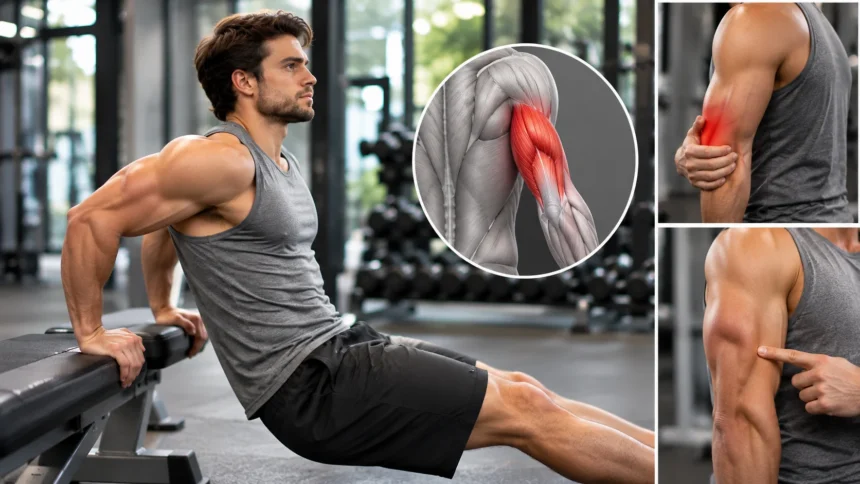
What Are the Triceps?
The triceps are a large muscle group located along the back of the upper arm. Their main function is to straighten the elbow, allowing you to push, reach, and extend your arm. The full anatomical name is the triceps brachii, which refers to its three distinct muscle heads. These muscles work together to support everyday movements and many physical activities.
Although the triceps are commonly associated with strength training, their role extends beyond exercise. They help you push open doors, rise from certain seated positions, and move objects away from your body. The triceps also contribute to controlling arm movements during different activities. Understanding how these muscles function can help you recognize their importance in everyday movement.
Healthy triceps muscles require a combination of strength, flexibility, and appropriate recovery. Muscle weakness, overuse, or injury can affect how comfortably your elbows and arms move. Learning about triceps anatomy, common problems, and basic care can support better movement awareness. This guide explains their location, function, common issues, and practical ways to maintain muscle health.
Where Are the Triceps Located?
The triceps are located on the posterior, or back, side of each upper arm. They extend from the shoulder and upper arm region toward the elbow. When you straighten your arm against resistance, you may notice the triceps contracting along the back of your upper arm. Their position allows them to generate the force needed for elbow extension.
The muscle lies opposite the biceps, which are positioned toward the front of the upper arm. While the biceps help bend the elbow, the triceps primarily straighten it. These opposing actions allow the arm to perform controlled movements in different directions. Both muscle groups contribute to everyday activities that involve reaching, lifting, and handling objects.
The lower portion of the triceps connects to the olecranon, the bony projection at the back of the elbow. This connection occurs through the triceps tendon, which transfers muscular force to the forearm bone. The upper attachments differ among the three muscle heads. Together, these structures help coordinate elbow movement and contribute to upper-arm stability.
Understanding the Three Heads of the Triceps
The triceps brachii consists of three sections known as the long head, lateral head, and medial head. Each section has a different attachment point in the upper arm or shoulder region. However, they join through a common tendon near the elbow. This arrangement allows the triceps to work as a coordinated muscle group during arm extension.
The long head begins at the infraglenoid tubercle of the scapula, or shoulder blade. Because it crosses both the shoulder and elbow joints, it contributes to more than elbow extension. The lateral head originates from the upper arm bone and helps produce force during demanding movements. These two sections are commonly discussed in exercise and muscle anatomy guides.
The medial head lies deeper beneath the other triceps sections and contributes to elbow extension across different activities. It originates from the humerus, the long bone of the upper arm. Although less visible, it plays an important role in controlled elbow movement. All three heads work together, and most triceps exercises activate the entire muscle group.
What Is the Main Function of the Triceps?
The primary function of the triceps is elbow extension, which means straightening the arm at the elbow joint. This movement occurs when you push an object away or extend your arm after bending it. The triceps generate force by contracting and pulling through their tendon. This action supports both ordinary activities and more demanding physical movements.
The long head of the triceps also assists with shoulder extension and adduction. Shoulder extension involves moving the upper arm backward, while adduction brings it closer to the body. These contributions are generally smaller than the muscle’s main elbow-extension role. Other shoulder and back muscles work alongside the long head to produce coordinated upper-body movement.
Triceps muscles also help control movement when resistance causes the elbow to bend. During certain activities, they lengthen while remaining active to manage the speed of movement. This process is called an eccentric muscle contraction. Such control is useful when lowering objects, performing resistance exercises, or managing movements that require both strength and coordination.
How the Triceps Work With Other Arm Muscles
The triceps work closely with the biceps to control elbow movement. When the triceps contract to straighten the elbow, the biceps generally allow the joint to extend. During elbow bending, the roles change as the biceps and other elbow flexors become more active. This coordinated relationship helps produce smooth and controlled arm movements.
Other muscles contribute to the complex movements performed by the upper limbs. The brachialis and brachioradialis assist with elbow flexion, while shoulder muscles position the upper arm. Forearm muscles control wrist and hand movements during gripping activities. Together, these muscle groups allow the body to perform tasks that require strength, precision, and stability.
Balanced muscle function is important because everyday movements rarely depend on one muscle alone. For example, pushing an object may involve the triceps, chest, shoulders, and trunk muscles. Weakness or discomfort in one area can influence how other muscles participate. Maintaining comfortable movement throughout the upper body helps support coordinated physical activity.
Why the Triceps Matter in Everyday Activities
Triceps strength contributes to many ordinary activities that involve pushing or straightening the arms. Opening a heavy door, pushing a shopping cart, and moving objects across a surface may involve these muscles. They also help during activities that require extending the elbow against resistance. Their contribution often goes unnoticed because the movements feel familiar.
The triceps are also involved when supporting part of your body weight through your arms. For example, they contribute when pushing yourself upward from a chair using armrests. Similar actions occur during certain floor movements and everyday transitions between positions. The amount of muscular effort depends on your posture, available support, and the resistance involved.
Healthy triceps function can make common movements feel more comfortable and controlled. However, difficulties with these activities do not automatically indicate a triceps problem. Shoulder conditions, joint stiffness, nerve issues, and other factors can also influence arm movement. Understanding the muscle’s role is useful, but persistent weakness or discomfort deserves appropriate evaluation.
Common Triceps Problems and Their Causes
Triceps problems can involve muscle strains, tendon irritation, weakness, or discomfort associated with repeated activity. These issues may develop after unfamiliar exercise, sudden increases in physical workload, or forceful movements. Some people experience pain near the back of the elbow, while others notice soreness higher in the arm. The location and nature of symptoms can provide useful clues.
Overuse is another possible contributor to triceps discomfort. Repeating demanding pushing movements without enough recovery may place increased stress on muscles and tendons. Poorly managed exercise progression can also contribute to irritation. However, triceps pain is not always caused by exercise, and symptoms may originate from nearby joints, nerves, or other tissues.
Understanding the difference between temporary muscle soreness and an injury is important. Mild soreness after unfamiliar activity may improve naturally as the body recovers. In contrast, sharp pain, significant swelling, or persistent weakness may suggest a problem requiring medical attention. Avoid assuming that all discomfort is normal simply because it begins after physical activity.
Triceps Muscle Strain: Symptoms and Causes
A triceps muscle strain occurs when muscle fibers are overstretched or injured by excessive force. It may happen during sudden pushing movements, heavy resistance exercises, or unexpected physical demands. Symptoms can include localized pain, tenderness, swelling, and difficulty extending the elbow comfortably. The severity varies depending on the extent and location of the injury.
Mild strains may cause discomfort during movement while allowing most daily activities to continue. More significant strains can lead to noticeable weakness and reduced arm function. In some cases, bruising or swelling may develop around the affected area. However, symptoms alone cannot reliably determine the severity of a muscle injury or distinguish it from tendon damage.
If you suspect a triceps strain, reduce activities that reproduce pain and avoid forcing the muscle through demanding movements. Gentle, comfortable movement may be appropriate depending on the injury. Seek professional evaluation when pain is significant, movement is limited, or weakness persists. A healthcare professional can assess the injury and recommend suitable recovery and rehabilitation strategies.
Triceps Tendonitis and Tendon-Related Pain
The triceps tendon connects the muscle to the olecranon at the back of the elbow. Repeated loading may contribute to tendon irritation or longer-term tendon changes, often described as triceps tendinopathy. Symptoms commonly involve discomfort near the back of the elbow during resisted extension. Tenderness may also occur around the tendon attachment.
Tendon-related pain sometimes develops gradually rather than following a single noticeable injury. People may experience discomfort during repeated pushing, lifting, or resistance exercises. Symptoms can become more noticeable when activity demands increase faster than the tendon can comfortably tolerate. However, other elbow conditions may cause similar symptoms, making accurate assessment important.
Management typically involves adjusting painful activities and gradually restoring appropriate tendon loading when symptoms allow. Complete inactivity is not always necessary, but continuing through significant pain may worsen the problem. A qualified clinician can recommend suitable exercises and assess whether additional treatment is needed. Persistent elbow pain should not be treated as tendonitis without considering other possible causes.
Triceps Weakness: Possible Reasons and Warning Signs
Triceps weakness may develop after inactivity, injury, or reduced use of the affected arm. Muscle strength can decline when normal activity decreases for an extended period. Some people notice difficulty pushing objects or straightening the elbow against resistance. However, weakness may also involve problems affecting the nerves responsible for muscle activation.
The radial nerve provides motor signals to the triceps and several other muscles involved in upper-limb movement. Nerve irritation or injury can affect strength and coordination depending on where the problem occurs. Certain conditions involving the neck or nervous system may produce similar symptoms. Weakness accompanied by numbness, tingling, or changes in hand function requires professional assessment.
Sudden or unexplained arm weakness should not be dismissed as ordinary muscle fatigue. Seek urgent medical attention if weakness appears suddenly, particularly alongside facial changes, speech difficulties, or other neurological symptoms. For gradual or persistent weakness, a healthcare professional can evaluate possible muscular, joint, or nerve-related causes. Treatment depends on identifying the underlying problem rather than simply increasing exercise.
Triceps Pain After Exercise: What Is Normal?
Mild triceps soreness can occur after unfamiliar or demanding physical activity. This discomfort may be associated with delayed-onset muscle soreness, commonly called DOMS. Symptoms often begin several hours after activity and become more noticeable during the following day or two. The muscles may feel tender or temporarily uncomfortable during familiar movements.
Ordinary post-exercise soreness usually improves gradually as the muscles recover. Comfortable daily movement and appropriate rest may help you return to your usual routine. However, severe pain, major swelling, pronounced weakness, or symptoms that continue worsening are not typical signs of uncomplicated soreness. These findings may indicate an injury or another condition requiring medical evaluation.
Avoid using soreness as the main measure of exercise effectiveness. Muscles can become stronger and improve their performance without producing significant discomfort afterward. Gradually increasing activity provides a more sustainable approach than repeatedly attempting demanding sessions. If soreness regularly interferes with everyday activities, consider reviewing your routine with a qualified fitness or healthcare professional.
Best Exercises for Triceps Strength and Function
Triceps exercises commonly involve extending the elbow against resistance. Examples include wall push-ups, resistance-band extensions, and certain pressing movements. These activities engage the triceps while also involving other upper-body muscles. The most suitable exercise depends on your current strength, comfort, movement ability, and any existing injuries.
Wall push-ups offer an accessible option for people beginning upper-body strengthening. Stand facing a stable wall and place your hands against it at a comfortable height. Bend your elbows slowly to move toward the wall, then gently push back to the starting position. Maintain controlled movement and stop if the exercise produces pain or uncomfortable joint pressure.
Resistance-band elbow extensions provide another way to train the triceps when performed with suitable equipment and technique. Choose a comfortable level of resistance and focus on smooth elbow movement rather than speed. Avoid locking the joint forcefully or allowing your shoulders to compensate excessively. Professional guidance may be useful if you have existing elbow problems or uncertainty about appropriate exercises.
How to Stretch the Triceps Safely
Triceps stretching can help maintain comfortable movement around the elbow and shoulder. A common stretch involves raising one arm overhead and gently bending the elbow so the hand moves toward the upper back. Use the opposite hand only for light support if needed. The movement should produce a comfortable stretching sensation rather than sharp pain.
Maintain a relaxed posture while allowing the shoulder and elbow to move within their natural comfort range. Avoid pulling forcefully on the arm or attempting to achieve an unusually deep stretch. Hold the position briefly while breathing naturally, then release slowly. You can repeat the movement on the opposite side if both arms feel comfortable.
Stretching is not necessary before every activity, and it should not replace strengthening or proper recovery. If you have an acute injury, significant pain, or restricted movement, certain stretches may be inappropriate. A healthcare professional can recommend suitable mobility exercises based on your condition. The main goal is comfortable function rather than forcing a particular range of motion.
Tips for Keeping Your Triceps Healthy
Maintaining triceps health involves managing physical activity, allowing recovery, and using comfortable movement techniques. When beginning a new exercise routine, gradually increase the difficulty rather than making sudden changes. Choose resistance that allows controlled movement without unnecessary strain. Consistent, manageable activity can support muscle strength while reducing the likelihood of overload-related discomfort.
Recovery is another important part of maintaining healthy muscles and tendons. Adequate sleep, regular meals, and appropriate rest between demanding activities support normal recovery processes. Varying your movements may also help prevent repeated stress on the same tissues. If you experience persistent soreness, consider adjusting your activity rather than automatically pushing through discomfort.
Pay attention to changes in strength, flexibility, and comfort during ordinary tasks. Difficulty performing familiar movements may indicate that your exercise routine needs modification or that another issue requires attention. Avoid comparing your abilities with those of other people, since strength and recovery needs vary. Sustainable triceps health depends on individual needs, balanced activity, and timely evaluation of concerning symptoms.
When Should You See a Doctor for Triceps Pain?
Mild muscle soreness often improves with time and suitable activity adjustments. However, medical evaluation is appropriate when pain continues, repeatedly returns, or limits everyday movement. Persistent swelling, significant tenderness, or difficulty straightening the elbow may indicate an underlying injury. A healthcare professional can examine the affected area and determine whether further investigation is needed.
Seek prompt medical care if pain begins after a sudden injury accompanied by a popping sensation or major loss of strength. Marked swelling, visible deformity, or an inability to extend the elbow normally may indicate more serious damage. An injury involving the triceps tendon sometimes requires specialized treatment. Early assessment can help reduce delays in identifying appropriate care.
Other warning signs include unexplained numbness, worsening weakness, fever with a painful swollen joint, or symptoms affecting multiple areas. These problems may involve structures beyond the triceps muscle itself. Avoid attempting to diagnose the cause through exercise responses alone. Professional assessment can clarify the problem and guide recovery, rehabilitation, or additional treatment when necessary.
Conclusion
The triceps are an important muscle group located along the back of the upper arm. Their primary function is straightening the elbow, although the long head also contributes to certain shoulder movements. These muscles support pushing, reaching, and controlled arm extension during everyday activities. Understanding their anatomy helps explain why healthy triceps function matters for comfortable upper-body movement.
Common triceps problems include muscle strains, tendon-related pain, temporary soreness, and weakness. Symptoms may result from unfamiliar activity, repetitive loading, injury, or conditions affecting nearby structures. Appropriate recovery depends on identifying the cause rather than assuming every problem involves ordinary muscle fatigue. Gradual exercise, comfortable movement, and attention to warning signs can support muscle health.
Maintaining strong and functional triceps does not require complicated routines or excessive exercise. Consistent activity, suitable recovery, and proper movement techniques can help preserve comfortable arm function. If you experience persistent pain, sudden weakness, or significant movement limitations, seek professional assessment. Taking a balanced approach to muscle care supports long-term strength, coordination, and everyday physical comfort.
Frequently Asked Questions
Where are the triceps located in the arm?
The triceps are located along the back of the upper arm, extending toward the elbow. They consist of three muscle heads that join through a common tendon attached to the ulna.
What is the main function of the triceps?
The main function of the triceps is elbow extension, which straightens the arm. The long head also assists with certain shoulder movements, including extension and adduction.
What causes triceps pain?
Triceps pain may result from muscle strains, tendon irritation, unfamiliar exercise, repetitive loading, or injury. Other conditions involving the elbow, shoulder, or nerves can produce similar symptoms.
What exercises help strengthen the triceps?
Wall push-ups, resistance-band elbow extensions, and suitable pressing exercises can strengthen the triceps. Choose movements that match your abilities and avoid exercises that produce pain or excessive strain.
How long does triceps muscle soreness last?
Typical post-exercise muscle soreness often improves within a few days. Severe pain, significant swelling, persistent weakness, or worsening symptoms may indicate an injury and should be assessed by a healthcare professional.