
Finding the best sitting position after knee replacement is an important part of a comfortable recovery. After surgery, your knee may feel swollen, stiff, or uncomfortable when you sit for extended periods. Everyday activities such as watching television, eating meals, or working at a desk may require small adjustments to reduce pressure and support healing.
The right sitting posture can help you manage discomfort, protect your recovering knee, and maintain comfortable movement. However, sitting incorrectly or remaining in one position for too long may increase stiffness and swelling. Choosing supportive furniture and following your rehabilitation instructions can make daily activities easier during recovery.
This guide explains how to sit after knee replacement surgery, which positions may improve comfort, and what habits to avoid. It also covers chair selection, leg elevation, safe movement, and practical recovery tips to help you regain confidence in everyday activities.
What Is the Best Sitting Position After Knee Replacement?
The best sitting position after knee replacement usually involves using a supportive chair with your back comfortably supported and your feet resting on the floor. Your operated knee should remain in a comfortable position without excessive twisting or pressure. Keeping the knee generally aligned with your hip and foot can make sitting more stable and manageable.
Choose a chair that allows you to sit without bending your knee beyond your current comfortable range. During early recovery, a slightly higher chair may make sitting down and standing up easier. Avoid forcing your operated knee into a deeply bent position. Your surgeon or physical therapist may recommend specific adjustments based on your recovery progress.
Although maintaining good posture is helpful, changing positions regularly is equally important. Sitting with your knee bent for extended periods may contribute to stiffness or swelling. Follow your rehabilitation plan for movement breaks and gentle exercises. The goal is to remain comfortable while gradually improving knee mobility, strength, and everyday function.
Why Sitting Position Matters After Knee Replacement
Knee replacement surgery involves replacing damaged joint surfaces with artificial components designed to improve movement and reduce pain. After surgery, surrounding tissues need time to recover from the procedure. Swelling, tenderness, and temporary movement limitations are common during this period. Your sitting position can influence comfort and how easily you move between activities.
Poorly supported sitting may increase discomfort around the operated knee. For example, sitting in a low chair can require deeper knee bending and greater effort when standing. Keeping your knee in one position for too long may also increase stiffness. Comfortable positioning helps you participate in daily activities without placing unnecessary demands on recovering tissues.
Proper sitting habits also support your rehabilitation routine. A stable chair makes it easier to perform approved knee movements and transfer safely between sitting and standing. However, no single posture can replace prescribed exercises or medical guidance. A balanced approach combines supportive seating, regular movement, appropriate rest, and gradual increases in physical activity.
How to Sit in a Chair After Knee Replacement Surgery
Before sitting down, choose a stable chair with a firm seat and supportive armrests. Move backward until you can feel the chair behind your legs. Reach for the armrests when appropriate, and lower yourself slowly using your arms and legs as instructed. Avoid dropping suddenly into the chair or twisting your operated knee.
During the early recovery period, you may find it easier to move your operated leg slightly forward while sitting down. This reduces how much the recovering knee needs to bend during the movement. Keep your other foot positioned for comfortable balance. Follow the transfer technique taught by your physical therapist, particularly if you use a walking aid.
Once seated, move backward until your back feels supported. Place your feet comfortably and avoid allowing the operated leg to twist inward or outward. If your knee becomes uncomfortable, adjust your position rather than forcing additional bending. A stable, supported sitting position can make everyday activities more manageable while your mobility improves.
Best Chair Height After Knee Replacement
Chair height can make a significant difference in comfort after knee replacement surgery. Low chairs usually require greater knee bending and more effort when standing. A moderately elevated seat may reduce these demands, especially during early recovery. Ideally, choose a height that allows you to sit and stand safely without excessive pressure.
When seated, your feet should have secure support rather than hanging above the floor. If the chair is too high, you may struggle to maintain balance when standing. A chair that is too low can make transfers more difficult. Your physical therapist can help identify a suitable chair height based on your mobility and leg length.
Firm cushions or suitable chair risers may help adjust seating height when necessary. However, avoid stacking unstable cushions because they can shift during movement. Choose furniture that remains steady when you push against the armrests. Stability matters more than achieving a particular measurement, especially when balance and strength are still improving after surgery.
Should You Keep Your Leg Straight While Sitting?
Keeping your leg straight during certain rest periods may help support knee extension after surgery. However, your knee also needs gradual bending to restore functional movement. Remaining completely straight throughout the day is not usually the goal. Your rehabilitation plan should include appropriate positions and exercises that support both bending and straightening.
When sitting in a regular chair, allowing your knee to bend comfortably is generally acceptable unless your surgeon has provided specific restrictions. Avoid forcing the joint into painful positions or keeping it bent continuously for long periods. Changing positions helps manage stiffness. Follow your therapist’s recommendations for balancing comfortable sitting with scheduled extension exercises.
If your care team recommends resting with the leg straight, support it in the manner they demonstrate. Avoid placing a pillow directly beneath the knee for prolonged periods when this keeps it continuously bent. This habit may interfere with recovering full extension. Proper support should follow your individual postoperative instructions and comfort needs.
How to Elevate Your Leg After Knee Replacement
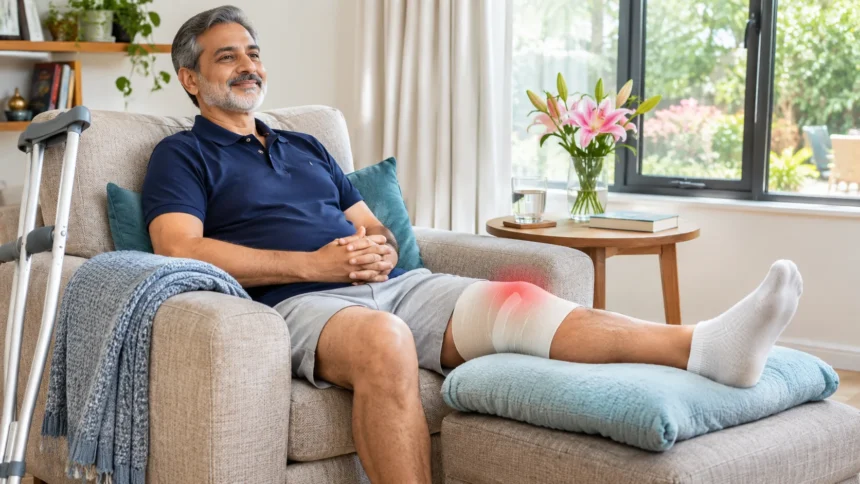
Leg elevation can help manage swelling during recovery from knee replacement surgery. When resting, your care team may recommend positioning your operated leg above heart level when practical. This can support fluid drainage from swollen tissues. However, the exact elevation technique depends on your condition, comfort, and any postoperative restrictions.
Use supportive pillows or a suitable leg elevation cushion to position the limb comfortably. When extension is being encouraged, supporting the calf and heel rather than keeping a thick pillow directly beneath the knee may be preferable. Avoid placing excessive pressure on sensitive areas. Your knee should remain in a position approved by your surgical team.
Elevation should be combined with appropriate movement rather than replacing it completely. Ankle pumps, short walks, and prescribed exercises may support circulation and mobility. Do not remain immobile for prolonged periods simply because your leg is elevated. Following your care team’s advice helps balance swelling management with safe recovery activities.
How Long Can You Sit After Knee Replacement?
There is no universal sitting time limit that applies to every person after knee replacement. Comfort, swelling, mobility, and postoperative instructions influence how long you should remain seated. During early recovery, prolonged sitting with the knee bent may increase stiffness or discomfort. Regular position changes are generally more useful than remaining seated continuously.
Your physical therapist may recommend standing, walking briefly, or completing gentle movements at intervals throughout the day. Some rehabilitation plans encourage changing positions approximately every 30 to 60 minutes while awake, but this is not a strict rule for everyone. Follow any specific instructions provided by your care team.
As recovery progresses, many people gradually tolerate longer periods of sitting. However, increased swelling or stiffness may indicate that your activity pattern needs adjustment. Instead of focusing only on the clock, pay attention to how your knee responds. A balanced routine should include sitting, walking, prescribed exercises, and periods of comfortable rest.
Is Sitting on a Sofa Safe After Knee Replacement?
Sitting on a sofa may be comfortable, but very low or soft sofas can make movement difficult during early recovery. Deep cushions often allow the body to sink, increasing the effort required to stand. This can place additional demands on your legs and arms. A firmer, higher seat is often easier to use initially.
If you prefer sitting on a sofa, choose one with supportive cushions and a stable structure. Make sure your feet can reach the floor and that you can stand without excessive twisting. Avoid seating arrangements that require you to pull heavily on unstable furniture. You may need assistance until your balance and strength improve.
A supportive cushion may improve the height of a suitable sofa, provided it does not slide or create instability. However, using a firm chair with armrests may be more practical during the first stages of recovery. Choose the option that allows safe movement. Comfort should always be considered alongside stability and your current rehabilitation needs.
Can You Sit in a Recliner After Knee Replacement?
A recliner can provide a comfortable resting position after knee replacement when it offers adequate leg support. Some people find it helpful for relaxing while keeping the operated leg elevated. However, recliners vary in height, stability, and ease of use. A chair that feels comfortable while resting may still be difficult to exit safely.
Before using a recliner, make sure you can sit down and stand up without excessive strain. Avoid models that are very low or require difficult manual adjustments. Keep the operated leg supported without forcing the knee into an uncomfortable position. Your therapist can advise whether a particular recliner suits your stage of recovery.
A recliner should not replace regular movement or prescribed rehabilitation exercises. Remaining in a partially bent knee position for extended periods may contribute to stiffness. Change positions according to your care plan and practice approved extension movements when appropriate. Recliners can be useful for comfort when combined with safe activity and recovery habits.
Best Sitting Position While Working at a Desk
Returning to desk work after knee replacement may require adjustments to your seating arrangement. Choose a stable office chair with suitable height and supportive backrest. Keep your feet comfortably supported and avoid sitting with the operated leg twisted beneath the chair. Your knee should have enough space to move without hitting nearby furniture.
A desk setup that allows regular position changes may improve comfort. You can stand briefly, walk around, or complete approved ankle and knee movements when appropriate. Avoid remaining focused on work for several hours without moving. Regular breaks help reduce prolonged stiffness and allow you to monitor swelling or discomfort during recovery.
If your knee becomes swollen while working, discuss suitable rest and elevation strategies with your care team. Some people benefit from temporarily adjusting their working hours or alternating seated tasks with short periods of movement. Returning to work should reflect your recovery progress. Your surgeon can advise on timing based on your job requirements.
How to Sit and Stand Safely After Knee Replacement
Safe sitting and standing techniques can reduce the risk of falls during knee replacement recovery. Before standing, move toward the front of the chair while keeping your movements controlled. Position your feet according to the technique taught by your therapist. Use stable armrests when appropriate rather than pulling on a walking frame.
As you rise, shift your weight forward and push through your arms and legs as instructed. Avoid sudden movements or twisting through the operated knee. Once standing, pause briefly to establish your balance before walking. If you feel dizzy or unstable, sit safely and ask for assistance rather than continuing immediately.
When sitting down again, approach the chair carefully and turn using small steps instead of pivoting sharply on the operated leg. Make sure you can feel the seat behind you before lowering yourself. Use the armrests for controlled support. These techniques become easier as strength, confidence, and movement improve during rehabilitation.
Common Sitting Mistakes After Knee Replacement
One common mistake is remaining in a low chair that requires excessive effort to stand. Deep sofas and unstable stools may increase discomfort and make transfers more challenging. Choosing furniture based only on softness can overlook important safety considerations. Supportive seating should allow comfortable positioning and controlled movement between sitting and standing.
Another mistake is keeping the knee continuously bent without allowing opportunities for extension. Although bending exercises are essential for recovery, prolonged static positioning may increase stiffness. Resting with a pillow permanently beneath the knee can also make extension work more difficult. Follow your rehabilitation plan to maintain a healthy balance of movement and rest.
Some people avoid moving because they fear damaging the replacement joint. Others attempt to force uncomfortable positions too early in recovery. Both approaches can interfere with rehabilitation. Gentle, prescribed movement is generally important, but activity should progress according to professional guidance. Avoid comparing your recovery directly with someone else’s experience.
Exercises to Reduce Stiffness After Sitting
Gentle exercises can help reduce stiffness after remaining seated for a period of time. Ankle pumps are commonly included in postoperative rehabilitation because they encourage lower-leg movement and support circulation. While sitting or resting, slowly move your ankles upward and downward as instructed. Continue according to your therapist’s recommended exercise schedule.
Seated knee bending exercises may help improve your range of motion when approved by your rehabilitation team. One common movement involves slowly sliding your foot backward beneath the chair to bend the knee comfortably. Hold only as instructed and return to the starting position. Avoid forcing the knee through significant pain or resistance.
Knee extension exercises are also important for restoring normal movement. Your therapist may recommend carefully straightening the operated leg while seated or supported. The exact technique should reflect your current recovery stage and surgical instructions. Combining appropriate bending and straightening exercises helps support functional mobility without placing unnecessary demands on healing tissues.
How Sitting Affects Swelling After Knee Replacement
Swelling is common after knee replacement surgery and may continue for several weeks or longer. Sitting with the leg dependent for extended periods can contribute to fluid accumulation around the knee and lower leg. This may create tightness or discomfort. Changing positions and following your swelling management plan can help reduce symptoms.
Elevation and approved exercises are commonly recommended for managing postoperative swelling. Some patients also use cold therapy or compression when instructed by their healthcare team. These methods should be applied according to individual medical guidance. Avoid relying entirely on elevation while neglecting prescribed walking and rehabilitation activities.
Pay attention to swelling that suddenly increases or appears alongside unusual symptoms. New calf pain, marked warmth, significant redness, or one-sided leg swelling may indicate a blood clot and requires prompt medical assessment. Chest pain or sudden shortness of breath requires emergency care. These symptoms should never be dismissed as ordinary postoperative discomfort.
When Can You Sit Normally After Knee Replacement?
The time needed to sit comfortably after knee replacement varies from person to person. Recovery depends on factors such as preoperative mobility, overall health, surgical details, and rehabilitation progress. Many people gradually find ordinary sitting easier as swelling decreases and knee movement improves. However, full recovery often continues for several months.
During the early postoperative period, supportive chairs and modified transfer techniques may be necessary. As strength and flexibility improve, sitting in different types of furniture may become easier. Your physical therapist can help you progress toward normal daily activities. Avoid rushing into deep knee bending simply because another person recovered more quickly.
Comfortable sitting does not necessarily mean that every movement has fully recovered. Some people continue experiencing stiffness after prolonged periods of inactivity, even when routine activities become manageable. Maintaining prescribed exercises and appropriate activity remains important. Your care team can explain when particular positions or activities are suitable for your individual recovery.
Tips for Comfortable Sitting During Knee Replacement Recovery
Planning your home environment can make sitting easier during the recovery period. Place a stable chair in an area where you spend time regularly and keep essential items within comfortable reach. Make sure walking paths remain clear of loose rugs and unnecessary obstacles. These adjustments can reduce fall risks and make everyday activities more convenient.
Consider using a supportive cushion, suitable footrest, or approved elevation arrangement when necessary. Choose items that remain stable and do not force your knee into uncomfortable positions. Keep your walking aid accessible if you still need assistance. Simple changes can make sitting, standing, and resting more manageable while strength gradually returns.
Remember that recovery involves more than finding one perfect sitting posture. Comfortable positioning, regular movement, prescribed exercises, and appropriate rest all contribute to rehabilitation. Keep track of symptoms and discuss concerns with your healthcare team. Following personalized instructions helps you make steady progress while reducing unnecessary discomfort and avoiding preventable setbacks.
Conclusion
The best sitting position after knee replacement usually involves a supportive chair, comfortable knee alignment, and secure foot placement. Slightly elevated seating may make sitting down and standing up easier during early recovery. Avoid forcing the operated knee into uncomfortable positions or remaining completely still for extended periods. Your surgeon’s instructions should guide any specific restrictions.
Small adjustments can make a meaningful difference during rehabilitation. Choosing stable furniture, using appropriate leg elevation, and changing positions regularly may help reduce stiffness and swelling. Gentle exercises prescribed by your physical therapist support the gradual return of knee movement. A balanced approach helps improve comfort while maintaining important recovery activities.
Every knee replacement recovery follows a different timeline. Some people regain comfortable sitting relatively quickly, while others need additional support and rehabilitation. Focus on safe movement, appropriate rest, and steady progress rather than rushing through recovery milestones. With suitable guidance and consistent care, sitting and other everyday activities can gradually become easier.
Frequently Asked Questions (FAQs)
What is the best way to sit after knee replacement surgery?
Sit in a stable chair with back support, secure foot placement, and your operated knee comfortably aligned. A slightly higher seat may make transfers easier. Follow your surgeon’s specific postoperative instructions.
Can I sit with my knee bent after knee replacement?
Yes, comfortable knee bending is generally part of recovery unless your surgeon gives specific restrictions. However, avoid keeping the knee bent continuously for long periods. Regular movement and prescribed extension exercises remain important.
Should I elevate my leg while sitting after knee replacement?
Leg elevation may help reduce postoperative swelling when performed as recommended by your healthcare team. Support the leg comfortably and follow instructions about knee positioning. Elevation should complement regular movement and rehabilitation exercises.
Is it okay to sit in a recliner after knee replacement?
Yes, a supportive recliner may be comfortable if you can enter and exit it safely. Avoid remaining in one position too long, and maintain prescribed exercises to support knee mobility.
How often should I get up after knee replacement surgery?
Regular movement is generally recommended during recovery, but the ideal frequency depends on your condition. Your care team may suggest changing positions every 30 to 60 minutes while awake, with individualized adjustments.