
Money Plant Care: How to Grow It Healthy & Fast
Money plants are among the easiest and most rewarding houseplants to grow, making them a favorite for beginners and experienced plant lovers alike. Often associated with pothos, especially Epipremnum aureum, the plant is valued for its attractive heart-shaped leaves, trailing vines, and ability to adapt to different indoor conditions. With the right balance of light, water, nutrients, temperature, and pruning, a money plant can produce healthy growth surprisingly quickly. It can thrive in soil, grow in water, climb a support, or trail from a hanging container. However, easy care does not mean completely maintenance-free. Understanding what the plant actually needs is the key to encouraging fuller foliage, stronger roots, and faster growth.
Healthy money plant care starts with creating stable growing conditions rather than constantly changing its location or watering routine. Bright indirect light generally produces the best combination of leaf color, vine length, and compact growth. Proper drainage protects the roots from staying wet for too long, while moderate feeding supplies nutrients during active growth. Pruning also plays an important role because it encourages branching and prevents the plant from becoming thin and leggy. Although money plants tolerate some neglect, their appearance often reflects the quality of care they receive. A few simple habits can therefore make the difference between a surviving plant and one that looks lush, vibrant, and actively growing.
Understanding Your Money Plant Before You Start
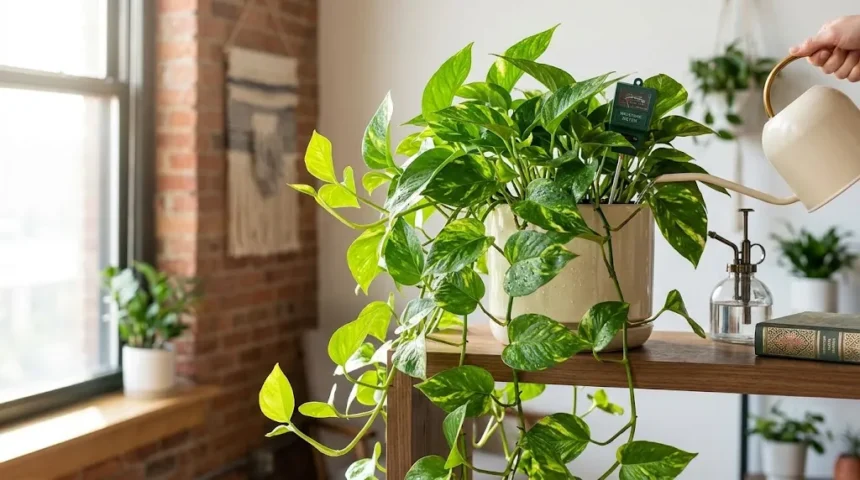
The term money plant can refer to different plants depending on the country, but in many homes it commonly refers to golden pothos or Epipremnum aureum. This tropical vine is known for glossy, heart-shaped leaves that may feature green, yellow, cream, or white variegation depending on the variety. It naturally climbs trees in warm tropical environments, which explains why indoor plants often grow vigorously when given a moss pole or other support. The plant can also trail beautifully from shelves and hanging baskets. Understanding its natural growth habit makes indoor money plant care much easier. Rather than treating it like a compact flowering plant, think of it as an adaptable climbing vine that responds strongly to light, moisture, and support.
Money plants are popular partly because they tolerate a wider range of indoor conditions than many tropical houseplants. They can survive in relatively low light, although surviving and growing vigorously are not the same thing. Plants kept in dim areas usually produce slower growth, smaller leaves, longer spaces between leaves, and reduced variegation. Those placed in brighter indirect light often grow more quickly and develop fuller foliage. This flexibility makes money plants suitable for bedrooms, offices, living rooms, kitchens, and other indoor spaces. However, choosing the brightest appropriate position you have will usually deliver better results than simply placing the plant wherever an empty shelf happens to be available.
Another useful characteristic of the money plant is its ability to produce roots from nodes along the stem. These nodes appear where leaves join the vine and can develop aerial roots when humidity and growing conditions are favorable. When a node is placed in water or moist growing medium, it can also produce new roots, which makes propagation remarkably straightforward. This ability allows one healthy plant to become several new plants with very little equipment. It also explains why pruning can make the original plant look fuller when cuttings are rooted and replanted into the same pot. Understanding nodes is therefore useful for both propagation and maintaining a dense, attractive money plant.
Growth speed varies according to season, environment, and care rather than following one fixed rate. During warmer months with longer daylight hours, a healthy money plant may produce new leaves and vine growth regularly. Growth often slows during cooler or darker periods because the plant receives less light and uses water more slowly. Indoor temperature, root space, nutrition, humidity, and plant maturity can also influence how quickly new foliage develops. Trying to force growth with excessive fertilizer or watering usually creates problems rather than faster results. Consistent care and adequate light are safer ways to promote healthy money plant growth without placing unnecessary stress on the roots.
It is also helpful to remember that variegated varieties may behave differently from solid-green types. Leaves containing large white, cream, or yellow sections have less chlorophyll available for photosynthesis, so heavily variegated plants often benefit from brighter indirect light. Without enough light, some varieties may produce greener leaves because greener tissue helps the plant capture more energy. At the same time, strong direct sunlight can scorch pale portions of the foliage more easily. Finding the right light balance is especially important for maintaining attractive variegation. Once you understand your particular money plant variety, you can adjust light, watering, and feeding more accurately instead of relying on a completely generic care routine.
Give Your Money Plant the Right Amount of Light
Bright, indirect light is usually the best choice for growing a healthy money plant quickly indoors. A position near an east-facing window can provide gentle morning light, while a south- or west-facing room may work well if the plant is placed farther from intense afternoon sun. Filtered light through a sheer curtain can also create excellent growing conditions. Adequate light supports photosynthesis, which gives the plant energy to develop new roots, leaves, and vines. When light is strong enough without being harsh, foliage tends to remain vibrant and growth becomes more compact. Observing the plant’s response is more reliable than assuming one window location will work equally well throughout every season.
Low light does not usually kill a money plant immediately, which is why it is often promoted as a low-light houseplant. However, prolonged low-light conditions can significantly reduce growth and change the appearance of the vines. You may notice longer gaps between leaves, smaller foliage, pale growth, or stems stretching toward a window. Variegated cultivars can also lose some of their contrasting color when they receive insufficient light. If these symptoms appear, gradually move the plant closer to a brighter natural light source. Avoid moving it directly from a dark room into intense sunlight because leaves that are not acclimated to stronger light can become damaged quickly.
Direct sunlight can be beneficial in very mild amounts, particularly gentle early-morning sun, but intense exposure should be approached carefully. Strong midday or afternoon sun through glass can heat leaf surfaces and create bleached, brown, or crispy patches. Variegated sections are especially vulnerable because they contain less protective green tissue. If the plant receives direct sun for several hours and develops scorch marks, move it back from the window or use a thin curtain. Existing burned areas will not turn green again, although new foliage can grow normally once conditions improve. Light changes should always be gradual so the plant has time to adapt to its new environment.
Artificial grow lights can be useful when natural light is limited, particularly in offices, apartments, or rooms with small windows. A full-spectrum LED grow light can supplement daylight and help prevent weak, stretched growth. Position the light according to the manufacturer’s recommendations because intensity varies considerably between different fixtures. The plant should receive enough light to support healthy growth without leaves becoming hot or bleached. A consistent daily schedule is generally better than leaving the light on continuously, since plants benefit from a regular dark period. Using a simple timer can make artificial lighting easier to manage and provide the money plant with a predictable day-and-night routine.
Rotating the container can also improve the appearance of a money plant because indoor light usually comes from one direction. Without rotation, vines and leaves may gradually lean toward the brightest window, leaving the opposite side less developed. Turning the pot by roughly a quarter turn every week or two encourages more balanced exposure. This is particularly useful for upright plants growing on poles or decorative supports. Trailing plants may still develop toward the light, but periodic rotation can keep the overall shape more attractive. Combined with pruning and proper spacing, balanced light exposure helps create a fuller money plant rather than one with most of its growth concentrated on a single side.
Water Your Money Plant Without Damaging the Roots
Proper watering is one of the most important parts of money plant care because both excess and insufficient moisture can affect growth. Instead of watering according to a rigid calendar, check the growing medium before adding more water. Allow the upper portion of the potting mix to dry slightly, then water thoroughly until excess moisture drains from the bottom of the container. This approach gives roots access to water while also allowing oxygen to return to the soil between waterings. Roots that remain constantly saturated can become stressed and vulnerable to rot. The frequency will change according to temperature, pot size, light exposure, soil composition, humidity, and season.
Overwatering is generally more dangerous than allowing a money plant to become slightly dry for a short period. Common signs of excessive watering include yellowing leaves, soft stems, persistently wet soil, slow growth, and an unpleasant smell coming from the potting mix. Severe root rot may cause leaves to wilt even though the soil remains wet because damaged roots can no longer absorb moisture properly. If you suspect overwatering, stop adding water and allow the mix to dry appropriately. Make sure the drainage holes are open and remove standing water from saucers or decorative cover pots. Plants with extensive root damage may need to be removed from the container, trimmed, and replanted in fresh well-draining soil.
Underwatering produces a different pattern of symptoms and is usually easier to correct when caught early. Leaves may droop, curl slightly, lose their firmness, or develop dry brown edges when the roots remain dry too long. The pot may also feel unusually light, and the soil may pull away from the sides of the container. Water slowly and thoroughly until the growing medium is evenly moistened rather than giving only a small splash at the surface. Extremely dry potting mix can sometimes repel water, so repeated gentle watering may be necessary. Once adequately hydrated, a mildly thirsty money plant often regains firmness relatively quickly if the roots are still healthy.
Water quality can influence leaf appearance over time, although money plants are generally tolerant of ordinary household water. In areas with very hard water, mineral deposits may accumulate on soil surfaces or leaf tips after repeated watering. If browning persists despite good care, filtered water, rainwater, or another suitable low-mineral source may be worth testing. Allowing water to reach room temperature can also reduce sudden temperature stress around the roots. Avoid routinely mistaking leaf-tip browning for thirst because salts, low humidity, fertilizer buildup, or root damage can produce similar symptoms. Looking at the entire plant and potting conditions provides a more accurate diagnosis than reacting to one leaf.
Seasonal adjustments are essential because money plants use water more slowly when light levels and temperatures decrease. A plant that needs watering relatively often during bright summer conditions may stay moist much longer during winter. Continuing the same summer watering schedule can therefore create root problems during cooler months. Check the soil directly rather than assuming the calendar should remain unchanged throughout the year. Plants under grow lights or in consistently warm indoor conditions may show less seasonal variation. The goal is to match watering to actual moisture use, giving the roots enough hydration for active growth while avoiding constantly wet conditions that restrict oxygen around the root system.
Use the Best Soil, Pot, and Fertilizer for Fast Growth
Money plants grow best in a loose, well-draining potting mix that holds some moisture without remaining soggy for extended periods. A quality indoor plant mix can work well, particularly when amended with materials that improve aeration and drainage. Perlite, orchid bark, coco coir, or similar components can help create air spaces around the root system. Dense garden soil should generally be avoided in indoor containers because it may compact easily and drain too slowly. Healthy roots require both moisture and oxygen, so soil structure matters as much as watering frequency. A balanced potting medium allows excess water to leave the container while retaining enough moisture for the plant to absorb between watering sessions.
The pot should always have adequate drainage holes unless you are deliberately growing the plant entirely in water. Decorative containers without drainage can trap water around the root zone and make overwatering much more likely. One easy solution is to keep the plant in a plastic nursery pot with drainage and place that container inside a decorative cover pot. Remove the inner pot for watering and allow it to drain completely before returning it. Pot size also matters because an oversized container holds considerably more wet soil around a small root system. Choose a pot only slightly larger than the existing root mass when repotting rather than jumping immediately to a much larger container.
Money plants do not need extremely frequent repotting, and being slightly root-bound is usually not an emergency. Consider repotting when roots circle heavily around the inside of the container, grow through drainage holes, or occupy most of the available potting mix. Water running straight through a root-packed pot or growth slowing despite otherwise good conditions can also indicate limited root space. Move to a container approximately one size larger and use fresh, airy potting medium. Spring or early active-growth periods are convenient times to repot because the plant can establish roots relatively quickly. Avoid repeatedly disturbing healthy roots simply because a fixed amount of time has passed.
Fertilizer can support faster money plant growth, but it should supplement good light and watering rather than compensate for poor growing conditions. A balanced liquid houseplant fertilizer applied at a diluted rate during active growth is suitable for many indoor money plants. Always follow product directions because nutrient concentration varies between fertilizers. Applying too much fertilizer can damage roots and produce brown leaf tips, salt buildup, or weak growth. Plants growing slowly because of inadequate light will not necessarily become healthier when given extra nutrients. Feed conservatively, observe how the plant responds, and reduce fertilization during periods when growth naturally slows.
Occasional flushing can help reduce fertilizer salts that accumulate in container soil over time. Water the pot thoroughly and allow plenty of excess water to flow through the drainage holes, provided the plant is in an appropriate well-draining medium. Never leave the pot sitting in the runoff afterward because the salts can be reabsorbed. White crust on the soil surface or around the pot rim can indicate mineral accumulation from fertilizer or hard water. Replacing part of the old potting mix during repotting can also refresh root conditions. Combining moderate feeding with strong indirect light and healthy roots will generally produce better growth than trying to accelerate the plant with increasingly concentrated fertilizer.
Prune and Train Your Money Plant for Fuller Growth
Pruning is one of the easiest ways to improve the shape of a money plant and prevent long, sparse vines from dominating its appearance. Use clean, sharp scissors or pruning shears and make cuts just above a node or leaf attachment point. Cutting a vine can encourage growth from nodes below the cut, helping the plant develop additional branches over time. Regular light pruning is often more effective than allowing vines to become extremely long before cutting them back dramatically. Remove yellow, damaged, or unhealthy leaves as part of routine maintenance. Healthy green trimmings can usually be saved for propagation, allowing the pruning session to produce new plants rather than wasted material.
A fuller-looking money plant often contains several rooted cuttings growing together in the same container. A single vine may remain attractive, but it will naturally look less dense at the soil line as it lengthens. If your plant appears sparse, root several cuttings and place them back into open areas of the original pot. Over time, the additional stems create a bushier appearance without relying only on branching. This method is particularly effective for hanging baskets and tabletop plants where dense foliage is preferred. Make sure the container is not overcrowded to the point that water and airflow become difficult to manage, since healthy roots still need adequate space.
Training a money plant upward can dramatically change its leaf size and overall appearance. In nature, pothos vines climb tree trunks using aerial roots, and indoor plants can respond similarly when provided with a moss pole, coir pole, plank, or another appropriate support. Gently secure vines using soft plant ties rather than tight wire that may cut into growing stems. Position nodes close to the support so aerial roots have an opportunity to attach when conditions are favorable. Climbing plants often develop larger leaves than vines left hanging downward. Adequate light remains essential because support alone cannot create strong growth if the plant lacks enough energy for photosynthesis.
Trailing growth can be equally attractive if you prefer vines cascading from a high shelf or hanging planter. Allow selected stems to lengthen while pruning others to maintain density near the top of the pot. Arrange vines so they receive enough light rather than hiding large sections behind furniture or deep inside dark corners. Very long stems can become bare near the base when lighting is poor or pruning is neglected. Cutting these stems back and propagating the healthy ends is often the easiest way to rejuvenate the plant. A combination of trailing vines and newly rooted cuttings can create a layered appearance that looks lush without requiring complicated training.
Always clean pruning tools before making cuts, especially if the scissors have recently been used on another plant. Dirty tools can potentially transfer pests or pathogens between plants. Wipe blades with a suitable disinfecting solution and allow them to dry before pruning healthy stems. Avoid cutting away a very large portion of a stressed plant unless damaged tissue makes removal necessary. A healthy money plant can tolerate substantial pruning, but gradual shaping is usually easier to manage and produces a more predictable result. After pruning, continue normal light and watering routines rather than immediately increasing fertilizer. Fresh growth will appear as the plant redirects its existing resources toward active nodes and developing shoots.
Grow a Money Plant in Water Successfully
Money plant cuttings can root easily in water, making water propagation one of the most popular ways to create new plants. Select a healthy vine and cut below a node so the cutting includes at least one or two viable nodes. Remove any leaves that would sit below the water surface because submerged foliage can decay. Place the lower node in a clean glass or container filled with fresh water while keeping the remaining leaves above the surface. Position the container in bright indirect light rather than strong direct sunlight. Roots often begin developing from the submerged nodes, although the exact timing varies with temperature, light, cutting health, and season.
Change or refresh the water regularly to keep the rooting environment clean and oxygenated. If the container develops an unpleasant smell, cloudy water, or slimy material around the stems, clean it and replace the water promptly. Rinse the vessel before returning the cuttings and inspect roots for damaged or rotting sections. Transparent containers make it easy to monitor root development, although they may also encourage algae when exposed to strong light. Algae is not always immediately harmful, but heavy buildup can compete for nutrients and make the container unattractive. Keeping the glass clean and avoiding intense sun usually makes water-grown money plants easier to maintain.
A money plant can remain in water for much longer than the initial propagation period if its needs are managed properly. However, plain water contains very limited nutrients, so long-term hydroponic growth differs from simply leaving a cutting in the same glass indefinitely. Once the root system becomes established, a very dilute hydroponic or suitable liquid nutrient solution may be needed to support sustained healthy growth. Follow fertilizer directions carefully because excess nutrients can damage roots in water more quickly than many people expect. Periodic water replacement also helps maintain an appropriate root environment. Healthy water-grown roots are generally firm and should not develop persistent foul odors or mushy tissue.
Transferring a water-rooted cutting into soil is easiest when the roots are established but have not spent an extremely long time adapting exclusively to water. Prepare a small container with moist, airy potting mix and create a hole large enough to accommodate the roots without bending them sharply. Place the cutting gently into the mix, cover the roots, and lightly firm the soil around the stem. Keep the potting medium consistently but not excessively moist during the initial transition period. Water-developed roots may need time to adjust to the different oxygen and moisture conditions of soil. Bright indirect light and stable temperatures can reduce stress while new soil-adapted roots develop.
Growing in water and growing in soil can both produce attractive money plants, but each method requires a different maintenance routine. Soil usually provides a more buffered root environment and makes conventional houseplant fertilizing relatively straightforward. Water culture provides a clean decorative appearance and makes root development visible, but nutrient management and water quality become more important. Neither method automatically guarantees faster growth under all conditions. Light, temperature, variety, root health, and nutrition still determine much of the plant’s performance. Choose the system that fits your lifestyle and maintenance habits, then keep conditions consistent instead of frequently moving established plants between water and soil.
Solve Common Money Plant Problems Before They Spread
Yellow leaves are one of the most common concerns among money plant owners, but they can have several different causes. Occasional older leaves naturally turn yellow and fall as the plant grows, especially near the base of mature vines. Multiple yellow leaves appearing quickly may instead indicate excessive moisture, poor drainage, low light, root stress, or another environmental problem. Check the potting mix before assuming the plant needs more water. If the soil remains wet for an unusually long period, improve drainage and adjust your watering routine. Look at root condition, light exposure, and recent changes together because yellow foliage is a symptom rather than a diagnosis by itself.
Brown leaf tips and edges can be associated with inconsistent watering, dry air, excessive fertilizer salts, mineral buildup, or root stress. Before cutting off the damaged areas, examine how frequently the plant is watered and whether the soil dries appropriately between waterings. If fertilizer has been applied heavily, flushing the potting mix may help remove accumulated salts. Extremely dry indoor air can contribute to crisp edges, although money plants usually tolerate normal household humidity reasonably well. Keep plants away from strong heating vents and very dry drafts when possible. Damaged brown tissue will not turn green again, but correcting the underlying issue can help new leaves emerge in better condition.
Leggy vines with large spaces between leaves usually indicate that the plant is reaching for stronger light. Moving the plant gradually into brighter indirect light can encourage more compact future growth. Pruning elongated stems also helps improve the shape and encourages activity from lower nodes. Rooting the removed pieces and adding them to the same pot can make a sparse plant appear fuller. Do not rely on fertilizer alone to correct stretching because nutrients cannot replace missing light. Once lighting improves, continue turning the plant periodically so several sides receive useful exposure. New growth should gradually become denser if the plant’s overall environment is suitable.
Common houseplant pests such as spider mites, mealybugs, scale insects, and thrips can occasionally affect money plants. Inspect the undersides of leaves, nodes, and new growth whenever you notice speckling, sticky residue, webbing, distorted foliage, or unexplained decline. Isolate an infested plant from nearby houseplants while identifying and treating the pest. Light infestations may sometimes be reduced through washing and manual removal, while appropriate insecticidal soap or other labeled houseplant treatments may be needed for persistent problems. Follow product directions exactly and repeat treatment only as recommended. Regular inspection makes pest control easier because small populations are generally simpler to manage than widespread infestations.
Root rot is one of the more serious money plant problems because damage occurs below the soil surface before the symptoms become obvious aboveground. Leaves may yellow, wilt, or drop while stems near the base become soft. Remove the plant from the container if you suspect severe rot and inspect the roots carefully. Healthy roots should generally feel firm, while rotting roots may appear dark, soft, or mushy and can have an unpleasant smell. Trim badly affected sections with clean tools and repot the remaining healthy plant in fresh, well-draining medium. If much of the root system is lost, taking healthy stem cuttings for propagation can sometimes preserve the plant.
How to Make a Money Plant Grow Faster and Stay Healthy
Faster growth begins with improving light because photosynthesis provides the energy plants need to create new tissue. Place your money plant where it receives plenty of bright, indirect light for much of the day. If natural light is inadequate, supplementing with an appropriate grow light can produce more reliable growth than applying additional fertilizer. Watch internode spacing and leaf size because they offer clues about whether the plant is receiving enough light. Compact growth with healthy foliage generally indicates better conditions than extremely long, thin vines. Optimize light first, then adjust watering and feeding around the plant’s increased growth rather than trying to stimulate development with nutrients alone.
Warm, stable temperatures also support vigorous growth because money plants are tropical vines. Typical comfortable indoor temperatures are generally suitable, particularly when the plant is protected from sudden cold drafts and extreme heat. Avoid placing the container directly beside air conditioners, heaters, frequently opened cold windows, or other sources of rapid temperature change. Growth can slow when the plant becomes chilled even if the leaves do not show immediate damage. Stable conditions allow roots and foliage to function more consistently. During warmer active-growth periods, you may notice the plant using water more quickly and producing leaves more frequently than it does during cooler, darker months.
Humidity can influence growth, particularly when indoor air is exceptionally dry, although money plants do not usually require greenhouse-level humidity. Moderate household humidity is often sufficient for healthy plants. If air is very dry, grouping compatible houseplants nearby or using a humidifier can create more stable conditions. Avoid relying entirely on occasional misting because the temporary moisture usually changes room humidity very little. Consistently wet leaves can also create unwanted conditions if airflow is poor. Focus instead on healthy roots, adequate watering, suitable temperatures, and balanced humidity. These environmental factors work together and are more important than any single trick marketed as a shortcut for rapid growth.
Healthy roots are the foundation of fast foliage growth, so resist the temptation to keep the soil constantly wet. Roots require oxygen as well as water, which is why an airy potting mix and drainage holes are essential. Allow the upper portion of the growing medium to dry somewhat before watering again, adjusting according to your particular environment. Repot only when the root system genuinely needs additional space and avoid disturbing roots unnecessarily. Apply balanced fertilizer moderately during active growth rather than overfeeding. When roots remain healthy, the plant can absorb moisture and nutrients effectively, giving stems and leaves the resources they need for sustained development.
Finally, combine regular pruning with propagation if your goal is a money plant that looks both fast-growing and full. Long vines alone can make a plant appear large while the base remains sparse. Strategic trimming encourages branching, and rooted cuttings can be planted back into the container to increase stem density. Give climbing vines a support if you want larger leaves and a more dramatic upright appearance. Keep observing new foliage because leaf size, spacing, color, and firmness reveal how well your care routine is working. There is no safe overnight method for doubling growth, but good light, healthy roots, moderate feeding, proper pruning, and stable conditions can produce impressive results over time.
Frequently Asked Questions
How often should I water a money plant?
Water your money plant when the upper portion of the potting mix feels slightly dry rather than following a fixed weekly schedule. Water thoroughly and allow excess moisture to drain so the roots do not remain constantly wet.
Does a money plant need direct sunlight?
Money plants generally perform best in bright, indirect light. Gentle morning sun may be tolerated, but strong midday or afternoon sunlight can scorch the foliage, particularly on highly variegated varieties.
How can I make my money plant bushier?
Prune long vines just above healthy nodes to encourage new growth and root some of the cuttings. Planting several rooted cuttings back into the same container is one of the easiest ways to create a fuller appearance.
Can a money plant grow permanently in water?
Yes, money plants can grow in water long term when water quality, cleanliness, light, and nutrients are properly managed. Established water-grown plants may require a carefully diluted nutrient solution because plain water alone does not provide complete nutrition indefinitely.
Why are my money plant leaves turning yellow?
Yellow leaves can result from overwatering, poor drainage, inadequate light, root problems, or normal aging of older foliage. Check soil moisture and overall growing conditions before changing your watering routine.