
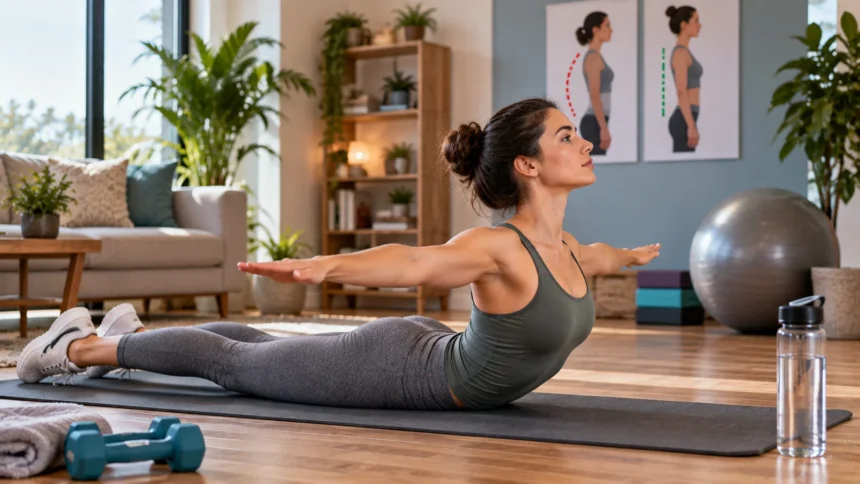
Poor posture can develop gradually from long hours at a desk, frequent phone use, weak core muscles, tight hips, or simply repeating the same movement patterns every day. Over time, rounded shoulders, a forward head position, and an overly arched lower back can become your body’s default. The right posture exercises can help restore better alignment while improving strength, mobility, and body awareness.
Improving posture is not about forcing yourself to sit perfectly straight all day. Your body is designed to move, change positions, and respond to different activities throughout the day. A balanced routine that strengthens weak muscles and improves flexibility can make comfortable upright posture feel more natural rather than something you constantly have to think about.
Why Exercises for Good Posture Matter
Good posture helps your muscles and joints share everyday loads more efficiently while you sit, stand, walk, lift, and exercise. When certain muscles become weak and others remain tight, the body may compensate by shifting the head, shoulders, pelvis, or spine. Posture exercises help address these imbalances by strengthening the muscles responsible for maintaining more comfortable alignment.
Many people focus only on their upper back when trying to fix poor posture, but posture involves the entire body. Your deep core muscles, glutes, hips, shoulders, neck, and upper-back muscles all contribute to how you position yourself. Improving several of these areas together generally creates better results than repeatedly performing one corrective movement.
Consistency also matters more than trying to complete an exhausting posture workout once a week. Short sessions performed several times throughout the week can gradually improve mobility, muscular endurance, and movement awareness. Combining strengthening exercises with stretches is especially useful because posture problems often involve both weak muscles and areas that have become stiff from prolonged positions.
Chin Tucks for Forward Head Posture
Chin tucks are one of the simplest exercises for people whose head tends to drift forward while working at a computer or looking at a phone. Sit or stand tall with your eyes facing directly ahead and your shoulders relaxed. Without tilting your head downward, gently draw your chin straight backward as though you are creating a small double chin.
Hold the tucked position for approximately three to five seconds while keeping your jaw relaxed and breathing normally. You should feel gentle engagement around the front and back of the neck rather than a strong stretch or painful pressure. Return to your starting position slowly and repeat the movement about eight to twelve times.
One common mistake is pushing the chin downward toward the chest instead of sliding the entire head backward. Imagine your head moving horizontally along a straight line rather than rotating forward. Practicing chin tucks during short work breaks can increase awareness of forward head posture and encourage better neck positioning throughout the day.
Wall Angels for Rounded Shoulders
Wall angels strengthen several muscles around the shoulders and upper back while encouraging better thoracic mobility. Stand with your back against a wall and place your feet slightly forward so you can remain comfortable. Bring your arms into a goalpost position with your elbows bent, keeping your ribs controlled rather than allowing your lower back to arch excessively.
Slowly slide your arms upward while maintaining comfortable contact between your upper back and the wall. Move only as high as you can without shrugging your shoulders, forcing your wrists backward, or dramatically arching your spine. Pause briefly near the top before slowly returning your arms to the starting position and repeating eight to ten times.
People with tight chest or shoulder muscles may initially find it difficult to keep their hands against the wall. That is completely fine because forcing the movement can reduce the quality of the exercise. Focus instead on controlled movement, relaxed breathing, and gradually increasing your range as your shoulder mobility and upper-back control improve.
Cat-Cow Stretch for Spinal Mobility
The cat-cow exercise gently moves your spine between flexion and extension, making it useful after long periods of sitting. Begin on your hands and knees with your wrists underneath your shoulders and knees positioned below your hips. Keep your movements slow so you can feel each section of your spine moving rather than rushing between the two positions.
As you inhale, gently lift your chest and tailbone while allowing your abdomen to move toward the floor without aggressively compressing your lower back. As you exhale, press through your hands, round your spine upward, and allow your head to follow the natural movement. Continue moving between these positions for approximately eight to twelve controlled repetitions.
Cat-cow does not directly strengthen every muscle involved in posture, but it can improve spinal awareness and reduce the stiffness that makes upright positions uncomfortable. It works especially well as part of a warm-up before strengthening exercises. Focus on smooth breathing and controlled mobility rather than trying to create the biggest possible arch in either direction.
Bird Dog for Core and Back Stability
Bird dog strengthens the core, lower back, glutes, and stabilizing muscles around the spine without requiring heavy equipment. Begin on all fours with your spine in a comfortable neutral position and gently tighten your abdominal muscles. Extend one arm forward while simultaneously extending the opposite leg backward without allowing your hips or shoulders to rotate.
Pause briefly when your arm and leg are approximately parallel with the floor, then return them slowly to the starting position. Repeat on the opposite side and continue alternating for six to ten repetitions per side. Think about reaching long through your fingertips and heel instead of trying to lift your limbs as high as possible.
The most common bird-dog mistake is arching the lower back when extending the leg. Keeping your core gently engaged and reducing your range of motion can make the exercise more effective. Proper bird-dog form teaches your torso to remain stable while your arms and legs move, which supports better alignment during everyday movement and other exercises.
Glute Bridges for Better Pelvic Alignment
Weak glutes can influence how the pelvis and lower back are positioned during standing, walking, and prolonged sitting. Glute bridges strengthen the muscles around your hips while also encouraging better control of the pelvis. Lie on your back with your knees bent, feet flat on the floor, and arms resting comfortably beside your body.
Gently brace your abdominal muscles before pressing through your feet and lifting your hips toward the ceiling. Squeeze your glutes near the top while keeping your ribs controlled and avoiding excessive arching through the lower back. Lower your hips slowly until they nearly touch the floor, then repeat for approximately ten to fifteen repetitions.
Try to distribute pressure evenly through both feet rather than pushing mainly through your toes. Your knees should remain roughly aligned with your hips and feet instead of collapsing inward or spreading excessively outward. Stronger glutes can support better pelvic stability and complement core exercises when you are working to improve overall posture and movement mechanics.
Dead Bugs for Deep Core Strength
Dead bugs train your abdominal muscles to stabilize your spine while your arms and legs move independently. Lie on your back and raise your knees until your hips and knees are bent at approximately ninety degrees. Extend your arms toward the ceiling and gently tighten your abdominal muscles so your lower back remains comfortably controlled.
Slowly lower one arm behind your head while extending the opposite leg toward the floor. Stop before your lower back begins to arch excessively, then return to the starting position and switch sides. Perform approximately six to ten repetitions per side while focusing on slow movement and steady breathing rather than trying to move quickly.
If keeping both your arm and leg moving feels too difficult, start by moving only one limb at a time. Good technique is more valuable than using the largest possible range of motion. Strengthening deep core muscles helps your torso remain more stable during sitting, standing, lifting, and walking, which can make maintaining comfortable posture easier.
Doorway Chest Stretch for Tight Chest Muscles
Tight chest muscles can contribute to shoulders resting in a more rounded or forward position, particularly after hours spent typing or using mobile devices. Stand inside a doorway and place one forearm against the frame with your elbow around shoulder height. Step forward gently until you feel a comfortable stretch across the front of your chest and shoulder.
Hold the stretch for approximately twenty to thirty seconds while breathing slowly and keeping your shoulders relaxed. Avoid aggressively pushing your chest forward or twisting your torso in an attempt to create a deeper stretch. Repeat on the opposite side, and consider performing two rounds whenever your upper body feels particularly stiff after prolonged sitting.
A doorway chest stretch works especially well alongside exercises that strengthen the upper-back and shoulder muscles. Stretching alone may temporarily improve mobility, but strengthening helps your body better control its newly available range. Combining chest stretches with wall angels and other upper-back exercises creates a more balanced approach to improving rounded shoulder posture.
Hip Flexor Stretch for People Who Sit Often
Long periods of sitting can leave the muscles at the front of the hips feeling shortened and stiff. A half-kneeling hip flexor stretch can improve mobility around the pelvis while encouraging better awareness of lower-body positioning. Kneel with one knee on a padded surface and place the opposite foot in front with the knee comfortably bent.
Gently tighten the glute on the kneeling side and slightly tuck your pelvis before shifting your body forward. You should feel a mild stretch near the front of the hip without dramatically arching your lower back. Hold the position for twenty to thirty seconds, then change sides and repeat the stretch once or twice.
Many people lean far forward during this exercise while allowing their lower back to arch, which reduces the focus on the hip flexors. Maintaining a gentle pelvic tuck usually creates a more effective stretch with less movement. Improving hip flexibility can complement glute and core strengthening exercises when working toward more comfortable standing and sitting posture.
Reverse Plank for the Posterior Chain
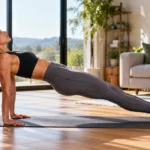
The reverse plank strengthens several muscles along the back of the body, including the glutes, shoulders, upper back, and posterior chain. Sit with your legs extended and place your hands behind you before lifting your hips into a controlled straight-body position. Keep your chest open and avoid allowing your hips to drop as you maintain steady breathing.
Beginners can start with shorter holds of ten to twenty seconds and gradually increase the duration as strength improves. If the full movement feels uncomfortable, bending your knees can reduce the difficulty while allowing you to practice proper shoulder and hip positioning. Focus on creating a long line through your torso rather than forcing your hips excessively high.
Because technique matters, learning the correct reverse plank form can help you perform the exercise more effectively and avoid unnecessary strain. The movement works well alongside glute bridges, bird dogs, and upper-back exercises. Together, these movements strengthen areas that help support upright posture during daily activities.
How to Build a Posture Exercise Routine
You do not need to perform every posture exercise every day to see gradual improvement. A simple routine could include chin tucks, wall angels, bird dogs, glute bridges, dead bugs, and one or two mobility exercises. Performing this routine three or four times per week can provide a manageable starting point without turning posture improvement into an exhausting daily commitment.
Begin with one or two sets of each strengthening exercise and gradually increase your repetitions as your control improves. For stretches, use comfortable holds of approximately twenty to thirty seconds rather than forcing yourself into extreme positions. Quality should remain the priority because poorly controlled repetitions may reinforce the same movement patterns you are trying to improve.
Remember that even excellent posture exercises cannot completely offset hours spent in one position without movement. Change positions regularly, take brief walking breaks, adjust your workstation when necessary, and avoid trying to maintain one rigid posture all day. The goal is to become stronger and more comfortable across different positions while developing better awareness of how your body moves.
Common Mistakes When Trying to Improve Posture
One of the biggest mistakes is trying to correct posture by aggressively pulling the shoulders backward throughout the day. This can create unnecessary tension in the upper back and neck instead of producing relaxed alignment. Your shoulders should sit comfortably rather than being forced backward, while your head and rib cage remain naturally positioned over your pelvis.
Another common problem is focusing only on stretching while ignoring strength. Tight muscles may benefit from mobility work, but your body also needs enough muscular endurance to maintain comfortable positions. Combining exercises for the core, glutes, upper back, shoulders, and neck generally provides a more complete strategy than relying entirely on stretches.
Finally, avoid expecting years of movement habits to change after a few workouts. Improving posture usually requires consistent practice, regular movement, and awareness of your daily positions. Progress may first appear as better exercise control, less stiffness after sitting, or an improved ability to notice when you have remained in one position for too long.
Conclusion
The best exercises for posture work because they address more than one part of the body. Chin tucks, wall angels, bird dogs, glute bridges, dead bugs, chest stretches, hip flexor stretches, and reverse planks can improve strength, mobility, and movement awareness. Together, they create a balanced approach to supporting comfortable alignment rather than simply forcing your shoulders backward.
Proper technique is important when performing any posture exercise. Move slowly, control your range of motion, breathe normally, and avoid forcing positions that cause discomfort. Starting with manageable repetitions and gradually building strength usually produces better long-term results than attempting difficult variations before your body is ready for them.
Most importantly, remember that healthy posture includes movement rather than one perfect position maintained all day. Combine regular posture exercises with walking breaks, varied sitting positions, and sensible workspace habits. With consistent practice, stronger supporting muscles and better mobility can make upright, comfortable movement feel increasingly natural throughout your everyday routine.
FAQs
How often should I do exercises to improve posture?
Most posture exercises can be performed three to four times per week, while gentle mobility movements may be used more frequently. Consistency and proper form are more important than doing long workouts every day.
How long does it take to improve poor posture?
The timeline varies depending on your strength, mobility, daily habits, and consistency. Some people notice improved body awareness within weeks, while meaningful changes in strength and movement patterns may require several months.
Can exercise completely fix rounded shoulders?
Exercise can strengthen upper-back muscles, improve chest mobility, and encourage better shoulder positioning. However, daily habits, workstation setup, movement frequency, and individual anatomy can also influence how your shoulders naturally rest.
What muscles should I strengthen for better posture?
Important muscles include the deep core, glutes, upper-back muscles, shoulder stabilizers, neck muscles, and spinal stabilizers. Training these areas together can provide better support than focusing only on your shoulders or back.
Should posture exercises hurt?
Posture exercises should generally feel controlled and manageable rather than painful. Mild muscular effort or gentle stretching is normal, but sharp, worsening, or persistent pain is a reason to stop the movement and seek appropriate professional advice.