
The reverse plank is a bodyweight exercise that strengthens several muscles along the back of the body while challenging your core, shoulders, and arms. Unlike a traditional plank where you face the floor, the reverse plank places your chest upward as you support yourself through your hands and heels. The position looks simple, but maintaining good alignment requires significant muscular control.
This exercise can be useful for people who want to strengthen the glutes, hamstrings, core, shoulders, and upper back without complicated equipment. It can also provide a different challenge from standard planks by emphasizing posterior-chain strength and shoulder stability. Proper form is important, however, because poor wrist, shoulder, or lower-back positioning can make the exercise unnecessarily uncomfortable.
What Is a Reverse Plank?
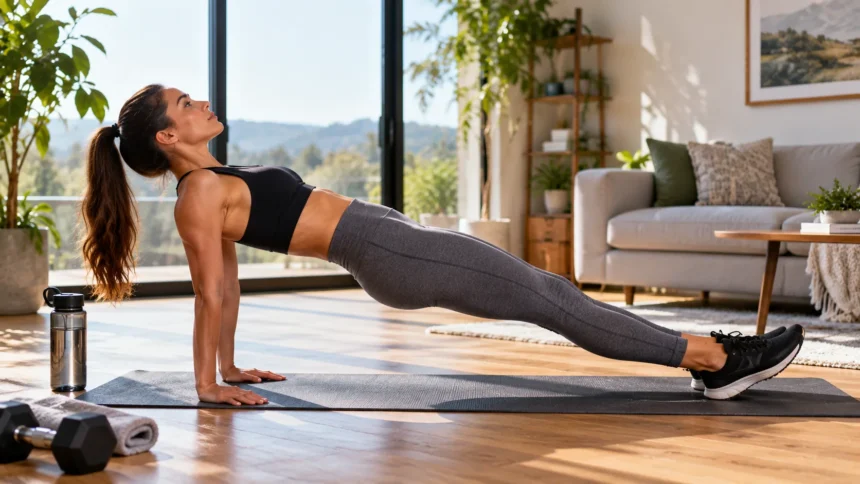
A reverse plank is an isometric bodyweight exercise performed with your hands and heels on the floor while your torso faces upward. You lift your hips until your body forms a relatively straight line from the shoulders through the hips toward the feet. The position is held rather than performed through repeated large movements.
The exercise requires the glutes and hamstrings to help keep the hips elevated while the abdominal and back muscles stabilize your trunk. Your shoulders, triceps, and upper-back muscles also work to support body weight through the arms. Because several muscle groups must remain active simultaneously, the reverse plank can provide a challenging full-body hold.
Reverse planks can be performed as part of a core workout, strength routine, or bodyweight training session. Beginners may start with bent knees or shorter holds before attempting the full straight-leg position. The goal is not simply to stay elevated for as long as possible, but to maintain controlled alignment throughout the hold.
How to Do a Reverse Plank Correctly
Sit on the floor with your legs extended in front of you and place your hands slightly behind your hips. Your fingers can point toward your feet or slightly outward depending on what feels comfortable for your wrists and shoulders. Keep your chest open and prepare your core before lifting.
Press through your palms and heels while squeezing your glutes to raise your hips from the floor. Aim to create a long line through the shoulders, hips, knees, and ankles without allowing the hips to sag. Keep your neck comfortable rather than throwing your head far backward or forcing your chin tightly toward your chest.
Hold the position while breathing steadily and maintaining tension through your glutes and core. When you can no longer keep your hips elevated without compensation, lower yourself under control. Beginners can perform shorter holds and gradually increase duration as their shoulder stability, core endurance, and posterior-chain strength improve.
What Muscles Does the Reverse Plank Work?
The gluteus maximus is one of the main muscles involved because it helps maintain hip extension throughout the hold. Your hamstrings also contribute to keeping the hips lifted and supporting the lower body. Together, these muscles form an important part of the posterior chain, which includes structures along the back of the body.
Your core works continuously to keep the trunk stable. The abdominal muscles help prevent excessive arching through the lower back, while the spinal stabilizers contribute to maintaining alignment. This combination makes the reverse plank more than a lower-body exercise, even though the hips and posterior-chain muscles play a major role.
The shoulders, triceps, and upper-back muscles support your upper body against gravity. Your arms remain relatively straight while the shoulder girdle works to maintain a stable position. Forearm and wrist muscles may also work significantly because your hands remain in contact with the floor throughout the exercise.
Benefits of Reverse Planks
One of the main reverse plank benefits is improved posterior-chain strength and endurance. The exercise challenges the glutes and hamstrings while encouraging the hips to remain extended. This can complement routines that contain many forward-facing exercises such as traditional planks, crunches, or push-ups.
Reverse planks also challenge core stability without requiring repeated spinal bending. The trunk must remain controlled while the hips stay elevated and the shoulders support part of your body weight. This can provide useful variety for people who want more bodyweight core exercises beyond conventional front and side plank variations.
Another benefit is convenience because the exercise requires little space and no gym equipment. You can add it to home workouts, bodyweight circuits, or strength sessions without preparing machines or weights. The difficulty can also be adjusted by changing leg position, hold duration, or exercise variation.
Reverse Plank vs Traditional Plank
A traditional plank is performed facing the floor, usually while supported by the forearms or hands and toes. It places considerable emphasis on the anterior core, including the abdominal muscles, while the glutes and shoulders help maintain alignment. The reverse plank changes your orientation and shifts more demand toward the posterior chain.
During a reverse plank, the glutes, hamstrings, shoulders, and upper-back muscles play especially important roles. The hips must remain extended against gravity, which creates a different challenge from preventing the hips from dropping in a conventional plank. Both exercises require core stability, but they emphasize muscular involvement in slightly different ways.
You do not necessarily need to choose one exercise over the other. Traditional planks, reverse planks, and side planks can all contribute to a balanced core routine when performed comfortably. Using several plank variations may help develop stability from multiple directions while preventing your workouts from becoming overly repetitive.
Common Reverse Plank Mistakes
Allowing the hips to sag is one of the most common reverse plank mistakes. When the glutes and core stop working effectively, the pelvis drops and the lower back may compensate by arching excessively. Reduce the hold duration if necessary so you can maintain better alignment throughout each set.
Another mistake is forcing the head backward. Looking toward the ceiling does not require dropping your head as far as possible, which can create unnecessary neck tension. Keep your neck in a comfortable position that feels like a natural continuation of your upper spine rather than exaggerating the movement.
Poor hand placement can also create wrist or shoulder discomfort. If pointing your fingers directly toward your feet feels restrictive, slightly rotating the hands outward may feel better for some people. However, persistent joint pain should not simply be pushed through, and an easier variation may be more appropriate.
Reverse Plank Variations for Beginners
A bent-knee reverse plank is one of the easiest variations for beginners. Sit with your knees bent and feet on the floor, place your hands behind you, and lift your hips until the torso and thighs form a relatively straight line. The shorter lever makes the exercise easier than keeping both legs fully extended.
You can also perform shorter full reverse plank holds rather than trying to remain elevated for a long period. Five to ten controlled seconds with good alignment can be more useful than a long hold where the hips repeatedly sag. Gradually increase time as your strength and confidence improve.
Another option is practicing hip lifts before holding the top position continuously. Raise your hips, pause briefly, lower with control, and repeat. This dynamic version can help you learn how to engage the glutes and shoulders before progressing to longer isometric reverse plank holds.
Advanced Reverse Plank Variations
Once the standard reverse plank becomes comfortable, lifting one leg can significantly increase the challenge. Maintain hip height while slowly raising one foot from the floor without allowing your pelvis to rotate. Alternate sides so both legs receive a similar training demand.
You can also increase the duration of each hold or add controlled repetitions of hip lowering and lifting. Moving slowly forces the glutes, hamstrings, and core to maintain tension throughout a larger range. Avoid turning the exercise into fast bouncing movements because control is more valuable than speed.
Advanced trainees may combine reverse planks with other bodyweight exercises in a circuit. For example, traditional planks, side planks, glute bridges, and reverse planks can challenge the trunk from several directions. Progress gradually rather than introducing several harder variations at once, especially if your wrists or shoulders are still adapting.
How Long Should You Hold a Reverse Plank?
Beginners can start with short holds that allow them to maintain proper form. Around 10 to 20 seconds may be enough initially, followed by rest before another set. The exact duration matters less than whether your hips remain elevated and your shoulders stay controlled throughout the exercise.
As strength improves, you can gradually increase hold time to around 30 seconds or longer if the position remains comfortable. There is little value in extending the hold once your form begins deteriorating. Stop the set when you can no longer maintain alignment instead of treating shaking or sagging as something that must be ignored.
Two or three sets can work well within many general strength routines, depending on the rest of your workout. You do not need to perform reverse planks every day to benefit. Allow adequate recovery, particularly when the exercise produces noticeable shoulder, hamstring, or glute fatigue.
Wrist, Shoulder, and Back Safety Tips
The reverse plank places your wrists into an extended position while your hands support a meaningful amount of body weight. People with sensitive wrists may find this uncomfortable, especially when they suddenly perform long holds. Use a suitable modification and stop if you experience sharp pain, numbness, or increasing joint discomfort.
Shoulder mobility also influences how comfortable the position feels. If your shoulders cannot tolerate your hands being placed behind your body, forcing the full exercise may create unnecessary strain. A bent-knee variation or another posterior-chain exercise can be a better starting point while shoulder strength and mobility improve.
Your lower back should not carry the entire workload. Squeeze your glutes and maintain abdominal tension so the hips remain elevated without excessive lumbar arching. If the exercise repeatedly causes lower-back pain despite good modifications, stop and consider getting guidance from a qualified fitness or healthcare professional.
Tips for Getting Better Results
Focus on muscular tension rather than simply surviving the hold. Actively squeeze your glutes, press through your hands, and keep the trunk controlled from the beginning of each repetition. Intentional muscle engagement can make a shorter reverse plank much more effective than a longer but poorly controlled position.
Combine reverse planks with other strength exercises for a more complete routine. Squats, hip hinges, rows, glute bridges, and traditional plank variations can train movement patterns that the reverse plank alone cannot cover. A balanced program usually produces better overall strength than relying heavily on one exercise.
Progress gradually by changing only one factor at a time. You might first increase hold duration, then add another set, and later introduce a harder variation. Slow progression gives the wrists, shoulders, core, and posterior-chain muscles time to adapt while making it easier to maintain consistent technique.
Conclusion
The reverse plank is a simple but demanding bodyweight exercise that strengthens the glutes, hamstrings, core, shoulders, and upper back. It provides a different challenge from traditional planks because your body faces upward and your posterior-chain muscles work hard to keep the hips elevated.
Correct form involves pressing through the hands and heels, squeezing the glutes, maintaining core tension, and keeping the body relatively straight. Avoid sagging hips, excessive lower-back arching, or forcing the head backward. Shorter high-quality holds are generally more useful than long repetitions performed with poor alignment.
Beginners can start with bent knees or shorter holds before gradually progressing to the standard reverse plank. More advanced variations include single-leg holds and controlled hip movements. Pay attention to wrist, shoulder, and back comfort so the exercise supports your training rather than creating unnecessary pain.
FAQs About Reverse Planks
What muscles do reverse planks work?
Reverse planks primarily work the glutes, hamstrings, core, shoulders, triceps, and upper-back muscles. The wrists and forearms also contribute by supporting your body weight through the hands.
Are reverse planks good for your core?
Yes. Reverse planks require continuous core stabilization to keep the pelvis and trunk aligned. They particularly challenge the core while also involving the glutes and posterior-chain muscles.
How long should a beginner hold a reverse plank?
Beginners can start with approximately 10 to 20 seconds while maintaining good form. Gradually increase the duration as strength improves rather than immediately attempting long holds.
Are reverse planks bad for the wrists?
They can be uncomfortable for people with limited wrist mobility or existing wrist problems. Adjust hand position, use an easier variation, or stop if the exercise creates sharp or persistent pain.
Can reverse planks build glutes?
Reverse planks activate the glutes and can improve muscular endurance, but progressive resistance exercises such as squats, hip thrusts, and lunges generally provide more direct options for building glute size and strength.