

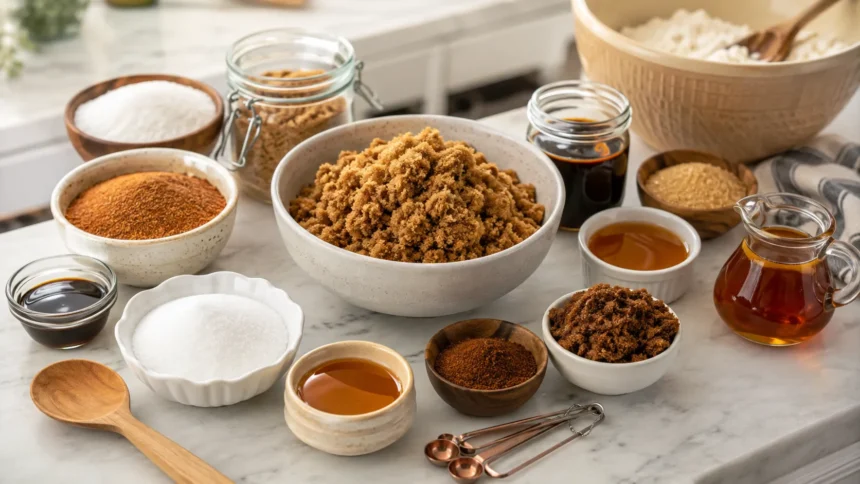
Brown Sugar Substitute: 10 Easy Swaps That Actually Work
Running out of brown sugar halfway through a recipe does not necessarily mean you need to abandon your baking plans. Several pantry ingredients can work as a brown sugar substitute, although the best replacement depends on whether you are making cookies, cakes, sauces, glazes, marinades, or another dish.
Brown sugar contributes more than sweetness. The molasses naturally present in brown sugar adds moisture, acidity, color, and a mild caramel-like flavor. That means replacing it with another sweetener can sometimes change how a recipe spreads, browns, rises, or feels when you take the first bite.
Fortunately, many substitutions work surprisingly well when you understand those differences. White granulated sugar mixed with molasses provides the closest homemade replacement, while coconut sugar, muscovado, maple syrup, honey, and several other sweeteners can work when exact duplication is less important.
The following 10 swaps explain what to use, how much to substitute, and what changes you can expect. Whether you need a brown sugar replacement for cookies, a healthier-feeling alternative, or simply something already sitting in your pantry, there is likely an option that fits your recipe.
What Makes Brown Sugar Different From White Sugar?
Brown sugar is essentially sugar containing molasses, which gives it its characteristic brown color, soft texture, and deeper flavor. Commercial brown sugar may be produced by adding molasses back to refined sugar or through other sugar-processing methods that retain or incorporate molasses.
The amount of molasses determines whether the sugar is considered light or dark brown. Light brown sugar has a milder flavor, while dark brown sugar contains more molasses and therefore tastes stronger, richer, and slightly more complex.
Molasses also makes brown sugar more moist than regular granulated sugar. That extra moisture can influence baked goods by helping cookies stay chewy, cakes remain softer, and sauces develop a richer consistency.
When choosing a substitute, consider whether you need only sweetness or whether moisture and flavor matter too. A dry substitute may work perfectly in some recipes, while another recipe may benefit from replacing the molasses component as closely as possible.
1. White Sugar and Molasses
The closest homemade brown sugar substitute is white granulated sugar mixed with molasses. Because brown sugar gets much of its distinctive flavor and moisture from molasses, combining these two ingredients recreates the characteristics of commercial brown sugar remarkably well.
For approximately 1 cup of light brown sugar, combine 1 cup of granulated sugar with about 1 tablespoon of molasses. For dark brown sugar, increase the molasses to around 2 tablespoons for a stronger flavor and darker appearance.
Mix the ingredients thoroughly with a fork, whisk, or food processor until the molasses is distributed evenly. The sugar will gradually become softer and more similar in appearance and texture to packaged brown sugar.
This swap works particularly well in cookies, cakes, muffins, sauces, glazes, and marinades. If you have molasses available, it is usually the best option when you want your recipe to behave as closely as possible to one made with regular brown sugar.
2. White Granulated Sugar
Plain white sugar can replace brown sugar when you have no molasses or other suitable sweetener available. In many recipes, you can substitute granulated sugar for brown sugar in a straightforward 1:1 ratio by volume.
The final result will usually be sweeter and cleaner in flavor because white sugar lacks the caramel and molasses notes of brown sugar. Baked goods may also turn out slightly lighter in color than the original recipe intended.
Texture can change as well. Cookies made entirely with white sugar often become crisper and may spread differently because the added moisture from brown sugar is missing. Cakes and quick breads may feel slightly less moist.
Despite those differences, white sugar works well in many everyday recipes where brown sugar is not the defining ingredient. It is especially useful when you need a fast substitution and care more about completing the recipe than perfectly recreating the original flavor and texture.
3. Coconut Sugar
Coconut sugar is made from the sap of coconut palm flowers and has a warm, caramel-like flavor that makes it a popular brown sugar alternative. Despite the name, it does not normally taste strongly like coconut.
You can generally replace brown sugar with coconut sugar using a 1:1 ratio. Because it is a dry granulated sweetener, you usually do not need to make complicated adjustments when substituting it in straightforward recipes.
However, coconut sugar is typically drier than brown sugar. Cookies, bars, and cakes may therefore come out slightly less moist or chewy, especially in recipes where brown sugar provides a significant portion of the moisture.
Coconut sugar works particularly well in muffins, oatmeal, granola, banana bread, cookies, and warm-spiced desserts. Its darker flavor pairs nicely with cinnamon, chocolate, nuts, coffee, vanilla, and recipes that already have caramel-like notes.
4. Muscovado Sugar
Muscovado sugar is one of the closest ready-made replacements for brown sugar because it naturally contains a significant amount of molasses. It has a soft, moist texture and a strong caramel, toffee, and slightly smoky flavor.
Use muscovado sugar in a 1:1 ratio when replacing brown sugar. Light muscovado is generally closer to light brown sugar, while dark muscovado works especially well when a recipe calls for dark brown sugar.
Because muscovado has a stronger flavor than ordinary brown sugar, you may notice more pronounced molasses notes in the finished dish. This can be an advantage in recipes designed around rich, deep flavors.
It works beautifully in gingerbread, chocolate cake, sticky puddings, barbecue sauces, marinades, cookies, and dark fruit desserts. If you already keep muscovado in your pantry, it is one of the easiest and most reliable substitutes available.
5. Turbinado Sugar
Turbinado sugar is a minimally refined cane sugar with large golden-brown crystals and a mild molasses flavor. It can replace brown sugar when you want a less processed-style granulated sweetener with some caramel character.
A 1:1 substitution usually works for sweetness, but the texture is not identical. Turbinado crystals are larger and drier than brown sugar, so they may not dissolve as quickly in batters and doughs.
This difference can create slightly crunchier cookies or a more noticeable crystal texture in delicate baked goods. Grinding the sugar briefly in a food processor can make the texture closer to regular brown sugar before using it.
Turbinado is especially useful in oatmeal, muffins, quick breads, crumbles, toppings, and recipes where a slightly coarse texture is acceptable. It may be less ideal when the soft moisture of brown sugar is critical to the recipe.
6. Demerara Sugar
Demerara sugar is another coarse cane sugar with large amber-colored crystals and a mild caramel flavor. It resembles turbinado sugar but can vary somewhat in crystal size, color, and processing depending on the brand.
You can usually use demerara sugar as a 1:1 brown sugar replacement in recipes where exact texture is not crucial. Its sweetness is similar enough to work in many baked goods, beverages, toppings, and sauces.
Because the crystals are relatively large and the sugar is less moist, baked goods can be a little drier or crunchier. Grinding demerara before mixing it into dough can help create a smoother texture.
Demerara works particularly well in fruit crisps, muffins, oatmeal, coffee, crumbles, and baked toppings. Its attractive crystals also make it useful when you want a crunchy finish on top of cookies or quick breads.
7. Maple Syrup
Pure maple syrup can replace brown sugar when you want sweetness combined with a rich, distinctive flavor. However, maple syrup is a liquid sweetener, so it behaves differently from dry brown sugar and may require small recipe adjustments.
As a starting point, use roughly 3/4 cup of maple syrup for every 1 cup of brown sugar. Because you are adding extra liquid, reduce another liquid ingredient in the recipe by several tablespoons when practical.
Maple syrup works especially well in oatmeal, sauces, glazes, muffins, pancakes, quick breads, marinades, and certain cakes. Its flavor is more noticeable than standard brown sugar, so it can change the overall character of delicate recipes.
Choose pure maple syrup rather than pancake syrup when you want genuine maple flavor. Pancake-style syrups may contain different sweeteners and flavorings, producing results that are less predictable when used as a direct baking substitution.
8. Honey
Honey is another convenient liquid sweetener that can stand in for brown sugar in many recipes. It provides sweetness, moisture, and its own floral flavor, which can be subtle or strong depending on the type of honey used.
A practical starting ratio is about 3/4 cup of honey for every cup of brown sugar. Because honey adds liquid, consider reducing other liquids slightly when the recipe contains enough milk, water, or another adjustable ingredient.
Honey can also cause baked goods to brown faster, so keep an eye on the oven near the end of baking. If the surface darkens too quickly, a modest temperature adjustment may sometimes help depending on the recipe.
This substitution works well in muffins, sauces, marinades, quick breads, granola, and cakes. It is less predictable in recipes such as cookies where sugar structure plays an especially important role in spread and crispness.
9. Date Sugar
Date sugar is made from dried dates that have been ground into a granulated powder. Unlike refined sugar, it contains components from the whole fruit, giving it a naturally sweet flavor with mild caramel and fruity notes.
You can often substitute date sugar for brown sugar in approximately a 1:1 ratio, particularly in recipes where a slight change in texture is acceptable. However, date sugar does not dissolve as completely as ordinary sugar because it contains fruit solids.
That difference can create a slightly denser or more textured result in baked goods. Date sugar also tends to absorb moisture, so particularly dry batters may benefit from a small amount of additional liquid.
It works nicely in banana bread, oatmeal cookies, muffins, breakfast bars, pancakes, and other recipes with fruit, nuts, cinnamon, or warm spices. It is not ideal for making smooth syrups or candies where fully dissolved sugar is essential.
10. Maple Sugar
Maple sugar is produced by removing the water from maple syrup until a dry granulated sweetener remains. Because it is dry rather than liquid, it can be easier to substitute for brown sugar than ordinary maple syrup.
Use maple sugar in approximately a 1:1 ratio as a starting point. It will provide a recognizable maple flavor, which may make the finished recipe taste somewhat different from one prepared with brown sugar.
Maple sugar is usually drier than brown sugar, so some baked goods may lose a little moisture or chewiness. Recipes that already contain butter, oil, mashed fruit, yogurt, or another source of moisture often handle the substitution more easily.
This option works well in muffins, cookies, oatmeal, granola, spice cakes, and recipes where maple flavor complements the other ingredients. The main drawback is that maple sugar can be more expensive and less widely available than ordinary brown sugar.
Best Substitute for Light Brown Sugar
The best substitute for light brown sugar is white granulated sugar mixed with a small amount of molasses. Combining approximately 1 cup of white sugar with 1 tablespoon of molasses recreates both the moisture and mild caramel flavor reasonably closely.
If molasses is unavailable, plain white sugar is the easiest alternative. Use an equal amount, but expect slightly less moisture and a cleaner sweetness without the subtle molasses flavor normally associated with light brown sugar.
Coconut sugar is another useful option when you want a dry replacement with caramel notes. Although the texture may be slightly drier, it works well in many cookies, muffins, quick breads, and breakfast recipes.
For recipes where flavor matters more than exact replication, maple sugar can also perform well. The best choice depends on whether your priority is matching moisture, matching flavor, or simply finding a convenient pantry substitute.
Best Substitute for Dark Brown Sugar
Dark brown sugar contains more molasses than light brown sugar, giving it a stronger flavor and darker color. The closest homemade replacement is therefore white sugar mixed with a larger amount of molasses.
Use approximately 1 cup of white granulated sugar plus 2 tablespoons of molasses for every cup of dark brown sugar required. Mix thoroughly until the sugar becomes evenly colored and soft.
Dark muscovado sugar is another excellent substitute because its naturally strong molasses flavor closely matches the richness expected from dark brown sugar. It works particularly well in gingerbread, barbecue sauce, baked beans, and rich chocolate desserts.
Coconut sugar can work in a pinch, but its flavor and moisture are somewhat different. When the deep molasses taste is central to a recipe, homemade dark brown sugar or dark muscovado will usually produce the closest result.
Best Brown Sugar Substitute for Cookies
For cookies, white sugar mixed with molasses is usually the most reliable substitute because brown sugar affects both flavor and texture. The molasses contributes moisture that helps many cookies remain softer and chewier.
Using plain white sugar can still produce a good cookie, but you should expect a different result. Depending on the recipe, cookies may become crisper, lighter in color, and slightly different in spread.
Coconut sugar is another useful cookie substitute, especially in chocolate chip, oatmeal, and spice cookies. Its caramel flavor works naturally with many traditional cookie ingredients, though the final cookie may be slightly drier.
Liquid sweeteners such as honey and maple syrup are more difficult to substitute directly in cookies because they change dough moisture. If texture matters, a dry replacement is generally easier to use successfully.
Best Brown Sugar Substitute for Cakes
Cakes tend to offer more flexibility than cookies because their batters often contain several sources of moisture. White sugar with molasses remains the closest replacement when you want a result similar to the original recipe.
Coconut sugar works particularly well in banana cake, carrot cake, spice cake, coffee cake, and other recipes with stronger flavors. Its darker sweetness can complement cinnamon, ginger, chocolate, nuts, and fruit.
Honey and maple syrup can also work in some cakes, but the added liquid should be considered. Reducing another liquid ingredient slightly helps keep the batter from becoming too thin.
Whichever substitute you use, remember that changes in sugar can influence browning, moisture, and flavor. For delicate cakes where texture is highly dependent on precise ingredient ratios, the closest dry substitution usually gives the most predictable result.
Best Brown Sugar Substitute for Sauces and Marinades
Sauces and marinades are among the easiest places to substitute brown sugar because exact baking chemistry is less important. White sugar, honey, maple syrup, coconut sugar, or muscovado can all work depending on the flavor you want.
For barbecue sauce, muscovado or white sugar mixed with molasses creates a particularly rich result. The deeper molasses notes pair naturally with tomato, smoke, vinegar, chili, and savory spices.
Honey works especially well in glazes and marinades because it adds thickness along with sweetness. Maple syrup can provide a similar effect while adding a more pronounced maple flavor.
Start with slightly less liquid sweetener than the amount of brown sugar called for and adjust according to taste. Sauces are forgiving, so you can usually fine-tune sweetness and consistency while cooking.
Can You Substitute Brown Sugar 1:1?
Many dry sweeteners can be substituted for brown sugar using a 1:1 ratio, but that does not guarantee identical results. White sugar, coconut sugar, muscovado, turbinado, demerara, and maple sugar can often be measured this way.
The biggest difference usually involves moisture. Brown sugar is softer and more moist than several alternatives, meaning a 1:1 substitution can still change the texture of cookies, cakes, or bars.
Liquid sweeteners such as honey and maple syrup should not normally be treated as straightforward cup-for-cup replacements. They add extra water to the recipe and can affect batter consistency, browning, and structure.
For casual cooking, these differences are often minor. For precise baking, use the closest substitute possible and consider how the replacement changes sweetness, moisture, acidity, and texture before making additional adjustments.
How Brown Sugar Substitutes Change Baking
Sugar affects much more than sweetness in baking. It can influence browning, tenderness, moisture retention, cookie spread, crust development, and how long baked goods remain soft after cooling.
Replacing brown sugar with a dry sweetener may reduce moisture. This can make cookies firmer or cakes slightly less tender, particularly when brown sugar represents a substantial portion of the recipe.
Liquid substitutions create the opposite challenge because they add moisture. Too much honey or maple syrup can make a batter thinner and affect how quickly a baked good sets in the oven.
The safest approach is to think about the role brown sugar is playing in the particular recipe. A tablespoon in a sauce is easy to replace, while two cups in a carefully formulated cookie dough deserve much more attention.
Which Brown Sugar Substitute Tastes Most Similar?
White sugar mixed with molasses tastes the most similar because it recreates the two main components responsible for brown sugar’s characteristic sweetness and flavor. You can also adjust the molasses amount depending on whether you need light or dark brown sugar.
Muscovado comes very close but typically has a stronger molasses flavor. It may actually improve recipes where dark caramel, toffee, and molasses notes are desirable.
Coconut sugar provides some caramel character but does not perfectly imitate brown sugar. It has its own flavor profile and a drier texture, making it better viewed as an alternative rather than an exact copy.
Plain granulated sugar produces the least complex flavor among common substitutes. It will provide sweetness effectively but cannot reproduce the moisture and molasses character that makes brown sugar distinctive.
Which Substitute Is Best When You Are Completely Out of Sugar?
If you have no granulated or alternative dry sugars at home, check whether you have honey or maple syrup. Both can provide sweetness in many sauces, breakfast recipes, marinades, cakes, and quick breads.
Liquid sweeteners require more attention in baking because they change moisture. Begin with a smaller quantity than the brown sugar amount and reduce another liquid ingredient when possible.
Fruit-based sweeteners such as date syrup or certain fruit purees can sometimes sweeten recipes as well, but they significantly change flavor and texture and should not be treated as universal brown sugar replacements.
For highly structured baked goods such as cookies or candies, waiting until you have an appropriate granulated sugar may provide better results. Not every recipe responds well to major ingredient substitutions.
How to Make Brown Sugar at Home
Making brown sugar at home is surprisingly simple if you have granulated white sugar and molasses. Place 1 cup of sugar in a bowl and add approximately 1 tablespoon of molasses for light brown sugar.
For dark brown sugar, use roughly 2 tablespoons of molasses instead. Mix with a fork or electric mixer until the molasses is distributed throughout the sugar and no large sticky patches remain.
Fresh homemade brown sugar can initially look slightly different from the packaged version, but it behaves similarly in most recipes. You can make only the amount needed rather than preparing a large batch.
Store leftovers in an airtight container to limit moisture loss. Like commercial brown sugar, homemade brown sugar can harden when exposed to air for extended periods, so good storage makes it easier to use later.
How to Keep Brown Sugar From Getting Hard
Brown sugar becomes hard when it loses moisture. Leaving the package open or storing it in a container that does not seal properly allows water to escape, gradually turning soft sugar into a solid block.
The easiest prevention method is an airtight container. Move opened brown sugar into a well-sealed storage container or make sure the original package is closed tightly after every use.
Food-safe brown sugar keepers designed to hold moisture can also help. Some people use a piece of bread temporarily to soften hardened sugar, although it should not be left indefinitely.
If your brown sugar has already hardened, gentle moisture can often restore its texture. Once softened, transfer it to an airtight container so you do not have to repeat the process every time you bake.
Common Mistakes When Substituting Brown Sugar
One common mistake is assuming every sweetener behaves identically because it tastes sweet. Baking depends on moisture, acidity, crystal structure, and other ingredient characteristics that can affect the final texture.
Another mistake is replacing brown sugar with a liquid sweetener cup for cup. Adding an entire cup of honey instead of a cup of brown sugar can make some batters far wetter than intended.
People also sometimes forget about flavor. Molasses, maple syrup, honey, coconut sugar, and muscovado each add recognizable notes that may work beautifully in one recipe and overpower another.
Finally, avoid making too many substitutions at once when baking. If you replace the sugar, flour, fat, and eggs simultaneously, it becomes difficult to predict how the recipe will behave or identify what caused a disappointing result.
Quick Guide to Choosing the Right Brown Sugar Replacement
Use white sugar plus molasses when you want the closest overall match. It replicates sweetness, moisture, color, and flavor more accurately than most other options and works across a wide variety of recipes.
Choose muscovado for rich desserts, dark sauces, gingerbread, and recipes where stronger molasses flavor is welcome. Coconut sugar is useful when you want an easy dry substitute with mild caramel notes.
Use white sugar when convenience matters most and minor texture changes are acceptable. Turbinado and demerara are better for rustic baked goods, toppings, and recipes where larger sugar crystals will not cause problems.
Choose maple syrup or honey when you are making sauces, marinades, moist cakes, or quick breads and can accommodate the extra liquid. Matching the substitute to the recipe will usually give better results than treating every sweetener as interchangeable.
Final Thoughts on the Best Brown Sugar Substitute
The best brown sugar substitute depends on what you are making and which ingredients you already have. White sugar mixed with molasses provides the closest replacement because it recreates the sweetness, moisture, and caramel-like flavor of ordinary brown sugar.
If molasses is unavailable, plain white sugar can work in many recipes, while coconut sugar, muscovado, turbinado, demerara, date sugar, and maple sugar provide useful dry alternatives with slightly different flavors and textures.
Honey and maple syrup can also work when a liquid sweetener suits the recipe. They are particularly convenient for sauces, marinades, muffins, and quick breads, but they may require adjustments when used in more precise baked goods.
The most important thing is understanding what brown sugar contributes to your recipe. Once you consider sweetness, moisture, texture, and flavor, choosing among these 10 easy swaps becomes much simpler—and running out of brown sugar no longer has to stop your recipe.
Frequently Asked Questions
What is the best substitute for brown sugar?
White granulated sugar mixed with molasses is the closest substitute. Use about 1 tablespoon of molasses per cup of sugar for light brown sugar and about 2 tablespoons for dark brown sugar.
Can I use white sugar instead of brown sugar?
Yes, white sugar can usually replace brown sugar in a 1:1 ratio. However, baked goods may be slightly crisper, lighter, and less moist because white sugar contains no molasses.
Can I use coconut sugar instead of brown sugar?
Yes. Coconut sugar can generally replace brown sugar using a 1:1 ratio. Expect a slightly drier texture and a mild caramel flavor.
Can honey replace brown sugar?
Yes, especially in sauces, marinades, cakes, and quick breads. Use roughly 3/4 cup honey per cup of brown sugar and reduce another liquid slightly when necessary.
What can I use instead of brown sugar in cookies?
White sugar mixed with molasses is the best choice for maintaining chewiness and flavor. Plain white sugar or coconut sugar can also work, but the cookie texture may change.