
What Is Happy Baby Pose?
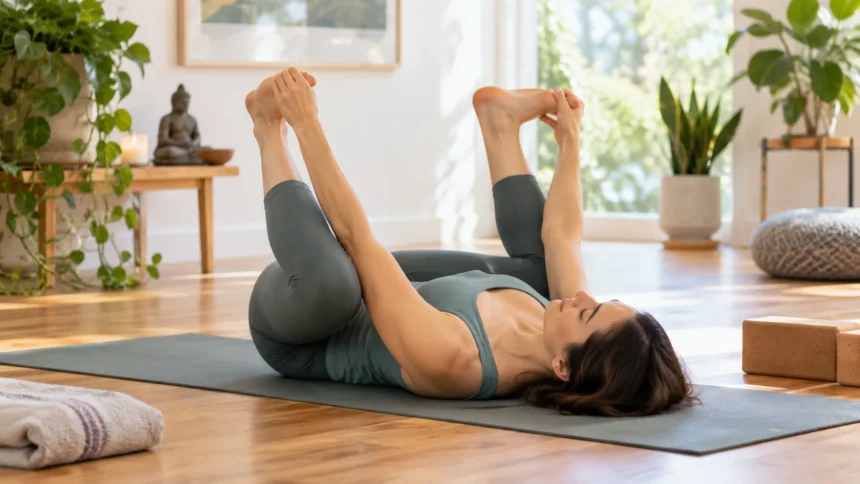
Happy Baby Pose is a gentle yoga position performed while lying on your back with your knees bent toward your chest. You hold the outside edges of your feet, ankles, or thighs while allowing your knees to move comfortably toward your armpits. The pose is commonly used to encourage relaxation and create a mild stretch through the hips, inner thighs, and lower body.
In yoga, Happy Baby Pose is also known as Ananda Balasana. The position resembles the way babies sometimes hold their feet while lying on their backs, which explains its familiar name. Although the posture looks simple, good form matters because pulling too hard on the legs can create unnecessary pressure through the hips, knees, or lower back.
Happy Baby Pose can be included during a warm-up, cooldown, mobility session, or relaxing yoga routine. It does not require advanced flexibility, and several modifications can make it accessible to beginners. The main goal is to create comfortable hip opening while keeping the spine supported and breathing naturally throughout the position.
What Muscles Does Happy Baby Pose Stretch?
Happy Baby Pose primarily targets muscles around the hips and inner thighs. As the knees move outward and toward the torso, the adductors along the inside of the thighs receive a gentle stretch. The glutes and deeper hip muscles may also feel lengthened depending on your mobility and how widely the knees comfortably separate.
The position can also create a mild stretch through the hamstrings, especially if the lower legs become more vertical. However, Happy Baby Pose is not intended to become an aggressive hamstring stretch. Keeping the knees bent allows the focus to remain more on the hips and groin rather than forcing the backs of the thighs into excessive tension.
Some people also notice a comfortable release through the lower back because the body remains supported by the floor. This sensation can vary significantly depending on spinal mobility and hip flexibility. If your lower back lifts excessively or feels compressed, reducing the range of the pose can make the position more comfortable.
Benefits of Happy Baby Pose
One of the most common benefits of Happy Baby Pose is improved awareness of hip mobility. The position encourages the hips to move into flexion and outward rotation while the body stays supported on the floor. This can make it easier to explore a comfortable range without needing to balance or support your body weight in a standing position.
The pose can also help reduce the temporary feeling of tightness that develops after prolonged sitting. People who spend many hours at desks often notice stiffness around the hips and inner thighs. Adding gentle mobility work, including Happy Baby Pose, may help the lower body feel less restricted when combined with regular walking and movement breaks.
Happy Baby Pose is also frequently used as a relaxing position near the end of a yoga session. Lying on your back and breathing slowly can encourage the shoulders, jaw, and abdomen to relax. While the pose is not a treatment for medical conditions, it can be a comfortable part of a general flexibility or relaxation routine.
How to Do Happy Baby Pose Correctly
Begin by lying flat on your back with your knees bent and your feet on the floor. Bring both knees slowly toward your chest, then separate them slightly wider than your torso. Reach your hands toward the outside edges of your feet, ankles, or thighs depending on what you can comfortably reach without lifting your shoulders.
Position your ankles approximately above your knees so your lower legs are close to vertical. Gently guide your knees toward the sides of your rib cage without forcing them toward the floor. Keep your tailbone and most of your back comfortably supported rather than curling your entire pelvis upward to create a deeper stretch.
Relax your shoulders and keep the back of your head supported on the floor. Breathe slowly while allowing the hips and inner thighs to soften rather than pulling continuously with your arms. Hold the position only as long as it remains comfortable, then release your feet and bring your knees together before returning them toward the floor.
Common Happy Baby Pose Mistakes
One common mistake is pulling the feet too hard toward the floor. Happy Baby Pose should create gentle tension rather than strong pressure in the hips or groin. If you are using your arms to force the knees lower, reduce the intensity and allow your hip mobility to determine how far the legs naturally move.
Another mistake is allowing the lower back or tailbone to lift excessively from the floor. A small amount of natural movement may occur, but aggressively curling the pelvis can change the stretch and make the position uncomfortable. Think about keeping the back supported while the thighs move around the sides of the torso.
People may also tense their shoulders and neck while reaching for their feet. If your shoulders lift or your head strains forward, hold your ankles, shins, or thighs instead. The effectiveness of the pose does not depend on touching your feet, so choose a hand position that allows the upper body to remain relaxed.
Happy Baby Pose for Tight Hips
People with tight hips may find the full version of Happy Baby Pose uncomfortable at first. Instead of trying to bring the knees close to the floor, allow them to stay higher and closer together. You can still receive a useful stretch while working within the range your hips currently allow.
Holding behind the thighs is another helpful modification. This reduces the amount of hip flexion required and prevents you from using your arms to force the legs outward. Over time, you may gradually move your hands toward the shins, ankles, or feet if your mobility improves and the transition remains comfortable.
Consistency matters more than intensity when working on hip flexibility. Performing a gentle version several times per week is usually more sensible than forcing a very deep position once. Combine Happy Baby Pose with walking, hip rotations, light strengthening, and other mobility exercises to create a more balanced approach to lower-body movement.
Can You Rock During Happy Baby Pose?
Some people gently rock from side to side while holding Happy Baby Pose. This small movement can create a light massage-like sensation through the lower back and may make the position feel more relaxing. The rocking should remain controlled, slow, and comfortable rather than becoming a large movement across the spine.
Keep both shoulders relaxed and avoid using momentum. Shift your weight slightly toward one side and then return through the center before moving toward the other side. If the rocking creates discomfort in the hips, spine, or neck, remain still and focus on breathing instead.
Rocking is optional and does not make the pose more effective. Some people prefer a completely stationary version because it allows them to focus more clearly on hip relaxation. Choose whichever variation feels better for your body instead of assuming that additional movement is always necessary.
How Long Should You Hold Happy Baby Pose?
Many people begin by holding Happy Baby Pose for around 20 to 30 seconds. This provides enough time to settle into the position and notice where tension is present without forcing a prolonged stretch. As the pose becomes more comfortable, you may stay slightly longer while continuing to breathe naturally.
You can also perform two or three shorter holds with brief rests between them. This approach can be useful for beginners because each repetition gives you an opportunity to adjust your hand position and range. The stretch should feel manageable throughout rather than becoming more painful as time passes.
There is no need to hold the pose for several minutes simply because you want faster flexibility gains. Longer does not automatically mean better, especially when your hips or knees feel sensitive. Stop or modify the position if you notice sharp pain, numbness, tingling, or increasing joint discomfort.
Happy Baby Pose in a Lower-Body Mobility Routine
Happy Baby Pose works well alongside other gentle hip and lower-body mobility exercises. You might combine it with knee-to-chest stretches, hip rotations, supported butterfly stretches, or gentle hamstring movements. Using several different positions allows the hips and legs to move through multiple directions instead of relying on one stretch alone.
Strengthening should also be part of a balanced lower-body routine. Hip, glute, thigh, and calf muscles all contribute to everyday walking and stability. Adding exercises such as calf muscle exercises can complement flexibility work by improving strength and control throughout the lower legs.
A simple routine might begin with light movement, continue with strengthening, and finish with relaxed stretches such as Happy Baby Pose. There is no requirement to follow one exact order for every person. The best routine is one that matches your mobility, activity level, and comfort while allowing you to progress gradually.
Who Should Modify or Avoid Happy Baby Pose?
People with recent hip, knee, lower-back, or groin injuries should be cautious with Happy Baby Pose. The position places the hips into a relatively deep bend and moves the knees outward, which may not be suitable during certain stages of recovery. Professional guidance can help determine whether the pose should be modified or temporarily avoided.
Pregnant individuals may also need modifications as the body changes, particularly later in pregnancy. Lying flat on the back for prolonged periods may not be appropriate for everyone, and abdominal space can make the standard position uncomfortable. A qualified prenatal professional can suggest safer alternatives based on the individual situation.
Stop immediately if the pose causes sharp joint pain, numbness, tingling, or significant discomfort. Mild muscular stretching is different from pain inside the hip or knee. If symptoms repeatedly appear whenever you attempt the position, avoid forcing the pose and consider getting individualized advice from a healthcare or movement professional.
Tips for Getting More From Happy Baby Pose
Focus on breathing instead of trying to create the deepest possible stretch. Slow inhalations and relaxed exhalations can help reduce unnecessary tension through the abdomen, hips, shoulders, and jaw. If you notice yourself holding your breath, slightly reduce the intensity until you can breathe normally again.
Keep the feet active but not rigid. You can gently flex the ankles so the soles of the feet face upward, but avoid creating excessive tension through the calves or toes. The goal is to maintain a stable position while letting the hips do most of the mobility work.
Use props when they make the pose more comfortable. A yoga strap can be placed around the feet if reaching them causes the shoulders or neck to strain. You can also hold behind the thighs instead of the feet, proving that good form and comfort matter far more than achieving the picture-perfect version of the pose.
Conclusion
Happy Baby Pose is a gentle yoga stretch that mainly targets the hips, inner thighs, and surrounding lower-body muscles. It can help improve mobility awareness and provide a relaxing way to finish a workout or yoga session. The pose works best when you move gradually and avoid pulling the legs beyond a comfortable range.
Good form involves keeping the back supported, shoulders relaxed, knees comfortably separated, and breathing steady. You can hold the feet, ankles, shins, or thighs depending on your flexibility. Modifications allow beginners and people with limited hip mobility to benefit without forcing themselves into the full position.
Include Happy Baby Pose as one part of a balanced routine that also contains walking, strengthening, and other mobility exercises. Stop if the position causes sharp pain, numbness, or worsening discomfort. Comfortable movement, consistency, and gradual progress are more valuable than trying to achieve the deepest possible stretch.
FAQs
What muscles does Happy Baby Pose stretch?
Happy Baby Pose mainly stretches the inner thighs, hips, glutes, and surrounding muscles. Some people may also feel mild tension through the hamstrings and lower back depending on their flexibility.
How long should I stay in Happy Baby Pose?
Beginners can start with around 20 to 30 seconds and repeat the pose if it feels comfortable. There is no need to hold it longer if the position begins causing discomfort.
Is Happy Baby Pose good for tight hips?
It can be useful for gently exploring hip mobility because the body remains supported on the floor. People with very tight hips should use a smaller range and avoid forcing their knees downward.
Should my tailbone stay on the floor?
Ideally, the pelvis and lower back should remain comfortably supported rather than lifting excessively. If your tailbone rises significantly, reduce the depth of the pose or hold higher on your legs.
Can beginners do Happy Baby Pose?
Yes. Beginners can modify the pose by holding their thighs, shins, or ankles instead of their feet. The priority should be relaxed breathing and comfortable hip movement rather than achieving maximum flexibility.