
Gardenia Care: How to Grow Healthy, Fragrant Blooms
Gardenias are prized for their glossy evergreen leaves, creamy white flowers, and rich fragrance that can perfume an entire patio, garden, or room. Their elegant appearance makes them popular as landscape shrubs, container plants, and indoor ornamentals, but gardenias have a reputation for being more demanding than many common flowering plants. They prefer consistent moisture, acidic soil, good humidity, bright light, and relatively stable temperatures. When one of those conditions changes suddenly, leaves may yellow, buds can drop, or flowering may slow. Fortunately, gardenia care becomes much easier once you understand what the plant naturally prefers. Consistency is usually more important than complicated gardening techniques.
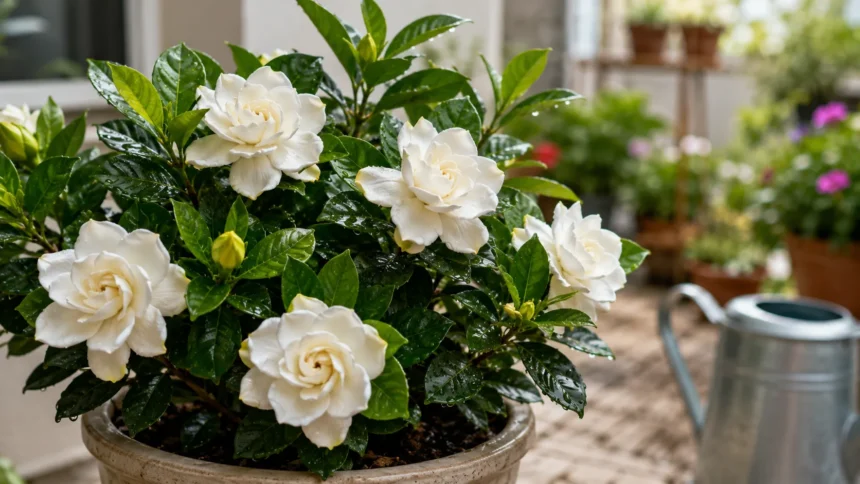
Most commonly grown gardenias belong to Gardenia jasminoides, an evergreen shrub native to warm regions of Asia. Depending on the variety and growing conditions, gardenias can remain compact enough for containers or develop into substantial outdoor shrubs. Their flowers generally emerge from late spring through summer, although warmer climates and certain cultivars may produce blooms over a longer season. The waxy flowers usually begin bright white and may gradually develop cream or yellow tones as they age. Healthy foliage remains dark green and shiny throughout much of the year. This combination of fragrance, foliage, and flowers explains why gardeners are often willing to give gardenias the extra attention they need.
Successful gardenia growing begins with matching the plant to the right environment rather than trying to correct problems after they appear. Soil drainage, acidity, sunlight, watering habits, temperature, humidity, and nutrition all influence flowering and leaf color. Outdoor gardenias generally perform best in warm climates with protection from extreme afternoon heat, while indoor plants need bright light and careful humidity management. Gardenias also dislike frequent relocation and dramatic changes in growing conditions. Once they are comfortable, leaving their environment relatively stable can encourage healthier growth. The following guide explains how to grow gardenias successfully, encourage fragrant flowers, prevent common problems, and keep these beautiful plants thriving through the seasons.
What Gardenias Need to Grow Well
Gardenias grow best when several environmental conditions remain within a fairly narrow range. They prefer acidic, organically rich soil that drains well while still holding enough moisture around the roots. Bright light is important for flowering, but intense afternoon sun in very hot climates can scorch leaves and stress flower buds. Consistent watering is equally important because gardenias dislike both waterlogged soil and prolonged dryness. Warm days, cooler but not cold nights, and moderate to high humidity generally suit them well. When these basic needs are balanced, gardenias can produce lush green foliage and repeated waves of fragrant blooms.
Soil acidity is particularly important because gardenias are acid-loving plants. They generally perform best when soil pH remains around 5.0 to 6.5, although exact tolerance varies somewhat by cultivar and growing environment. When soil becomes too alkaline, gardenia roots may struggle to absorb iron and other nutrients even when those nutrients are physically present. Leaves can then become yellow while veins remain green, a condition often associated with chlorosis. Gardeners sometimes mistake this appearance for simple fertilizer deficiency and add more nutrients without correcting the pH. Testing the soil can prevent unnecessary treatments and help identify whether acidity is the real problem.
Gardenias also require good drainage because their roots need access to both moisture and oxygen. Heavy clay soil that stays saturated for long periods can encourage root problems, while very sandy soil may dry too quickly. Amending planting areas with organic matter can improve structure, but drainage should never depend entirely on adding compost to a poorly located site. Containers should always have drainage holes so excess water can escape freely. Standing water around the roots can lead to leaf yellowing, wilting, and root rot. A healthy gardenia root zone should feel evenly moist rather than constantly wet.
Temperature stability is another important part of gardenia care. Many gardenias prefer daytime temperatures roughly between 65°F and 75°F, with somewhat cooler nighttime conditions. Extreme heat can dry plants rapidly and shorten flower life, while cold temperatures can damage tender growth. Bud formation may also be affected when nighttime temperatures remain unusually high or fluctuate dramatically. Indoor plants should be kept away from heating vents, air conditioners, fireplaces, and cold drafts. A relatively stable location helps gardenias maintain buds instead of dropping them before they open.
Humidity contributes to healthy growth because gardenias naturally prefer moist air. Outdoor plants often receive adequate humidity in warm climates, but indoor environments can become very dry, particularly during winter heating. Low humidity may cause leaf edges to brown or buds to dry before opening. A humidifier can be more effective than occasional misting because it raises moisture in the surrounding air more consistently. Grouping plants together can also slightly increase local humidity. However, humidity should not come at the expense of airflow, because persistently wet leaves and stagnant air can encourage fungal problems.
How Much Light Does a Gardenia Need?
Gardenias need plenty of bright light to produce strong growth and abundant flowers. Outdoor plants generally perform best with several hours of direct sunlight each day, particularly morning sun. In mild climates, full sun may be suitable if soil remains evenly moist and summer temperatures are not excessive. In hotter regions, protection from intense afternoon sunlight can prevent leaf scorch and reduce water stress. Too much shade usually results in leafy growth with fewer buds and flowers. The ideal location often combines bright morning light with light afternoon protection.
Morning sunlight is particularly useful because it provides strong light without the harshest heat of the day. A gardenia planted on the eastern side of a home or garden can receive several hours of direct morning sun followed by softer afternoon conditions. This arrangement helps encourage flower production while limiting heat stress. Gardenias planted in deep shade may survive but often become sparse or produce disappointing blooms. If a plant has healthy foliage but very few flowers, insufficient light should be considered. Gradually increasing sunlight exposure may improve flowering without shocking the plant.
Container-grown gardenias offer more flexibility because pots can be moved according to seasonal conditions. During spring, a container may benefit from a sunny patio where temperatures remain moderate. In midsummer, moving the pot slightly away from reflected heat or harsh afternoon sun can prevent stress. Avoid constantly moving the plant from bright sun to deep shade because gardenias respond better to stable conditions. If relocation is necessary, adjust exposure gradually over several days. Leaves that developed in lower light can scorch when suddenly exposed to intense sunlight.
Indoor gardenias need the brightest location available because indoor light is significantly weaker than outdoor sunlight. A south-facing or east-facing window can provide useful light, although climate and window orientation affect intensity. Several hours of direct or very bright filtered light are usually beneficial. During dark winters or in homes with limited window exposure, a grow light can help maintain healthy growth. Place artificial lighting at an appropriate distance so leaves receive strong illumination without overheating. Insufficient indoor light is a common reason gardenias fail to bloom.
Signs of incorrect lighting can help you adjust care before the plant declines. Gardenias receiving too little light may produce long, weak stems, widely spaced leaves, and few flower buds. Excessive direct sun can create faded patches, brown leaf edges, or scorched areas, particularly during extreme heat. Light stress can also increase water demand and cause buds to drop if the soil dries rapidly. Evaluate the entire environment rather than assuming every yellow or brown leaf is caused by light alone. Watering, roots, temperature, and nutrition can create similar symptoms.
How to Plant Gardenias Successfully
The best time to plant a gardenia outdoors is usually during mild weather when the soil is warm but extreme heat or cold is unlikely. Spring is ideal in many regions because the plant has time to establish roots before summer stress or winter temperatures arrive. In very warm climates, early fall may also work well if winters are mild. Avoid transplanting during heat waves because newly disturbed roots struggle to supply enough moisture to the foliage. Choose the final location carefully before planting. Gardenias dislike repeated disturbance once they begin establishing.
Prepare a planting hole that is wider than the root ball but approximately the same depth. Planting too deeply can keep the crown and upper roots excessively wet, increasing the chance of root problems. Position the top of the root ball level with or slightly above the surrounding soil depending on drainage conditions. Backfill gently with the original soil rather than creating a completely different pocket around the roots. Water thoroughly after planting to settle the soil and remove large air spaces. Avoid packing the soil aggressively because compressed soil can reduce oxygen around the roots.
Organic matter can improve many garden soils by increasing moisture retention and supporting healthy structure. Pine bark fines, composted organic material, or other suitable amendments can be useful when incorporated thoughtfully. Gardenias appreciate soil containing organic matter, but adding enormous quantities of compost does not automatically produce better results. The soil still needs to drain well and maintain appropriate acidity. If your native soil is highly alkaline, growing gardenias in containers may sometimes be easier than repeatedly trying to alter a large garden area. Soil testing can guide these decisions.
Mulching helps gardenias maintain more consistent soil moisture and protects shallow roots from rapid temperature changes. Apply a two- to three-inch layer of pine bark, pine needles, or another organic mulch around the plant. Keep the mulch a few inches away from the main stems or trunk so moisture does not remain trapped against the bark. As organic mulch gradually decomposes, it can also contribute small amounts of organic material to the soil. Replace or refresh it when the layer becomes thin. Mulch is especially useful during hot summers when gardenia roots can dry quickly.
Spacing also matters because gardenias need airflow around their leaves and room to reach mature size. Check the expected dimensions of your particular variety before planting several shrubs close together. Compact cultivars may remain relatively small, while larger gardenias can eventually become several feet wide. Crowded plants stay damp longer after rain and may become more vulnerable to fungal leaf problems. Adequate spacing also allows sunlight to reach more of the plant. Planning for mature size at planting time prevents unnecessary pruning and transplanting later.
How to Water Gardenias Correctly
Gardenias prefer consistently moist soil, but they do not tolerate roots sitting in water for long periods. Water when the upper inch of soil begins to feel slightly dry rather than waiting until the plant visibly wilts. Outdoor frequency depends on rainfall, temperature, soil type, wind, and whether the plant is growing in a container. Newly planted gardenias often require closer monitoring while their roots establish. Mature shrubs may tolerate short periods of dryness better, but repeated drought stress can reduce flowering. Consistency is the central goal when watering gardenias.
Deep watering is generally better than frequent shallow sprinkling because it encourages moisture to reach more of the root zone. Apply water slowly enough that it penetrates the soil instead of immediately running away from the plant. After watering, check several inches down if you are uncertain whether moisture has reached the roots. Gardenia roots can be relatively shallow, so allowing the entire upper root zone to become completely dry may stress the plant quickly. Mulch helps slow evaporation between waterings. During very hot weather, containers may need daily checking.
Overwatering can create symptoms that resemble drought because damaged roots may no longer absorb water efficiently. Leaves can turn yellow, droop, or fall even while the soil remains wet. A gardenia planted in poorly drained ground may decline despite receiving what seems like careful attention. Before adding more water to a wilted plant, feel the soil and consider recent rainfall. If the ground is already saturated, additional irrigation is likely to worsen the problem. Improving drainage is more useful than trying to correct root stress with fertilizer.
Container gardenias need especially careful watering because pots dry faster than garden soil but can also become waterlogged when drainage holes are blocked. Water thoroughly until excess moisture drains from the bottom of the container, then empty any saucer that remains filled. Do not allow the pot to stand continuously in water. Check moisture by touching the potting mix rather than following an inflexible watering calendar. A plant may need more water during flowering, hot weather, or rapid growth. During cooler periods, the same container may dry much more slowly.
Water quality can matter when gardenias are grown in areas with highly alkaline tap water. Repeated watering with mineral-rich water may gradually increase the pH of container soil and contribute to nutrient availability problems. Rainwater can sometimes be useful for container plants when it can be collected safely and legally. However, most gardeners can successfully grow gardenias with ordinary water if soil conditions are managed appropriately. Do not add acidic household substances to every watering without knowing the soil pH. Random attempts to acidify water can damage roots or create unpredictable conditions.
Best Soil and Fertilizer for Gardenias
Gardenias grow best in acidic soil that contains organic matter and drains freely. An ideal garden soil holds enough moisture to prevent roots from drying rapidly while still allowing excess water to move away. For containers, choose a quality potting mix formulated for acid-loving plants such as azaleas, camellias, or gardenias. Avoid dense garden soil inside pots because it can compact and drain poorly. The root system needs oxygen as well as moisture. Good soil creates the foundation for healthy leaves and flower production.
Fertilizer supports active growth and blooming, but gardenias should not be fed excessively. Products formulated for acid-loving plants are often convenient because their nutrient balance and micronutrients are designed for species with similar requirements. Begin feeding when active spring growth starts and follow the product label carefully. Depending on the fertilizer type, applications may continue periodically through the main growing season. Avoid applying more fertilizer than recommended in an attempt to produce extra flowers. Excess salts can damage roots and cause brown leaf edges.
Nitrogen supports leafy growth, phosphorus contributes to important plant functions including flowering, and potassium helps with overall vigor and stress tolerance. Gardenias also need micronutrients such as iron and magnesium in appropriate amounts. However, nutrient deficiencies cannot always be solved by simply adding fertilizer. When soil pH is too high, nutrients such as iron may become less available to the roots. Correcting the pH problem can therefore be more effective than repeatedly applying additional iron. Soil testing is useful when symptoms persist despite normal feeding.
Yellow leaves with green veins can suggest iron chlorosis, particularly when younger leaves are affected first. This appearance commonly develops when soil is too alkaline for gardenia roots to access available iron efficiently. Before adding multiple supplements, check soil pH and drainage conditions. Products containing chelated iron may sometimes provide temporary improvement when iron availability is genuinely involved. However, long-term success depends on creating suitable root-zone conditions. Yellowing caused by overwatering, root disease, cold stress, or natural leaf aging requires different treatment.
Stop or reduce fertilizing as the growing season approaches cold weather, especially in climates where winter frost is possible. Late applications high in nitrogen may encourage tender new shoots that are easily damaged by low temperatures. Gardenias should gradually slow growth rather than being pushed into continuous soft development. Container plants brought indoors also usually need less fertilizer during low-light winter months. Resume normal feeding when active growth returns in spring. Matching fertilizer use to the plant’s natural growth cycle helps prevent unnecessary stress.
How to Encourage More Gardenia Blooms
Strong flowering begins with adequate light because gardenias need substantial energy to produce buds. A shrub growing in deep shade may remain green while producing few flowers. Before increasing fertilizer, evaluate whether the plant receives enough sunlight during the day. Morning sun with some afternoon protection is ideal in many warm climates. Indoor plants generally require very bright window light or supplemental lighting. Improving light can often have a greater impact on flowering than adding more nutrients.
Stable temperatures are also important during bud development. Gardenias can respond to sudden temperature changes by dropping unopened buds, particularly when grown indoors. Avoid placing container plants beside air-conditioning vents, heaters, frequently opened doors, or cold windows during winter. Outdoor plants benefit from sites protected from harsh winds and extreme reflected heat. Some gardenias respond well to moderately cooler nighttime temperatures while forming buds. Consistency reduces the stress that commonly leads to bud drop.
Watering must remain steady while the plant is developing flowers. Allowing gardenias to become very dry and then saturating them repeatedly can cause buds to yellow or fall before opening. Check soil moisture more frequently during hot weather and when container plants are actively blooming. At the same time, avoid keeping the roots continuously wet. A healthy balance allows the plant to support flowers without suffering root stress. Mulch around outdoor shrubs can make moisture conditions easier to maintain.
Feeding at the appropriate time can support flowering when soil fertility is inadequate. Use a fertilizer intended for acid-loving flowering plants and apply it according to label instructions during active growth. Avoid excessive nitrogen because too much can encourage lush foliage at the expense of balanced flowering. If a gardenia has healthy dark-green leaves but produces few flowers, consider light and temperature before assuming more fertilizer is required. Plants cannot be forced into blooming through constant feeding. Healthy roots and suitable environmental conditions are more important.
Deadheading old flowers improves appearance and prevents decaying blooms from remaining on the plant. Remove spent flowers carefully after they fade, cutting or pinching them away without damaging nearby developing buds. This simple maintenance can keep the shrub looking cleaner throughout the blooming season. However, deadheading alone will not produce new flowers if light, water, temperature, or nutrition is unsuitable. Think of it as supporting an already healthy flowering cycle. Gardenias reward consistency more than aggressive intervention.
How and When to Prune Gardenias
Gardenias generally require only moderate pruning to maintain an attractive shape. The best time to prune most varieties is shortly after the main flowering period has finished. Gardenias often form future flower buds on new growth produced after blooming, so heavy pruning too late in the season can remove developing buds and reduce next year’s flowers. Use clean, sharp pruning shears to make smooth cuts. Remove unwanted growth gradually instead of cutting the shrub back severely. Light annual shaping is usually easier on the plant than occasional drastic pruning.
Begin by removing dead, damaged, or diseased branches whenever you notice them. Dead stems can be cut back to healthy green tissue, while branches rubbing against each other can be thinned to improve airflow. Weak growth inside a crowded shrub may also be removed carefully. These maintenance cuts improve structure without dramatically changing the size of the plant. Always disinfect pruning tools when working with potentially diseased material. Clean tools reduce the chance of spreading plant pathogens between branches or different shrubs.
To shape an overgrown gardenia, shorten excessively long branches while maintaining the natural form of the plant. Make cuts just above a healthy leaf node or branching point so new growth develops in a balanced way. Avoid trimming every branch to exactly the same length unless you specifically want a formal hedge appearance. Gardenias naturally form attractive rounded shapes when given enough space. Selective pruning tends to preserve that appearance better than constant shearing. It can also allow more light and air to reach the interior foliage.
Severely neglected gardenias can sometimes tolerate rejuvenation pruning, but major cutting should be approached carefully. Removing a large portion of foliage reduces the plant’s ability to produce energy and can temporarily eliminate flowering. If possible, restore the shrub over two or more seasons rather than cutting everything at once. Start by removing the oldest or least productive branches and then reassess new growth. Provide consistent water after significant pruning so the plant can recover. Avoid combining severe pruning with transplanting, drought, or other major stresses.
Indoor and container gardenias may require occasional pinching or trimming to remain compact. Long shoots can be shortened after flowering to encourage branching and a fuller appearance. Avoid constant pruning during bud formation because you may accidentally remove future flowers. Rotate indoor pots periodically so growth develops evenly toward the light. Remove only enough foliage to maintain shape and health. A slightly natural form is usually easier to maintain than forcing a gardenia into a rigid shape.
Common Gardenia Problems and How to Fix Them
Yellow leaves are among the most common gardenia problems and can have several different causes. Older leaves may naturally yellow and fall occasionally, especially when new growth is developing. Widespread yellowing, however, may indicate overwatering, poor drainage, high soil pH, nutrient deficiencies, or root stress. Look closely at which leaves are affected and whether the veins remain green. Check soil moisture before adding fertilizer or water. Solving the underlying cause is more effective than treating every yellow leaf as the same problem.
Bud drop is another frustrating issue because apparently healthy flower buds may fall before opening. Sudden temperature changes, inconsistent watering, low humidity, insufficient light, or moving the plant repeatedly can all contribute. Indoor gardenias are particularly sensitive when moved from greenhouse conditions into a much drier home environment. Give newly purchased plants time to adapt rather than changing several care factors every day. Keep moisture and temperature as stable as possible. Once environmental conditions improve, future buds may develop more successfully.
Brown leaf tips commonly develop when roots experience irregular moisture, excess fertilizer salts, dry air, or other stress. Indoor plants may suffer when heating systems reduce humidity significantly during winter. Containers can also accumulate fertilizer salts over time, particularly when plants are fed frequently. Occasionally flushing the potting mix thoroughly with appropriate water can help remove excess soluble salts. Make sure water drains freely from the bottom afterward. If browning continues, inspect roots and reconsider watering frequency.
Sooty mold can appear as a dark coating on leaves when sap-feeding insects such as scale, aphids, or whiteflies produce sticky honeydew. The mold itself grows on the sugary residue rather than directly feeding on plant tissue. Controlling the insects is therefore the main solution. Inspect the undersides of leaves and stems carefully for small bumps, tiny insects, or sticky surfaces. Light infestations may sometimes be managed with washing or horticultural products appropriate for gardenias. Always follow pesticide labels and avoid spraying flowers when pollinators are active.
Root rot can develop when gardenias remain in saturated soil for prolonged periods. Affected plants may wilt despite wet soil, develop widespread yellowing, lose leaves, or decline rapidly. Prevention is much easier than treatment, which is why proper drainage is so important. Container plants with severely damaged roots may need repotting into fresh, well-draining mix after unhealthy roots are removed. Outdoor shrubs growing in chronically wet locations may require drainage improvement or relocation. Continuing to water a plant with rotting roots will only accelerate the damage.
Gardenia Pests and Diseases to Watch For
Whiteflies are common gardenia pests that often gather on the undersides of leaves. When disturbed, tiny white adults may fly around the plant while immature stages remain attached to foliage. Heavy infestations can weaken plants and produce sticky honeydew that encourages sooty mold. Check new plants before introducing them near established gardenias, especially indoors or in greenhouses. A strong stream of water can remove some insects from outdoor plants. More persistent populations may require insecticidal soap, horticultural oil, or another labeled treatment.
Scale insects can be harder to recognize because they often resemble small brown, tan, or white bumps attached to stems and leaves. These pests feed by sucking plant sap and may cause yellowing, weakened growth, and honeydew accumulation. Because adult scale can remain stationary, gardeners sometimes mistake them for part of the plant. Scrape a suspicious bump gently to determine whether it can be removed. Small infestations may be managed manually, while larger ones can require horticultural treatments. Repeated monitoring is necessary because one application may not reach every life stage.
Spider mites thrive in hot, dry conditions and can become problematic on stressed gardenias, particularly indoor plants. Their feeding may create fine pale speckling on leaves, and severe infestations can produce delicate webbing between stems. Mites are extremely small, so symptoms may become visible before the pests themselves are obvious. Increasing appropriate humidity and regularly inspecting leaves can help detect problems early. Washing foliage may reduce light infestations. Persistent mite problems may require a product specifically labeled for mite control.
Fungal leaf spots can develop when foliage stays wet for long periods or airflow is poor. Leaves may develop brown, black, or irregular spots that expand over time. Remove heavily affected fallen leaves so spores are not repeatedly splashed back onto the plant. Water near the soil whenever practical rather than routinely soaking the foliage late in the day. Improve spacing and airflow around crowded shrubs. Fungicides are not always necessary when cultural conditions can be corrected.
Gardenias can also suffer from diseases involving roots or stems when drainage and sanitation are poor. Prevention includes using clean containers, well-draining soil, healthy nursery plants, and appropriate watering practices. Avoid working with plants when leaves are constantly wet, especially if disease is already present. Remove severely diseased material rather than allowing it to remain around healthy growth. If several gardenias in the same area decline despite good care, consider professional diagnosis before repeatedly applying pesticides or fertilizers. Correct identification prevents unnecessary treatments.
How to Grow Gardenias Indoors
Growing gardenias indoors can be rewarding, but the plant’s environmental needs make it more challenging than many common houseplants. Begin by providing extremely bright light, ideally near an east- or south-facing window. Gardenias kept several feet from a window may receive far less light than they need even if the room feels bright to you. A grow light can supplement natural light during short winter days. Maintain stable temperatures and avoid hot or cold drafts. Once you find a location where the plant grows well, avoid moving it unnecessarily.
Indoor humidity is often the most difficult requirement to maintain. Heating and air conditioning can make indoor air much drier than gardenias prefer. A room humidifier provides more consistent moisture than misting leaves occasionally. Pebble trays can add a small amount of localized humidity, but the pot should sit above the water rather than directly in it. Grouping compatible houseplants together can also slightly raise humidity. At the same time, provide enough air circulation to discourage fungal growth.
Water indoor gardenias when the upper layer of potting mix begins to dry slightly. Check with your finger instead of watering automatically on the same weekday. Seasonal differences in light and temperature can significantly change how quickly a pot dries. Water thoroughly and allow excess moisture to drain away. Never leave the plant standing in a full saucer for extended periods. Consistent moisture without saturation gives indoor roots the best chance of remaining healthy.
Repot gardenias only when necessary because unnecessary root disturbance can cause stress. Signs that repotting may be needed include roots circling heavily inside the container, water running straight through compacted mix, or the plant becoming noticeably root-bound. Choose a container only slightly larger than the current pot and make sure it contains drainage holes. Use an acidic, well-draining potting mix designed for appropriate plants. Spring is generally a better time for repotting than the middle of winter. Afterward, keep light, temperature, and moisture stable while roots recover.
Indoor gardenias may drop buds or leaves shortly after being brought home because nursery conditions can differ dramatically from household environments. Greenhouses often maintain high humidity, consistent watering, bright light, and controlled temperatures. Instead of reacting by constantly moving or fertilizing the plant, give it time to adapt. Place it in the best available light and monitor moisture carefully. Some initial bud loss does not necessarily mean the entire plant is failing. Once conditions stabilize, new growth and future flowering can improve.
Winter Care for Gardenias
Outdoor winter care depends heavily on the specific gardenia cultivar and your climate. Some varieties tolerate colder temperatures better than traditional gardenias, while others can be damaged by even moderate frost. Check the expected cold hardiness of your cultivar before planting it permanently outdoors. In borderline climates, choose a protected site near a wall or structure that reduces exposure to cold wind. Mulching the root zone before winter can help moderate soil temperatures. However, mulch cannot protect tender stems from severe freezes.
Container gardenias are more vulnerable to cold because their roots are exposed to lower temperatures from every side of the pot. If frost threatens, move containers into a protected location such as a bright enclosed porch, greenhouse, or suitable indoor area. Make the transition before a severe freeze rather than waiting until leaves are already damaged. Indoor conditions should still provide strong light and reasonable humidity. Do not place the plant directly beside a heater. Sudden shifts from cold outdoors to very hot indoor air can create additional stress.
Water requirements generally decrease during cooler months because evaporation and plant growth slow down. Continue checking the soil rather than allowing roots to dry completely. Outdoor gardenias may still need occasional watering during dry winter periods when the ground is not frozen. Container plants indoors should be watered according to actual soil moisture. Overwatering is especially common during winter because gardeners continue using summer schedules. Slower drying combined with low light can quickly lead to root stress.
Fertilizer should usually be reduced or stopped during the plant’s slower winter period. Forcing tender new growth during cold weather offers little benefit and can make outdoor plants more vulnerable to frost damage. Indoor gardenias under strong supplemental lighting may remain more active, but they still often require less feeding than during spring and summer. Resume normal fertilizer once vigorous growth returns. Observe the plant rather than relying only on the calendar. New leaves and lengthening shoots are useful signs that active growth has restarted.
Cold-damaged leaves and stems should not always be pruned immediately after a freeze. Damaged foliage can provide some temporary protection to tissue beneath it, and the full extent of injury may not be obvious until warmer weather returns. Wait until the risk of severe frost has passed before making major pruning decisions. Scratch a small section of questionable stem bark to look for green living tissue underneath. Cut dead stems back to healthy wood once growth resumes. Patience can prevent removal of branches that might otherwise recover.
FAQs About Gardenia Care
Are gardenias difficult to grow?
Gardenias can be more demanding than many common shrubs because they prefer acidic soil, consistent moisture, bright light, stable temperatures, and moderate humidity. Once those conditions are established, routine gardenia care becomes much easier.
How often should I water a gardenia?
Water when the upper inch of soil begins to feel slightly dry, then water deeply enough to moisten the root zone. Frequency varies with temperature, rainfall, container size, soil type, and season, so checking the soil is better than following a fixed schedule.
Why are my gardenia leaves turning yellow?
Yellow leaves can result from overwatering, poor drainage, high soil pH, nutrient availability problems, cold stress, or natural aging. Yellow leaves with noticeably green veins can sometimes indicate iron chlorosis associated with soil that is too alkaline.
How can I get my gardenia to bloom more?
Provide several hours of bright light, maintain consistent moisture, avoid sudden temperature changes, and fertilize appropriately during active growth. Pruning immediately after flowering rather than late in the season also helps preserve future flower buds.
Can gardenias grow indoors?
Yes, gardenias can grow indoors when they receive very bright light, consistent moisture, good humidity, and stable temperatures. Indoor plants often benefit from a sunny window, a humidifier, and supplemental grow lighting during darker months.