

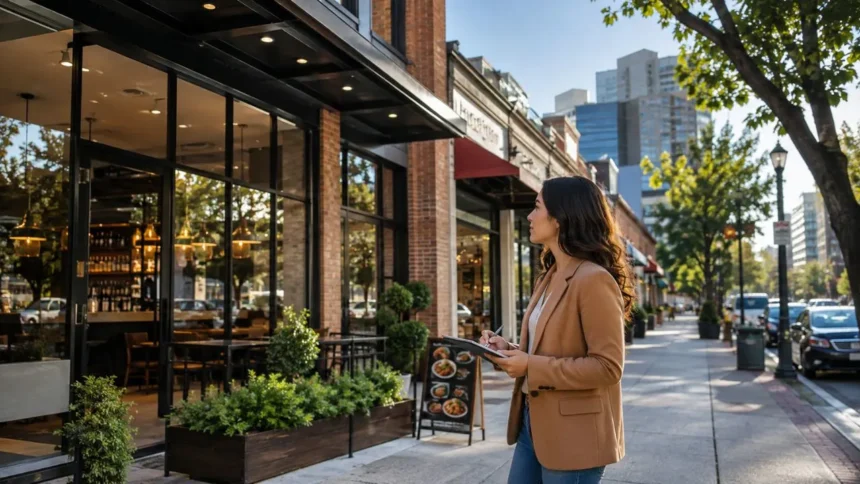
How to Choose the Right Location for a Food Business and Avoid Costly Mistakes
Learning how to choose the right location for a food business is one of the most important steps in planning a restaurant, café, bakery, takeaway, grocery shop or commercial kitchen. A strong concept can still struggle when customers cannot find the premises, parking is difficult or operating costs are too high.
The best location is not necessarily the busiest street or the most expensive commercial area. It is the place where your target customers, business model, budget and operational requirements fit together. A delivery kitchen, fine-dining restaurant and neighbourhood bakery will each need a different type of site.
Location also affects legal requirements, taxes, staffing, utilities and the permits needed to operate. The U.S. Small Business Administration notes that a business location can determine the zoning laws, taxes and regulations that apply, and similar location-based rules exist in many countries.
This guide explains how to evaluate food business locations using customer research, foot traffic, competition, rent, visibility, parking, delivery access and site infrastructure. It also provides a practical food business location checklist to use before signing a commercial lease.
Define Your Business Model
Start by defining exactly what kind of food business you want to operate. A quick-service takeaway relies on convenience and customer turnover, while a destination restaurant may attract people who are willing to travel for a distinctive menu, atmosphere or dining experience.
Consider how customers will receive the food. They may dine inside, collect an order, use a drive-through, purchase packaged products or order through delivery platforms. Each sales method creates different requirements for customer space, kitchen capacity, road access and parking.
Write down your expected opening hours and busiest periods. A breakfast café needs morning foot traffic, while a dessert shop may benefit from evening visitors near cinemas, universities or family entertainment areas. A lunch-focused concept may perform better near offices, hospitals or industrial workplaces.
Defining the business model prevents you from evaluating every site using the same standards. A low-visibility industrial unit might be unsuitable for a walk-in bakery but ideal for a delivery-only food business with affordable rent and easy driver access.
Know Your Target Customer
A suitable food business location should place your offer near the people most likely to buy it. Identify your target customer’s age, income, household type, work routine, transport habits, dietary preferences and typical food budget before comparing neighbourhoods.
Consider why customers would visit your business. Office workers may want speed and convenient weekday lunches, while families may value parking, child-friendly seating and weekend availability. Students may prioritise affordable prices, late hours, Wi-Fi and locations close to public transport.
Use reliable demographic and economic data rather than relying only on personal impressions. In the United States, Census Business Builder provides demographic, socioeconomic and business information that entrepreneurs can use when researching possible locations and markets.
Visit each area and compare the available data with what you observe. A neighbourhood may have the right income level but limited activity at your intended opening times. Combining statistics with direct observation creates a more realistic customer profile.
Study Local Demand
Demand measures whether enough potential customers want the type of food you intend to sell. A fashionable area is not automatically suitable when its visitors prefer different prices, cuisines or dining formats from those offered by your business.
Search for evidence of unmet customer needs. A residential area may have several fast-food outlets but no healthy lunch option, specialist bakery or family-friendly café. This gap could represent an opportunity when enough customers are willing to pay for the difference.
Review online searches, local community discussions, delivery platforms and customer reviews of nearby businesses. Complaints about limited vegetarian options, slow delivery, poor evening availability or inconsistent quality may reveal problems that your concept could solve.
Demand should be strong enough to support repeat purchases rather than curiosity alone. A large opening-week crowd cannot sustain a business when customers view the product as an occasional novelty instead of part of their regular eating routine.
Measure Foot Traffic
Foot traffic is important for cafés, bakeries, snack shops and takeaway businesses that depend on spontaneous purchases. A location near offices, transport stations, schools, shopping centres or busy pedestrian routes may create regular exposure without requiring every customer to plan a visit.
Measure traffic at several times and on different days. Count pedestrians during your expected breakfast, lunch, evening and weekend trading periods. A street that looks busy at midday may become empty after offices close or during school holidays.
Study the quality of the traffic as well as the number of people. Hundreds of commuters rushing toward a train may behave differently from shoppers walking slowly through a retail district. The people passing should resemble your target market and have a realistic opportunity to stop.
Observe which side of the street receives more movement and where people naturally pause. Crossings, bus stops, entrances and shaded walkways can influence customer flow. A shop only a short distance away may receive far fewer visits when reaching it requires crossing a difficult road.
Check Vehicle Traffic
Vehicle traffic can benefit drive-through businesses, roadside restaurants, food markets and takeaway outlets serving commuters. However, a high number of passing vehicles has limited value when drivers cannot see the entrance, turn safely or find a convenient place to stop.
Observe traffic direction, speed and turning patterns. A site positioned on the wrong side of a divided road may lose customers who cannot enter without making a long detour. Complicated junctions can also discourage drivers from making an unplanned visit.
Check visibility from both directions and identify how much time drivers have to notice the premises. Buildings, trees, billboards, parked vehicles and road curves may hide the storefront until it is too late to turn.
Traffic conditions should also be assessed during peak hours. A road that appears convenient in the afternoon may become heavily congested during breakfast or dinner. Customers may choose a competitor when entering or leaving your location feels stressful.
Evaluate Visibility
Visibility allows customers to recognise and remember your business. A visible storefront can reduce dependence on paid advertising by repeatedly exposing local residents, commuters and visitors to your brand.
Stand at different distances and examine whether the entrance, signage and windows can be seen clearly. Check visibility during daylight, after dark and in poor weather. A food business operating in the evening needs effective lighting and signage that remains readable at night.
Review local rules before assuming you can install large signs, outdoor menus, illuminated branding or pavement displays. Commercial properties may be subject to municipal regulations, landlord restrictions or shopping-centre design standards.
A less visible site can still work when the business is a destination, delivery operation or established brand. However, the marketing budget may need to increase because customers will depend more heavily on maps, digital advertising, social media and recommendations to find it.
Analyse the Competition
Competition proves that people already spend money on food in the area, but too many similar businesses can divide demand. Map nearby restaurants, cafés, bakeries, grocery outlets, food trucks and delivery kitchens that compete for the same customers or occasions.
Compare their menus, prices, opening hours, customer ratings, seating capacity and service style. Identify which businesses are consistently busy and which appear quiet. Strong competitors can reveal what local customers value, while repeated failures may expose an unsuitable market or difficult property.
Direct competition is not always negative. A recognised food district can attract customers specifically because it offers several choices. Businesses may benefit from shared foot traffic when each concept has a clear identity and the overall area feels active.
Indirect competitors also matter. A premium sandwich shop may compete with office canteens, convenience stores, meal-prep services and supermarket ready meals. Analyse every practical alternative customers can choose when they want to solve the same food need.
Look for Complementary Businesses
Neighbouring businesses can generate useful customer traffic without competing directly. A coffee shop may benefit from offices, salons, gyms, bookstores or colleges, while a family restaurant may perform well near cinemas, parks and entertainment venues.
Consider whether nearby businesses attract customers at the right time. A bakery beside a morning commuter route may gain breakfast sales, while a dessert shop near restaurants may receive customers after dinner.
Complementary tenants can also support joint promotions. A café might collaborate with a coworking space, or a bakery could supply products to a nearby hotel. These partnerships may create dependable sales beyond ordinary walk-in traffic.
Avoid depending entirely on one neighbouring attraction. An office tower, school or supermarket may close, relocate or change its operations. A resilient location should offer several sources of demand rather than one external business controlling most customer traffic.
Review Parking and Access
Convenient access can strongly influence whether customers choose your food business. Evaluate parking availability, public transport, pedestrian access, bicycle facilities and safe routes for people with mobility needs.
Count available parking spaces during busy periods rather than when the area is quiet. Determine whether the spaces are free, paid, time limited or reserved for other tenants. Customers may avoid a quick takeaway purchase when parking costs more than the food.
Examine the journey from the parking area or public transport stop to the entrance. Poor lighting, uneven paths, steep stairs or dangerous crossings can discourage families, older customers and people carrying multiple orders.
Accessibility requirements vary by jurisdiction and building type, so verify them before leasing. Door widths, ramps, toilets, counters and circulation areas may require modifications, and those improvements should be included in the startup budget.
Plan Delivery Access
Delivery has become an important sales channel for many food businesses, but it creates operational challenges that should influence location selection. Drivers need a safe and convenient place to collect orders without blocking customers, staff or neighbouring businesses.
Check the delivery radius from each potential location. A central site may reach more customers quickly, while an isolated location can create longer travel times, colder food and higher delivery charges.
Review traffic conditions during the periods when delivery demand is likely to peak. A kitchen located in a congested city centre may appear close to customers on a map but still produce slow deliveries because drivers cannot move efficiently.
Create a separate collection point when possible. Delivery drivers waiting at the main counter can crowd the entrance and reduce the experience for dine-in customers. The layout should support walk-in, collection and delivery orders without creating unnecessary conflict.
Check Zoning Rules
Before negotiating a lease, confirm that the property can legally be used for your specific food activity. A location approved for general retail may not automatically permit cooking, alcohol service, late-night operation, outdoor seating or food manufacturing.
Zoning rules can control business use, opening hours, signage, noise, waste, ventilation and parking. The SBA advises businesses to confirm that a purchased, rented or constructed property complies with local zoning requirements before operating there.
Contact the local planning authority directly and describe the intended operation in detail. Explain whether food will be prepared, fried, baked, packaged, delivered or consumed on site. Obtain written confirmation instead of relying only on an estate agent or landlord.
Do not assume that a previous restaurant licence guarantees approval for your concept. Regulations may have changed, approvals may have expired or your equipment and service model may create different requirements.
Understand Food Regulations
Food businesses may be regulated by several authorities depending on what they produce and how they sell it. Restaurants and retail food operations are often overseen by local or regional agencies, while packaged-food manufacturing can involve additional national requirements.
The FDA explains that food businesses may need to comply with federal, state and local rules and advises founders to contact the agencies responsible for their specific facility and product.
In the United States, more than 3,000 state, local and tribal agencies have primary responsibility for regulating retail food and foodservice establishments. FDA provides model guidance, but practical licensing and inspection requirements are generally administered locally.
Ask about plan review, food permits, inspections, staff training, waste handling, grease management, pest control and food-safety requirements before committing to the premises. Approval delays can leave a business paying rent for months without permission to open.
Inspect the Kitchen Space
The kitchen must support your menu, production volume and food-safety controls. Measure the available space and create a basic workflow showing how ingredients will move from receiving to storage, preparation, cooking, packing, service and washing.
Look for enough refrigeration, freezer capacity, dry storage and preparation surfaces. Check whether raw ingredients, allergens, cooked food and cleaning chemicals can be separated appropriately. A small kitchen may become unsafe or inefficient when every activity competes for the same surface.
Review ventilation, extraction and fire-suppression requirements before purchasing equipment. Fryers, grills, ovens and commercial dishwashers may require substantial upgrades to electrical systems, gas lines, drainage or ventilation.
Invite a qualified contractor, kitchen designer or food-safety specialist to inspect the property. The cost of modifying an unsuitable site can exceed the apparent saving created by low rent.
Check Utilities and Capacity
Food businesses often consume more electricity, gas and water than ordinary retail tenants. Confirm that the building’s utility capacity can support refrigeration, cooking equipment, ventilation, lighting, dishwashing and hot-water demand.
Ask for recent utility bills from a similar operation when available. These records can help estimate ongoing costs, although your menu, equipment efficiency and opening hours may produce different results.
Check water pressure, drainage, grease traps and sewer capacity. Slow drainage or inadequate grease management can interrupt operations and lead to expensive repairs or compliance problems.
Power reliability also matters. Frequent outages can damage refrigerated stock, interrupt online ordering and stop kitchen equipment. Consider whether backup power, temperature monitoring or another risk-control system will be required.
Examine Waste Management
Food businesses produce general waste, packaging, food scraps, cooking oil and sometimes grease or recyclable materials. The location needs sufficient space for waste storage without affecting food preparation, customers or neighbouring properties.
Inspect the route employees will use to remove rubbish. Carrying waste through a dining area or across a crowded kitchen can create operational and hygiene problems. A separate service exit is useful where the building allows it.
Check collection schedules, container sizes and landlord responsibilities. Waste left for too long can create odours, pests and complaints, particularly in warm climates or mixed residential and commercial areas.
Ask how used cooking oil and grease must be managed. Incorrect disposal can block drainage systems and result in substantial costs. Include waste contracts and cleaning responsibilities in the financial assessment.
Consider Staffing
A location cannot operate successfully without enough reliable employees. Research whether potential staff live nearby and can reach the premises during early mornings, late nights, weekends and public holidays.
Public transport schedules are particularly important when shifts begin before normal services or end after they stop. Limited transport may increase lateness, turnover and the need to pay for taxis or staff parking.
Compare local wage expectations and competition for hospitality workers. A busy commercial district may provide more applicants but also expose employees to numerous alternative jobs offering similar pay.
Staff facilities should also be considered. Changing areas, toilets, lockers, break spaces and safe entrances can affect recruitment, retention and compliance. A site that works for customers but creates difficult conditions for employees may become expensive to operate.
Calculate Total Occupancy Cost
Rent is only one part of the cost of occupying a commercial property. Add service charges, property taxes, insurance, utilities, waste collection, maintenance, security, parking, licence fees and required building improvements.
Estimate the percentage of projected sales that the complete occupancy cost would consume. A prestigious location may generate more revenue but still leave less profit when rent and operating expenses are excessively high.
Build conservative, realistic and optimistic sales scenarios. Calculate whether the business can continue paying the location costs during slow months, launch delays and unexpected repairs.
Avoid choosing a location simply because it is affordable. Low rent may reflect weak demand, poor visibility, difficult access or an unsuitable building. The objective is to find sustainable value rather than the cheapest available unit.
Review the Commercial Lease
A commercial lease can create long-term financial obligations, so obtain qualified legal and financial advice before signing it. Review the rent, deposit, renewal options, permitted use, maintenance duties and conditions for ending or transferring the lease.
Confirm who pays for ventilation, plumbing, electrical upgrades, grease traps, fire systems and accessibility improvements. Verbal promises should be written into the agreement before the lease becomes binding.
Ask whether rent begins before construction and licensing are complete. A rent-free fit-out period or approval condition may reduce the risk of paying for premises that cannot yet trade.
Check restrictions on signage, outdoor seating, delivery hours, music, waste and menu activities. The permitted-use clause should be broad enough to support realistic future changes, such as adding catering, packaged products or delivery.
Test the Location First
Testing a location before committing can reveal more than a desk-based analysis. Run a pop-up, market stall, delivery campaign or temporary food event in the target area when local rules permit it.
Track customer numbers, average spending, popular products and order timing. Ask customers where they live or work and how they discovered the business. This information can show whether the area attracts the right audience.
A delivery test can compare travel times from different neighbourhoods. Run orders during peak periods and observe how congestion, parking and driver availability affect service.
Short-term testing does not reproduce every aspect of a permanent location, but it provides real behavioural evidence. Actual purchases are generally more valuable than survey responses claiming that people would visit.
Visit at Different Times
A single property viewing cannot reveal the complete behaviour of a location. Visit during weekday mornings, lunch periods, evenings, weekends and poor weather before making a decision.
Observe traffic, noise, parking, security, neighbouring businesses and customer activity. Check when nearby shops open and close and whether the area remains comfortable after dark.
Talk with nearby business owners when possible. They may provide useful information about seasonal demand, landlord responsiveness, flooding, construction projects, crime, waste collection and local events.
Keep structured notes and photographs for every visit. Emotional excitement about one attractive property can make comparison difficult, so use the same evaluation criteria for each shortlisted site.
Create a Location Scorecard
A location scorecard turns observations into a more objective comparison. List the factors that matter most, such as target customers, demand, visibility, access, rent, parking, delivery speed, kitchen suitability and legal approval.
Assign each factor a weight according to its importance. Delivery radius may matter more than foot traffic for a cloud kitchen, while visibility may carry greater weight for a bakery depending on walk-in purchases.
Score every property using the same scale and evidence. Add notes explaining each rating so that the final total does not hide serious problems, such as a zoning failure or insufficient ventilation.
A high overall score should not override a critical weakness. If the site cannot receive approval, support safe production or remain affordable, it should be rejected even when its customer traffic is excellent.
Match the Location to Growth
Choose a location that supports the first stage of the business without preventing reasonable growth. Consider whether the kitchen, storage and service areas can handle increased demand before another move becomes necessary.
Avoid paying for a space far larger than the business needs only because you expect rapid expansion. Unused space increases rent, utilities and maintenance before the additional sales exist.
Review whether the premises can support new channels such as catering, delivery, wholesale products or private events. The lease and zoning approvals should allow these activities if they form part of the growth plan.
The best location balances current affordability with future flexibility. It should give the business enough capacity to develop without placing the first year under unnecessary financial pressure.
Common Location Mistakes
One common mistake is falling in love with the appearance of a property before checking demand, costs and legal requirements. Attractive architecture cannot compensate for inadequate ventilation, weak customer traffic or an unaffordable lease.
Another mistake is assuming that a busy area guarantees sales. Traffic must contain the right customers at the right time, and those people must be able to enter, park, order and pay the intended price comfortably.
Some founders underestimate renovation and approval costs. A former food unit may still require expensive electrical, drainage, fire-safety or extraction work before it can support a different menu.
The final mistake is rushing into a lease because the agent claims other tenants are interested. A missed property is usually less damaging than years of payments on an unsuitable site.
Food Business Location Checklist
Confirm that the area contains enough target customers and demand for your menu, pricing and service style. Measure foot traffic, vehicle access and activity during the exact periods when you expect to trade.
Check competitors, complementary businesses, parking, public transport, delivery routes and nighttime security. Assess visibility from the road and pedestrian routes rather than judging only from directly outside the property.
Verify zoning, food permits, signage rules, accessibility and operating restrictions in writing. Ask qualified professionals to inspect the kitchen, utilities, drainage, ventilation, fire systems and waste facilities.
Calculate the full occupancy cost and review the lease professionally. Score several locations against the same criteria and reject any site that fails a critical legal, safety, operational or financial requirement.
Conclusion: Choose With Evidence
Knowing how to choose the right location for a food business requires more than finding an attractive property. The strongest site connects your concept with the right customers while supporting safe production, convenient service and sustainable operating costs.
Begin with the business model, target market and customer demand. Measure real traffic, study competitors and examine access during different times instead of relying on assumptions or one short property visit.
Complete legal and operational checks before signing a lease. Confirm zoning, permits, ventilation, utilities, food-safety requirements and renovation responsibilities with the appropriate authorities and qualified professionals.
Finally, compare every site using a weighted location scorecard and realistic financial projections. A carefully researched location can support repeat customers, smoother operations and long-term growth, while an unsuitable site can weaken even an excellent food concept.
Frequently Asked Questions
What is the best location for a food business?
The best location places your food concept near its target customers while offering suitable rent, visibility, access, utilities and legal approval. The ideal site differs for restaurants, cafés, bakeries, food trucks and delivery kitchens.
How do I analyse a restaurant location?
Study customer demographics, foot traffic, competitors, parking, visibility, delivery routes and nearby businesses. Visit at different times and compare projected sales with the complete occupancy cost.
Is high foot traffic always important?
No. Foot traffic matters most for businesses relying on walk-in or impulse purchases. A destination restaurant, commercial kitchen or delivery-only operation may prioritise road access, delivery radius and affordable production space.
What should I check before signing a food business lease?
Confirm zoning, food permits, allowed operating hours, utilities, ventilation and required renovations. Review rent increases, maintenance duties, renewal terms and exit conditions with a qualified legal professional.
How much rent should a food business pay?
There is no universal safe amount because margins, sales volume and business models vary. Build conservative sales projections and ensure that total occupancy costs remain affordable during slower periods.