

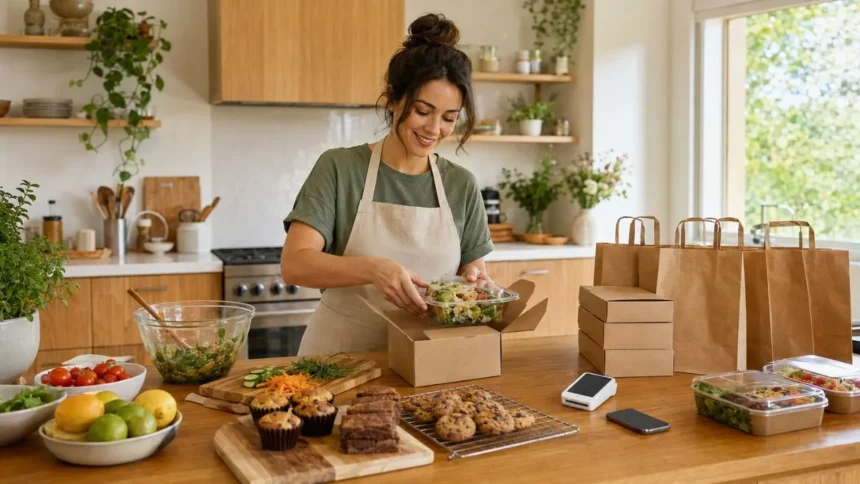
How to Start a Food Business from Home
Starting a food business from home can be a practical way to turn your cooking skills into income. It usually requires less money than opening a restaurant, café, or commercial bakery. You can begin with a small menu and increase production as demand grows. This approach makes it easier to test your idea without taking a major financial risk.
However, enjoying cooking is not enough to build a successful home food business. You must understand food safety, local regulations, product pricing, packaging, marketing, and customer service. You also need a system for managing ingredients, orders, payments, and deliveries. Treating your idea like a real business from the beginning can prevent expensive mistakes.
A home-based food business can sell baked goods, prepared meals, sauces, frozen foods, snacks, or specialty products. The right choice depends on your cooking skills, available equipment, target customers, and local demand. Some products are easier to prepare and store safely than others. Start with food that you can make consistently without overwhelming your kitchen.
This guide explains how to start a food business from home step by step. You will learn how to choose a product, create a business plan, calculate costs, follow food laws, and attract customers. You will also discover how to manage orders and grow without losing quality. Use these practical steps to turn your food idea into an organized operation.
Decide What Kind of Food You Want to Sell
Your first step is deciding which food products you want to offer. Possible options include cakes, cookies, lunch boxes, frozen meals, sauces, snacks, desserts, and traditional foods. Choose products that match your strongest cooking or baking skills. Customers are more likely to return when the food delivers consistent taste and quality.
Consider whether the product can be prepared efficiently inside your home kitchen. A complicated dish may require expensive equipment, additional storage, or more preparation space than you currently have. It may also become difficult to produce when several customers order at once. Select food that remains manageable as your sales volume increases.
Think about how the product will be stored, packaged, and delivered. Some foods can remain stable for longer periods, while others require strict refrigeration or immediate delivery. Products that spoil quickly may create greater safety risks and more food waste. Your available storage and delivery system should influence your final decision.
Begin with a focused range rather than a large menu. You might sell three cake flavors, four weekly meals, or two types of homemade sauce. A smaller menu helps you control ingredients, preparation time, and product quality. You can add new options after identifying what customers order repeatedly.
Identify Your Ideal Customers
Your ideal customers are the people most likely to purchase your food regularly. They might include office employees, university students, busy parents, fitness enthusiasts, or families planning celebrations. Understanding these customers will help you create suitable products and prices. It will also make your promotional messages more specific and effective.
Think about the main problem your food business will solve for them. Office workers may want affordable lunches delivered on time, while parents might need convenient family dinners. Fitness-focused customers may prefer high-protein meals with clear nutritional information. Celebration customers may value attractive designs and reliable custom ordering.
Research how your potential customers currently purchase similar food. Study their preferred portion sizes, flavors, price ranges, delivery times, and ordering platforms. Read local customer reviews to identify repeated complaints about existing businesses. Those complaints can reveal opportunities for you to provide a better experience.
Speak directly with potential buyers before finalizing your products. Ask whether they would purchase the food, how often they might order, and what price they consider reasonable. Avoid depending entirely on compliments from friends and relatives. Paid test orders provide stronger evidence of real customer demand.
Research Other Home Food Businesses
Competitor research helps you understand what customers can already purchase in your area. Look for home-based sellers, bakeries, restaurants, meal services, and online food brands offering similar products. Examine their menus, prices, packaging, delivery areas, and customer reviews. This information can help you recognize both competition and market opportunities.
Pay attention to what successful food businesses do consistently well. They might have attractive product photography, simple ordering, reliable delivery, or clear menu descriptions. Consider which of these practices could improve your own operation. Use the research for learning rather than directly copying another business.
Negative customer reviews can provide especially useful information. Buyers may complain about late deliveries, unclear prices, small portions, weak packaging, or inconsistent food quality. Repeated complaints show where customers are experiencing genuine frustration. Your business can stand out by solving one or more of these problems.
Decide how your offer will be different from other sellers. Your advantage could involve unique flavors, convenient meal plans, customized products, better service, or dependable delivery. Keep this difference specific and easy for customers to understand. A clear reason to choose your brand will make marketing much easier.
Test Your Food Business Idea
Testing allows you to measure demand before purchasing large amounts of equipment or packaging. Prepare a limited quantity of your product and offer it through preorders or a small launch. You could also sell at a local event where regulations permit. The goal is to learn whether people are genuinely willing to pay.
Ask customers for detailed feedback after they receive the product. Find out what they think about the taste, freshness, portion size, appearance, packaging, and price. Ask whether they would order again and what might improve their experience. Specific questions usually produce more valuable answers than simply asking whether they liked it.
Record how much time and money each test order requires. Include shopping, preparation, cooking, packaging, cleaning, communication, and delivery. A product may receive positive feedback but still be too expensive or time-consuming to produce. Testing helps you discover these problems before expanding the business.
Use the results to improve your product and operating process. You might adjust a recipe, change the portion size, simplify the packaging, or increase the price. Remove items that create waste but generate little customer interest. A successful test should lead to informed changes rather than an immediate large launch.
Write a Home Food Business Plan
A business plan explains how your home food business will operate and generate income. It does not need to contain complicated language or unrealistic predictions. A clear document covering your goals, customers, products, expenses, and marketing can be enough. The plan should help you make practical decisions before spending money.
Describe what you will sell and why customers will choose it. Include your target audience, service area, ordering process, delivery method, and opening schedule. Explain how many orders you can realistically prepare each day or week. This capacity estimate can prevent you from accepting more work than you can handle.
Create a startup budget covering equipment, ingredients, permits, packaging, branding, marketing, insurance, and delivery supplies. You should also estimate your regular monthly expenses and expected sales. Prepare conservative numbers rather than assuming every week will be fully booked. Realistic projections will help you understand how much money the business needs.
Review your plan after beginning operations. Actual sales may show that some products, prices, or marketing channels perform differently from your expectations. Update the document whenever important costs or customer behaviors change. Your business plan should guide your decisions instead of remaining unused after the launch.
Check Licenses and Home Food Regulations
Food businesses must follow the laws that apply in their location. Requirements can vary by country, city, product type, preparation method, and sales channel. You may need business registration, food-handler training, inspections, permits, or tax registration. Contact the relevant local authorities before selling any food.
Some locations have cottage-food rules that allow approved products to be prepared at home. These rules may limit which foods you can sell, where you can sell them, and how much revenue you can earn. Products requiring refrigeration may face stricter requirements than shelf-stable baked goods. Never assume every homemade product is automatically permitted.
Check whether your home kitchen must meet specific standards or undergo an inspection. Requirements may cover handwashing facilities, food storage, surfaces, ventilation, pest control, pets, and waste disposal. You might also need a separate preparation area or an approved commercial kitchen. Confirm the rules before investing in equipment or accepting orders.
Keep your registrations, certificates, inspection records, and product information organized. Renew permits before they expire and update authorities when required. Regulations may change as your production volume or sales channels expand. Following the law protects customers and gives your business greater credibility.
Set Up a Safe and Efficient Kitchen
Your kitchen should support safe food preparation and an organized production process. Clean and sanitize preparation surfaces before and after working with food. Keep ingredients protected from household activities, pets, cleaning chemicals, and other possible contaminants. Personal hygiene should remain a priority throughout preparation and packaging.
Separate raw foods from cooked or ready-to-eat products. Use appropriate utensils, containers, and preparation areas to reduce cross-contamination. Store ingredients at suitable temperatures and regularly check refrigerators and freezers. Food that has been stored incorrectly should not be sold to customers.
Arrange equipment and ingredients according to the order in which you use them. An efficient layout reduces unnecessary movement and can shorten preparation time. Label storage containers clearly so ingredients are easy to identify and rotate. Place older approved stock where it will be used before newly purchased items.
Create written checklists for cleaning, preparation, storage, packaging, and order completion. Checklists become especially valuable when you are busy or eventually hire help. They reduce the chance that an important safety or quality step will be forgotten. A professional home kitchen depends on repeatable routines rather than memory alone.
Create Standard Recipes and Portions
A standard recipe lists the exact ingredients and quantities needed to produce an item. It should also include preparation instructions, cooking times, temperatures, and expected serving sizes. Following the same process helps every order taste and look consistent. Customers should receive the quality they expect each time they purchase.
Use a reliable kitchen scale instead of estimating important ingredients. Small differences may seem unimportant in one batch but can create significant costs over time. Accurate measurements also make it easier to identify how many portions a recipe produces. This information is necessary for calculating a profitable selling price.
Decide the correct portion size for every product. An uncontrolled portion may increase food costs and create inconsistent customer experiences. Use suitable scoops, containers, cutters, or scales to maintain the chosen amount. Portions should provide good value while protecting your profit margin.
Review each recipe whenever ingredient brands, prices, or suppliers change. A replacement ingredient can affect flavor, texture, appearance, cooking time, and cost. Test the updated product before selling it to customers. Consistent recipes will make it easier to train employees when your home food business grows.
Calculate the Complete Cost of Each Product
Ingredient cost is only one part of producing and selling food. Your complete calculation should include packaging, labels, utilities, labor, delivery, payment fees, marketing, and expected waste. Ignoring these expenses may cause you to set prices that cannot produce profit. Record every cost instead of relying on rough estimates.
Calculate how much of each ingredient is used in one recipe. Divide the total recipe cost by the number of portions it produces. Add the cost of containers, bags, napkins, labels, and any included sauces. This process will show the direct cost of completing one customer order.
Assign a reasonable value to the time you spend working. Shopping, communicating with customers, preparing food, cleaning, and arranging delivery are all business activities. If the selling price only covers ingredients, you may be working without earning anything. Your labor should be treated as a real cost.
Review your calculations whenever suppliers increase their prices. Even small increases in commonly used ingredients can reduce your profit across many orders. You may need to adjust portions, negotiate with suppliers, change ingredients, or update prices. Regular costing helps you respond before the business starts losing money.
Set Prices That Support Profit
Your prices must cover all production and operating expenses while leaving room for profit. Copying the price of another food seller can be risky because their costs may be very different. Start with your own numbers and then compare the result with local market prices. This balance can help you remain competitive without undercharging.
Consider how customers understand the value of your offer. Product quality, portion size, ingredients, convenience, packaging, customization, and service can all influence what people are willing to pay. A specialist product may support a higher price than a widely available item. Your marketing should clearly communicate the benefits behind the price.
Avoid using large discounts as your main method of attracting customers. Frequent discounts can reduce profit and teach buyers to wait for promotions. Consider using meal bundles, introductory samples, preorder benefits, or loyalty rewards instead. These methods can create value without making the regular price appear unreasonable.
Display prices clearly before customers confirm their orders. Explain additional charges for delivery, customization, urgent orders, or premium ingredients. Request a deposit for large or personalized orders to cover part of your costs. Clear pricing builds trust and reduces payment disagreements.
Choose Suitable Food Packaging
Packaging should protect the food throughout storage, transportation, and delivery. It must be appropriate for the product’s temperature, moisture, weight, and texture. Poor containers can cause leaks, crushed decorations, soggy food, or unsafe temperature changes. Test packaging under realistic delivery conditions before using it for customer orders.
Consider how customers will open, store, and reheat the product. A practical container should be secure without being unnecessarily difficult to use. Provide reheating instructions when they are needed for quality or safety. Do not state that packaging is microwave-safe, freezer-safe, or recyclable unless that claim is accurate.
Product labels may need to show the business name, ingredients, allergens, weight, dates, storage instructions, or contact information. The exact requirements depend on the product and your local laws. Make the label readable instead of using decoration that hides essential information. Clear labeling helps customers make safer purchasing decisions.
Packaging also contributes to how customers perceive your food brand. Use consistent colors, labels, and presentation to create a recognizable appearance. You do not need luxury packaging to look professional and trustworthy. Simple, clean, secure, and well-designed packaging can create an excellent impression.
Manage Allergens and Food Safety
Food allergies can cause serious reactions, so allergen management must be taken seriously. Identify which recipes contain common allergens and record every ingredient used. Remember that sauces, flavorings, decorations, and packaged ingredients may also contain allergens. Review supplier labels whenever you purchase a different brand.
Cross-contact can occur when an allergen is unintentionally transferred to another product. Shared utensils, work surfaces, fryers, storage containers, and equipment can create this risk. Cleaning alone may not always make an environment suitable for every allergen-sensitive customer. Be honest about how your home kitchen operates.
Never describe a product as allergen-free unless your ingredients, equipment, environment, and processes can support that statement. If you cannot safely accommodate a special request, explain the limitation clearly. Protecting the customer is more important than completing one additional sale. Staff or family members who help with production should follow the same procedures.
Keep accurate ingredient and supplier information for every product. If a customer asks about an allergen, check your records instead of guessing. Update menus and labels whenever a recipe changes. Responsible allergen communication protects customers and strengthens trust in your business.
Build a Memorable Food Brand
A food brand is the overall identity customers connect with your products and service. It includes your business name, logo, packaging, photography, communication style, and ordering experience. A consistent brand helps people remember and recommend your home food business. It can also make a small operation appear more professional.
Choose a name that is easy to pronounce, spell, and search online. Make sure it suits the food you sell without limiting future growth unnecessarily. Check for existing businesses, trademarks, website domains, and social media names before committing. Changing an established name later can be costly and confusing.
Use a simple visual style across menus, labels, social profiles, and promotional materials. Select a small group of colors and fonts that remain easy to read. Product photographs should represent the food honestly and attractively. Misleading images may generate an order but can damage customer trust.
Create a short brand message explaining what you offer and who it serves. For example, you might provide homemade family meals for busy parents or custom desserts for intimate celebrations. Keep this message clear across every marketing platform. Customers should quickly understand why your business is relevant to them.
Create a Simple Ordering System
An organized ordering system saves time and reduces expensive mistakes. Decide whether customers will order through your website, social media, messaging application, telephone, or online form. Keep the process simple enough for people to complete without repeated questions. Provide all necessary information before they place an order.
Your menu should show product names, descriptions, prices, sizes, ordering deadlines, delivery areas, and available dates. State whether customers can request substitutions or customizations. Clear choices make order preparation faster and reduce confusion. Remove unavailable products promptly so buyers do not select them.
Send customers an order confirmation containing their products, quantities, total cost, payment status, collection or delivery time, and address. Ask them to verify the information before you begin preparing personalized food. Written confirmation provides a useful record if a disagreement occurs. It also creates a more professional customer experience.
Establish policies for deposits, cancellations, refunds, late collection, and delivery problems. Present these policies before accepting payment rather than after an issue appears. Keep the language fair, clear, and easy to understand. Consistent policies allow you to handle difficult situations calmly.
Plan Collection and Delivery
Decide whether customers will collect orders, receive home delivery, or choose between both options. Collection can reduce your transportation costs, but it must not disturb your household or neighbors. Provide a clear pickup time and safe meeting arrangement. Avoid making customers wait while the food is still being prepared.
If you offer delivery, define a manageable service area. Long distances increase fuel costs, travel time, and the possibility of temperature or quality problems. Calculate a delivery fee based on your actual expenses. Free delivery should only be offered when the order value can support it.
Plan how you will keep hot food hot and cold food cold during transportation. Use suitable insulated containers and limit the amount of time food spends in transit. Test how each product looks and tastes after a normal delivery journey. The customer judges the food they receive rather than how it appeared in your kitchen.
Send an estimated delivery time and inform the customer if an unexpected delay occurs. Use secure packaging and check every order before it leaves. A missing item can eliminate the profit from an otherwise successful sale. Reliable collection and delivery can become an important competitive advantage.
Market Your Home Food Business
Begin marketing where your target customers already spend their time. This might include local social media groups, community pages, business directories, offices, schools, or fitness centers. Choose channels based on customer behavior instead of trying to appear everywhere. Focused promotion is often more effective for a small home business.
Share clear photographs and useful information about your products. Show ingredients, preparation, packaging, menu updates, customer feedback, and behind-the-scenes processes. Avoid publishing only promotional messages asking people to buy. Helpful and authentic content can make the business feel more trustworthy.
Create a local business profile where appropriate so nearby customers can find your contact details, hours, photos, and reviews. Keep your business name, telephone number, service area, and operating times accurate. Ask satisfied buyers to leave honest reviews after receiving their orders. Never purchase fake feedback because it can damage credibility.
Encourage repeat orders through direct communication with customer permission. You can send weekly menus, preorder reminders, seasonal products, and availability updates. Keep messages useful and avoid contacting people too frequently. A direct customer list reduces your dependence on social media reach.
Launch With a Manageable Number of Orders
A controlled launch allows you to test your complete process under real conditions. Limit the number of orders, products, delivery areas, or available dates during the first few weeks. This approach gives you space to correct problems before serving a larger audience. It also protects food quality when you are still learning.
Prepare a detailed schedule for purchasing, preparation, cooking, packaging, collection, and delivery. Estimate how many orders you can complete without rushing. Leave extra time for unexpected delays during the initial launch. Accepting fewer orders professionally is better than disappointing many customers.
After each operating day, record what worked and what created difficulty. You might discover that one product takes too long, a container leaks, or a delivery route is inefficient. Correct these issues before increasing order capacity. Small operational improvements can save considerable time as sales grow.
Do not judge the entire business based on one launch day. Customers may need time to discover and trust a new food brand. Study repeated patterns across several selling periods instead. Consistent improvement is more valuable than expecting immediate perfection.
Keep Accurate Business Records
Record every sale, expense, refund, supplier payment, and delivery charge. Accurate financial information will show whether your home food business is actually making money. Revenue alone cannot tell you whether the operation is healthy. Profit is what remains after all business costs have been deducted.
Keep digital or physical copies of invoices and receipts. Organize them by date and expense category so information is easier to find. This practice supports tax preparation, budgeting, and cost analysis. It can also help if you need to verify a purchase or resolve a supplier problem.
Separate your personal money from business funds. A dedicated business account or payment method makes financial tracking clearer. Avoid using money needed for ingredients, taxes, permits, or supplier bills on personal spending. Financial separation helps you treat the operation as a serious business.
Review your records every week and prepare a fuller financial summary each month. Compare sales, food costs, packaging, delivery, waste, and profit over time. Investigate unexpected changes instead of waiting for cash problems to appear. Good records allow you to make decisions using evidence rather than assumptions.
Reduce Food Waste and Control Inventory
Food waste directly reduces the amount of profit you keep. Record ingredients that expire, become damaged, are overproduced, or remain unused. The reason for each loss can help you identify how to prevent it. Simply throwing food away without tracking it hides an important business expense.
Purchase ingredients according to confirmed orders and realistic sales forecasts. Large quantities may offer lower prices, but the savings disappear if products spoil before use. Start with smaller purchases until your order patterns become predictable. Build relationships with reliable suppliers who can deliver when needed.
Label ingredients with purchase, preparation, opening, and use-by information where appropriate. Organize stock so older approved products are used before newer ones. Check storage areas before placing each supplier order. This routine prevents duplicate purchases and forgotten ingredients.
Look for safe ways to use shared ingredients across several products. For example, the same vegetables or sauces may work in different meals without making them feel identical. Never use an ingredient beyond safe limits merely to avoid a financial loss. Food safety must always take priority over waste reduction.
Grow Your Home Food Business Carefully
Consider growth after you can consistently manage your current orders, quality, and finances. Expanding too early can increase mistakes, waste, customer complaints, and personal stress. Stable demand and repeat customers are better signals than temporary social media attention. Your existing operation should work smoothly before you add more complexity.
Create written procedures for recipes, cleaning, packaging, order handling, and customer communication. These systems will make it easier to maintain standards as the workload increases. They are also essential if you hire someone to help. Growth becomes more manageable when the business does not depend entirely on memory.
Expand one area at a time. You could increase production days, add a delivery zone, introduce a subscription, or supply a local retailer. Measure the revenue, cost, time, and customer response before making another change. Controlled experiments reduce the financial risk of expansion.
Eventually, your home kitchen may no longer provide enough space or meet regulatory requirements for increased production. At that point, consider renting time in a commercial kitchen or moving to suitable premises. Make the decision using sales and capacity data rather than personal excitement. The next stage should strengthen the business without creating unsustainable expenses.
Common Mistakes to Avoid
One common mistake is starting with too many products. A large menu increases ingredient costs, food waste, preparation time, and ordering errors. It can also make it harder for customers to understand your specialty. Begin with your strongest products and expand according to proven demand.
Underpricing is another frequent problem among home food sellers. Owners sometimes charge only for ingredients because they feel uncomfortable valuing their time. This approach ignores packaging, utilities, labor, delivery, marketing, and profit. Sustainable prices allow you to maintain quality and continue serving customers.
Accepting every order can quickly create stress and inconsistent results. Urgent requests, extensive customization, and distant deliveries may not fit your normal process. Learn to decline work that you cannot complete safely or professionally. Protecting your reputation is more valuable than earning from one unsuitable order.
Some beginners focus entirely on promotion while neglecting operations. Attractive content cannot compensate for late deliveries, incorrect orders, unsafe food, or inconsistent quality. Build reliable systems before trying to attract a large audience. Marketing works best when the business is prepared to keep the promises it makes.
Final Thoughts
Starting a food business from home is possible when you combine cooking ability with careful planning. Begin by choosing a focused product that matches your skills, kitchen, budget, and local demand. Test the idea through a limited number of paid orders. Use real customer behavior to guide your decisions.
Confirm all legal, licensing, food safety, labeling, and insurance requirements before launching. Regulations can vary significantly between products and locations. Following the correct procedures protects both customers and your business. It also gives buyers greater confidence in ordering homemade food.
Calculate your complete costs and create prices that allow the business to earn profit. Keep accurate records, manage ingredients carefully, and build a dependable ordering process. Consistency will encourage more repeat business than constant discounts. Every successful order should strengthen the customer’s trust in your brand.
Grow gradually after your original operation becomes stable. Document your procedures and improve one part of the business at a time. A home food company does not need to become large immediately to be successful. It needs to remain safe, organized, valuable to customers, and financially sustainable.
Frequently Asked Questions
Can I legally sell food made at home?
You may be able to sell homemade food, but the rules depend on your location and products. Some areas allow certain shelf-stable foods under cottage-food regulations. Foods requiring refrigeration may face stricter controls. Contact your local authority before accepting orders.
You may need business registration, food-handler training, inspections, tax registration, or insurance. The exact requirements vary between countries and cities. Do not depend entirely on advice from other sellers. Request information directly from the responsible authority.
Your home kitchen might also need to meet specific hygiene and storage standards. Pets, household activities, and shared equipment may be regulated. Some businesses must prepare food in an approved commercial kitchen. Confirm these details before investing in your setup.
Legal compliance should remain an ongoing responsibility after you launch. Renew permits and training when necessary. Recheck requirements when you introduce a new product or sales channel. Keeping accurate documents can make inspections and renewals easier.
What food is easiest to sell from home?
Baked goods, snack boxes, confectionery, and certain shelf-stable products can be easier for beginners to manage. They may be simpler to portion, package, and transport than full meals. However, permitted products depend on local food regulations. Choose an option that matches your skills and available equipment.
The easiest product is one you can make consistently without excessive preparation. It should use accessible ingredients and maintain quality during delivery. It should also have enough customer demand at a profitable price. Convenience for the owner alone does not guarantee commercial success.
Start with a product range containing only a few variations. This allows you to control ingredients and improve the recipes. It also makes purchasing and production schedules easier to manage. Add more choices after identifying genuine customer preferences.
Test every product through a small number of paid orders. Track production time, ingredient cost, packaging, waste, and feedback. Compare products based on profit as well as popularity. The strongest option will balance demand, quality, and operational simplicity.
How much does it cost to start a home food business?
The cost depends on your products, existing kitchen equipment, permits, packaging, and production volume. A small preorder business may require much less money than a meal-delivery operation. Refrigerated products may need additional storage and transportation equipment. Create a detailed budget for your specific idea.
Common expenses include registration, training, insurance, ingredients, containers, labels, utensils, cleaning supplies, and marketing. You may also need refrigeration, baking equipment, insulated delivery boxes, or a website. Include small purchases because they can become significant together. Leave room for unexpected costs.
Avoid buying professional equipment before you have tested customer demand. Use appropriate existing equipment when regulations and production needs allow it. Upgrade when sales show that new equipment will save time or increase capacity. This approach can reduce financial pressure during the launch.
Keep working capital available after purchasing your initial supplies. You will need money for future ingredients, packaging, utilities, and delivery. Spending the complete budget before receiving regular orders can create cash-flow difficulties. Begin with essential purchases and improve gradually.
How should I price homemade food?
First, calculate the ingredient cost of one complete recipe. Divide that amount by the number of portions the recipe produces. Add packaging, labels, delivery supplies, and payment fees. This calculation provides the direct cost of each item.
Next, include labor, utilities, waste, marketing, licenses, and other business expenses. These costs may not appear inside the package, but they are necessary to produce the order. Ignoring them can make a busy business unprofitable. Your time should never be treated as free.
Compare your calculated price with similar products in the local market. Consider your portion size, quality, convenience, customization, and target audience. Do not automatically reduce the price simply because another seller charges less. Their cost structure may be completely different.
Review your prices when ingredient or operating expenses change. Explain prices clearly and show customers the value behind your products. Use bundles carefully to increase order value without damaging profit. A sustainable price helps you maintain quality over the long term.
How can I get customers for my home food business?
Begin by promoting your food to relevant people within your local area. Use community groups, local business listings, social media, office networks, and personal recommendations. Share clear menus, attractive photographs, prices, and ordering instructions. Customers should understand the offer without sending several questions.
Ask early customers to provide honest feedback and reviews. Positive experiences can create valuable word-of-mouth marketing. Do not pressure buyers to leave only favorable comments. Genuine feedback can help you improve the product and service.
Consider a limited launch offer, tasting box, or introductory bundle. The promotion should encourage trial without removing your profit. Avoid depending on deep discounts for every order. Customers attracted only by low prices may not remain when regular pricing returns.
Focus on retaining customers after attracting them. Deliver the correct food on time and respond professionally to questions or problems. Send menu updates and preorder reminders with permission. Repeat customers can provide a more dependable foundation than constantly searching for new buyers.