

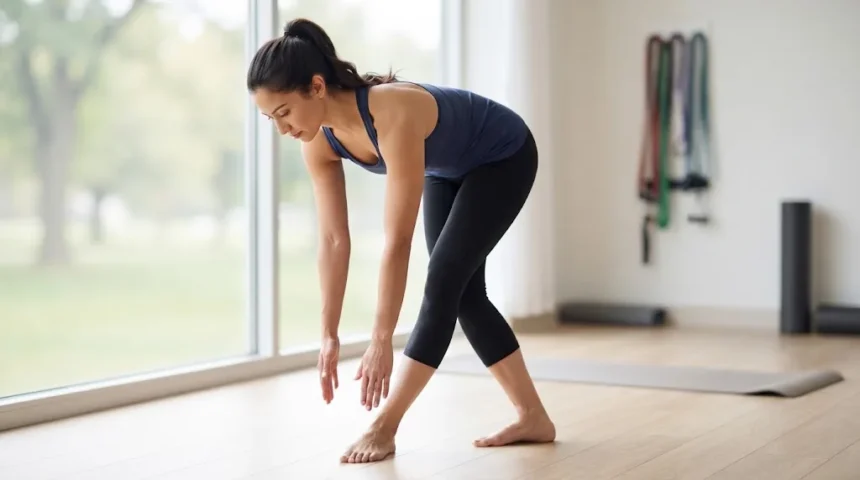
The iliotibial band, commonly called the IT band, is a thick strip of connective tissue that runs along the outside of the thigh. It begins near the hip and continues toward the outer knee. The IT band helps stabilize the hip and knee during walking, running, climbing stairs, and other lower-body movements.
Unlike a muscle, the IT band is made primarily of dense connective tissue and does not stretch easily. This means most so-called IT band stretches actually target nearby muscles, including the tensor fasciae latae, glutes, and outer hip muscles. Reducing tension in these surrounding tissues may improve comfort without trying to lengthen the IT band itself.
The area can become sensitive when training volume increases rapidly or when the hip and thigh muscles are overloaded. Runners and cyclists often notice discomfort along the outside of the knee or thigh. A combination of mobility work, strengthening, and sensible load management is usually more useful than stretching alone.
Why Does the IT Band Feel Tight?
A feeling of tightness along the outside of the thigh does not always mean the IT band itself has become physically shortened. Nearby muscles can become tired, stiff, or sensitive after repetitive activity. The nervous system may also create a sensation of tension when tissues are irritated, especially after running, hiking, cycling, or unfamiliar lower-body exercise.
Weakness or reduced endurance around the hips can also contribute to symptoms. The gluteus medius and other stabilizing muscles help control the pelvis and thigh during each step. When these muscles fatigue, movement patterns may change and increase stress around the outer knee and hip.
Training errors are another common factor. Increasing mileage, hill running, speed work, or cycling volume too quickly can exceed the tissues’ current capacity. Changing footwear, running surface, or exercise intensity at the same time can further increase stress, which is why gradual progression is important when trying to prevent recurring IT band discomfort.
Standing IT Band Stretch
To perform a standing IT band stretch, stand upright and cross the leg on the affected side behind the other leg. Keep both feet on the floor and gently shift your hips toward the affected side. Then lean your upper body away until you feel a mild stretch along the outer hip and side of the thigh.
Keep your torso relatively tall rather than twisting aggressively. The movement should feel controlled and comfortable, with most of the sensation coming from the outer hip rather than the knee itself. Hold the position for about 20 to 30 seconds while breathing normally, then return slowly to the starting position.
Repeat once or twice on each side if it feels helpful. Avoid forcing the stretch farther simply because you want a stronger sensation. If you feel sharp pain at the outer knee, numbness, or tingling, stop and choose another movement because those symptoms suggest something other than ordinary muscle tightness.
Side-Leaning IT Band Stretch
A side-leaning stretch can target the outer hip and tensor fasciae latae more directly. Stand next to a wall for balance and cross the outside leg behind the inside leg. Reach the outside arm overhead and gently lean toward the wall while allowing the hips to shift away.
You should feel a stretch along the side of the hip and possibly down the outer thigh. Keep both feet grounded and avoid rotating your hips forward or backward excessively. The movement should remain smooth, and you should still be able to breathe comfortably throughout the stretch.
Hold for 20 to 30 seconds before returning to neutral. This variation can be useful after running or prolonged sitting when the outer hip feels stiff. However, stretching should only be one part of your routine, because repeated outer-knee pain usually responds better when mobility work is combined with hip strengthening and training adjustments.
Lying IT Band and Glute Stretch
Lie on your back with both legs extended or one knee bent for support. Bring one leg across your body toward the opposite side while keeping your shoulders relaxed against the floor. Move only until you feel a comfortable stretch through the outer hip and buttock rather than trying to force the knee all the way to the ground.
You can keep the knee slightly bent if that feels easier on the hip or lower back. Avoid twisting aggressively through the lumbar spine to create more range. The goal is to gently lengthen surrounding muscles and improve comfort, not to force the IT band itself into a dramatic stretch.
Hold the position for around 20 to 30 seconds and repeat on the other side. If the movement causes back pain or nerve-like symptoms, reduce the range or stop. A supported version using a pillow under the knee can make the stretch more comfortable for people with limited hip mobility.
Hip Flexor and TFL Stretch
The tensor fasciae latae, or TFL, connects into the IT band and can contribute to outer hip tightness. A half-kneeling hip flexor stretch can help target this area. Place one knee on the floor, keep the opposite foot in front, and gently tuck the pelvis before shifting forward slightly.
To increase the stretch toward the TFL, shift your hips slightly sideways away from the kneeling leg. You may also reach the arm on the kneeling side overhead and lean gently in the opposite direction. The sensation should stay around the front and outer hip without producing a sharp pinch in the groin.
Keep the movement mild and avoid arching the lower back. Hold for 20 to 30 seconds while breathing normally, then switch sides. This stretch can be especially useful for people who spend long periods sitting or cycling, because both activities keep the hips in a flexed position for extended periods.
Glute Stretches for IT Band Relief
The glute muscles help stabilize the hip and influence how the IT band behaves during movement. A figure-four stretch can help reduce stiffness around the glutes. Lie on your back, cross one ankle over the opposite thigh, and gently draw the supporting leg toward your chest until you feel a comfortable stretch.
Keep your head and shoulders relaxed while holding the position. You should feel the stretch around the buttock and outer hip rather than the knee. If the crossed-leg position causes knee discomfort, move the ankle slightly farther away from the hip or choose a seated version with less pressure.
Stretching the glutes may improve comfort, but strengthening them is equally important. Bridges, side steps, clamshells, and controlled single-leg exercises can help the hips tolerate more load. Combining mobility and strengthening generally provides a more complete approach than relying only on passive stretches.
Foam Rolling the Outer Thigh
Foam rolling can provide temporary relief for some people by reducing the sensation of tightness in the outer thigh. Lie on your side with the roller under the outer thigh and use your arms and opposite leg to control pressure. Move slowly rather than rolling aggressively from the hip to the knee.
The IT band itself is dense connective tissue, so pressing extremely hard does not meaningfully “break it up” or permanently lengthen it. Instead, foam rolling may affect nearby tissues and temporarily change how tight the area feels. Moderate pressure is usually enough, and the process should not leave bruising or significant soreness.
If rolling directly over the outer knee is painful, avoid that area and focus higher up toward the outer thigh and hip muscles. You can also roll the glutes and TFL separately. Short sessions combined with movement and strengthening are generally more useful than spending long periods forcing painful pressure into the IT band.
Strengthening Exercises That Support the IT Band
Hip strengthening can reduce stress around the IT band by improving control of the pelvis and thigh. Side-lying leg raises, clamshells, lateral band walks, and step-ups are all useful options. These exercises target the gluteus medius and other muscles that help keep the knee and hip aligned during walking and running.
Start with body weight or light resistance and focus on controlled movement. Avoid allowing the pelvis to rotate or the knee to collapse inward when fatigue develops. Once basic exercises become easy, gradually increase resistance, repetitions, or time under tension while keeping your technique consistent.
Single-leg exercises can be added later because they more closely resemble running and walking demands. Split squats, single-leg deadlifts, and controlled step-downs can build strength and coordination. Progress slowly so the hips and knees adapt without creating another flare from suddenly increasing training volume.
IT Band Stretches for Runners
Runners commonly experience IT band-related discomfort near the outside of the knee, especially after increasing distance, speed, or hill training. Gentle outer-hip stretches may improve temporary tightness, but training adjustments are often more important. Continuing to run through steadily worsening pain can make the area more sensitive and extend recovery.
Reduce mileage or intensity temporarily if symptoms increase during every run. Flat routes may feel easier than downhill running, which can place greater repetitive demand on the outer knee. Once symptoms settle, gradually rebuild distance rather than immediately returning to the same weekly mileage that triggered the problem.
Strength work should remain part of the plan even after pain improves. Glute exercises, calf strengthening, and controlled single-leg movements can help build tolerance for repetitive running loads. Stretching can complement this work, but it should not replace progressive strength and sensible training progression.
Common IT Band Stretching Mistakes
One common mistake is assuming that more intense stretching always produces better results. The IT band itself does not behave like a flexible muscle, so forcing side bends or aggressive cross-body stretches may simply irritate surrounding tissues. Gentle, consistent mobility work is usually more appropriate than repeatedly pushing into pain.
Another mistake is relying on stretching while ignoring training load. If someone increases running mileage dramatically and then spends five minutes stretching afterward, the tissue may still be overloaded. Reducing aggravating activity and rebuilding gradually often matters more than adding extra stretches to an already demanding routine.
People also sometimes use forceful joint manipulation as a general mobility solution. Stretching and mobility should remain controlled rather than turning into aggressive attempts to make joints pop or crack. If you are curious about similar habits elsewhere in the body, this guide on neck cracking explains why forceful self-manipulation should be approached carefully.
When IT Band Pain Needs Medical Attention
Mild outer-knee discomfort that appears after increased activity may improve with reduced training, strengthening, and mobility work. However, persistent pain that continues despite sensible changes should be assessed. A healthcare professional can examine the knee, hip, running mechanics, and surrounding tissues to determine whether the IT band is actually the source.
Seek assessment sooner if you experience major swelling, instability, locking, or difficulty bearing weight. These symptoms are not typical of simple IT band irritation and may involve another knee structure. Pain after significant trauma also deserves evaluation rather than being treated only with stretching or foam rolling.
Numbness, weakness, severe night pain, fever, or unexplained swelling should also be checked by a healthcare professional. Outer-knee pain can have several causes, including meniscus problems, ligament injuries, tendon issues, and nerve irritation. Getting the right diagnosis helps ensure your exercise plan matches the actual problem.
Conclusion
IT band stretches mainly target the muscles surrounding the iliotibial band rather than stretching the band itself. Standing side bends, lying cross-body stretches, hip flexor stretches, and glute mobility work can reduce temporary tightness around the outer hip and thigh. Keep each movement gentle and avoid forcing positions that create sharp knee or hip pain.
For longer-term improvement, combine stretching with glute and hip strengthening, sensible training progression, and regular movement. Foam rolling may provide temporary comfort, but it should not replace strengthening or load management. Runners in particular should review recent changes in mileage, hills, and speed when outer-knee symptoms begin.
Persistent or severe pain deserves professional assessment, especially when swelling, locking, weakness, or instability is present. IT band-related discomfort is usually manageable, but not every pain on the outside of the knee comes from the IT band. A balanced approach that includes mobility, strength, and recovery provides the best foundation for comfortable movement.
FAQs
Can you actually stretch the IT band?
The IT band itself is dense connective tissue and does not stretch easily. Most IT band stretches work by lengthening nearby muscles such as the TFL, glutes, and outer hip muscles.
How long should I hold an IT band stretch?
A gentle stretch can usually be held for about 20 to 30 seconds. Repeat once or twice per side and avoid pushing into sharp pain, numbness, or tingling.
Is foam rolling good for IT band tightness?
Foam rolling may temporarily reduce the feeling of tightness in the outer thigh. Use moderate pressure and focus on surrounding muscles rather than aggressively pressing directly into painful areas.
What exercises help IT band pain?
Clamshells, side steps, glute bridges, step-ups, and controlled single-leg exercises can strengthen muscles that support the hip and knee. Progress resistance gradually as symptoms improve.
When should I stop stretching my IT band?
Stop if stretching causes sharp pain, worsening outer-knee symptoms, numbness, or tingling. Persistent pain, swelling, locking, or instability should be evaluated by a healthcare professional.