

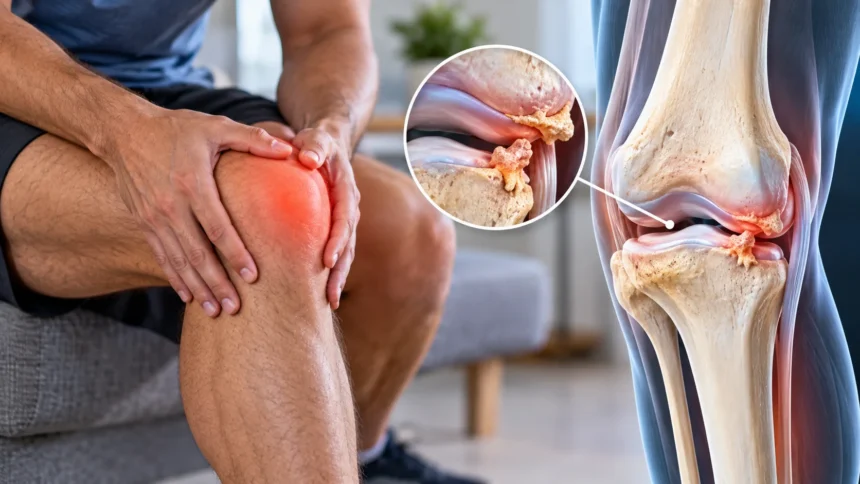
Bone spurs in the knee are small bony growths that commonly develop around joints affected by long-term wear, cartilage changes, or arthritis. Many people discover them during an X-ray even before experiencing noticeable symptoms. Others may develop knee stiffness, reduced movement, aching, or discomfort that becomes more noticeable during walking, climbing stairs, or other weight-bearing activities.
Understanding what knee bone spurs mean can help you separate the imaging finding from the symptoms you actually feel. A bone spur does not automatically mean severe joint damage or that surgery is necessary. Learning about their causes, symptoms, diagnosis, treatment options, and everyday management can help you make more informed decisions about maintaining comfortable knee movement.
What Are Bone Spurs in the Knee?
Bone spurs are extra areas of bone that form around the edges of joints. The medical term for a bone spur is osteophyte, and these growths often develop gradually as the body responds to changes within a joint. In the knee, they may appear around the femur, tibia, or kneecap where these bones meet.
The body may produce additional bone as part of its response to joint stress and cartilage deterioration. Rather than being a separate piece of loose bone, an osteophyte usually grows directly from existing bone. Some spurs remain small and cause no obvious problems, while larger growths may affect joint space, movement, or surrounding tissues.
Bone spurs are often associated with osteoarthritis, but their presence alone does not tell you exactly how painful your knee should feel. Some people have visible osteophytes with very little discomfort, while others experience significant symptoms. Pain depends on several factors, including inflammation, cartilage condition, muscle strength, joint mechanics, and overall activity level.
What Causes Bone Spurs in the Knee?
The most common cause of knee bone spurs is osteoarthritis, a condition involving gradual changes in the cartilage and other structures within a joint. As cartilage becomes thinner or less able to distribute force effectively, the body may respond by increasing bone formation around the joint margins. This process can occur slowly over many years.
Age is one factor that increases the likelihood of degenerative joint changes, although knee osteoarthritis is not simply an unavoidable result of getting older. Previous injuries, joint alignment, genetics, body weight, repetitive loading, and certain occupational or athletic demands may also influence how much stress the knee experiences over time.
A previous knee injury can sometimes accelerate changes within the joint. Damage involving cartilage, ligaments, or the meniscus may alter how forces pass through the knee during movement. Over time, these changes can contribute to osteoarthritis and osteophyte formation, although not everyone with an old knee injury will eventually develop significant bone spurs.
Common Symptoms of Knee Bone Spurs
Some knee bone spurs cause no symptoms and are discovered only during imaging performed for another reason. When symptoms do occur, people may notice aching, stiffness, or discomfort around the knee. These sensations can become more noticeable after prolonged sitting, standing, walking, climbing stairs, or performing activities that repeatedly load the joint.
Reduced range of motion may also occur if arthritis and bone changes make the knee feel stiff. Some people find it difficult to fully bend or straighten the joint, particularly after periods of inactivity. The knee may feel less flexible in the morning or after sitting for a long time, then loosen somewhat after gentle movement.
Swelling, grinding sensations, or a feeling that the knee is not moving smoothly may also accompany degenerative joint changes. These symptoms do not prove that a bone spur itself is causing the problem because cartilage loss, inflammation, meniscus changes, and surrounding tissues can contribute. A proper assessment is useful when symptoms persist or worsen.
Where Do Bone Spurs Form in the Knee?
Bone spurs can develop in different parts of the knee depending on where degenerative changes are occurring. They commonly form along the margins of the femur and tibia, the two major bones that create the main knee joint. Spurs may also develop around the kneecap where it interacts with the groove at the end of the thigh bone.
Spurs around the kneecap may be associated with changes in the patellofemoral joint. People with problems in this area sometimes notice discomfort during stairs, squatting, kneeling, or prolonged sitting. However, symptoms cannot reliably identify the exact location of a spur without an examination and appropriate imaging when it is medically indicated.
The size and location of an osteophyte may influence how much it affects movement, but imaging findings do not always match symptom severity. A relatively large spur may cause little discomfort, while a person with smaller structural changes can still experience significant pain. Treatment therefore usually focuses on function and symptoms rather than X-ray appearance alone.
Are Bone Spurs in the Knee the Same as Arthritis?
Bone spurs and arthritis are related, but they are not exactly the same thing. Osteoarthritis describes a broader pattern of changes involving cartilage, bone, joint lining, and other structures. Osteophytes are one structural feature that may develop as osteoarthritis progresses, so their presence can support evidence of degenerative joint change.
A person can have other signs of knee osteoarthritis in addition to bone spurs. These may include narrowing of the joint space, changes in the bone beneath cartilage, stiffness, and recurring discomfort. Doctors consider symptoms, physical findings, medical history, and imaging together rather than diagnosing the condition based only on one visible spur.
It is also important to remember that arthritis severity on imaging does not always predict daily pain. Two people with similar X-rays can have very different levels of discomfort and mobility. Strength, activity, sleep, previous injury, inflammation, general health, and individual pain sensitivity can all influence how the knee feels and functions.
How Are Knee Bone Spurs Diagnosed?
Diagnosis usually begins with a conversation about symptoms and a physical examination. A healthcare professional may ask when the pain occurs, what activities make it better or worse, and whether you have experienced swelling, locking, instability, or previous injury. They may also assess knee movement, strength, tenderness, and walking patterns.
X-rays are commonly used to identify osteophytes and other signs of osteoarthritis. They can show bone changes, joint-space narrowing, and the location of larger bone spurs. However, imaging is not always required immediately for every episode of knee pain, particularly when symptoms are mild, recent, and improving with conservative care.
Additional imaging such as MRI may occasionally be considered when symptoms suggest problems involving cartilage, ligaments, menisci, or other soft tissues. The choice depends on the clinical situation rather than simply the presence of a spur. The goal of diagnosis is to identify what is likely contributing to your symptoms and guide appropriate management.
Can Knee Bone Spurs Go Away on Their Own?
Established bone spurs generally do not simply disappear through stretching, exercise, or rest. Once additional bone has formed, conservative treatment usually focuses on reducing symptoms and improving joint function rather than physically removing the osteophyte. Many people can still manage their symptoms effectively without needing the spur itself to disappear.
The important point is that symptoms can improve even when the bone spur remains visible on an X-ray. Better muscle strength, improved movement tolerance, reduced inflammation, weight management when appropriate, and activity modification may all help the knee function more comfortably. Changes in pain do not necessarily require changes in the size of the osteophyte.
Surgical removal of a spur may be considered in selected situations, but it is not routinely necessary simply because an osteophyte exists. When surgery is discussed, the overall joint condition and severity of symptoms matter. Treatment decisions should be based on how the knee affects daily life rather than imaging findings alone.
Treatment Options for Bone Spurs in the Knee
Conservative treatment is often the first approach when knee bone spurs are associated with osteoarthritis symptoms. Activity modification, exercise, physical therapy, and gradual strengthening can help improve joint support and movement. The aim is usually to maintain function while reducing the activities or movement patterns that repeatedly aggravate symptoms.
Healthcare professionals may also recommend pain-relief approaches depending on the person’s medical history and symptom severity. These can include medications or other treatments that are appropriate for the individual. Because medicines can have side effects and interactions, it is better to discuss frequent or ongoing use with a qualified healthcare professional.
More advanced treatments may be considered when symptoms remain severe despite appropriate conservative management. These can include injections or surgical procedures in selected cases. Surgery is generally based on the overall extent of knee damage and functional limitation rather than the simple presence of a bone spur seen during imaging.
Exercises and Movement for Knee Bone Spurs
Appropriate exercise can help maintain strength and mobility around a knee affected by osteoarthritis and osteophytes. Strong thigh, hip, and lower-leg muscles can support movement and help manage the loads placed on the joint. Low-impact activities such as walking, cycling, or water-based exercise may be comfortable options for many people.
Strength exercises can be introduced gradually based on your current ability. Controlled sit-to-stands, step exercises, leg strengthening, and other movements may help improve function when performed comfortably. Exercise should not involve repeatedly forcing the knee through sharp pain, and significant symptom increases after activity may indicate that the program needs adjustment.
Whole-body movement also matters because the knee works as part of a larger movement system. Hip mobility, foot function, trunk control, and even muscle tension in other regions can influence how someone moves. Learning about related mobility concerns such as a tight pelvic floor can be useful when building a broader understanding of muscle tension, movement, and body mechanics.
How to Manage Knee Stiffness at Home
Gentle movement can be helpful when the knee feels stiff after sitting or sleeping. Slowly bending and straightening the knee within a comfortable range can help the joint transition back into activity. Short periods of walking may also feel easier than immediately beginning a demanding workout after the knee has remained still for a long time.
Some people find heat helpful for stiffness, while cold may feel more comfortable when the knee is irritated or swollen after activity. The choice often depends on personal preference and the type of symptoms present. Neither method removes a bone spur, but temporary symptom relief can make daily movement or exercise more comfortable.
Pacing your activities is also important. Doing very little for several days and then suddenly performing hours of demanding activity can aggravate a sensitive knee. A more consistent approach, with gradual increases in walking, exercise, or household tasks, gives the joint and surrounding muscles time to adapt to increased physical demand.
Can Weight Affect Knee Bone Spurs?
Body weight can influence the mechanical load passing through the knees during standing, walking, climbing stairs, and other weight-bearing activities. For people with overweight or obesity who also have symptomatic knee osteoarthritis, medically appropriate weight management may help reduce some of the stress placed on the joint during everyday movement.
Weight is only one factor and should not be treated as the sole explanation for knee pain. Joint history, genetics, muscle strength, previous injuries, physical activity, and many other factors contribute to osteoarthritis symptoms. People of many different body sizes can develop knee bone spurs and experience very different levels of discomfort.
When weight management is appropriate, gradual and sustainable changes are generally more useful than extreme approaches. Combining regular movement, suitable exercise, balanced nutrition, and professional guidance can support overall health and joint function. The goal should be improved health and comfortable activity rather than assuming weight change alone will eliminate structural knee changes.
When Should You See a Doctor?
Occasional mild knee discomfort may improve with rest, gradual movement, and temporary activity modification. However, persistent pain that continues for several weeks, repeatedly limits normal activities, or keeps returning should be assessed. A healthcare professional can determine whether osteoarthritis, a bone spur, or another knee condition is contributing to your symptoms.
Seek more prompt medical attention if you cannot bear weight, the knee becomes severely swollen, or significant pain follows a fall or injury. A knee that becomes very hot and red, especially when accompanied by fever or feeling unwell, also needs timely medical assessment because causes other than ordinary osteoarthritis may need to be considered.
Locking, repeated giving way, significant loss of motion, or rapidly worsening symptoms also deserve evaluation. Not every painful knee is caused by a bone spur, even if previous imaging showed one. Proper assessment helps avoid focusing on an old imaging finding while overlooking another condition that may require different management.
Can Bone Spurs in the Knee Be Prevented?
There is no guaranteed way to prevent every bone spur because genetics, aging, injury history, and other factors influence joint changes. However, maintaining regular physical activity and muscle strength can help support overall knee function. Strong muscles around the hips and legs help manage forces during everyday tasks and recreational activity.
Reducing avoidable injury risk may also help protect long-term joint health. Using appropriate technique, progressing training gradually, and allowing recovery after demanding exercise can reduce unnecessary stress. If a significant knee injury does occur, proper rehabilitation can help restore strength and movement rather than allowing persistent weakness or altered mechanics to remain.
Healthy lifestyle habits can support joints even though they cannot guarantee that osteophytes will never develop. Regular movement, adequate sleep, appropriate nutrition, and management of other health conditions all contribute to general physical health. The focus should be on maintaining function and resilience rather than trying to completely eliminate normal age-related changes in the body.
Living With Bone Spurs in the Knee
Living with knee bone spurs does not necessarily mean giving up exercise or normal activities. Many people continue walking, working, exercising, and participating in hobbies even when osteophytes are visible on imaging. Adjustments may be necessary during symptom flare-ups, but complete long-term avoidance of movement can lead to additional weakness and stiffness.
Finding the right level of activity is often a process of gradual experimentation. You may tolerate cycling better than running or shorter walks better than long continuous sessions during a painful period. Monitoring how your knee responds during the activity and over the following day can help you identify a manageable level of physical stress.
It can also be helpful to focus on what the knee can do rather than the appearance of an X-ray alone. Structural changes do not always determine future function, and many symptoms can be managed through appropriate care. Building strength, staying active within tolerance, and seeking professional help when necessary can support long-term mobility.
Conclusion
Bone spurs in the knee are extra areas of bone, called osteophytes, that often develop alongside osteoarthritis and other long-term joint changes. They commonly appear around the edges of the knee bones and may be discovered on an X-ray. Some people experience pain and stiffness, while others have very few symptoms despite visible spurs.
Treatment usually focuses on managing symptoms and improving movement rather than trying to make the bone spur disappear. Exercise, strengthening, activity modification, physical therapy, and other medical treatments may help depending on the severity of symptoms. Surgery is generally reserved for selected cases where significant joint problems continue despite appropriate conservative care.
If knee pain persists, worsens, or affects walking and normal daily activities, professional assessment can help identify the actual cause. A bone spur may be part of the picture without being the only source of discomfort. Understanding the condition and staying appropriately active can help many people maintain useful, comfortable knee function over time.
FAQs
Are bone spurs in the knee serious?
Bone spurs are not automatically serious and may cause no symptoms at all. Their importance depends on the overall joint condition, pain level, mobility, and whether they interfere with normal daily activities.
What does a bone spur in the knee feel like?
Some people feel nothing, while others experience aching, stiffness, reduced motion, swelling, or discomfort during walking and stairs. Symptoms may come from broader osteoarthritis changes rather than the spur alone.
Can exercise make knee bone spurs worse?
Appropriate exercise generally supports strength and joint function rather than making a bone spur grow. However, activities that repeatedly cause sharp or significant pain may need to be modified with professional guidance.
Can knee bone spurs be removed without surgery?
Conservative treatments can improve symptoms but generally do not physically remove established bone spurs. Surgical treatment may remove or address bone changes in selected cases when symptoms and overall joint damage justify it.
Do bone spurs always mean knee arthritis?
Bone spurs are commonly associated with osteoarthritis, but diagnosis considers more than one imaging finding. Symptoms, medical history, physical examination, and other structural changes help determine the overall condition of the knee.