

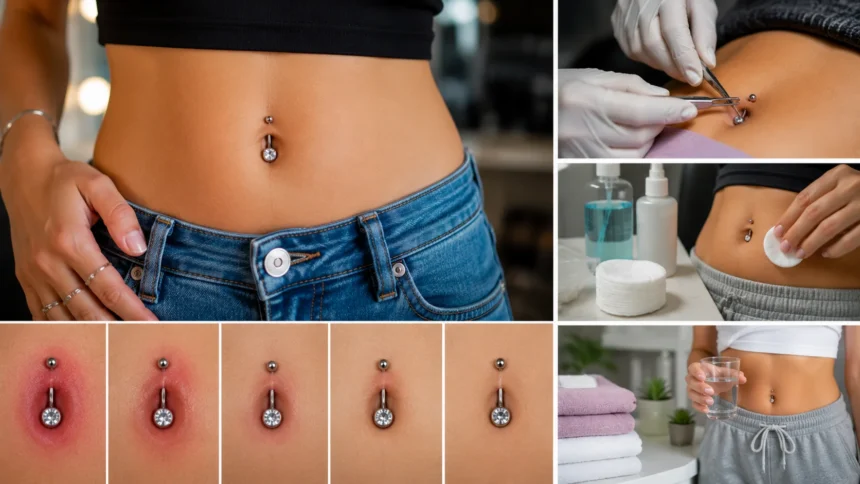
Belly Button Piercing: Healing, Pain and Aftercare
Meta description: Learn about belly button piercing pain, healing time, aftercare, jewelry, infection signs, rejection, swimming, exercise and when to seek medical care.
A belly button piercing, also called a navel piercing, can be a stylish form of body jewelry, but getting one involves more commitment than the quick piercing procedure might suggest. The navel moves whenever you bend, twist, exercise, sit or stretch, and clothing frequently rubs across the area. These factors make belly button piercings slower to heal than many people expect. Initial tenderness and swelling usually settle relatively quickly, but complete healing can take many months. During that time, careful aftercare helps reduce irritation, infection and migration. Knowing what normal healing looks like can also prevent unnecessary panic when mild redness, crusting or tenderness appears during the early stages.
A professional navel piercing is typically placed through the fold of skin above the belly button rather than through the center of the navel itself. Not every belly button has anatomy suitable for a traditional piercing, so an experienced piercer should evaluate the area before proceeding. Pain is usually brief, while the longer challenge is protecting the piercing as the channel heals from the outside inward. Appropriate jewelry, sterile technique, gentle saline cleaning and avoiding unnecessary handling are central to successful healing. The Association of Professional Piercers recommends sterile saline wound wash rather than homemade salt mixtures and advises against twisting or rotating jewelry during healing.
What Is a Belly Button Piercing?
A belly button piercing is usually made through the upper rim of tissue surrounding the navel. A sterile hollow needle passes through a fold of skin, after which appropriately sized jewelry is inserted into the new piercing channel. The most familiar jewelry is a curved barbell, although the exact design should depend on anatomy and healing needs. A properly placed piercing should pass through enough healthy tissue to remain stable without being excessively deep. Placement that is too shallow can increase the risk of migration or rejection. For this reason, the quality of the initial piercing matters just as much as the aftercare performed at home.
Traditional navel piercings generally enter above the belly button and exit inside the upper portion of the navel. Some people have anatomy better suited to a lower navel placement or a specialized floating-navel piercing. A floating navel typically uses jewelry designed to reduce pressure inside a navel that collapses when sitting or bending. Anatomy varies widely, and a skilled piercer should look at how the navel changes when the client stands, sits and moves. Trying to force traditional jewelry into unsuitable anatomy can create constant pressure. That pressure may eventually cause irritation, migration or rejection even when the person follows excellent cleaning practices.
The piercing itself creates a wound that the body gradually lines with new tissue. Although the outside openings may look settled fairly quickly, the interior channel remains fragile much longer. This explains why a belly button piercing can suddenly become irritated several months after appearing completely healed. Catching the jewelry on clothing, sleeping on the stomach or changing jewelry too early can damage that delicate internal tissue. The Association of Professional Piercers emphasizes that piercings can appear healed externally before internal healing is complete. Patience is therefore one of the most important parts of navel piercing healing.
Not every person is automatically a good candidate for this piercing. The navel should have enough defined tissue to support jewelry without the barbell being pressed constantly against the abdomen. Previous surgery, significant scarring, certain skin conditions or unusual anatomy can affect placement options. Medical conditions that interfere with circulation, wound healing or immune function can also influence the risk of complications. A professional piercer may decline to perform the piercing if the anatomy is unsuitable. That decision can be frustrating, but refusing an unstable piercing is usually better than dealing with repeated irritation or a permanent rejection scar later.
A belly button piercing is best viewed as a long-term healing project rather than a quick fashion accessory. The actual needle procedure takes only moments, but protecting the area can require months of consistent attention. Normal activities such as exercise, wearing high-waisted clothing, swimming and sleeping may need temporary adjustments. Jewelry should usually remain in place during the healing period unless a qualified piercer or healthcare professional recommends otherwise. Understanding these requirements before the appointment can make aftercare much easier. People who are prepared for the healing process are less likely to make impulsive jewelry changes or over-treat normal temporary irritation.
How Much Does a Belly Button Piercing Hurt?
Belly button piercing pain is usually brief and manageable for most people, although pain tolerance varies considerably. During the procedure, many describe a sharp pinch followed by pressure as the needle passes through the skin. The actual piercing step commonly lasts only a few seconds. Because the tissue being pierced is skin rather than cartilage, some people find it easier than cartilage piercings. Others may experience stronger discomfort because of anxiety, anatomy or individual sensitivity. The anticipation can sometimes feel worse than the procedure itself, especially for someone receiving their first body piercing.
Immediately afterward, the area may feel sore, warm, tender or slightly throbbing. Bending forward, sitting down quickly or wearing clothing that presses against the navel can make the new piercing more noticeable. Mild swelling and bruising can occur during the first several days. These responses are part of the body’s reaction to a fresh wound and do not automatically mean infection is developing. The Association of Professional Piercers considers initial localized swelling, tenderness, bruising and minor bleeding within the range of normal early healing. Symptoms should generally become less intense rather than progressively more severe.
Pain often decreases substantially after the first few days, but tenderness can return temporarily throughout healing. Accidentally catching the jewelry on a towel or waistband can irritate the channel and make it sore again. Exercise that repeatedly folds the abdomen may also create temporary discomfort. This does not necessarily reset the entire healing process, but repeated trauma can prolong it considerably. The best approach is to notice which movements or clothing styles consistently aggravate the piercing. Reducing those triggers allows the tissue to settle rather than repeatedly becoming inflamed.
A piercing should not remain intensely painful for an extended period. Increasing pain accompanied by spreading redness, marked warmth, significant swelling or thick foul-smelling discharge may indicate infection or another complication. Pain can also result from jewelry that is too short and becoming embedded as swelling increases. Conversely, excessively long jewelry can move around and catch on clothing. If pain is worsening rather than settling, a qualified piercer can check placement and jewelry fit. Medical evaluation becomes important when infection or serious tissue damage is suspected.
Pain perception can also be influenced by preparation. Eating normally beforehand, staying hydrated and getting adequate sleep may help someone feel steadier during the procedure. Alcohol or recreational drugs should not be used as a way to reduce anxiety before piercing because they can impair judgment and create other safety concerns. Slow breathing and telling the piercer that you feel nervous can make the appointment easier. An experienced professional should explain what will happen without rushing you. Choosing a calm, hygienic environment often makes the experience feel significantly more manageable.
Belly Button Piercing Healing Time and Stages
A navel piercing is considered a relatively slow-healing body piercing. Some people experience substantial external improvement within several months, but complete internal healing frequently requires six months or longer, and some piercings may continue healing for a year or beyond. Cleveland Clinic notes that navel piercings can require up to a year or longer to fully heal, with some tenderness, redness or crusting possible during the extended healing period. Daily abdominal movement contributes to this slower recovery. The piercing channel needs time to mature even after the surface looks normal.
During the earliest stage, localized swelling, tenderness and minor bleeding may occur. The skin around the jewelry may appear pink, red, brownish or purple depending on skin tone and the degree of irritation. Clear or whitish-yellow fluid may dry around the jewelry and form a small amount of crust. This normal lymph-like secretion is different from thick, foul-smelling pus. Mild itching can also occur as new tissue develops. The jewelry should still be left alone instead of being twisted to remove crust aggressively. Gentle saline cleaning allows debris to soften and come away without damaging the healing channel.
Over the following weeks, swelling should generally decrease and touching nearby skin should become less uncomfortable. The piercing may look much calmer while still remaining vulnerable internally. Occasional mild crusting can continue, particularly after exercise, friction or accidentally bumping the jewelry. Some people mistake this stage for complete healing and decide to change jewelry. That can reopen fragile tissue and cause swelling or bleeding. Even when the jewelry seems to move comfortably, the inside of the piercing may not yet be mature enough for unnecessary changes.
Later healing is less obvious because the piercing can look normal for long stretches. Internal tissue continues strengthening, and temporary flare-ups can still occur after snagging, pressure or prolonged moisture exposure. A stable piercing should gradually become less reactive rather than experiencing constant redness and discharge. The APP advises continuing appropriate hygiene throughout the entire healing period because external appearance can be misleading. Consistency matters more than repeatedly changing products whenever minor irritation appears.
Healing time is influenced by anatomy, jewelry quality, placement, aftercare, clothing, overall health and repeated physical trauma. A piercing that is frequently caught by high-waisted pants may take longer than one protected from pressure. Smoking or nicotine exposure can affect circulation and wound healing, while certain medical conditions can also slow recovery. There is therefore no exact date on which every belly button piercing becomes fully healed. Instead, healing should be judged by long-term stability, absence of ongoing tenderness or discharge and professional assessment when jewelry changes are planned.
Belly Button Piercing Aftercare
Good belly button piercing aftercare begins with clean hands. Wash your hands thoroughly before intentionally touching the area, and otherwise leave the jewelry alone. Unnecessary handling transfers bacteria and creates mechanical irritation. The Association of Professional Piercers advises using a sterile saline wound wash containing 0.9% sodium chloride, ideally without additional moisturizers or antibacterial ingredients. The solution can be sprayed onto the piercing and allowed to rinse the surrounding openings. Homemade saltwater is no longer preferred because inaccurate salt concentration can dry and irritate healing tissue.
After rinsing, gently dry the area with a clean disposable material such as sterile gauze or another clean single-use product. Reusable cloth towels can hold bacteria and may catch on jewelry. Do not scrape dried crust from the piercing while it is firmly attached. Saline or shower water can soften the material first so loose debris can be removed gently. Aggressive cleaning creates microscopic injuries and may lengthen healing. More cleaning is not automatically better, and repeatedly soaking the piercing throughout the day can keep tissue overly wet and irritated.
Do not twist, spin or rotate the jewelry while cleaning. Older piercing advice often recommended turning jewelry so the skin would not attach to it, but modern professional aftercare guidance does not recommend this practice. Movement can tear the delicate tissue forming inside the channel and introduce contamination from the external portion of the jewelry. The APP specifically states that moving or rotating jewelry is unnecessary and may irritate the piercing. If dried material makes the jewelry feel temporarily tight, allow it to soften during normal cleaning rather than forcing movement.
Avoid alcohol, hydrogen peroxide and other harsh antiseptic products unless a healthcare professional specifically recommends something for a diagnosed medical problem. Strong chemicals can damage new cells and make a healing piercing dry, inflamed or cracked. Ointments can also trap moisture and debris around the piercing and are not part of routine professional piercing aftercare. The APP identifies harsh soaps, alcohol, peroxide and inappropriate ointments as common contributors to distressed piercings. Simple care is generally safer than repeatedly experimenting with stronger products.
Aftercare also means protecting the piercing between cleaning sessions. Wear clean clothing and bedding, keep lotions and body sprays away from the site and avoid letting waistbands rub repeatedly against the jewelry. Be careful when drying after a shower because towels can snag the barbell. Check threaded jewelry ends with clean hands when appropriate so they do not loosen unexpectedly, but do not play with the piercing. If the jewelry fit becomes problematic as swelling decreases, a professional piercer can determine whether downsizing is needed. Initial jewelry should not be changed casually simply because another design looks more attractive.
Choosing Jewelry and a Safe Professional Piercer
The quality of the initial procedure has a major influence on healing. A professional piercing studio should use sterile single-use needles rather than piercing guns for body piercings. The piercer should wash their hands, wear fresh gloves and open sterile equipment appropriately. Surfaces should appear clean and organized, and the studio should have proper sterilization procedures for reusable instruments. A knowledgeable piercer should also ask about anatomy rather than automatically agreeing to pierce every navel. Professionalism includes being willing to say that a particular anatomy is not suitable.
Initial navel piercing jewelry should be made from a material appropriate for fresh body piercings. Implant-grade titanium is a commonly chosen option because it is lightweight and suitable for many people with metal sensitivity. Certain high-quality steels and properly manufactured solid gold jewelry may also be used when appropriate. Cheap mystery-metal jewelry can contain nickel or other materials more likely to produce irritation or allergic reactions. The jewelry surface should be smooth so microscopic irregularities do not repeatedly damage the piercing channel. Quality matters more than choosing the most decorative design during initial healing.
Jewelry size is just as important as material. Fresh piercings need enough room for expected swelling, which means the initial barbell may be somewhat longer than the jewelry eventually worn after healing. A bar that is too short can press tightly into swollen skin and may become embedded. A bar that is unnecessarily long can move excessively, catch on clothing and create leverage that irritates the channel. A piercer may recommend downsizing after initial swelling has settled. The Association of Professional Piercers notes that many piercings require professional downsizing before complete healing.
Decorative dangling jewelry is generally better saved for a fully healed navel piercing. Heavy charms increase movement and downward pressure, and they can catch easily on clothing or towels. The APP advises against hanging charms or other objects from healing jewelry until the piercing is fully healed. Simple curved barbells are therefore common during the initial healing period. Once the channel is mature, more decorative jewelry may be appropriate if its weight and shape remain comfortable.
Before choosing a studio, ask questions about sterilization, jewelry materials, aftercare and what support is available if the piercing becomes irritated. A good piercer should provide realistic healing information rather than promising that the navel will be completely healed in a few weeks. They should also explain when follow-up visits or jewelry adjustments may be needed. Price is worth considering, but the cheapest option is not necessarily the safest. You are paying not only for jewelry but also for sterile technique, anatomy assessment, professional placement and access to informed aftercare.
Normal Healing vs an Infected Belly Button Piercing
Some redness and tenderness are normal immediately after a new belly button piercing. Mild swelling, bruising, occasional itching and a small amount of clear or whitish-yellow fluid can occur as tissue heals. This fluid may dry into a thin crust around the jewelry. Normal healing changes should remain localized and generally trend toward improvement. The area may temporarily become slightly irritated after clothing friction or accidental snagging, but it should settle again when the irritation stops. The APP includes these features within expected healing and notes that discoloration can persist for quite some time in navel piercings.
An infection tends to behave differently. Instead of gradually improving, redness may expand and become more intense, while swelling and pain increase. The area can feel noticeably hot and may develop thick discharge that is yellow, green, gray or otherwise pus-like. An unpleasant smell can also increase suspicion of infection. Cleveland Clinic notes that painful swelling, warmth, increasing discoloration and pus are warning signs of an infected navel piercing. The presence of several of these symptoms together deserves more attention than one small area of temporary redness.
Whole-body symptoms raise the level of concern further. Fever, chills, marked fatigue or feeling generally ill are not expected parts of ordinary piercing healing. These symptoms can indicate that a local infection is becoming more significant. Rapidly spreading redness or red streaks moving away from the navel also deserve prompt medical evaluation. Severe infection from a body piercing is uncommon, but an open wound provides a potential route for bacteria. Delaying care because you hope stronger home cleaning will solve a worsening infection can allow complications to develop.
If infection is suspected, do not automatically remove the jewelry yourself. Closing the surface while infection remains underneath may interfere with drainage in some situations. The APP recommends discussing suspected infection with a physician to determine whether quality jewelry should remain in place or whether another approach is necessary. Medical treatment may include antibiotics when a bacterial infection is confirmed or strongly suspected. Jewelry removal decisions are best made with professional guidance rather than during panic.
Not every irritated piercing is infected. Metal sensitivity, jewelry pressure, excessive cleaning, friction and migration can all cause redness without bacterial infection. This distinction matters because antibiotics will not fix poor jewelry fit or an allergic reaction. A professional piercer can evaluate mechanical problems, while a healthcare professional should assess suspected infection or significant medical symptoms. Sometimes both are useful. Watching the pattern rather than judging one symptom in isolation makes it much easier to distinguish ordinary healing from a problem that needs intervention.
Rejection, Migration and Irritation Bumps
Belly button piercing rejection occurs when the body gradually pushes the jewelry toward the surface instead of maintaining a stable channel. Navel piercings can be vulnerable because they are essentially surface-adjacent piercings subjected to constant movement and pressure. One early sign is that the skin between the jewelry openings appears to become thinner. More of the barbell may become visible over time, or the holes may seem to move from their original locations. Jewelry that was once positioned deeply can begin sitting increasingly close to the surface. Rejection is different from infection even though both can produce redness and tenderness.
Migration refers to gradual movement of the piercing from its original placement. Some migration may occur before full rejection develops, but not every small change means the piercing will necessarily fail. Persistent pressure from poor anatomy, unsuitable jewelry or tight clothing can contribute. Sleeping on the stomach and repeatedly catching the barbell may also create ongoing mechanical stress. If the piercing angle changes noticeably, a professional piercer should examine it. Continuing to leave jewelry in a piercing that is actively rejecting can result in a longer and more visible scar.
An irritation bump can develop near one or both piercing openings when the area is repeatedly traumatized. These bumps are often blamed on infection even when there is no pus, spreading redness or systemic illness. Excessive jewelry movement, poor angle, improper size, harsh cleaning products or friction may be responsible. The APP notes that changing inappropriate aftercare or correcting jewelry size, style or material can resolve many distressed piercing problems. Treating every bump with strong antiseptics can actually make irritation worse.
Metal allergy is another possibility when skin around the jewelry becomes persistently red, dry or intensely itchy. Nickel is a common trigger in people with metal sensitivity. Allergic reactions tend to look more like an itchy dermatitis than a deep infection, although the two can sometimes be difficult to distinguish from appearance alone. Switching to an appropriate high-quality material may help when jewelry composition is the problem. This change should ideally be performed by an experienced piercer during healing so the channel is not unnecessarily damaged or allowed to close.
Scarring can occur after any piercing, even when healing goes smoothly. A tiny mark may remain permanently if jewelry is eventually removed. More noticeable scars are possible after rejection, repeated tearing or significant inflammation. People who tend to develop raised hypertrophic scars or keloids should discuss their history before getting pierced. Good placement and minimizing irritation reduce avoidable scarring but cannot guarantee completely invisible skin afterward. Choosing a navel piercing therefore means accepting the possibility of a permanent mark even if the jewelry is removed years later.
Swimming, Exercise and Clothing During Healing
Swimming deserves caution because lakes, pools, oceans and hot tubs expose a healing piercing to microorganisms and chemicals. The Association of Professional Piercers recommends avoiding submerging a healing piercing in bodies of water whenever possible. If water exposure cannot be avoided, a waterproof transparent film dressing may provide protection for areas such as the navel when applied correctly. Showers are generally preferable because water flows away instead of the piercing soaking in a shared environment. A long beach vacation immediately after getting pierced is therefore not ideal timing.
Exercise itself does not necessarily have to stop. The APP states that exercise and sweating during healing can be acceptable provided the piercing is protected from irritation and contaminated surfaces. The main challenge with a navel piercing is repeated bending, stretching and contact with equipment. Exercises that press the abdomen directly against a bench or mat may be uncomfortable initially. Gym equipment and exercise mats can also carry bacteria, so avoid letting the fresh piercing rub directly against them. After exercise, showering and changing out of sweaty clothing can reduce prolonged moisture exposure.
Clothing can strongly influence how comfortable the piercing feels. Tight high-waisted jeans, leggings or belts that sit directly across the jewelry can create repeated pressure and friction. Softer, breathable clothing that does not compress the piercing is often more comfortable during early healing. Low- or mid-rise garments may reduce contact depending on piercing location and individual anatomy. Clothing does not need to be excessively loose everywhere, but the waistband should not repeatedly push the jewelry sideways. Persistent rubbing can contribute to irritation and potentially migration.
Sleeping position also matters. Stomach sleeping can place hours of pressure directly on a fresh piercing and may cause soreness when you wake. Sleeping on your back or side is generally easier during the initial healing period. Clean bedding is important because the piercing may contact sheets during the night. The APP recommends regularly washing and changing bedding and wearing clean, breathable clothing that protects healing piercings. Developing these habits early can prevent repeated low-level irritation that becomes difficult to trace later.
Sports that involve direct abdominal contact require additional planning. Wrestling, martial arts, gymnastics and other activities can snag or compress navel jewelry. A hard ventilated protective eye patch can sometimes be secured over the area to reduce physical trauma, a strategy specifically mentioned in professional navel-piercing aftercare guidance. Protective covering should not trap excessive moisture or use irritating adhesive directly on sensitive skin. People training competitively may want to schedule the piercing during a lower-intensity season.
Changing Belly Button Jewelry Safely
The most common mistake when changing belly button jewelry is doing it too early. A piercing may appear calm after several weeks or months even though the inside remains fragile. Removing the original jewelry can injure tissue and make reinsertion difficult. The channel may also shrink surprisingly quickly once jewelry is removed. Professional aftercare guidance emphasizes that even established piercings can begin narrowing when left empty. During initial healing, jewelry changes should generally be limited to those needed for fit, material or another genuine problem.
A professional downsizing appointment is different from changing jewelry for fashion. The initial bar may include extra length to accommodate swelling, and once that swelling disappears, too much movement can become irritating. A piercer can replace it with correctly fitted jewelry while minimizing trauma. Not every navel piercing requires the same schedule, so the decision should be based on anatomy and actual healing. Downsizing yourself can be awkward because visibility and angle around the navel are limited. Professional sterile handling reduces unnecessary manipulation.
Once the piercing is genuinely healed, jewelry choice can become more flexible. Curved barbells remain common because they match the natural piercing path. Rings and decorative pieces may be appropriate for some healed piercings, although individual anatomy determines comfort. Heavy dangling jewelry should be used thoughtfully because prolonged weight can stretch or irritate the channel. If a piece repeatedly catches on clothing, it may not be suitable for everyday wear even when the piercing is mature.
Clean hands are essential whenever changing healed jewelry. The jewelry itself should also be clean, smooth and made from a material your skin tolerates. Forcing jewelry through resistance can tear the channel and create inflammation. If the hole seems to have tightened, stop rather than repeatedly pushing harder. A professional piercer may be able to taper an existing channel open safely depending on how much it has shrunk. Attempting to force a sharp or unsuitable object through can create a new wound.
If jewelry must be removed temporarily for surgery, medical imaging or another procedure, ask both the healthcare team and piercer what alternatives may be possible. Nonmetallic retainers may sometimes maintain the channel when metal cannot remain in place. Requirements vary according to the medical procedure, so this should be discussed in advance. Simply leaving a belly button piercing empty for several hours can result in narrowing for some people. Planning avoids the frustrating situation of discovering afterward that previously comfortable jewelry no longer fits.
Belly Button Piercing During Pregnancy
Pregnancy creates unique considerations because the abdominal skin gradually stretches as the uterus grows. An established belly button piercing may remain comfortable for part or all of pregnancy, but others become increasingly tight or irritated. Jewelry that begins pressing against stretched skin may need to be changed or removed. The response varies depending on anatomy, piercing age and how much the surrounding skin changes. A piercing that has been fully healed for years generally presents a different situation from one that is still actively healing.
Getting a brand-new navel piercing shortly before pregnancy can be difficult because the normal healing period overlaps with rapid abdominal change. Cleveland Clinic specifically advises thinking carefully about a new belly button piercing when pregnancy is expected relatively soon because the piercing may still be healing while the abdomen stretches. A healing channel under increasing tension can become irritated or migrate. Waiting until after pregnancy and postpartum recovery can therefore be more practical when timing is flexible.
Flexible pregnancy jewelry is marketed as a solution for abdominal expansion, but quality and suitability vary. Changing a healthy established piercing to a flexible retainer is not automatically necessary just because someone becomes pregnant. A qualified piercer can help determine whether existing jewelry is still comfortable and appropriately fitted. Any material inserted into a piercing should be body-safe rather than simply chosen because it bends. Comfort, skin condition and medical requirements should guide the decision.
If the skin becomes very thin, painful or stretched around the piercing, leaving jewelry in place at all costs may increase scarring. Some people choose to remove jewelry and allow the piercing to close or partially shrink. Once pregnancy is over and the tissue has stabilized, a professional piercer can determine whether the existing channel can be reopened or whether repiercing would be safer. The cosmetic result varies because stretch marks or scar tissue may alter the original anatomy.
Pregnant people should seek medical advice if a piercing becomes infected, severely swollen or develops significant discharge. Pregnancy-related immune and skin changes can alter how inflammation behaves, and self-treatment with random topical medications is not advisable. Inform the obstetric healthcare team about any concerning body-piercing issue, particularly if fever or spreading infection develops. Most established navel piercings do not create major pregnancy problems, but comfort and skin integrity should take priority over keeping jewelry in place.
When to See a Doctor About a Belly Button Piercing
A healthcare professional should evaluate a piercing when redness, swelling or pain continues increasing instead of settling. Significant warmth, thick pus-like discharge or an unpleasant odor can indicate bacterial infection. Cleveland Clinic describes painful swelling, increasing redness or discoloration, warmth and pus as common infection warning signs. A small amount of ordinary healing fluid is different from progressively heavier, foul-smelling discharge. Monitoring the direction of symptoms helps make that distinction.
Fever and chills require greater attention because they suggest that the problem may extend beyond simple localized irritation. Feeling faint, unusually weak or generally very unwell is also not part of normal piercing healing. Rapidly spreading redness around the abdomen should be assessed promptly. Severe infections are uncommon, but delaying treatment increases risk when bacteria are spreading through surrounding tissue. A fresh piercing remains an open route through the skin until the channel has matured.
An abscess can develop when infected material collects beneath the skin. The area may become increasingly painful, swollen and fluctuant or develop a concentrated pocket of pus. Attempting to squeeze, puncture or drain an abscess at home can drive infection deeper or introduce additional bacteria. A clinician may need to drain it safely and determine whether antibiotics are needed. Professional medical care becomes particularly important when infection is progressing despite appropriate routine hygiene.
People with diabetes, significant immune suppression or conditions that interfere with wound healing should seek advice earlier when a piercing becomes problematic. Infection and poor tissue healing can progress differently when circulation or immunity is compromised. A minor-looking problem may require more careful monitoring. Similarly, a person taking medications that suppress immune function should tell the clinician about them. Individual health history changes how piercing complications should be managed.
A piercer and doctor serve different roles. A professional piercer is useful for checking angle, migration, jewelry material and whether the barbell size is creating pressure. A healthcare professional should diagnose and treat medical infection, severe allergic reactions or significant tissue damage. When the problem is unclear, seeking both types of expertise can be valuable. Do not rely solely on social media photographs or advice from someone who cannot examine the area. Persistent or worsening symptoms deserve an assessment tailored to what the piercing actually looks like.
Frequently Asked Questions
How long does a belly button piercing take to heal?
A belly button piercing commonly needs at least several months to heal, and complete healing may take around six to twelve months or even longer for some people. The outside can look healed while the internal piercing channel remains fragile.
How painful is a belly button piercing?
Most people describe the procedure as a brief sharp pinch followed by pressure and temporary soreness. Pain tolerance varies, but significant increasing pain several days later is not considered normal and should be assessed.
How often should I clean my belly button piercing?
Use sterile 0.9% saline wound wash according to professional aftercare instructions, generally without excessive cleaning or manipulation. Avoid twisting the jewelry and do not use homemade salt mixtures, alcohol or hydrogen peroxide as routine aftercare.
Can I swim after getting my belly button pierced?
It is best to avoid submerging a healing piercing in pools, hot tubs, lakes and oceans because these environments can expose it to bacteria and other contaminants. If unavoidable, professional piercing guidance suggests using an appropriate waterproof transparent film dressing.
How do I know if my belly button piercing is infected?
Increasing pain, spreading redness, marked warmth, worsening swelling, thick or foul-smelling pus, fever or chills can indicate infection. Seek medical care if these symptoms are developing rather than improving, and do not remove the jewelry automatically without professional advice.