

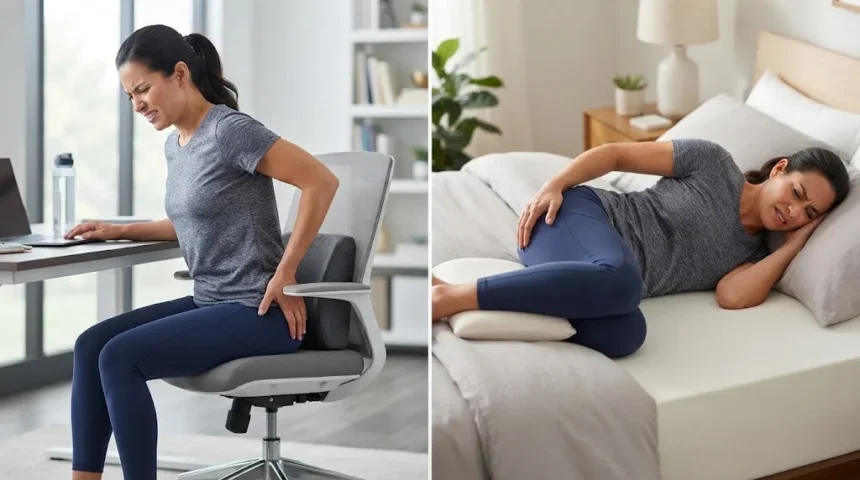
Buttock pain when sitting or lying down can come from muscles, tendons, joints, nerves, or tissues around the pelvis. Some people feel a deep ache in one buttock, while others notice burning, pressure, or pain that travels into the thigh. The exact pattern often depends on which structure is irritated and which positions place pressure on it.
Long periods of sitting can compress tissues beneath the pelvis and keep the hips in the same position for hours. Lying down can also aggravate symptoms when body weight presses directly on a sensitive hip or buttock. Previous injuries, sudden increases in exercise, prolonged driving, weak or overloaded muscles, and lower-back problems can all contribute.
Most mild musculoskeletal causes improve with activity changes, gradual movement, and appropriate strengthening. However, severe pain, progressive weakness, numbness, fever, major trauma, or bladder and bowel changes need medical attention. Understanding how your symptoms behave can help narrow down whether the source is muscular, nerve-related, joint-related, or something requiring further evaluation.
Deep Gluteal or Piriformis-Related Pain
The piriformis is a small muscle deep in the buttock that lies close to the sciatic nerve. Irritation around the deep gluteal region can cause pain that becomes noticeable during prolonged sitting, driving, or certain hip movements. Some people describe a deep ache or burning sensation that stays in the buttock or extends into the back of the thigh.
The term “piriformis syndrome” is often used for this pattern, although several structures in the deep buttock can irritate the sciatic nerve. This is why clinicians may use the broader term deep gluteal syndrome. Symptoms can resemble sciatica from the lower back, making the exact source difficult to determine without assessing the hip, spine, and nerve function together.
Relief usually involves reducing long sitting periods and avoiding aggressive stretching that increases nerve symptoms. Gentle hip mobility, glute strengthening, and gradual return to activity may help when the problem is musculoskeletal. If pain consistently travels below the knee or includes numbness or weakness, a professional assessment can help distinguish deep gluteal irritation from spinal nerve problems.
Sciatica and Lower-Back Nerve Irritation
Sciatica occurs when the sciatic nerve or one of the nerve roots that contributes to it becomes irritated. The source is often in the lower spine, even when most of the discomfort is felt in the buttock. Pain may travel down the back or side of the thigh and can sometimes continue into the calf, foot, or toes.
Nerve-related pain may feel burning, electric, sharp, or tingling rather than simply sore. Sitting can worsen symptoms because it changes spinal and hip position, while certain lying positions may also increase pressure or tension on an irritated nerve. Coughing, sneezing, or bending forward can aggravate symptoms in some people depending on the underlying cause.
Not every episode of buttock pain is sciatica, and imaging changes such as disc bulges do not always cause symptoms. Gentle movement and avoiding prolonged aggravating positions often help mild cases. Progressive weakness, increasing numbness, or severe radiating pain should be evaluated instead of repeatedly stretching the hamstrings or buttocks without knowing the source.
Ischial Bursitis and Hamstring Tendon Pain
The ischial tuberosity is the bony area at the bottom of the pelvis that bears pressure when you sit. A small cushioning bursa and the upper hamstring tendons are located near this area. Irritation can produce pain directly beneath the buttock, especially on hard chairs, during prolonged sitting, or after activities involving repeated hip bending.
Ischial bursitis often feels like a localized ache or tenderness over the sitting bone. Proximal hamstring tendinopathy can cause a similar problem but may also hurt during running, hinging, or stretching the hamstrings. The two conditions can overlap, which is why the exact diagnosis may require an examination when symptoms persist.
Reducing pressure on the area can provide temporary relief. Use shorter sitting periods, choose a more comfortable surface, and avoid aggressively stretching a painful upper hamstring tendon. Progressive strengthening of the hamstrings and glutes may be useful once symptoms settle, especially when pain developed after running, sprinting, or a sudden increase in training volume.
Gluteal Tendinopathy and Side-Lying Pain
Gluteal tendinopathy affects tendons around the outside of the hip, particularly those connected to the gluteus medius and minimus. Pain is usually felt along the outer hip rather than deep in the center of the buttock. It can become especially noticeable when lying on the affected side because body weight directly compresses the sensitive tissues.
The pain may also increase when climbing stairs, standing on one leg, walking long distances, or sitting with the legs crossed. Some people experience aching that extends slightly into the side of the thigh. Symptoms are often worse after sudden increases in walking, running, or hill activity that exceeds what the tendons are currently prepared to tolerate.
Avoiding all activity is usually unnecessary, but repeated compression may need to be reduced temporarily. Sleeping on the opposite side with a pillow between the knees can help some people. Gradual hip strengthening, particularly exercises that build glute capacity without provoking strong lateral hip pain, can support recovery over time.
Sacroiliac Joint and Pelvic Pain
The sacroiliac joints connect the lower spine to the pelvis and sit close to the upper part of the buttocks. Irritation around this region can produce one-sided pain that feels deep near the back of the pelvis. Sitting, turning in bed, climbing stairs, or standing from a chair may make symptoms more noticeable.
SI joint pain can be difficult to diagnose because lower-back muscles, hip joints, nerves, and surrounding ligaments can create similar symptoms. There is no single home test that reliably confirms the sacroiliac joint as the source. Clinicians typically use several movement findings and symptom patterns together rather than relying on one painful spot.
Treatment often focuses on restoring comfortable movement and strengthening the hips and trunk. Gentle walking, bridges, controlled core exercises, and gradual lower-body loading can be useful when tolerated. Persistent one-sided pelvic pain or symptoms following a significant fall should be assessed so other causes are not overlooked.
Pelvic Floor Tension and Buttock Pain
Pelvic floor muscles sit at the base of the pelvis and work closely with the hips, abdomen, and deep rotator muscles. When these muscles remain overly tense or become sensitive, pain can sometimes be felt in the buttocks, tailbone, pelvis, or surrounding areas. Prolonged sitting may increase symptoms because pressure is concentrated through the pelvic region.
Pelvic floor-related pain may occur alongside urinary urgency, pelvic pressure, pain with bowel movements, or discomfort around the tailbone, although symptoms vary widely. In these situations, repeatedly strengthening the pelvic floor may not be appropriate if the muscles already have difficulty relaxing. Assessment from a pelvic health professional can help determine whether tension or weakness is actually present.
Treatment may involve breathing, relaxation, hip mobility, and individualized rehabilitation rather than simply performing more contractions. If this pattern seems relevant, learning about pelvic floor therapy exercises can provide helpful context. Persistent pelvic or buttock pain should still be assessed when the cause remains unclear or other pelvic symptoms are present.
How Sitting and Sleeping Positions Affect Buttock Pain
Sitting places direct pressure through the buttocks and sitting bones while keeping the hips flexed. If a nerve, tendon, bursa, or muscle is already sensitive, remaining seated for long periods can increase symptoms. Taking brief standing or walking breaks is often more useful than searching for one perfect sitting posture and holding it all day.
A supportive chair may improve comfort, but avoid very soft surfaces that allow the pelvis to sink deeply if that worsens your pain. Adjust your position regularly and avoid keeping a wallet, phone, or other bulky object in a back pocket while sitting. Small changes in pressure can matter when tissues around the buttock are already irritated.
For sleep, try the position that creates the least pressure. Side sleepers may benefit from a pillow between the knees, while back sleepers can place a pillow under the knees if that reduces tension. If direct pressure on one buttock or outer hip is painful, sleeping on the opposite side or back may provide a more comfortable temporary option.
How to Relieve Buttock Pain at Home
Begin by reducing activities and positions that clearly increase symptoms without becoming completely inactive. Shorten long sitting periods, change positions frequently, and continue gentle walking if it feels comfortable. Complete bed rest can increase stiffness and reduce strength, so maintaining tolerable movement is generally preferable when there are no serious warning signs.
Heat may help when the buttock feels tight or achy, while cold can provide temporary relief after an activity that causes soreness. Use either for short periods and protect the skin from direct contact. Choose the option that feels better rather than assuming one treatment is always more appropriate for every cause.
Over-the-counter pain medication may be suitable for some people, but health conditions and other medications can change what is safe. A pharmacist or healthcare professional can provide guidance when needed. Symptom relief works best when combined with addressing the likely cause, such as excessive sitting, training overload, weak muscles, or repeated compression.
Exercises and Stretches That May Help
Glute bridges can strengthen the hips without requiring prolonged standing. Lie on your back with your knees bent, press through the feet, and lift the hips to a comfortable height. Pause briefly and lower slowly, avoiding excessive arching through the lower back or pushing into sharp buttock pain.
Gentle hip rotation and mobility exercises may help when stiffness is contributing to symptoms. However, avoid aggressive piriformis or hamstring stretching if it causes burning, tingling, or pain to travel farther down the leg. Nerve-related symptoms can sometimes become worse when an irritated nerve is repeatedly pulled into a strong stretch.
Walking, side steps, and controlled hip strengthening can also build tolerance gradually. Start with low volume and increase only when symptoms remain manageable during and after exercise. If every strengthening or stretching attempt consistently worsens pain, an individualized evaluation is more useful than continuing to experiment with increasingly intense exercises.
When to See a Doctor for Buttock Pain
Medical assessment is appropriate when pain is severe, follows significant trauma, or prevents normal walking or weight-bearing. Persistent symptoms that continue for several weeks despite reasonable activity changes also deserve evaluation. A clinician can examine the back, hips, pelvis, nerves, and surrounding muscles to identify the most likely source.
Seek urgent medical attention for new bladder or bowel control problems, numbness around the groin or saddle area, or rapidly worsening leg weakness. These symptoms can indicate significant nerve compression and are not typical of a simple muscle strain. Severe buttock pain with fever or feeling acutely unwell also needs prompt assessment.
Unexpected swelling, redness, significant night pain, or unexplained weight loss should also be discussed with a healthcare professional. The same applies when pain repeatedly wakes you and does not change with position. Most buttock pain is musculoskeletal, but persistent or unusual symptoms should not automatically be assumed to come from tight muscles.
Conclusion
Buttock pain when sitting and lying down can come from several sources, including deep gluteal irritation, sciatica, hamstring tendons, bursae, gluteal tendons, sacroiliac joints, and pelvic floor muscles. The location of the pain and how it responds to pressure, movement, and different positions can provide useful clues about the likely cause.
Relief often starts with reducing prolonged sitting, changing sleep positions, maintaining gentle movement, and gradually strengthening the hips and surrounding muscles. Stretching can help some types of muscular stiffness, but it should not be forced when symptoms feel nerve-like or worsen with tension. A gradual approach is usually more useful than repeatedly testing painful movements.
Seek professional evaluation if pain is severe, persistent, or accompanied by progressive weakness, numbness, fever, significant trauma, or bladder and bowel changes. These symptoms need more than routine home care. When serious causes are excluded, appropriate movement, load management, and targeted rehabilitation can often make sitting and lying down more comfortable again.
FAQs
Why does my buttock hurt more when sitting?
Sitting places pressure on the buttock, sitting bones, tendons, and nearby nerves. Pain may worsen with conditions such as deep gluteal irritation, hamstring tendinopathy, ischial bursitis, or nerve-related problems.
Why does my buttock hurt when I lie down?
Lying down can compress sensitive tissues around the hip or buttock. Gluteal tendinopathy, muscle irritation, SI joint pain, or certain nerve problems may become more noticeable in specific sleeping positions.
Is buttock pain a sign of sciatica?
It can be, especially when pain is burning or electric and travels down the leg with tingling or numbness. However, many muscle, tendon, joint, and pelvic conditions can also cause buttock pain.
Should I stretch buttock pain?
Gentle stretching may help muscular stiffness, but avoid aggressive stretching if it causes radiating pain, tingling, numbness, or burning. Those symptoms can indicate nerve irritation that may require a different approach.
When should buttock pain be considered serious?
Seek medical care for progressive weakness, saddle numbness, bladder or bowel changes, fever, major trauma, unexplained swelling, or severe persistent pain. These symptoms require assessment rather than self-treatment alone.