
Pelvic floor therapy exercises can help improve strength, coordination, relaxation, and control in the muscles that support the bladder, bowel, reproductive organs, and surrounding pelvic structures. However, pelvic floor training is not simply about doing more Kegels. Some people have weak muscles, while others have muscles that are already too tight and need relaxation rather than additional strengthening.
Learning how to perform pelvic floor exercises correctly is therefore essential. The right routine depends on your symptoms, breathing patterns, muscle control, and overall movement habits. This guide explains common pelvic floor therapy exercises, how to perform them safely, mistakes to avoid, and when professional assessment may be useful.
What Are Pelvic Floor Therapy Exercises?
Pelvic floor therapy exercises are movements and techniques used to improve how the pelvic floor muscles contract, relax, and coordinate with the rest of the body. These muscles form a supportive layer at the bottom of the pelvis and contribute to bladder control, bowel function, sexual function, and core stability.
Some exercises focus on strengthening weakened pelvic floor muscles, while others encourage relaxation when the muscles are excessively tight. Therapy may also include breathing exercises, hip mobility, core training, posture work, and movements that improve coordination between the diaphragm, abdominal muscles, hips, and pelvic floor.
The goal should be better function rather than simply creating the strongest possible contraction. A healthy pelvic floor needs to tighten when support is required and relax during activities such as urination, bowel movements, and certain forms of movement. Balanced control is usually more useful than constant muscle tension.
How to Identify Your Pelvic Floor Muscles
Before beginning pelvic floor exercises, it helps to understand where the muscles are located. Imagine gently stopping the passage of gas or lifting the muscles around the pelvic openings upward. This subtle lifting sensation can help you identify the pelvic floor without creating excessive tension elsewhere in the body.
Avoid repeatedly stopping urine flow as a training exercise. Although briefly noticing the muscles during urination may help some people understand their location, regularly interrupting urine flow can interfere with normal bladder emptying. Pelvic floor exercises are better practiced when your bladder is comfortably empty.
When contracting the pelvic floor, try to keep the buttocks, inner thighs, and abdominal muscles relatively relaxed. You should also continue breathing normally. If you need to squeeze your entire body or hold your breath to create the contraction, the exercise may be too strong or the technique may need adjustment.
Pelvic Floor Breathing Exercise
Diaphragmatic breathing is one of the most useful starting exercises because the diaphragm and pelvic floor naturally move together. Lie comfortably on your back with your knees bent or sit in a relaxed position. Place one hand on your lower ribs and allow the abdomen and rib cage to expand gently as you breathe in.
During inhalation, imagine the pelvic floor softening and lowering slightly rather than pushing downward forcefully. As you exhale, allow the muscles to return naturally toward their resting position. The movement should feel subtle and comfortable, not like a strong contraction or strain.
This type of breathing can be especially useful for people who hold tension around the abdomen, hips, or pelvis. It may also help improve awareness before strengthening exercises. Practicing slow breathing for several minutes can make it easier to recognize the difference between pelvic floor contraction and relaxation.
How to Do Kegel Exercises Correctly
A Kegel involves gently contracting and lifting the pelvic floor muscles. Begin in a comfortable position and take a relaxed breath. As you exhale, lightly draw the pelvic floor upward as though you are preventing gas from passing, then hold the contraction briefly without squeezing your glutes or holding your breath.
Release the muscles fully after each contraction. The relaxation phase matters because the pelvic floor needs to return to its resting length before another repetition. Performing repeated contractions without releasing properly can create unnecessary tension and may make pelvic discomfort worse in some people.
Start with a small number of comfortable repetitions rather than performing dozens of strong contractions. You can gradually increase hold time and repetitions if strengthening is appropriate for you. If Kegels cause pain, pressure, urinary urgency, or increased tightness, stop and consider seeking guidance from a pelvic floor physical therapist.
Quick Pelvic Floor Contractions
Quick contractions train the pelvic floor to activate and release rapidly. Sit or lie comfortably, gently contract the muscles for about one second, then allow them to relax completely. Repeat the movement slowly enough that each contraction and release remains distinct rather than turning into continuous squeezing.
This type of exercise may help train the muscles to respond during sudden increases in abdominal pressure. Coughing, sneezing, laughing, and quick changes in movement can all create pressure that the pelvic floor helps manage. Coordination is more important than performing the contractions as quickly as possible.
Combine quick contractions with slower holds only when strengthening is appropriate. Some people need relaxation training instead, particularly when they experience pelvic pain, painful intercourse, constipation, or difficulty emptying the bladder. Symptoms alone cannot always tell you whether the muscles are weak, tight, or poorly coordinated.
Bridge Exercise for Pelvic Floor Support
Bridges strengthen the glutes and hips while encouraging coordination with the core and pelvic floor. Lie on your back with your knees bent and feet flat on the floor. Exhale gently and lift your hips until your body forms a comfortable line from the shoulders toward the knees.
Avoid squeezing the pelvic floor as hard as possible during the movement. Instead, allow the muscles to respond naturally while you maintain steady breathing. Slowly lower your hips back to the floor and completely relax before beginning another repetition.
Bridges can be useful because pelvic function depends on more than one small muscle group. Strong hips and glutes contribute to movement control around the pelvis and trunk. Keep the range comfortable and reduce the height if you feel lower-back strain, pelvic pressure, or difficulty maintaining relaxed breathing.
Clamshell Exercise for Hip and Pelvic Support
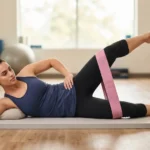
The clamshell strengthens muscles around the outer hip that contribute to pelvic and lower-body stability. Lie on your side with your knees bent and your hips stacked. Keep your feet together while gently lifting the top knee without allowing your pelvis to roll backward.
Move slowly and keep your trunk relaxed rather than forcing the knee as high as possible. You can learn more about proper clamshell exercise form if you want to add this movement to a broader hip-strengthening routine. Good technique matters more than using a large range.
The clamshell does not directly strengthen the pelvic floor in the same way as a pelvic floor contraction. Instead, it supports muscles around the hips and pelvis that work alongside the core during everyday movement. This makes it a useful complementary exercise when included as part of a balanced program.
Squats and Pelvic Floor Coordination
Squats train the hips, legs, trunk, and pelvic floor together during a functional movement. Stand with your feet in a comfortable position and lower your hips as though sitting into a chair. Keep the movement controlled and allow your breathing to remain steady as you descend and return to standing.
Try inhaling as you lower and exhaling as you stand. The pelvic floor may naturally lengthen slightly during the downward phase and become more active as you rise. Avoid gripping the muscles continuously because functional pelvic floor control involves responding to movement rather than staying tightly contracted.
Start with a shallow squat if deeper positions feel uncomfortable. Holding onto a stable surface can also make the exercise easier while you learn the movement. Stop if you experience pelvic heaviness, bulging, pain, or worsening symptoms, and consider professional assessment before progressing.
Pelvic Floor Relaxation Exercises
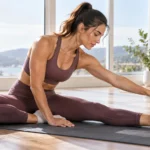
Pelvic floor therapy often includes relaxation exercises because tight muscles can cause problems just as weakness can. Slow diaphragmatic breathing, supported child’s pose, comfortable deep squat variations, and gentle hip-opening positions may help some people reduce unnecessary muscle guarding.
Relaxation should never involve forcefully pushing the pelvic floor downward. Instead, think about allowing the area to soften and widen slightly with inhalation. Gentle warmth, comfortable positioning, and slower breathing can sometimes make it easier for the muscles to release without creating more pressure.
People with pelvic pain, painful intercourse, constipation, urinary urgency, or difficulty relaxing during bowel movements may particularly benefit from assessment for excessive pelvic floor tension. These symptoms can have many causes, so repeatedly strengthening the muscles without understanding the problem may not be appropriate.
Common Pelvic Floor Exercise Mistakes
One of the most common mistakes is assuming everyone should perform Kegels. Weakness is only one possible pelvic floor problem, and excessive tension can produce symptoms that may appear similar. Strengthening already tight muscles can sometimes increase pain, urgency, or difficulty relaxing.
Another mistake is holding your breath during contractions. Breath-holding increases pressure within the abdomen and may encourage unnecessary tension through the core and pelvic floor. Use gentle breathing and avoid bearing down when performing contractions, bridges, squats, or other pelvic therapy exercises.
People also commonly use too much effort. Pelvic floor contractions should not require aggressive squeezing of the buttocks, thighs, or abdomen. A smaller contraction performed with good coordination and full relaxation is often more useful than repeatedly forcing the muscles as hard as possible.
How Often Should You Do Pelvic Floor Exercises?
Exercise frequency depends on what your pelvic floor actually needs. A strengthening program may include short sessions performed regularly, while someone with significant muscle tension may focus more on breathing and relaxation. There is no single repetition schedule that works correctly for every person.
If you are doing strengthening exercises, quality matters more than volume. A few controlled contractions with complete relaxation can be more useful than a large number of rushed repetitions. Muscles can become fatigued, so repeatedly exercising them throughout the day without recovery is not necessarily better.
Track your symptoms as well as your repetitions. If urinary leakage, pelvic pressure, discomfort, or muscle control gradually improves, the program may be appropriate. If symptoms worsen or remain unchanged after consistent practice, an individualized assessment can help determine whether your exercise selection needs to change.
Signs You May Need Professional Pelvic Floor Therapy
Consider speaking with a pelvic floor physical therapist if you have persistent pelvic pain, urinary leakage, urinary urgency, constipation, painful intercourse, or difficulty emptying your bladder or bowels. These symptoms can involve strength, tension, coordination, or other medical factors that cannot always be identified through exercises alone.
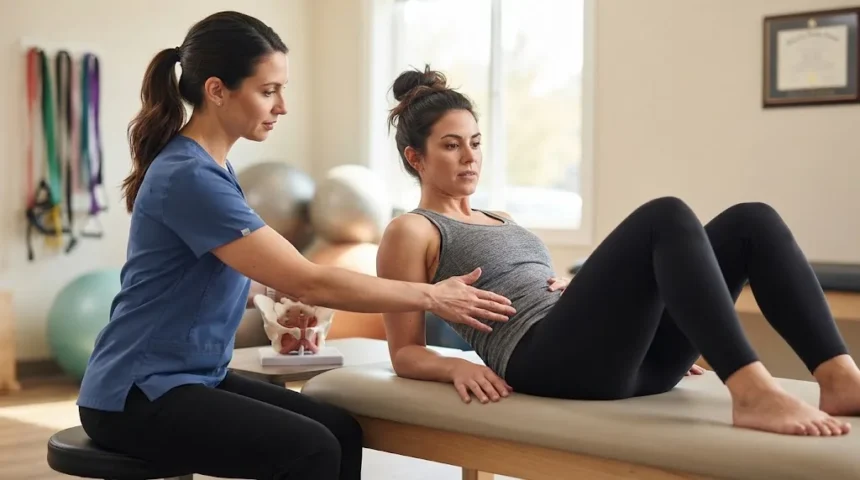
A therapist can assess breathing, movement patterns, hip strength, abdominal coordination, posture, and pelvic floor function. Depending on the situation and your consent, assessment may also include more specific evaluation of muscle tone and control. Treatment can then be matched to what your muscles actually need.
Seek medical care promptly for unexplained bleeding, severe or rapidly worsening pelvic pain, fever, new numbness, significant weakness, or sudden loss of bladder or bowel control. Exercises should not be used to delay evaluation when symptoms could indicate a condition that requires medical attention.
Tips for Getting Better Results
Consistency is helpful, but the exercises should fit naturally into your routine. A short session performed with good technique is generally easier to maintain than a complicated program containing many movements. Focus first on breathing, awareness, and control before increasing resistance or repetitions.
Combine pelvic floor training with whole-body movement. Walking, hip strengthening, mobility work, and appropriate core exercises can support better function around the pelvis. The pelvic floor does not work in isolation, so overall movement habits and strength can influence how effectively these muscles respond.
Finally, avoid judging progress only by how strongly you can squeeze. Improvements may appear as less leakage, easier bowel movements, reduced pelvic tension, better confidence with activity, or greater awareness of when to contract and relax. Functional changes are usually more meaningful than simply producing a stronger contraction.
Conclusion
Pelvic floor therapy exercises can help improve strength, relaxation, coordination, and awareness when they are matched to your individual needs. Kegels, breathing exercises, bridges, clamshells, and squats may all have a place in a balanced program. The right exercise depends on whether your muscles are weak, tight, or poorly coordinated.
Good technique includes steady breathing, controlled movement, and complete relaxation between contractions. Avoid excessive squeezing, breath-holding, or pushing through pain. Pelvic floor training should improve function rather than create more tension or discomfort.
If symptoms such as pain, leakage, urgency, constipation, or pelvic pressure continue, consider working with a qualified pelvic floor physical therapist or healthcare professional. An individualized assessment can help identify the underlying problem and guide you toward exercises that are more appropriate for your body.
FAQs
What are the best pelvic floor therapy exercises?
Common options include Kegels, diaphragmatic breathing, bridges, clamshells, squats, and relaxation exercises. The best choice depends on whether your pelvic floor needs strengthening, relaxation, or better coordination.
How do I know if I am doing pelvic floor exercises correctly?
You should feel a gentle lifting or tightening around the pelvic openings without squeezing your glutes, thighs, or abdomen excessively. You should also be able to breathe and fully relax afterward.
Can pelvic floor exercises make symptoms worse?
Yes, particularly if the muscles are already overly tight and you repeatedly perform strong Kegels. Increased pain, pressure, urgency, or difficulty relaxing may indicate that you need a different approach.
How long does it take for pelvic floor exercises to work?
Progress varies depending on symptoms, muscle function, consistency, and the underlying problem. Some people notice gradual changes over several weeks, while others require longer or benefit from professional pelvic floor therapy.
Should everyone do Kegel exercises?
No. Kegels can help when appropriate strengthening is needed, but people with tight or overactive pelvic floor muscles may need relaxation and coordination exercises instead. Individual assessment can clarify which approach fits best.