
Feverfew: Benefits, Uses, Dosage & Side Effects
Feverfew is a traditional medicinal herb best known for its long-standing use in migraine prevention and headache support. The plant, scientifically called Tanacetum parthenium, belongs to the daisy family and contains naturally occurring compounds such as parthenolide that have attracted considerable scientific interest. Today, feverfew is available in capsules, tablets, dried leaves, extracts, teas, and combination supplements marketed for migraine management and inflammatory discomfort. Research suggests that standardized feverfew preparations may help reduce migraine frequency in some people, although results have not been consistent across every study or product. Feverfew is not a quick painkiller for an active migraine, and its effectiveness may depend on formulation, dose, and regular use. Understanding feverfew benefits, uses, dosage, side effects, interactions, and safety considerations can help people make more informed decisions before adding this herbal supplement to their routine.
What Is Feverfew?
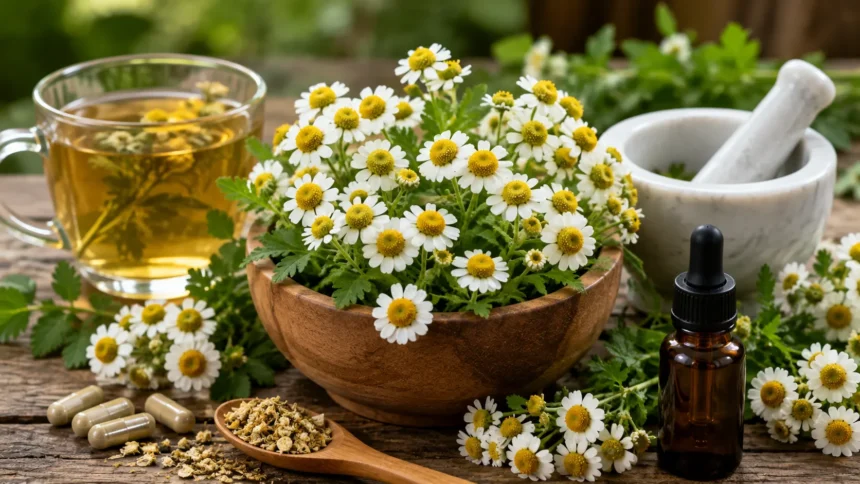
Feverfew is a flowering perennial herb native to parts of southeastern Europe but now grown in many regions around the world. It has small white flowers with yellow centers that resemble miniature daisies, which reflects its membership in the Asteraceae botanical family. Historically, different cultures used feverfew for headaches, fever, digestive discomfort, menstrual symptoms, arthritis, and various inflammatory complaints. Modern interest focuses mainly on its possible role in reducing migraine frequency rather than treating the broad range of conditions traditionally associated with the herb. The leaves contain multiple plant compounds, including sesquiterpene lactones such as parthenolide. These compounds are believed to contribute to many of feverfew’s biological effects.
The name feverfew can be misleading because the herb is not currently considered a standard treatment for fever. Its historical name developed from traditional medicinal uses rather than modern clinical evidence demonstrating reliable fever reduction. Today, feverfew supplements are more commonly associated with migraine prevention and headache wellness. This distinction is important because traditional names do not always reflect scientifically supported uses. Many herbs were historically recommended for multiple conditions based on observation and customary practice. Modern research attempts to determine which of those uses have measurable benefits and which remain uncertain. For feverfew, migraine prevention has received considerably more scientific attention than treatment of fever itself.
Parthenolide is one of the most discussed active compounds in feverfew. Researchers have investigated whether it influences inflammatory pathways, blood vessel activity, platelet function, and chemical signaling associated with migraine development. However, feverfew should not be reduced to a single ingredient because the whole plant contains numerous compounds that may interact with one another. Different supplements can contain very different concentrations of parthenolide depending on the plant variety, processing method, storage conditions, and manufacturing process. This variation helps explain why two feverfew products may not produce identical effects. Standardized products attempt to provide more consistent levels of particular compounds, but quality can still vary between manufacturers.
Feverfew can be consumed in several forms, including dried leaf capsules, tablets, liquid extracts, and herbal preparations. Raw fresh leaves were traditionally chewed, but this method can irritate the mouth and is generally less appealing than standardized supplements. Some people drink feverfew tea, although the concentration of active compounds can be less predictable than in measured capsules or extracts. Commercial migraine supplements may also combine feverfew with magnesium, riboflavin, ginger, or other ingredients. Combination products can make it difficult to know which component is producing a benefit or side effect. When evaluating feverfew, it is helpful to examine both the herb itself and the exact formulation being used.
Feverfew is often described as “natural,” but natural does not automatically mean risk-free. Herbal compounds can influence biological processes just as medicines do, and they may interact with medications or health conditions. Feverfew can cause digestive upset, mouth irritation, allergic reactions, and other side effects in some people. It can also influence platelet activity, creating additional considerations for people using medications that affect bleeding. Pregnant individuals are generally advised to avoid feverfew because of safety concerns and insufficient evidence supporting its use during pregnancy. Treating feverfew as an active herbal product rather than an ordinary food ingredient leads to safer and more realistic expectations.
What Are the Main Benefits of Feverfew?
The potential benefit with the strongest public interest is migraine prevention. Some people who take feverfew regularly report fewer migraine attacks or a reduction in certain migraine-related symptoms. Clinical research has produced mixed but somewhat promising findings, with benefits varying depending on the feverfew preparation used. Standardized products may be more likely to provide consistent results because active-compound levels can be controlled more carefully. Feverfew does not appear to help everyone, and its average effect is generally modest rather than dramatic. It should therefore be viewed as one possible preventive option rather than a guaranteed migraine cure. People with frequent or disabling migraines should still receive appropriate medical assessment and evidence-based treatment.
Feverfew may also influence inflammatory processes in the body. Laboratory research suggests that compounds within the plant can interact with signaling pathways involved in inflammation. This has led to interest in feverfew for conditions involving inflammatory discomfort, including arthritis and musculoskeletal pain. However, human evidence for these uses is much weaker than the research surrounding migraine prevention. A biological anti-inflammatory effect in laboratory studies does not automatically mean the herb reliably treats inflammatory diseases in people. Conditions such as rheumatoid arthritis require appropriate medical care because uncontrolled inflammation can cause progressive joint damage. Feverfew should not replace prescribed treatment for established inflammatory disease.
Another proposed benefit involves the way feverfew compounds interact with platelets and substances associated with blood vessel regulation. Migraine biology is complex and includes neurological signaling, inflammation, sensory pathways, and vascular changes. Feverfew has been investigated because its compounds may influence several of these processes simultaneously. Earlier theories often described migraines mainly as problems caused by expanding or narrowing blood vessels, but modern understanding recognizes a more complicated neurological mechanism. Feverfew’s possible effectiveness therefore cannot be explained by one simple vascular effect. Instead, researchers are interested in how its various compounds influence inflammatory and neurological processes involved in migraine susceptibility.
Some people use feverfew for menstrual discomfort because of its traditional reputation as an herb affecting inflammation and smooth muscle activity. However, strong clinical evidence supporting feverfew as a reliable treatment for menstrual cramps is currently limited. Similar uncertainty applies to claims involving digestive discomfort, allergies, dizziness, tinnitus, and other conditions for which the herb has historically been promoted. Traditional use can provide useful clues for research, but it should not be treated as proof of effectiveness. Anyone experiencing persistent menstrual pain, unexplained abdominal symptoms, or other recurrent problems should determine the underlying cause. An herbal supplement may ease certain symptoms without addressing a medical condition that requires diagnosis.
A more realistic overall benefit of feverfew is that it may provide an additional preventive option for selected people who experience migraines and prefer to explore complementary approaches. It may be particularly appealing to individuals who have discussed conventional and complementary preventive strategies with a healthcare professional. However, benefits should be evaluated over a meaningful period rather than based on one good or bad day. Migraine frequency naturally fluctuates, making it easy to attribute improvement to a supplement that may not actually be responsible. Keeping a headache diary can help identify whether attack frequency, severity, duration, and medication use genuinely change over time. This approach creates a more reliable picture of whether feverfew is providing practical value.
Feverfew for Migraines and Headaches
Migraine is a neurological disorder that can involve severe head pain, nausea, light sensitivity, sound sensitivity, visual disturbances, and other neurological symptoms. Because attacks can significantly interfere with work and daily life, many people look for preventive options that reduce how often migraines occur. Feverfew has become one of the better-known herbal supplements associated with migraine prevention. Its traditional reputation for headaches eventually led researchers to evaluate standardized preparations scientifically. Some studies have found modest reductions in migraine frequency among regular users, while others have produced less convincing results. Differences in supplement quality and formulation appear to be important when interpreting these mixed outcomes.
Feverfew is generally considered a preventive supplement rather than an acute migraine treatment. This means it is usually taken regularly with the aim of reducing future attacks instead of being used only when a migraine starts. Someone experiencing severe migraine pain should not expect a feverfew capsule to work like a fast-acting acute medication. Preventive strategies typically require consistent use over weeks or months before their effectiveness can be evaluated. Even then, a meaningful benefit might involve fewer monthly attacks rather than complete elimination of migraines. This distinction helps set realistic expectations and reduces the risk of abandoning effective acute treatments in favor of an herbal supplement that is not designed for immediate relief.
Researchers do not have one universally accepted explanation for how feverfew might reduce migraines. Parthenolide and other compounds appear capable of influencing inflammatory signaling and cellular pathways associated with migraine mechanisms. Feverfew may also affect platelet activity and the release of certain chemical messengers. Migraine itself involves complex communication between nerves, blood vessels, immune-related signaling, and pain-processing pathways in the brain. It is therefore possible that multiple actions contribute to feverfew’s effects rather than one isolated mechanism. This complexity is also why results can vary substantially from person to person. Individual migraine triggers and biological pathways are not identical among all patients.
Feverfew should not be confused with ordinary treatment for occasional tension-type headaches. Tension headaches and migraines have different patterns and may require different management strategies. Someone experiencing repeated headaches should first determine whether they are dealing with migraine, tension-type headaches, medication-overuse headaches, sinus-related symptoms, or another medical issue. New severe headaches, neurological changes, head injury, fever with neck stiffness, or rapidly worsening headache patterns require prompt medical attention. Supplements should not delay evaluation of potentially serious symptoms. Feverfew is most relevant when a person has an established pattern of migraine and is considering preventive approaches rather than trying to self-diagnose an unexplained headache.
A headache diary can make feverfew trials more meaningful. Record the number of headache or migraine days each month, approximate severity, duration, possible triggers, acute medication use, and any side effects from supplements. Compare patterns over several weeks rather than judging effectiveness based on one isolated attack. If migraines become substantially less frequent or easier to manage without troublesome adverse effects, the supplement may be providing useful support. If nothing changes after an appropriate trial, continuing indefinitely may offer little value. People using prescription migraine medications should also discuss supplements with their clinician because complementary treatments can affect the overall treatment plan.
Feverfew Uses Beyond Migraine Prevention
Feverfew has historically been used for joint discomfort and inflammatory conditions. This use is understandable because several plant compounds appear to interact with pathways involved in inflammation. Some supplement manufacturers therefore market feverfew for arthritis, general aches, or musculoskeletal wellness. However, evidence supporting clinically meaningful improvement in arthritis is limited compared with established treatments. Inflammatory arthritis can cause permanent joint damage when poorly controlled, so replacing prescribed medication with feverfew could create significant risk. People with persistent joint swelling, morning stiffness, or unexplained pain should obtain proper medical evaluation. Feverfew may be considered complementary in selected situations, but it should not be presented as a proven disease-modifying therapy.
Traditional herbal practice has also included feverfew for menstrual discomfort. Menstrual cramps are partly associated with chemical mediators involved in uterine contractions and inflammation, creating a theoretical reason why anti-inflammatory plant compounds might influence symptoms. However, reliable human evidence demonstrating a clear benefit from feverfew remains insufficient. Menstrual pain can also result from conditions such as endometriosis, adenomyosis, or fibroids rather than routine menstrual cramping alone. Severe pain that interferes substantially with daily life deserves medical assessment. Using herbs without evaluating persistent symptoms can delay diagnosis. Feverfew’s historical use may be interesting, but evidence should guide expectations about effectiveness.
Digestive complaints represent another traditional area of feverfew use. Historical descriptions include use for nausea, stomach discomfort, and digestive disturbances, although modern research has not established feverfew as a standard gastrointestinal treatment. Interestingly, gastrointestinal upset can also occur as a side effect of feverfew supplementation. This illustrates why traditional uses do not automatically translate into predictable clinical benefits. Nausea occurring with migraine may improve if migraine frequency declines, but that is different from directly treating unrelated nausea. Persistent vomiting, abdominal pain, unexplained weight loss, or gastrointestinal bleeding requires professional assessment. Feverfew should not be used to mask symptoms that could indicate a more significant underlying problem.
Some people encounter claims that feverfew can improve allergies, skin problems, tinnitus, dizziness, or respiratory symptoms. These claims generally rely on traditional use, theoretical biological mechanisms, or preliminary research rather than strong clinical evidence. Herbal compounds often demonstrate interesting effects in cells or laboratory models, but translating those findings into real-world treatments requires carefully designed human trials. Dosage, absorption, metabolism, and disease complexity can all change the outcome. Consumers should therefore be cautious when a supplement is promoted as helping a very long list of unrelated conditions. A product claiming to solve migraines, arthritis, digestion, allergies, infections, and skin disease simultaneously deserves particularly careful evaluation.
Feverfew research may eventually reveal additional applications because its plant compounds continue to attract scientific interest. Laboratory studies have explored parthenolide in relation to cellular signaling and several biological pathways, including areas beyond headache medicine. However, early research should not be mistaken for approved or established medical use. A compound behaving interestingly in laboratory cells does not mean swallowing the herb will reproduce that effect safely in humans. Developing new treatments requires research into dosage, absorption, toxicity, effectiveness, and long-term outcomes. For current users, feverfew’s most relevant evidence-supported role remains migraine prevention rather than treatment of numerous unrelated diseases. Keeping this distinction clear helps prevent exaggerated expectations.
Feverfew Dosage and How It Is Taken
There is no single feverfew dosage that is appropriate for every person or every supplement because products vary substantially in concentration and preparation. Clinical studies have commonly used standardized dried-leaf preparations or extracts rather than fresh plants. Some commercially available products provide approximately 50 to 150 milligrams of feverfew per daily serving, although the amount cannot be compared directly when extraction strength and parthenolide content differ. Certain research formulations use much smaller quantities of concentrated extract. This variation makes label instructions more useful than choosing a dose based only on the total milligrams printed on another product. People considering feverfew regularly should discuss appropriate use with a pharmacist or healthcare professional.
Standardization is particularly important because parthenolide concentration can differ dramatically between products. A capsule containing a larger weight of poorly standardized plant material might provide less parthenolide than a smaller amount of concentrated extract. Some labels state a percentage or measured amount of parthenolide, while others provide only the weight of feverfew leaf. Even standardized parthenolide content does not guarantee effectiveness because feverfew contains additional compounds that may contribute to its activity. Nevertheless, standardized manufacturing can improve consistency between doses. When comparing supplements, consumers should look beyond the number of milligrams and evaluate the form, extract ratio, standardization information, manufacturer quality, and other ingredients.
Feverfew is generally taken regularly when used for migraine prevention because it is not considered an immediate rescue treatment. Preventive effects, when they occur, may take several weeks to become noticeable. This means taking feverfew only after migraine pain begins is unlikely to reproduce the type of use studied in preventive research. Consistency matters, but users should avoid increasing the dose simply because no immediate effect is noticeable. Higher amounts can increase side effects without necessarily producing additional benefit. A defined trial period discussed with a clinician can help determine whether continued use makes sense. Recording migraine frequency during that period provides a more objective way to assess effectiveness.
Feverfew can be taken with food if it causes stomach discomfort, although instructions vary by product. Capsules and tablets are often easier to dose consistently than teas or fresh leaves because the quantity of plant compounds can be more predictable. Chewing fresh feverfew leaves is generally discouraged because direct contact may irritate the mouth and cause sores or altered taste. Tea provides a traditional method of consumption but makes standardized dosing more difficult. Liquid extracts also differ considerably in concentration, so drops from one manufacturer should not automatically be treated as equivalent to another product. Always follow formulation-specific instructions rather than assuming all feverfew products have the same strength.
Children, pregnant individuals, breastfeeding individuals, and people with significant medical conditions should not determine feverfew dosage through general adult supplement information. Evidence in these groups is more limited, and specific safety concerns may apply. People taking anticoagulants, antiplatelet drugs, or medications that affect bleeding should also seek professional advice before using feverfew. Surgery creates another important consideration because supplements that influence platelet function may need to be stopped ahead of a procedure under medical guidance. The safest dose is not simply the smallest or most popular amount. Appropriate use depends on the person’s medical history, medications, product formulation, and reason for taking the supplement.
Feverfew Side Effects
Feverfew is generally tolerated by many adults when used appropriately, but side effects can occur. Commonly reported problems include stomach discomfort, nausea, diarrhea, bloating, and indigestion. These reactions are usually mild but can be troublesome enough for some people to discontinue the supplement. Gastrointestinal symptoms can also be confusing in migraine sufferers because nausea may already accompany migraine attacks. Tracking when symptoms occur in relation to feverfew use can help determine whether the supplement is contributing. Taking the product with food may reduce stomach irritation for some users, although this does not eliminate every reaction. Persistent or severe symptoms should prompt discontinuation and appropriate medical guidance.
Fresh feverfew leaves can cause irritation inside the mouth. People who chew the leaves may develop mouth ulcers, swelling, irritation of the tongue, or altered taste. This is one reason modern supplementation generally relies on capsules or prepared extracts rather than chewing fresh plant material. Even processed products may occasionally cause oral discomfort in sensitive individuals. Anyone experiencing significant swelling of the lips, tongue, mouth, or throat should consider the possibility of an allergic reaction and seek urgent care when breathing or swallowing becomes difficult. Oral irritation should not be dismissed as proof that the herb is “working.” It is an adverse effect rather than a necessary part of treatment.
Allergic reactions are especially relevant for people sensitive to plants in the daisy or Asteraceae family. This botanical group includes plants such as ragweed, chrysanthemums, marigolds, and daisies. Someone who has experienced significant allergic reactions to related plants may be more likely to react to feverfew, although sensitivity is not guaranteed. Symptoms can include rash, itching, swelling, or respiratory reactions. Mild skin symptoms should still be taken seriously if they appear soon after introducing a new supplement. Severe allergic reactions involving breathing difficulty, throat swelling, faintness, or widespread hives require emergency medical attention. Botanical supplements can trigger allergies just like foods and medications can.
Another concern involves potential effects on platelet activity and bleeding. Feverfew compounds have demonstrated actions that could influence how platelets function, which creates caution for people already taking medications that reduce blood clotting. Easy bruising, prolonged bleeding, frequent nosebleeds, or unexplained blood in urine or stool should not be ignored. The clinical significance of feverfew’s effect can vary, but combining multiple substances that influence bleeding may increase overall risk. This becomes particularly relevant before dental procedures or surgery. Users should tell healthcare professionals about herbal supplements rather than assuming plant-based products are medically irrelevant. Accurate medication lists should include vitamins, herbs, and nonprescription products.
Some people who have taken feverfew regularly for long periods have reported symptoms after suddenly stopping it. This has sometimes been described as a “post-feverfew syndrome” and may include headaches, sleep problems, nervousness, muscle or joint stiffness, and fatigue. Evidence regarding how frequently this occurs is limited, but abrupt discontinuation after prolonged use may be uncomfortable for some individuals. Anyone using feverfew long term should discuss stopping strategies with a healthcare professional, particularly if it has become part of a migraine-prevention routine. A returning migraine after discontinuation may also reflect loss of a preventive benefit rather than a true withdrawal reaction. These possibilities can be difficult to distinguish without careful symptom tracking.
Feverfew Interactions and Who Should Avoid It
People taking anticoagulant or antiplatelet medications should be especially cautious with feverfew. Drugs used to prevent blood clots already alter clotting processes, and adding an herbal product that may influence platelet function could potentially increase bleeding risk. This consideration can apply to medications such as warfarin and various antiplatelet therapies, although individual risk depends on the exact treatment and medical condition. Regular use of aspirin or other medications affecting bleeding also deserves discussion with a healthcare professional. Users should not stop prescribed medication in order to take feverfew instead. The safer approach is to have a pharmacist or clinician review the combination before supplementation begins.
Nonsteroidal anti-inflammatory drugs, commonly known as NSAIDs, are frequently used by people with headaches, menstrual discomfort, or musculoskeletal pain. Some of these medicines can increase gastrointestinal irritation or bleeding risk, particularly when used at higher doses or for prolonged periods. Because feverfew may also influence platelet behavior, combining the two deserves thoughtful consideration. Occasional use does not automatically mean a dangerous interaction will occur, but personal risk varies according to age, medical history, dosage, and other medications. People with previous stomach ulcers, gastrointestinal bleeding, kidney problems, or clotting disorders should be especially careful. Professional medication review is preferable to assuming herbal products cannot interact with common pain relievers.
Feverfew is generally avoided during pregnancy because of concerns about its potential effects on uterine activity and because sufficient safety evidence is lacking. Historical use of feverfew in reproductive contexts is another reason caution is appropriate. Pregnant individuals should not use it for migraine prevention without specific guidance from a qualified healthcare professional. Breastfeeding presents similar uncertainty because there is limited information about the transfer of feverfew compounds into breast milk and their effects on infants. When evidence is insufficient, avoiding unnecessary exposure is generally the safer approach. Migraine during pregnancy or breastfeeding can still be treated, but treatment choices should be selected according to established maternal and infant safety considerations.
Surgery is another situation in which feverfew needs to be disclosed. Because of its possible effects on platelet function, healthcare teams may recommend discontinuing it before an operation or invasive procedure. The appropriate timing should come from the surgeon, anesthesiologist, physician, or pharmacist rather than a general rule copied from a supplement website. Dental procedures involving significant bleeding may also be relevant. Patients often forget to mention herbal products because they do not think of them as medications. However, surgeons and anesthesiologists need a complete picture of everything that could affect bleeding, sedation, cardiovascular responses, or medication metabolism. Bringing supplement bottles or an updated medication list can make this easier.
People with chronic illness should take similar precautions. Liver disease, kidney disease, clotting disorders, recurrent gastrointestinal bleeding, and severe allergies may change the risk-benefit calculation for herbal supplementation. Children also require special caution because adult feverfew research cannot simply be applied by adjusting the dose according to body size. Anyone taking multiple medications should consider a pharmacist review because interactions are more difficult to predict as the medication list grows. This is particularly important when feverfew appears inside a multi-ingredient migraine supplement. Every additional ingredient creates another potential source of side effects and interactions. A simple product is often easier to evaluate than a complex blend containing numerous active substances.
How to Choose a Feverfew Supplement
Choosing a feverfew supplement involves more than selecting the bottle with the largest number on the front label. Look for clear information about the feverfew form, amount per serving, serving size, and whether the product is standardized for parthenolide or another marker compound. A reputable manufacturer should provide complete ingredient information rather than hiding multiple substances inside vague proprietary blends. Check whether the product contains only feverfew or combines it with ingredients such as magnesium, riboflavin, butterbur, ginger, or other migraine supplements. Combination formulas may be appropriate in some situations, but they make it harder to identify which ingredient causes benefits or adverse effects. Clear labeling supports safer decision-making.
Independent quality testing can provide additional confidence that a supplement contains what the label claims and is manufactured with reasonable quality controls. Herbal supplements can vary in purity, potency, and contamination risk depending on sourcing and manufacturing practices. A professional-looking label does not guarantee accurate ingredient content. Consumers should therefore prioritize established manufacturers that provide transparency about testing and quality standards. Extremely cheap products with unusually large claims deserve caution. Higher price does not automatically mean higher quality either. The objective is to find a consistent, well-labeled product rather than assuming cost or marketing language predicts clinical effectiveness.
Pay attention to parthenolide information but do not treat one number as the entire measure of product quality. Some feverfew preparations are standardized to contain a specific percentage or amount of parthenolide because this compound has been associated with the herb’s biological activity. However, different clinical studies have used different formulations, and feverfew contains numerous compounds beyond parthenolide. A product with more parthenolide is not automatically more effective or safer. Extremely concentrated extracts may deliver very different exposure from traditional dried-leaf preparations. Comparing products requires consideration of the extraction method, dose, standardization, and evidence supporting that particular formulation rather than focusing on a single chemical marker.
Check the complete ingredient list for allergens, fillers, sweeteners, and other active botanical ingredients. Someone sensitive to certain herbs may react to a combination product even when feverfew itself is tolerated. Capsules may also contain gelatin or other ingredients that matter to people with dietary preferences or restrictions. Liquid extracts can contain alcohol, glycerin, or other solvents. Gummies frequently contain added sugars and may provide lower or less flexible doses than capsules. Choosing a formulation that fits personal needs improves the likelihood of consistent use. A pharmacist can help interpret labels when the serving size, extract ratio, or standardization information is difficult to understand.
Avoid products promising guaranteed migraine cures, immediate results, detoxification, or treatment of multiple serious diseases. Responsible supplement information should acknowledge uncertainty and recognize that individual responses differ. Feverfew has enough evidence to justify scientific interest, particularly for migraine prevention, but that does not support exaggerated promises. A company claiming its product permanently eliminates migraine, arthritis, digestive disease, and inflammation should raise questions about the reliability of its marketing. Supplements work best when expectations are based on realistic evidence rather than dramatic advertising. Choosing carefully also makes it easier to assess whether the product genuinely improves symptoms over time.
How to Use Feverfew Safely and Effectively
Before starting feverfew, define the reason you want to use it. If the goal is migraine prevention, track how many migraine days occur each month before beginning the supplement. This baseline gives you something meaningful to compare with later results. Without tracking, natural fluctuations can make it difficult to determine whether the supplement is actually working. Record headache severity, duration, acute medications, potential triggers, and any side effects as well. The goal is not to create a complicated medical diary but to collect enough information to notice genuine trends. A simple calendar or phone note can make the evaluation much more objective.
Introduce one new supplement at a time whenever practical. Starting feverfew, magnesium, riboflavin, and several other products simultaneously makes it difficult to identify which ingredient helped or caused a side effect. A gradual approach also reduces confusion when symptoms change. If feverfew causes digestive problems or an allergic reaction, identifying the responsible product is much easier when nothing else has recently changed. People already using multiple migraine treatments should discuss additions with their clinician rather than restructuring the entire plan independently. Complementary treatment works most safely when it is coordinated with conventional care rather than layered unpredictably on top of it.
Follow the specific product instructions and avoid increasing the amount simply because benefits have not appeared quickly. Preventive strategies often require patience, while excessive doses can increase the chance of adverse effects. Taking more feverfew does not guarantee a stronger migraine-prevention effect. If a well-chosen product provides no meaningful improvement after a reasonable trial, continuing indefinitely may not be worthwhile. Discussing the outcome with a healthcare professional can help determine whether another preventive strategy would be more appropriate. Migraine treatment now includes numerous options, including lifestyle approaches, oral medications, injectable therapies, neuromodulation devices, and other strategies selected according to individual needs.
Continue paying attention to migraine triggers and overall health even when taking feverfew. Regular sleep, adequate hydration, appropriate meals, stress management, and physical activity can all influence migraine patterns in susceptible people. Some individuals also have specific triggers such as alcohol, missed meals, intense sensory stimulation, or hormonal changes. Feverfew is unlikely to compensate completely for multiple unmanaged triggers. Preventive care works best when it addresses the overall pattern rather than depending on one capsule. Likewise, people should avoid excessively restrictive trigger avoidance when there is no evidence that a particular factor causes their migraines. Individual patterns matter more than generic lists of supposed triggers.
Finally, recognize when self-care is no longer appropriate. A new sudden severe headache, weakness, difficulty speaking, loss of consciousness, fever with neck stiffness, vision loss, head trauma, or a rapidly changing headache pattern requires urgent medical assessment. Frequent migraines that significantly disrupt daily life also deserve professional treatment even when herbal approaches are being considered. Feverfew may provide modest preventive support for some people, but it is not a diagnostic tool or emergency treatment. Safe use involves understanding both its potential value and its limitations. That balanced approach allows people to explore complementary options without neglecting effective medical care.
FAQs About Feverfew
What is feverfew mainly used for?
Feverfew is most commonly used as an herbal supplement for migraine prevention. Some people also use it for inflammatory discomfort, menstrual symptoms, or joint pain, but evidence for these additional uses is less established.
How much feverfew should you take daily?
There is no universal feverfew dose because supplements vary in concentration, extraction method, and parthenolide content. Commercial products and studies often use different amounts, so follow the specific product instructions and ask a healthcare professional or pharmacist about an appropriate dose for your circumstances.
How long does feverfew take to work for migraines?
Feverfew is generally used preventively rather than as an immediate migraine treatment, so any benefit may take several weeks of consistent use to become noticeable. Tracking monthly migraine frequency can help determine whether it is providing a meaningful effect.
What are the most common side effects of feverfew?
Possible side effects include nausea, indigestion, diarrhea, abdominal discomfort, and allergic reactions. Chewing fresh leaves can also cause mouth irritation or ulcers, and feverfew may influence platelet function and bleeding risk in susceptible people.
Who should not take feverfew?
Pregnant individuals are generally advised to avoid feverfew, while breastfeeding individuals, children, people preparing for surgery, and those using medications that affect blood clotting should obtain professional guidance before taking it. Anyone allergic to plants in the daisy or Asteraceae family should also use particular caution.