
The figure four stretch is a simple lower-body mobility exercise commonly used to loosen the hips, glutes, and muscles around the pelvis. It gets its name from the shape your legs create when one ankle crosses over the opposite thigh. The stretch can be performed lying down, sitting, or standing, making it easy to adapt to different mobility levels.
People often use the figure four stretch after workouts, long periods of sitting, running, or strength training. When performed correctly, it may improve hip mobility and reduce the feeling of tightness around the buttocks. The key is to use gentle, controlled pressure rather than forcing the hip into a painful range.
What Is the Figure Four Stretch?
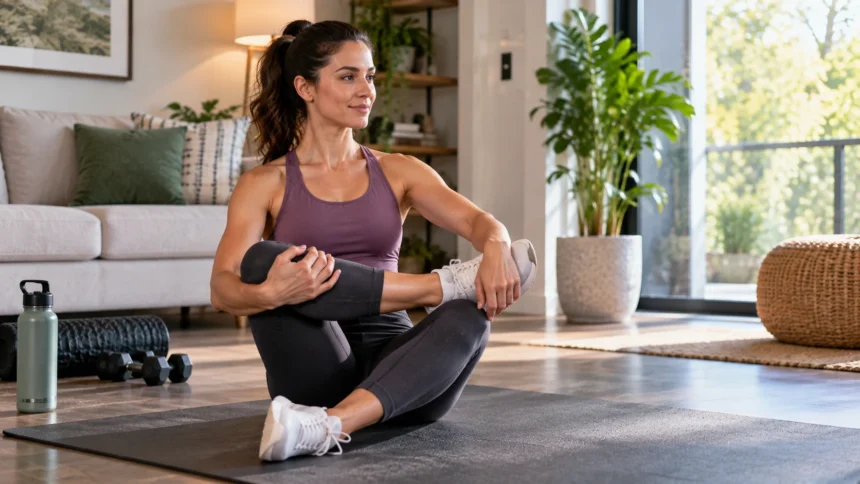
The figure four stretch targets the muscles around the back and outside of the hip. You create the position by placing one ankle across the opposite thigh, making the legs resemble the number four. From there, you gently increase the stretch by bringing the supporting leg closer or leaning forward, depending on the variation.
The movement is often used to stretch the gluteal muscles and deeper hip rotators. These muscles help stabilize the pelvis and control movements such as walking, running, squatting, and changing direction. When they feel tight after exercise or prolonged sitting, the figure four position can provide a comfortable way to introduce mobility.
Several versions of the stretch exist, including lying, seated, and standing variations. The lying version is often the easiest for beginners because the floor supports the back and reduces balance demands. More advanced variations can be used when you want additional hip mobility or need an option that fits into a warm-up or office routine.
What Muscles Does the Figure Four Stretch Target?
The figure four stretch mainly targets the gluteus maximus, gluteus medius, and smaller muscles responsible for rotating the hip. One important muscle in this region is the piriformis, which sits deep in the buttock area. The exact sensation varies depending on hip anatomy and how the stretch is performed.
You may feel the stretch along the outer hip or deep inside the buttocks rather than directly in one specific muscle. This is normal because several tissues contribute to hip rotation and stabilization. The position can also create a mild stretch through nearby connective tissues and surrounding muscles.
The exercise should not create sharp pain inside the hip joint or knee. If the stretch feels pinchy, uncomfortable, or causes numbness or tingling, reduce the range. A useful mobility exercise should create mild muscular tension while allowing you to breathe comfortably and maintain control.
How to Do the Lying Figure Four Stretch
Lie on your back with both knees bent and your feet flat on the floor. Lift one leg and place the ankle across the opposite thigh, just above the knee. Keep the crossed foot gently flexed rather than allowing it to hang loosely, which can help keep the position more controlled.
Reach behind the thigh of the supporting leg and gently pull it toward your chest. You should begin to feel a stretch through the glute and outer hip of the crossed leg. Keep your head and shoulders relaxed on the floor and avoid forcing the knee downward with your hand.
Hold the position for around 20 to 30 seconds while breathing slowly, then release gently. Repeat on the opposite side and perform one to three rounds depending on your comfort level. The stretch should become easier gradually rather than through aggressive pulling during one session.
How to Do a Seated Figure Four Stretch
Sit near the front of a stable chair with both feet on the floor. Cross one ankle over the opposite thigh while keeping your spine comfortably tall. Allow the crossed knee to move outward naturally without pushing it down or forcing the hip beyond its available range.
Hinge forward slightly from the hips while keeping your back relatively long. You should feel tension through the glute and outer hip of the crossed leg. Lean only as far as needed to create a mild stretch, because excessive rounding of the spine does not necessarily improve the hip stretch.
The seated version is useful for office workers or anyone who wants a stretch that does not require getting onto the floor. It can be performed during movement breaks after long periods of sitting. Make sure the chair is stable and avoid pressing aggressively on the knee.
Key Benefits of the Figure Four Stretch
One major benefit is improved comfortable movement around the hips. The glutes and external hip rotators can feel stiff after prolonged sitting, running, cycling, or lower-body strength training. A gentle figure four stretch can introduce movement into these tissues and reduce the sensation of tightness.
The stretch may also support activities that require hip rotation and mobility. Squats, lunges, walking, and many sports depend on the hips moving freely while the pelvis remains controlled. Mobility exercises cannot replace strength training, but they can complement a balanced lower-body routine.
Another benefit is convenience. The stretch requires no equipment and can be performed almost anywhere using the floor, a chair, or a wall for support. This makes it easy to include after training, during work breaks, or as part of a short daily mobility routine.
Can the Figure Four Stretch Help Tight Glutes?
Tight glutes can develop after heavy training, repetitive activity, or spending many hours sitting. The figure four stretch places the hip into a position that can create gentle tension through the buttock muscles. This may temporarily improve comfort and make the hips feel less restricted.
However, a tight feeling does not always mean the muscles simply need more stretching. Weakness, fatigue, poor movement habits, or irritation around the hip can also create sensations of stiffness. In these situations, strengthening and activity changes may be just as important as flexibility exercises.
If glute tightness returns constantly, look at your overall training and daily routine. Regular movement, hip strengthening, and gradual exercise progression can often complement stretching. Persistent pain or severe limitation should be assessed rather than repeatedly stretched without understanding the underlying cause.
Figure Four Stretch for Runners and Active People
Runners repeatedly load the hips, glutes, and lower legs, so mobility work can be useful after demanding training sessions. The figure four stretch can provide a simple way to relax the outer hip after running. It works best as part of a complete program that also includes strength and sensible training progression.
Athletes should avoid relying only on stretching to maintain lower-body health. Hip stability, calf strength, ankle control, and overall leg strength also matter. Exercises such as tibialis raises can complement mobility work by strengthening the lower leg while the figure four stretch focuses more on hip flexibility.
Use the stretch after activity or during separate mobility sessions rather than forcing a long hold immediately before explosive training. Before running or sports, dynamic movement is often more appropriate. Save longer static stretches for times when the muscles are warm and you can focus on relaxed breathing.
Common Figure Four Stretch Mistakes
One common mistake is forcing the crossed knee toward the floor. This can place unnecessary pressure on the knee and does not guarantee a better hip stretch. Allow the leg to relax naturally and increase the stretch by adjusting the supporting leg or torso instead.
Another mistake is holding your breath. People often tense their entire body when a stretch feels strong, which makes it harder to relax the target muscles. Use slow breathing and reduce the intensity if you cannot maintain a comfortable rhythm during the hold.
The stretch can also become ineffective when the body twists excessively. Keep your hips relatively level and avoid rotating the pelvis just to create more range. A smaller controlled position usually provides a more useful stretch than a deeper position created through compensation.
How Long Should You Hold the Figure Four Stretch?
A hold of around 20 to 30 seconds works well for many people. Beginners may start with shorter holds if the hips feel especially tight. Longer holds are not automatically better, so focus on comfort and consistent breathing rather than trying to remain in the position as long as possible.
You can repeat the stretch one to three times on each side. If one hip feels tighter, you can spend slightly more time there, but avoid aggressive attempts to force symmetry. Differences between sides are common and do not always indicate a problem.
The figure four stretch can be performed several times per week or even daily when it feels comfortable. Frequency matters less than quality. Gentle, regular mobility work usually provides better results than occasional intense stretching that leaves the hips sore afterward.
Figure Four Stretch vs Pigeon Pose
The figure four stretch and pigeon pose both target the glutes and outer hip, but they place the body in different positions. Figure four variations are usually easier to control and modify. This makes them a better starting point for many beginners or people with limited hip mobility.
Pigeon pose can create a stronger stretch because more body weight is placed over the front hip. However, it also requires more hip mobility and may place greater pressure on the knee if positioning is poor. People with knee discomfort may find the lying figure four version much more comfortable.
There is no need to choose the deepest stretch simply because it looks more advanced. The best option is the one that creates a comfortable muscular stretch without joint pain. Mobility should improve gradually rather than being forced through positions your body cannot yet control.
When Should You Avoid the Figure Four Stretch?
Avoid the stretch if it causes sharp pain in the hip, knee, or lower back. Pain is different from mild muscular tension and should not be ignored. Reducing the range or switching to another mobility exercise may be more appropriate when the position feels uncomfortable.
People recovering from hip or knee surgery should follow rehabilitation instructions before introducing this stretch. Certain injuries may also require temporary restrictions on hip rotation. A physical therapist can help determine when the figure four position is suitable and how far you should move.
Seek professional advice if hip discomfort occurs with significant weakness, swelling, inability to bear weight, or pain following a fall or injury. Persistent numbness or tingling also deserves evaluation. Stretching is useful for ordinary muscular tightness, but it should not replace assessment when symptoms suggest another problem.
Best Practices for Better Results
Warm muscles usually respond more comfortably to stretching than completely cold muscles. Consider walking for a few minutes or performing gentle hip movements before settling into a longer figure four hold. This can make the position feel smoother and reduce the temptation to force the range.
Combine mobility with strengthening for better long-term results. Glute bridges, squats, lunges, and controlled single-leg exercises can improve hip strength, while the figure four stretch supports flexibility. A strong and mobile hip is generally more useful than focusing exclusively on one quality.
Progress should be gradual. You may notice the knee lowering naturally or the supporting leg moving closer to your chest over time. Allow these changes to happen through consistent practice rather than pushing aggressively, because comfortable control is a better measure of mobility than how deep the stretch looks.
Conclusion
The figure four stretch is a simple way to target the glutes, outer hips, and deeper muscles involved in hip rotation. It can be performed lying down, sitting, or standing depending on your mobility and surroundings. The lying version is often the easiest choice for beginners because it provides more support and control.
For best results, use gentle pressure, breathe normally, and hold the stretch for around 20 to 30 seconds. Avoid forcing the crossed knee downward or twisting your pelvis to create extra range. A comfortable muscular stretch is more useful than a deeper position that causes joint pain.
The figure four stretch works best when combined with regular movement and lower-body strengthening. Use it as one part of a balanced routine rather than the only solution for tight hips. If pain is persistent, sharp, or associated with injury or neurological symptoms, seek professional guidance before continuing.
FAQs
What does the figure four stretch work?
The figure four stretch mainly targets the glutes and deeper hip rotator muscles. It can also create gentle mobility through the outer hip and surrounding tissues.
How long should you hold a figure four stretch?
Holding the stretch for about 20 to 30 seconds works well for many people. Repeat one to three times per side while maintaining relaxed breathing and avoiding sharp pain.
Is the figure four stretch good for tight hips?
Yes. It can help reduce the feeling of tightness around the glutes and outer hips. However, recurring stiffness may also require strengthening, movement changes, or professional assessment.
Can the figure four stretch hurt your knee?
It can if the knee is forced downward or the hip lacks enough mobility. Keep the crossed foot flexed, use gentle pressure, and stop if you feel knee pain.
Can you do the figure four stretch every day?
Yes, many people can perform a gentle figure four stretch daily. Keep the intensity moderate and avoid stretching through pain, numbness, or tingling.