

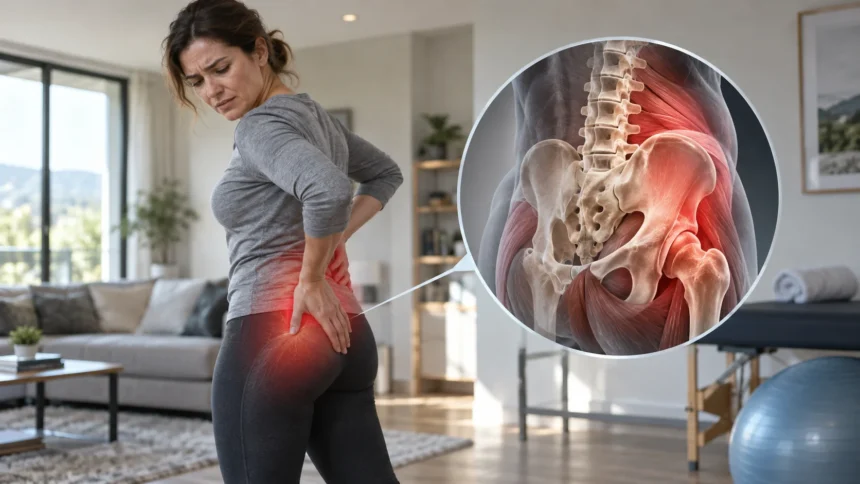
Lower back hip pain can make walking, sitting, sleeping, bending, and everyday movement uncomfortable. The pain may come from muscles, joints, nerves, or structures around the lower spine and pelvis, and sometimes discomfort from one area can feel like it is coming from another. Understanding the pattern of your symptoms can help narrow down possible causes.
Some cases improve with gentle movement, activity modification, heat, or simple mobility work, while others need medical evaluation. The location, severity, duration, and accompanying symptoms all matter. Knowing the common causes of lower back and hip pain can help you recognize when self-care may be reasonable and when professional assessment is more appropriate.
What Causes Lower Back and Hip Pain?
Lower back hip pain can develop when muscles, joints, ligaments, discs, or nerves around the spine and pelvis become irritated. Sometimes the discomfort begins after lifting, exercising, or sitting for long periods. In other cases, symptoms appear gradually because of changes in mobility, strength, workload, or repetitive movement.
The lower back and hips work closely together during walking, bending, sitting, and standing. When one area moves less comfortably, another may compensate by doing more work. This can create soreness around the lower spine, buttocks, outer hip, groin, or the area where the pelvis and back meet.
Pain can also be referred from one structure to another, which is why the exact source is not always obvious. A hip problem may feel like back pain, while irritation in the lower spine may be noticed around the hip or buttock. Persistent symptoms are best evaluated rather than diagnosed entirely by location alone.
Muscle Strain and Overuse
Muscle strain is one of the most common reasons for sudden lower back or hip discomfort. It can happen after lifting something heavy, twisting unexpectedly, increasing exercise too quickly, or performing repetitive movements. The area may feel sore, stiff, tight, or tender, especially during movements that use the irritated muscles.
Overuse can also develop without one obvious injury. Long workdays, repeated bending, heavy training, or unfamiliar exercise can gradually fatigue the muscles around the back and hips. Symptoms may become more noticeable later in the day or after activity rather than appearing immediately.
Mild muscular pain often improves with time, gentle movement, and temporary reduction of aggravating activities. Complete bed rest is usually unnecessary for ordinary muscle soreness. However, pain that becomes severe, causes significant weakness, or continues worsening despite reasonable self-care should be assessed by a healthcare professional.
Tight Hips and Limited Mobility
Limited hip mobility can influence how the lower back moves during everyday activities. If the hips do not move comfortably into flexion, extension, or rotation, the spine may contribute more motion during bending or reaching. This does not automatically cause pain, but it can increase strain during repeated or loaded movements.
Tightness around the hip flexors, glutes, and hamstrings can also make certain positions feel restricted. People who sit for long periods may especially notice stiffness when standing up or walking afterward. Gentle mobility work and regular movement breaks can sometimes make these sensations less noticeable.
Stretching should remain comfortable rather than aggressive. If a movement causes sharp pain, pinching, numbness, or symptoms traveling down the leg, stop forcing the stretch. Persistent stiffness may also reflect weakness, nerve sensitivity, or another issue, so flexibility alone should not be assumed to be the complete answer.
Poor Lifting Mechanics and Hip Hinge Problems
Lifting places demand on the hips, legs, trunk, and lower back, especially when the object is heavy or awkward. Problems can occur when someone repeatedly lifts beyond their current capacity or loses control during the movement. Fatigue, rushing, and poor positioning can all make the task feel more stressful.
Learning a controlled hip hinge can help distribute movement through the hips instead of relying entirely on spinal bending. The technique involves pushing the hips backward while keeping the load close and maintaining control through the torso. It is useful for deadlifts and many everyday lifting tasks.
Good technique does not mean the spine must remain perfectly rigid during every movement. The goal is to manage load efficiently and avoid sudden uncontrolled motion. Building strength gradually and practicing with lighter resistance can be more useful than trying to correct technique only after pain appears.
Sciatica and Nerve-Related Pain
Sciatica commonly describes pain related to irritation of the sciatic nerve or nerve roots in the lower spine. Symptoms may travel from the lower back or buttock into the thigh, calf, or foot. Some people also experience tingling, numbness, burning, or weakness along the affected leg.
Nerve-related discomfort often feels different from ordinary muscular soreness. Sitting, coughing, bending, or certain leg positions may increase symptoms depending on the cause. Pain may affect only one side, although the exact pattern can vary significantly between individuals.
Gentle movement may help some people, but aggressive stretching can sometimes worsen nerve symptoms. Seek medical evaluation if pain is persistent, weakness develops, or numbness becomes significant. New bladder or bowel problems or numbness around the groin require urgent medical care because they can indicate serious nerve compression.
Arthritis and Joint-Related Pain
Arthritis can affect both the lower spine and the hip joint. Age-related changes may contribute to stiffness, aching, and reduced mobility, particularly after inactivity or during certain movements. Hip arthritis often causes groin pain, but discomfort can also spread toward the thigh, buttock, or surrounding areas.
Arthritis in the lower spine can make bending, standing, or prolonged walking uncomfortable. Symptoms vary widely, and imaging findings do not always match how much pain someone experiences. Many people have age-related changes without severe symptoms, so scans should be interpreted alongside physical examination and functional limitations.
Management may include activity modification, strengthening, mobility work, weight management when appropriate, and medications advised by a healthcare professional. The goal is often to improve function rather than eliminate every structural change. Persistent joint pain that limits walking, sleep, or daily activities deserves proper assessment.
Sacroiliac Joint and Pelvic Pain
The sacroiliac joints connect the pelvis to the lower part of the spine. Irritation around this area can produce pain near one side of the lower back or upper buttock. Some people notice discomfort while walking, climbing stairs, standing from a chair, or remaining in one position for too long.
Because symptoms can resemble lower back, hip, or muscular pain, identifying sacroiliac involvement based only on location is difficult. Several structures around the pelvis can create similar sensations. A clinical examination can help determine which movements reproduce symptoms and whether another cause may be more likely.
Treatment often focuses on improving movement tolerance, hip and trunk strength, and gradually returning to normal activities. Some people benefit from targeted physical therapy. Sudden severe pelvic pain after trauma, or pain accompanied by neurological symptoms, should be evaluated promptly rather than managed only with home exercises.
How to Relieve Mild Lower Back Hip Pain
For mild pain without serious warning signs, gentle movement is often more helpful than staying completely inactive. Short walks, comfortable position changes, and light mobility can prevent excessive stiffness. Reduce activities that clearly worsen symptoms, but avoid assuming that every movement is harmful simply because some discomfort is present.
Heat may help relax tight muscles and make movement more comfortable, while cold packs can feel useful after a recent strain or flare-up. Use whichever option feels better and protect the skin from extreme temperatures. Neither heat nor ice treats every underlying cause, so consider them comfort measures rather than complete solutions.
Over-the-counter pain medicines may help some people, but they are not appropriate for everyone. Medical conditions, pregnancy, allergies, kidney problems, stomach issues, and medication interactions can affect what is safe. A pharmacist or healthcare professional can help determine whether a particular option is suitable for you.
Exercises That May Support Recovery
Gentle strengthening can help the hips and trunk tolerate everyday loads more comfortably. Exercises such as bridges, bird dogs, controlled squats, and easy hip hinges may be useful when performed within a comfortable range. Start with simple movements and avoid increasing resistance quickly when symptoms are still sensitive.
Mobility work can also be helpful when stiffness contributes to discomfort. Gentle hip rotations, knee-to-chest movements, and comfortable spinal motion may help restore confidence in movement. The goal should be to explore pain-free or manageable ranges rather than forcing the back or hips into extreme positions.
Walking is often one of the simplest ways to stay active during recovery. Begin with a duration that feels manageable and increase gradually as tolerance improves. If exercise consistently causes sharp pain, increasing leg symptoms, significant weakness, or worsening discomfort afterward, seek professional guidance before continuing the same routine.
When Lower Back Hip Pain Is Serious
Seek urgent medical care if lower back hip pain is accompanied by new bladder or bowel problems, numbness around the groin or saddle area, or major weakness in one or both legs. These symptoms can occasionally indicate serious nerve compression and should not be managed by waiting for them to improve.
Medical attention is also important after significant trauma, especially if you cannot bear weight or the pain is severe. Fever, unexplained weight loss, a history of certain cancers, or pain that is rapidly worsening may also require further evaluation. These warning signs do not always indicate a serious condition, but they deserve assessment.
Pain that lasts for weeks, repeatedly disrupts sleep, or prevents normal work and walking should also be evaluated even when no urgent warning signs are present. A clinician can examine your back, hips, strength, reflexes, and movement to help identify what type of treatment is most appropriate.
How Lower Back and Hip Pain Is Diagnosed
Diagnosis usually begins with a detailed history and physical examination. A healthcare professional may ask when the pain started, where it travels, which movements worsen it, and whether you have weakness, numbness, or previous injuries. They may also examine hip motion, spinal movement, strength, sensation, and walking pattern.
Imaging is not necessary for every episode of back or hip pain. X-rays, MRI scans, or other tests may be recommended when symptoms suggest a fracture, severe arthritis, nerve compression, or another condition that requires further investigation. The decision depends on the history, examination findings, and presence of warning signs.
Treatment should be based on the most likely cause rather than simply on an imaging result. Many structural changes can appear in people who have little or no pain. Combining the examination, symptoms, activity limitations, and any necessary tests usually provides a clearer picture than relying on one finding alone.
How to Reduce the Risk of Future Pain
Regular movement can help keep the hips, legs, and trunk prepared for everyday activities. Strength training, walking, and mobility work can all play a role when progressed gradually. The goal is to build enough capacity that normal lifting, bending, sitting, and standing do not suddenly exceed what your body is used to handling.
Avoid spending hours in one position when possible. Changing posture, standing briefly, walking, or performing a few comfortable movements throughout the day can reduce stiffness. There is no single perfect sitting posture, so movement variety is often more practical than trying to remain perfectly aligned all day.
Increase exercise and lifting loads gradually rather than making sudden jumps. Muscles and joints adapt when they receive manageable amounts of stress followed by recovery. Good sleep, sensible training, and consistent activity can often do more for long-term resilience than repeatedly stretching every area that temporarily feels tight.
Conclusion
Lower back hip pain can result from muscle strain, reduced mobility, nerve irritation, arthritis, joint problems, or changes in how the hips and spine share movement. Because several structures can cause similar symptoms, the location of pain alone does not always reveal the exact source.
Mild symptoms may improve with gentle movement, activity modification, heat, strengthening, and gradual return to normal activity. Avoid forcing stretches or exercises that create sharp pain, weakness, numbness, or increasing symptoms down the leg. If the problem continues, a professional assessment can help identify a more targeted approach.
Seek urgent care when lower back hip pain appears with bladder or bowel changes, saddle numbness, major weakness, severe trauma, or other concerning symptoms. For less urgent discomfort, staying appropriately active and building strength gradually can often support recovery while helping reduce future flare-ups.
FAQs
Why does my lower back and hip hurt on one side?
One-sided pain can come from muscles, joints, nerves, the sacroiliac region, or the hip itself. The exact cause depends on location, movement patterns, accompanying symptoms, and your medical history.
Can tight muscles cause lower back hip pain?
Yes, muscular stiffness may contribute by changing how the hips and spine move together. However, recurring tightness can also involve weakness, workload, nerve sensitivity, or another underlying issue.
Is walking good for lower back and hip pain?
Gentle walking can be helpful for many mild cases because it keeps the hips and spine moving. Reduce the duration if walking causes increasing pain, limping, weakness, or worsening leg symptoms.
How do I know if my pain is sciatica?
Sciatica often causes pain that travels from the lower back or buttock down the leg and may include tingling, numbness, or weakness. A medical evaluation can help confirm the cause.
When should I worry about lower back hip pain?
Seek urgent care for bladder or bowel changes, saddle numbness, major leg weakness, or severe trauma. Persistent or worsening pain that limits normal activities also deserves professional evaluation.