
Tight hamstrings can make everyday movements such as walking, bending, climbing stairs, or exercising feel less comfortable. The hamstrings run along the back of your thighs and play an important role in hip movement, knee control, and lower-body strength. Regular stretching can help maintain flexibility and make movement feel smoother when it is performed with good form.
The best hamstring stretches do not require extreme flexibility or complicated equipment. Simple standing, seated, and lying stretches can all be effective when you move slowly and avoid forcing your range of motion. Understanding proper technique, timing, and mobility habits can help you stretch more comfortably while reducing unnecessary strain.
What Are the Hamstrings and Why Do They Get Tight?
The hamstrings are a group of three muscles located along the back of the thigh. They help bend the knee and extend the hip during activities such as walking, running, climbing, and lifting. Because these muscles cross both the hip and knee joints, their tension can influence how freely your lower body moves.
Hamstrings may feel tight after long periods of sitting, intense exercise, running, or repetitive lower-body training. Limited hip mobility, muscle fatigue, or simply being unused to certain ranges of motion can also contribute. Tightness does not always mean the muscles are actually shortened, because stiffness can also reflect fatigue or nervous system sensitivity.
Your individual anatomy also affects flexibility. Some people naturally have greater hamstring range than others, and that does not necessarily mean they are healthier or stronger. Instead of chasing maximum flexibility, focus on having enough comfortable movement for your daily activities, exercise routine, and personal mobility goals.
Benefits of Hamstring Stretching
Regular hamstring stretching can help maintain or gradually improve flexibility around the back of the thighs. Better flexibility may make movements such as reaching toward the floor, hinging at the hips, or straightening the legs feel easier. Stretching can also be useful after periods of inactivity when the lower body feels stiff or restricted.
Hamstring mobility can support exercises that require coordinated movement through the hips and knees. Squats, deadlifts, lunges, running, and many sports movements depend on multiple muscle groups working together through a comfortable range. Stretching alone does not improve strength, but it can complement resistance training and general mobility work.
Gentle stretching may also feel relaxing after a workout or long day of sitting. Slow breathing combined with controlled movement can reduce the sensation of stiffness and help you become more aware of your available range. The goal should be comfortable mobility rather than pushing until the stretch becomes painful or intense.
How to Stretch Your Hamstrings Safely
A hamstring stretch should create mild to moderate tension along the back of the thigh without causing sharp pain. Move gradually into the position and stop before your body begins to resist strongly. You should still be able to breathe normally and keep the surrounding muscles relatively relaxed while holding the stretch.
Avoid bouncing aggressively at the end of your range. Sudden movements can make the muscles tense rather than relax and may cause unnecessary strain. For static stretching, ease into the position and hold it steadily for around 20 to 30 seconds, adjusting the intensity if you feel pain, tingling, or pulling behind the knee.
Pay attention to your lower back and pelvis as you stretch. Many people round their spine to reach farther, which can create the illusion of better hamstring flexibility. Instead, try hinging gently from the hips and maintaining a comfortable back position so the stretch is directed more toward the back of the thigh.
Standing Hamstring Stretch
The standing hamstring stretch is convenient because it requires little space or equipment. Place one heel on a low step, bench, or stable surface while keeping the knee comfortably straight. Keep your hips facing forward and gently hinge from the hips until you feel tension along the back of the elevated thigh.
Avoid reaching toward your toes by aggressively rounding your upper and lower back. Imagine moving your chest forward while keeping the spine long rather than trying to touch your foot. A small hip hinge is often enough to create a strong stretch, particularly if your hamstrings are already tight.
Hold the position for 20 to 30 seconds and then switch legs. You can repeat the stretch two or three times on each side depending on your routine. Use a lower surface if balance is difficult or if placing your foot high causes discomfort in the hip, knee, or lower back.
Seated Hamstring Stretch
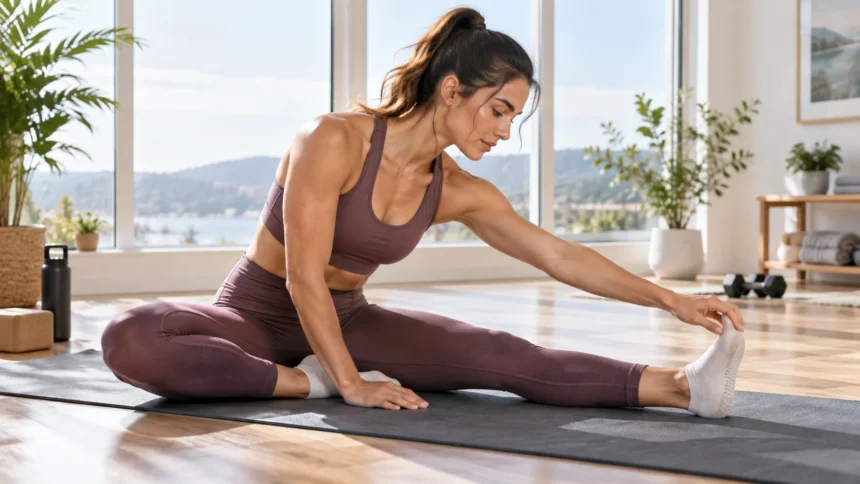
Sit near the edge of a firm surface or on the floor with one leg extended in front of you. Keep the other knee comfortably bent if that makes the position easier to control. Point the toes of the extended leg upward and slowly hinge forward from the hips until you notice a gentle stretch.
Your goal is not to grab the toes or force your head toward the knee. Reaching too far can encourage excessive rounding through the lower back instead of increasing useful hamstring mobility. Keep your chest lifted and move only as far as you can while maintaining a controlled, comfortable position.
Hold for about 20 to 30 seconds before changing sides. If sitting on the floor causes your pelvis to roll backward, try sitting on a folded towel or cushion. Slightly elevating your hips can make it easier to maintain good form and focus the stretch on the hamstrings rather than the lower back.
Lying Hamstring Stretch With a Strap
A lying hamstring stretch is useful if you want more support and control. Lie on your back with both legs comfortably positioned, then loop a stretching strap or towel around one foot. Slowly raise that leg toward the ceiling while holding the strap and keeping the opposite leg relaxed.
The knee does not need to be perfectly straight. A slight bend is often more comfortable and may help you avoid excessive tension behind the knee. Gradually straighten the leg only as far as you can without lifting your hips or forcing the foot toward your head.
Hold the stretch for 20 to 30 seconds and breathe steadily. This variation is useful because the floor supports your spine and allows you to control the intensity through the strap. If you experience tingling, numbness, or electric sensations down the leg, ease out of the stretch rather than continuing.
Dynamic Hamstring Stretch for Warm-Ups
Dynamic hamstring stretches are often more appropriate before exercise because they move the muscles through a controlled range rather than holding one position for a long time. Leg swings are a simple example. Stand beside a stable surface and swing one leg gently forward and backward while keeping the movement smooth.
Start with a small range and gradually increase the height as your muscles warm up. The movement should remain controlled rather than becoming a forceful kick. Perform approximately 8 to 12 repetitions on each side, depending on your warm-up needs and the activity you plan to perform afterward.
Walking hamstring sweeps are another useful dynamic option. Step one foot slightly forward with the heel on the floor, soften the opposite knee, and hinge gently while sweeping your hands toward the front foot. Return upright and repeat on the other side, moving continuously rather than holding each position.
Toe-Reach Hamstring Stretch With Better Form
The traditional toe reach is commonly used to stretch the back of the legs, but form matters. Stand with your feet around hip-width apart and soften the knees slightly rather than locking them. Begin the movement by pushing your hips backward and allowing your torso to move forward gradually.
You do not need to touch the floor for the stretch to be effective. Stop when you feel comfortable tension through the back of the thighs, even if your hands remain near your knees or shins. Forcing your fingers toward your toes may simply increase spinal rounding without providing additional useful hamstring stretching.
Use slow breathing and avoid bouncing. As your flexibility improves, you may naturally reach farther while keeping better control through your hips and trunk. Progress should come from repeated comfortable practice rather than forcing your body into a range that it is not prepared to handle.
Combine Hamstring and Hip Mobility Work
Hamstring flexibility is only one part of lower-body mobility. Your hips, glutes, calves, and lower back all contribute to how comfortably you bend, squat, walk, and exercise. Combining several gentle mobility drills often works better than repeatedly stretching the same muscle while ignoring the surrounding joints and tissues.
Hip stretches can be especially useful because tightness around the glutes and outer hip may affect how your lower body moves. Adding a controlled figure four stretch alongside hamstring work can target the glutes and improve overall hip mobility. Use comfortable positions and avoid forcing either stretch into pain.
You can also include calf stretches, hip flexor mobility, and gentle hip rotations. A balanced routine supports movement in several directions instead of focusing only on how far you can reach toward your toes. This approach may be more practical for everyday activities and exercise performance than trying to maximize one isolated flexibility measurement.
How Often Should You Stretch Your Hamstrings?
Hamstring stretching can be performed several times per week, and some people prefer brief daily mobility sessions. Consistency is generally more useful than performing one intense stretching session occasionally. Even five to ten minutes of controlled lower-body mobility can be enough to maintain a regular routine without making stretching feel like a major workout.
If you perform static stretches, they may fit well after exercise or during a separate mobility session. Before running, lifting, or sports, dynamic movements are often more suitable because they help warm the body while maintaining movement. Your routine can include both styles at different times depending on your goals.
Listen to how your muscles respond over the following hours and days. If stretching repeatedly leaves your hamstrings sore or more uncomfortable, reduce the intensity or frequency. Flexibility develops gradually, so there is little benefit in pushing hard enough to create pain simply because you want faster results.
Common Hamstring Stretching Mistakes
One common mistake is assuming that a stronger stretch is automatically a better stretch. Pulling aggressively toward your toes or forcing the leg higher may increase discomfort without providing extra benefit. A moderate sensation that you can hold while breathing comfortably is usually a better choice for regular flexibility training.
Another mistake is ignoring the position of the pelvis and spine. If your lower back rounds dramatically during every hamstring stretch, much of the movement may be coming from the spine rather than the hip. Using a smaller range while maintaining better alignment can make the stretch more controlled and easier to progress.
Stretching through nerve-like symptoms is also something to avoid. Tingling, numbness, burning, or electric sensations traveling down the leg are different from ordinary muscular tension. If these symptoms occur regularly, stop forcing the stretch and consider getting professional guidance to determine whether a nerve or another structure may be contributing.
Mobility Tips for Better Hamstring Flexibility
Warm muscles generally feel easier to move than cold muscles. Consider walking for a few minutes, performing gentle leg swings, or doing light bodyweight movements before deeper stretching. This simple warm-up can make your mobility routine feel more comfortable and help you gradually explore your available range without immediately pushing into strong tension.
Combine flexibility work with strength training rather than treating them as opposites. Romanian deadlifts, bridges, leg curls, and other controlled exercises can strengthen the hamstrings through useful ranges of motion. Building strength may help you feel more confident using newly gained mobility during daily movement, workouts, and sports.
Track progress by noticing how movement feels instead of measuring only how far you can reach. Easier hip hinging, more comfortable walking, smoother exercise technique, and less stiffness after sitting can all indicate useful improvement. Your flexibility does not need to look impressive to be functional, comfortable, and valuable for your lifestyle.
When Should You Avoid Hamstring Stretching?
Avoid aggressive hamstring stretching immediately after an acute muscle strain or injury. A recently injured muscle may need time before deeper stretching becomes appropriate, particularly when there is significant pain, swelling, bruising, or weakness. Continuing to pull strongly on an irritated area may make symptoms more uncomfortable rather than helping recovery.
Be cautious if the sensation travels below the knee or includes numbness, tingling, or burning. These symptoms can sometimes involve nerve sensitivity rather than ordinary hamstring tightness. Forceful stretching may aggravate the sensation, so consider professional assessment when neurological symptoms are persistent, worsening, or repeatedly triggered by certain movements.
Seek medical or rehabilitation guidance if hamstring pain follows a significant injury, limits normal walking, or does not improve over time. A physical therapist or other qualified professional can assess strength, mobility, and movement patterns. This can help determine whether stretching is appropriate or whether strengthening, load management, or another approach should come first.
Conclusion
The best hamstring stretches are simple movements that you can perform consistently with good control. Standing, seated, lying, and dynamic stretches can all help maintain flexibility when they are matched to your comfort level and activity. You do not need extreme ranges of motion for a stretching routine to be useful.
Focus on gentle tension, steady breathing, and good hip positioning rather than forcing your hands toward your toes. Combine hamstring stretches with hip and lower-body mobility work to create a more balanced routine. Strengthening the muscles through controlled movements can also help you use your mobility more effectively during exercise and everyday activities.
Progress gradually and pay attention to what your body is telling you. Mild muscular tension is normal during stretching, but sharp pain, significant weakness, numbness, or tingling should not be ignored. A sustainable mobility routine should leave you feeling more comfortable and capable rather than sore from repeatedly pushing beyond your limits.
FAQs
What is the best stretch for tight hamstrings?
A lying hamstring stretch with a strap is a good option because it provides support and lets you control the intensity. Standing and seated variations can also work well when performed with proper hip positioning.
How long should I hold a hamstring stretch?
For static stretching, holding a comfortable position for around 20 to 30 seconds is a practical starting point. You can repeat the stretch two or three times without forcing deeper range.
Is it okay to stretch hamstrings every day?
Gentle hamstring stretching can be performed daily if it feels comfortable and does not cause lingering soreness. Keep the intensity moderate and adjust the frequency if your muscles feel irritated afterward.
Should I stretch hamstrings before or after exercise?
Dynamic hamstring movements are generally more suitable during a warm-up, while longer static stretches often fit better after exercise or during separate mobility sessions. Choose the approach based on your activity and comfort.
Why are my hamstrings still tight after stretching?
Persistent tightness can be influenced by activity levels, strength, sitting habits, hip mobility, fatigue, or nerve sensitivity. Stretching may help, but combining mobility with strengthening and regular movement often provides a more complete approach.