
How to Turn Empty Corners Into Beautiful and Useful Spaces
Empty corners are easy to ignore because they rarely seem important when you first furnish a room. Yet these small areas can strongly influence whether an interior feels complete or slightly unfinished. With thoughtful corner decor ideas, an awkward space can become a reading nook, plant display, storage area, or decorative focal point. The best solution depends on the size of the corner, how people move through the room, and what the space genuinely needs. Decorating a corner successfully is less about filling every gap and more about giving unused space a clear purpose.
Before adding furniture or accessories, look at the entire room rather than focusing only on the empty area. A corner that appears bare may actually provide valuable visual breathing room, especially in a small or highly decorated interior. In other cases, the empty space may make the room feel unbalanced because most of the visual weight sits on the opposite side. Understanding this relationship helps you decide whether the corner needs something tall, functional, decorative, or intentionally minimal. Good empty corner decorating ideas should support the whole room instead of creating another isolated display.
Scale is one of the most important considerations when decorating corners. A tiny accessory placed in a large corner may look lost, while oversized furniture can interfere with walkways and make the area feel cramped. Tall plants, floor lamps, accent chairs, corner shelves, and narrow cabinets work well because they use vertical space efficiently. Smaller corners may need only a sculptural lamp or basket. Matching the size of your decor to the surrounding architecture helps the finished arrangement look intentional rather than like an object was placed there simply to fill space.
Your lifestyle should also guide the way you use an unused corner. If you frequently read, a comfortable chair and lamp can create a practical retreat. If storage is limited, floating shelves or a corner cabinet may be more valuable than purely decorative accessories. Plant lovers might use the area for greenery, while art collectors can turn it into a small gallery moment. The most successful corner decoration ideas for living rooms and bedrooms usually combine visual appeal with something useful or personally meaningful.
Finally, remember that every corner does not need to be decorated in exactly the same way. Repeating the same plant, lamp, or shelving unit in multiple rooms can make your home feel predictable. Instead, treat each empty space according to its location and purpose. A hallway corner may need storage, a bedroom corner may benefit from softness, and a living room corner can support a stronger focal point. The ideas below will help you turn neglected areas into spaces that feel balanced, stylish, and naturally connected to your home.
Start by Deciding Whether the Corner Really Needs Decor
The first step in decorating an empty corner is deciding whether it actually needs anything at all. Modern interiors often benefit from negative space because it allows furniture, artwork, and architectural details to stand out. If the room already contains several strong focal points, another decorative arrangement may create unnecessary visual competition. Stand at the doorway and view the entire room from a distance. If the corner feels calm rather than unfinished, leaving it open may be the most sophisticated choice.
An empty corner usually needs attention when the room feels visually unbalanced. For example, a large sofa, bookcase, or fireplace on one side of the room may make the opposite corner appear noticeably empty. Adding a tall plant, floor lamp, or slim furniture piece can redistribute visual weight and make the layout feel more complete. This does not mean both sides should look identical. Asymmetrical balance often creates a more relaxed and natural interior while still making the room feel intentionally arranged.
Think about circulation before introducing any furniture. Corners near doorways, hallways, or frequently used pathways should remain easy to move through. A decorative chair may look attractive in photographs but quickly become frustrating if people constantly walk around it. In these areas, wall-mounted shelves, narrow baskets, lighting, or artwork can add interest without taking up much floor space. Small corner decor ideas work best when they respect the practical movement of the household rather than sacrificing comfort for decoration.
Consider what the room is currently missing. An empty corner may offer an opportunity to solve another design problem at the same time. If the room lacks lighting, add a floor lamp. If books are scattered around, introduce shelves. If the room needs natural texture, use a plant or woven basket. If seating is limited, consider an accent chair. Approaching the corner as useful square footage instead of an empty gap usually produces more thoughtful results.
You should also consider the architecture. Some corners contain windows, radiators, electrical outlets, molding, vents, or sloped ceilings that influence what can comfortably fit. Rather than fighting those features, work around them. A low stool may suit a corner beneath a window, while a tall narrow plant could work beside one. Taking existing architectural details into account helps your interior corner decor feel integrated with the room rather than placed on top of it.
Add a Tall Indoor Plant for an Easy Natural Focal Point
A tall plant is one of the simplest ways to transform an empty corner because it provides height, color, texture, and movement without requiring much furniture. Plants also soften architectural lines, making sharp corners feel less rigid. Fiddle leaf figs, rubber plants, palms, olive-style trees, and large dracaenas are often used because their height gives them enough visual presence. Even in minimalist rooms, one substantial plant can make the corner feel complete without introducing unnecessary decorative clutter.
Choose the plant according to the natural light available rather than appearance alone. A bright corner near a window can support different species than a shaded area farther inside the room. If the space receives limited daylight, select plants that tolerate lower-light conditions or consider a high-quality artificial tree. A plant that constantly struggles will not create the fresh, polished appearance you intended. Matching greenery to the environment is therefore an important part of successful corner plant decor.
The container matters almost as much as the plant itself. A large planter can become a decorative object, especially when its material complements the rest of the room. Ceramic pots suit modern and organic interiors, woven baskets add warmth, and simple matte planters work well in minimalist spaces. Consider placing smaller pots inside decorative baskets if you want an easy way to change the outer appearance. The planter should feel proportionate to both the plant and the surrounding furniture.
You can also create a layered plant corner instead of relying on one large tree. Combine plants at several heights using a low stool, plant stand, or small table. Keep the arrangement controlled so it does not become visually crowded. Three plants with clearly different heights usually create a stronger composition than several similarly sized pots. Layering greenery works especially well in bohemian, eclectic, and relaxed modern interiors where natural elements already play an important role.
If a living plant is impractical, branches in a large floor vase can achieve a similar vertical effect. Eucalyptus, olive branches, dried grasses, or sculptural stems can introduce organic movement without requiring watering. This approach works particularly well in entryways, bedrooms, and corners without strong natural light. The important principle is height. A tall organic element naturally draws the eye upward and can make an overlooked corner feel intentional with relatively little effort.
Create a Cozy Reading Corner With a Chair and Floor Lamp
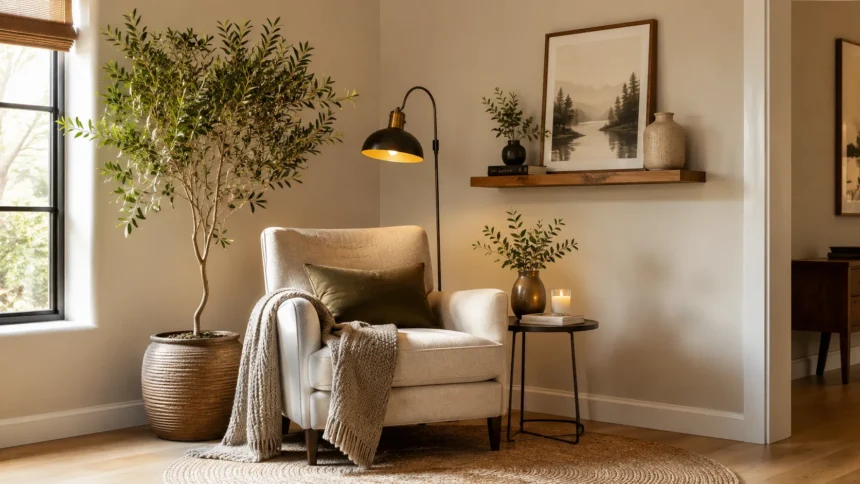
An unused corner can become one of the most enjoyable parts of a room when transformed into a small reading nook. Start with a comfortable accent chair that fits the available space without blocking walkways. You do not necessarily need a large armchair; compact lounge chairs, slipper chairs, or even a well-cushioned occasional chair can work beautifully. Add a floor lamp nearby and the once-empty space immediately gains both purpose and visual structure. This is one of the most practical living room corner decor ideas for homes with enough floor space.
Comfort should guide your furniture choices. A chair may look attractive but offer little value if you never want to sit in it. Consider seat depth, back support, and whether you prefer an upright reading position or something more relaxed. If the corner is large enough, a small footstool or ottoman can make the area more inviting. The chair does not need to match the sofa exactly; a contrasting fabric, texture, or shape can add personality while still connecting with the broader room palette.
Lighting is essential because a reading nook should remain useful after sunset. A floor lamp with an adjustable arm can direct light where needed without occupying side-table space. If the corner has a nearby outlet, table lamps can work on a small side table instead. Warm lighting generally makes the area feel more comfortable than harsh overhead illumination. The lamp itself can also provide vertical height, which helps visually fill the corner even when the furniture stays relatively compact.
A small table can improve the functionality of the nook if space allows. Use it for a drink, book, glasses, or small decorative object. Round pedestal tables often work well because they occupy less visual and physical space than bulky square furniture. If the corner is tight, a slim wall-mounted shelf can serve the same purpose. Adding only what you genuinely need prevents a cozy reading spot from becoming cluttered.
Finish the area with a few soft details that connect it to the rest of the room. A small cushion, throw blanket, nearby rug, or piece of artwork can make the reading corner feel intentionally designed rather than like an extra chair pushed against the wall. Avoid over-accessorizing the area, especially if the living room already contains numerous decorative elements. A comfortable chair, good lighting, and one or two supporting pieces are usually enough to create an attractive cozy corner decor arrangement.
Use Floating Corner Shelves to Combine Display and Storage
Floating shelves are particularly useful when floor space is limited because they make use of walls without crowding the room. Corner shelves can hold books, small plants, framed photographs, ceramics, and decorative objects while visually activating an otherwise empty area. They work in living rooms, bedrooms, kitchens, home offices, and hallways. Because shelves draw attention vertically, they can also make the room feel taller. Corner shelf decor ideas are therefore especially useful in compact apartments and smaller homes.
Choose shelf proportions according to the size of the corner and what you plan to display. Very small triangular shelves may work for a few decorative objects, while wider floating shelves can accommodate books and practical storage. If the shelves wrap around both walls, maintain enough separation between levels to avoid a cramped appearance. Before installation, lay out your intended objects on the floor so you can estimate how much vertical space they require. Planning prevents shelves from ending up too close together.
When styling the shelves, avoid filling every inch. Combine objects with different heights and shapes while leaving some empty space between groups. A small plant beside several stacked books may be enough for one shelf, while the next could hold one sculptural piece. Repeating one or two colors helps the arrangement feel connected. Too many tiny accessories can quickly make corner shelving look messy rather than intentional, especially when viewed from across the room.
Mix decorative and practical items when storage matters. Attractive boxes can conceal chargers, stationery, or small household items, while baskets on deeper shelves can hold everyday necessities. Books provide both storage and visual structure. In a home office, shelves may support files and decor, while kitchen corner shelves can display attractive dishes or containers. Matching the function to the room allows the corner to become useful rather than simply decorative.
The shelf finish should relate to other materials nearby. Natural wood works beautifully with warm, organic interiors, while painted shelves can blend into the wall for a quieter appearance. Black or metal shelving can create stronger contrast in industrial and contemporary spaces. You do not need an exact furniture match, but repeating a familiar material can help the new feature feel integrated. Thoughtful corner wall decor should look like part of the original room rather than an unrelated addition.
Style an Empty Corner With a Floor Lamp or Statement Lighting
Sometimes an empty corner does not need furniture at all. A well-chosen floor lamp can provide enough height and presence to complete the space while also improving the room’s lighting. Arc lamps, tripod lamps, sculptural fixtures, and slim upright designs each create a different effect. Because lighting has both decorative and functional value, it is one of the easiest ways to make an unused area feel purposeful without introducing additional storage or seating.
Select the lamp according to the surrounding furniture and ceiling height. An oversized arc lamp can balance a substantial sectional sofa, while a thin vertical lamp may suit a narrow bedroom corner. The shade should feel proportionate to the base and should not extend so far into the walkway that people repeatedly bump into it. Looking at the lamp from several viewpoints helps you judge whether its scale feels appropriate. Good corner lighting ideas depend on both appearance and comfortable movement.
The finish can help connect the lamp with other elements in the room. Black metal may echo curtain rods or furniture legs, while brass can repeat smaller metallic accents. Wood bases can add warmth and suit Scandinavian or organic interiors. Fabric shades soften the overall effect and often create warmer ambient light. You do not need every metal finish in the room to match, but repeating one finish in several places can produce a more cohesive visual rhythm.
Lighting temperature affects the atmosphere as much as the lamp design. Warm light tends to make living rooms and bedrooms feel relaxed, while cooler light may suit work areas where greater visual clarity is needed. If the corner serves multiple purposes, a dimmable lamp provides flexibility. You can use brighter light when reading and softer illumination when entertaining or relaxing. Thoughtful lighting makes the entire room feel layered instead of relying only on one ceiling fixture.
A sculptural lamp can also function almost like artwork when switched off. This is particularly useful in minimalist rooms where you want visual interest without additional objects. Choose a distinctive silhouette, interesting texture, or unusual material and allow the fixture to stand alone. Adding too many accessories around a strong statement lamp can reduce its impact. Sometimes the simplest empty corner idea is one beautiful functional object placed with enough space around it.
Create a Mini Gallery Wall in an Awkward Corner
Artwork can turn an empty corner into a visual feature without taking up any floor space. A small gallery arrangement works particularly well in corners where furniture would interfere with movement. You can hang framed prints, photographs, illustrations, or personal artwork across one wall or wrap the arrangement around both sides. This creates a sense of continuity that emphasizes the architecture instead of treating each wall separately. Corner wall art ideas are especially useful in hallways, stair landings, and narrow rooms.
Begin by identifying a clear visual theme. The artwork may share a similar color palette, frame material, subject, or overall style. This does not mean every piece must match exactly. A mix of photography, drawings, and abstract art can look cohesive when the frames or colors create a common thread. If you prefer a more relaxed appearance, vary the sizes while maintaining consistent spacing. For a cleaner modern look, use matching frames and a more structured grid.
Before making holes in the wall, arrange the frames on the floor or use paper templates to test the composition. Corners can be visually tricky because the arrangement is viewed from several angles. Make sure the artwork does not appear heavily concentrated on one side while the other feels empty. Wrapping a few pieces around the adjacent wall can make the installation feel deliberate. Adjust the layout until the corner looks balanced from the main viewpoint in the room.
The height of the arrangement matters as well. Hanging everything too high can make the art feel disconnected from nearby furniture, while pieces positioned too low may appear compressed. If a chair, bench, or cabinet sits nearby, relate the bottom edge of the gallery to that furniture. In an otherwise empty corner, consider starting around normal viewing height and expanding upward. The exact placement should respond to the wall dimensions rather than follow a rigid formula.
You do not have to create a large gallery. One oversized artwork can work just as effectively when the corner is visually quiet. A tall vertical piece can emphasize ceiling height, while a large framed print can fill a narrow wall without requiring multiple objects. Use the amount of artwork that suits the room’s overall level of decoration. Good corner artwork decor adds personality while preserving enough negative space for the interior to breathe.
Use a Small Table or Pedestal for a Simple Designer Look
A small pedestal or side table can provide just enough structure to make an empty corner feel finished. This approach works particularly well when there is not enough room for a full chair or cabinet but the space still feels visually incomplete. Choose a table with a sculptural shape or interesting material, then style it with one strong object. A vase, lamp, plant, or decorative bowl may be all you need. The simplicity gives the corner a clean, designer-inspired appearance.
Round tables often work well because their curves soften the hard angle created by two walls. Pedestal bases also occupy less visual space than furniture with four substantial legs. In compact living rooms or bedrooms, this can make the corner feel lighter. Consider marble, wood, metal, or textured plaster depending on your interior style. The table should feel like a deliberate accent rather than leftover furniture that had nowhere else to go.
Keep the styling restrained, especially when the table surface is small. One tall vase with branches can provide height, while a lamp can introduce practical illumination. If you prefer several objects, group them closely rather than spreading them across the entire surface. A book topped with a small decorative piece can create a simple layered composition. The goal is to complement the furniture instead of covering it completely.
A pedestal can also serve as a place for artwork or sculpture. This works beautifully in modern and eclectic interiors where individual decorative pieces are given room to stand out. Choose something meaningful rather than simply filling the surface. A handmade ceramic object, vintage find, or sculptural vessel can become a subtle focal point. When displayed alone, even a modest object can feel more important and intentional.
Consider how the small table relates to nearby furniture. If a sofa, bed, or console sits close to the corner, the new piece should not compete with its height or scale. Repeating one material from elsewhere in the room can create continuity. For example, a wooden pedestal might connect with a coffee table, while a metal base could echo lighting fixtures. This type of small corner furniture idea works best when it quietly supports the surrounding design.
Turn a Bedroom Corner Into a Calm and Functional Retreat
Bedrooms often contain unused corners because the bed and storage furniture occupy the most obvious positions. Rather than leaving these areas empty, consider giving one corner a purpose that supports relaxation. A chair, small bench, floor lamp, or plant can make the room feel more complete while providing somewhere to sit that is separate from the bed. The design should remain calm and uncluttered because bedrooms benefit from visual simplicity.
A small chair can be useful for reading, getting dressed, or placing a throw blanket. Choose a design that is proportionate to the room so it does not make the space feel crowded. If the bedroom is compact, a simple upholstered chair without large arms may work better than an oversized lounge chair. Add a small cushion or throw if you want softness, but avoid turning the chair into permanent clothing storage. Functional bedroom corner decor ideas should make the room easier to use rather than create another clutter zone.
A tall mirror can also work well in a bedroom corner. Leaning mirrors create height and reflect light, which can make smaller rooms feel more open. Position the mirror carefully so it does not obstruct wardrobes, doors, or walkways. A simple frame that coordinates with furniture or hardware can help it feel integrated. If the mirror is freestanding, ensure it is safely secured according to the manufacturer’s recommendations rather than relying purely on its decorative appearance.
Plants can bring softness to bedroom corners as long as the available light supports them. One large plant usually looks calmer than several small pots spread around the room. A woven basket or ceramic planter can introduce additional texture. If living plants are impractical, dried branches or a high-quality artificial tree can produce a similar visual effect. Keep the palette gentle so the corner supports the restful mood of the bedroom.
Lighting can complete the area and make it useful during the evening. A slim floor lamp beside a chair creates a small reading zone, while a sculptural lamp can simply add ambience. Warm lighting generally works well in bedrooms because it feels softer and less stimulating before sleep. By combining only a few pieces, an unused bedroom corner can become a calm, functional part of the room without compromising the spacious feeling you want.
Use Corner Storage to Make Small Rooms Work Harder
When storage is limited, an empty corner can become valuable functional space. Tall corner cabinets, narrow bookcases, floating shelves, and storage benches can hold household items without consuming large sections of the main wall. The best solution depends on what needs to be stored and how often you need access. Closed cabinetry keeps visual clutter hidden, while open shelving works well for attractive objects and frequently used items.
Tall storage takes advantage of vertical space, which is especially useful in small homes. A narrow bookcase can hold considerably more than a low decorative table while using a similar amount of floor area. Choose a unit that fits closely within the corner rather than projecting too far into the room. Matching the cabinet finish to the wall can make it visually recede, while contrasting wood or color can turn it into a stronger focal point.
Closed storage is often the best option when the room already contains many decorative elements. Doors and drawers can hide paperwork, electronics, toys, linens, or miscellaneous household items that would otherwise make the space feel busy. You can then style the top with one lamp, vase, or piece of art. This combination provides function without visually announcing everything stored inside. Corner storage ideas for small spaces are most effective when organization is hidden behind a calm exterior.
Open shelving can still work beautifully if you edit what is displayed. Combine useful items with decorative objects rather than filling every shelf with random belongings. Baskets and attractive boxes can conceal smaller items while maintaining easy access. Keep colors and materials relatively consistent so the storage does not overwhelm the room. Leaving several shelves partially empty can actually make the unit appear more organized and sophisticated.
Custom-built storage may be worth considering when the corner has unusual dimensions. Sloped ceilings, alcoves, and narrow wall returns can sometimes accommodate cabinetry that standard furniture cannot. However, you do not always need a permanent installation. Modular shelves and slim cabinets offer flexibility and can move with you. The important goal is to use the corner in a way that solves a genuine storage problem while maintaining comfortable circulation.
Make a Small Corner Feel Bigger With Mirrors and Light Colors
Mirrors are particularly effective in small corners because they reflect both light and surrounding space. A tall mirror can visually extend the room, while a round or arched mirror adds softness to an otherwise angular area. Positioning a mirror opposite or adjacent to a window may increase the amount of natural light that appears to circulate through the space. This is especially useful in narrow hallways, bedrooms, and smaller living rooms where corners can feel dark.
Large mirrors usually create a stronger effect than several tiny reflective pieces. A single floor mirror can function as both decor and a practical feature, while a wall-mounted mirror preserves floor space. Select a frame that does not feel too heavy for the area. Thin wood, black metal, or frameless options often work well in compact interiors. The mirror should complement the surrounding furniture rather than compete with it.
Light colors can also make an enclosed corner feel visually softer. Warm white, beige, pale gray, and other gentle tones help reflect natural light and reduce contrast between adjacent walls. This does not mean dark corners should always be avoided. A darker color can create depth and mood when used intentionally, but in very compact spaces, lighter finishes may create a more open feeling. Choose color based on the entire room rather than the corner in isolation.
Lighting can amplify the effect, especially in areas that receive little daylight. A floor lamp, wall sconce, or small table lamp can prevent a corner from disappearing into shadow during the evening. Aim the light toward a wall or ceiling for softer reflection rather than using a harsh direct beam. Layered lighting also makes the broader room feel more dimensional. This simple approach can make an awkward area feel like part of the overall interior rather than a dark leftover space.
Keep accessories minimal when your primary goal is visual openness. A mirror combined with one plant or lamp may be enough. Filling the area with numerous baskets, shelves, and decorative objects can counteract the spacious effect created by reflective surfaces and pale colors. Small corner decorating ideas work best when every addition earns its place. In compact interiors, restraint can make the room feel both more stylish and easier to live in.
Decorate Corners According to Your Interior Style
Minimalist corners usually require fewer but stronger objects. A tall plant, sculptural floor lamp, or single pedestal can create enough interest without disrupting the room’s calm atmosphere. Focus on shape, proportion, and material rather than quantity. Neutral colors and clean silhouettes help maintain visual simplicity. If the rest of the room already contains statement furniture, leaving one corner almost empty may actually strengthen the design.
Organic-modern interiors benefit from natural textures and warm materials. Consider a potted tree, wooden stool, woven basket, stone pedestal, or ceramic vase filled with branches. These elements soften architectural corners and add depth without introducing bright colors. Repeating natural materials already found in the room creates continuity. Modern corner decor ideas often feel most sophisticated when the arrangement appears relaxed rather than perfectly symmetrical.
Bohemian and eclectic interiors allow greater layering. You might combine plants, floor cushions, a woven basket, small artwork, and a low table to create a cozy corner. However, layering should still feel intentional. Repeating colors or materials can prevent the space from becoming visually chaotic. Instead of filling every inch, create a few overlapping elements at different heights. This gives the area richness while preserving enough negative space.
Traditional rooms can support more classic furniture and decorative details. An upholstered chair, small wooden side table, table lamp, framed artwork, or decorative urn can create a refined corner. Symmetry is not necessary, but the materials should relate to the room’s broader character. Rich wood, brass, patterned textiles, and classic silhouettes work particularly well. The goal is to extend the existing style rather than introduce a completely different design language.
Scandinavian interiors usually favor simplicity, pale woods, soft textiles, greenery, and practical furniture. A light wooden chair with a small lamp and neutral throw can create a comfortable corner without adding visual weight. Warm whites and muted earth tones help maintain the calm atmosphere associated with this style. Regardless of your preferred aesthetic, use corner decor to reinforce the room’s personality rather than following a trend that feels disconnected from the rest of your home.
Common Corner Decorating Mistakes to Avoid
One common mistake is placing something in a corner purely because the space is empty. Not every unused area needs furniture or accessories, and unnecessary objects can make a room feel crowded. Before adding anything, decide what the corner contributes to the room. If it needs visual height, use a plant or lamp. If it needs function, add storage or seating. Purposeful decisions nearly always produce better results than decorating simply to eliminate blank space.
Using objects that are too small is another frequent problem. A tiny plant or decorative figurine placed alone in a large corner rarely provides enough visual weight. Instead, choose one substantial item or create a controlled grouping with several different heights. Large-scale pieces often make the room look more polished because they relate better to furniture and architecture. Scale should be considered before color or decorative style.
Overcrowding is the opposite problem. A chair, side table, floor lamp, plant, basket, and several accessories may all fit physically, but the corner can still feel visually cramped. Remove anything that does not improve either function or appearance. Leaving some wall and floor visible helps each piece stand out. The most successful empty corner decor often uses fewer objects than people initially expect.
Ignoring walkways can make an otherwise attractive arrangement impractical. Furniture should not obstruct doors, drawers, radiators, or paths between major areas of the room. Test the corner during normal daily movement before assuming the layout works. If you constantly need to walk around a plant or chair, choose a slimmer alternative. Practical circulation should remain a priority in every room.
Finally, avoid using decor that feels disconnected from the rest of the interior. A highly ornate cabinet may look beautiful on its own but feel out of place in a minimal modern room. Repeat at least one existing material, color, or shape so the corner feels integrated. It does not need to match perfectly, but it should contribute to the overall design language. Cohesion is what turns an empty corner into a natural extension of the room.
Conclusion: Make Every Corner Feel Intentional
Empty corners offer valuable opportunities to improve both the appearance and function of your home. Some need only a tall plant or floor lamp, while others can support a chair, storage unit, artwork, or shelving. The right solution depends on the size of the space, the room’s purpose, and your everyday needs. Rather than automatically filling every gap, consider what would genuinely improve the interior.
Scale should guide your choices. Large corners usually need one substantial feature or several carefully grouped objects, while small spaces benefit from slim furniture and wall-mounted solutions. Matching proportions helps the decor feel deliberate rather than accidental. It also prevents objects from becoming lost or overwhelming the surrounding furniture. Taking a few measurements before shopping can save both space and money.
Function can make corner decorating especially worthwhile. A reading nook creates a new place to relax, shelving adds storage, and a mirror can brighten a compact room. When decorative choices solve practical problems, they tend to remain useful for much longer. This is more sustainable than buying accessories solely because a corner looks empty. Design becomes stronger when beauty and usefulness support each other.
Personal style should remain part of the final arrangement. Plants, artwork, books, handmade objects, and furniture can communicate your interests while connecting the corner with the rest of your home. You do not need to copy a perfectly staged photograph. Use inspiration as a starting point, then adapt it according to your architecture, belongings, and lifestyle. A home feels more memorable when it reflects the people living in it.
Ultimately, the best corner decor ideas to use empty spaces beautifully depend on balance rather than quantity. Choose pieces that provide appropriate scale, useful function, and visual connection with the surrounding room. Leave some negative space when necessary and avoid forcing furniture into areas that should remain open. With thoughtful planning, even an overlooked corner can become one of the most attractive and useful parts of your interior.
Frequently Asked Questions
What can I put in an empty corner of a room?
You can use a tall plant, floor lamp, accent chair, corner shelf, mirror, small table, basket, or artwork. Choose an option based on the amount of space and what the room actually needs.
How do you decorate a small corner without making it cluttered?
Use one or two substantial pieces instead of several small accessories. Wall-mounted shelves, slim lamps, mirrors, and tall plants add interest while preserving valuable floor space.
What is the best way to decorate a living room corner?
A plant, reading chair, floor lamp, shelving unit, or small side table can work well. Select something that balances the surrounding furniture while improving either comfort, storage, or visual interest.
How can I make an awkward corner look better?
Work with the corner’s dimensions instead of forcing standard furniture into it. Vertical decor, custom shelving, narrow storage, lighting, or one tall decorative element can make awkward spaces feel intentional.
Should every empty corner be decorated?
No. Some corners benefit from remaining open, particularly in small or already well-decorated rooms. Add decor only when it improves visual balance, function, or the overall atmosphere of the space.