
How to Get Rid of Maggots Fast & Keep Them Away
Finding maggots in your home can be alarming, but the problem is usually easier to control once you identify what is attracting the flies. Maggots are the larval stage of certain flies, and they typically develop where adult flies have access to decaying organic material. Garbage, spoiled food, pet waste, dirty trash cans, animal remains, and neglected food spills are common breeding sources. Removing visible larvae without eliminating that source will usually provide only temporary relief. The fastest solution is therefore a combination of removal, thorough cleaning, and prevention. Once the breeding material is gone, the infestation can often be stopped quickly.
Maggots can appear surprisingly fast because some flies reproduce rapidly when temperatures are warm and food is available. Adult flies may lay eggs on meat scraps, food waste, garbage, animal waste, or other decomposing material. Those eggs can hatch into tiny larvae that begin feeding almost immediately. As the larvae grow, they may move away from the original food source and appear on floors, walls, bin lids, or nearby surfaces. This movement sometimes makes the infestation look larger than the original breeding area. Finding the source remains more important than killing every individual larva you can see.
The best method for getting rid of maggots depends on where they are located. Larvae inside a garbage bin can often be removed with hot soapy water and thorough scrubbing, while those near food require disposal of contaminated items and careful kitchen cleaning. Carpet or flooring infestations require a different approach because moisture should not be spread through porous materials unnecessarily. Outdoor maggots may require better waste storage, pet-waste management, or removal of decaying organic matter. Using the correct method protects surfaces while solving the underlying problem. Avoid pouring harsh chemicals everywhere without first identifying where the larvae originated.
Safety matters when cleaning a maggot infestation because the breeding source may contain harmful bacteria or decomposing material. Wear disposable or washable gloves when handling spoiled food, pet waste, trash, or animal remains. Keep children and pets away from the area until cleaning is complete. Avoid mixing household cleaning chemicals, particularly bleach with ammonia, acids, or other products, because dangerous fumes can result. Wash hands thoroughly after removing gloves and disinfect tools that contacted contaminated waste. Proper hygiene is just as important as killing the visible larvae.
This guide explains how to get rid of maggots fast and prevent them from returning. It covers immediate removal, garbage cans, kitchens, drains, flooring, carpets, outdoor areas, pet-related sources, cleaning routines, and long-term fly prevention. You will also learn which common methods are useful and which approaches can create unnecessary risks. Most small household infestations can be managed successfully with cleaning and source control. Larger or recurring infestations may require pest-control or sanitation help if the source cannot be located. The goal is not only to remove the maggots you can see but to break the fly breeding cycle completely.
What Causes Maggots in the First Place?
Maggots appear when adult flies find a suitable place to lay eggs. The most common breeding areas contain moist, decomposing organic material that provides food for developing larvae. Kitchen scraps, meat packaging, spoiled food, garbage residue, pet feces, dead animals, and dirty outdoor bins can all attract flies. Warm weather accelerates the process because fly reproduction and larval development happen faster under favorable conditions. A trash bag left exposed for several days can therefore become a breeding site surprisingly quickly. Preventing access to these materials is one of the most effective forms of maggot control.
Garbage cans are particularly common sources because they combine food residue, moisture, warmth, and easy access for flies. Even when trash bags are removed regularly, small leaks can leave food liquids and grease on the bottom or sides of the bin. Flies may then continue breeding inside the container after the main bag has been taken away. Outdoor bins can become even more attractive during summer because temperatures inside dark containers rise quickly. Poorly fitted lids give adult flies easy access. Regular bin washing helps remove the hidden residue that keeps attracting them.
Spoiled food can create indoor infestations as well. A forgotten potato, piece of fruit, meat package, or food spill under an appliance can attract flies without being immediately visible. Pet food left uncovered can create another potential source, especially wet food that sits for long periods. Maggots may begin around the food and then crawl outward as they mature. This is why searching nearby cabinets, appliances, and corners is important when larvae appear unexpectedly. The visible maggots are often only a clue pointing toward a hidden food source.
Dead animals can also cause sudden infestations, particularly when flies gain access to a rodent, bird, or other animal that has died inside a wall, attic, crawl space, chimney, garage, or yard. Blowflies are strongly attracted to animal remains and may produce large numbers of larvae. In these cases, simply vacuuming up maggots will not solve the problem because the carcass continues providing food. A persistent foul odor often accompanies this type of infestation. Safe removal of the animal remains is usually necessary before fly activity decreases. Difficult or inaccessible carcasses may require professional assistance.
Pet waste and outdoor animal feces can support fly breeding when they are not removed regularly. Dog waste left in a yard, dirty litter areas, livestock manure, or waste around animal housing can all attract flies. Moist organic matter such as rotting compost can also become a problem when poorly managed. Keeping these areas clean reduces both maggots and adult fly activity. The common factor is always access to decaying material. When you understand that relationship, prevention becomes much easier than repeatedly treating larvae after they appear.
How to Get Rid of Maggots Immediately
Begin by removing the breeding material before focusing on individual maggots. If the larvae are inside a trash bag, spoiled food package, or container of waste, carefully seal the entire item in a sturdy garbage bag. Double-bagging can be useful if the original container is leaking. Take the waste to an appropriate outdoor bin immediately rather than leaving it indoors while you clean. Wear gloves and avoid touching your face during the process. Removing the food source deprives remaining larvae of what they need to continue developing.
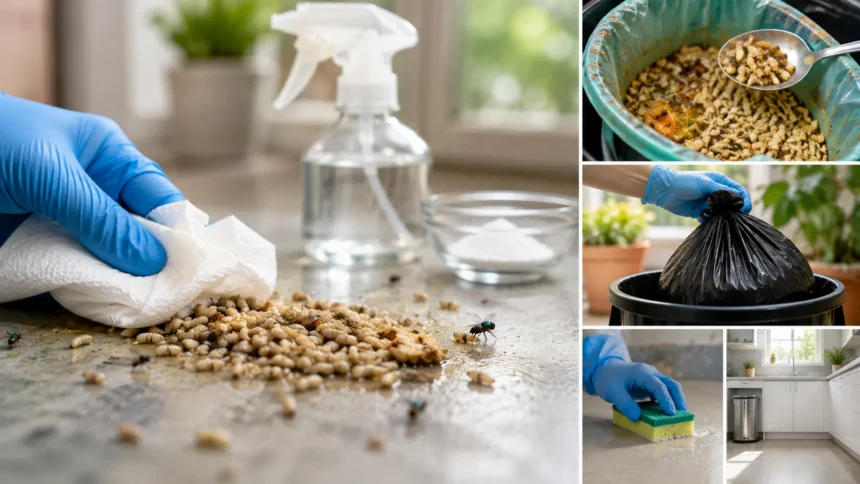
Visible maggots on hard washable surfaces can often be collected with disposable paper towels, a dustpan, or a vacuum reserved for appropriate household cleaning. If using a vacuum, empty the bag or canister into a sealed outdoor trash bag immediately afterward and clean the equipment according to the manufacturer’s instructions. Do not allow collected larvae to remain inside the vacuum. Hard floors can then be washed with warm water and detergent. A household disinfectant suitable for the surface can be used afterward if contamination from garbage or animal waste was present. Follow product directions carefully.
Hot soapy water can be especially useful for washable bins and nonporous containers. The combination removes larvae while loosening grease and organic residue from the surface. Extremely boiling water is not necessary and can damage some plastics, seals, flooring, or plumbing components. Warm or very hot tap water with detergent is usually safer for routine cleaning. Scrub corners, hinges, handles, grooves, and the underside of the lid where eggs or residue may remain. Rinse and allow the area to dry completely before replacing a new trash bag.
Some people use salt, vinegar, or other household products as maggot remedies, but cleaning remains more important than relying on any one ingredient. Salt can dehydrate larvae in limited situations, yet it does nothing to remove the food source or sanitize a contaminated bin. Vinegar may help with general cleaning when appropriate for the surface, but it is not a substitute for proper waste removal. Never combine vinegar with bleach or other cleaners. Simple detergent and thorough physical cleaning are often enough. The most effective method is the one that removes both larvae and the material attracting flies.
After the visible infestation is removed, inspect the surrounding area carefully. Look beneath appliances, behind bins, under shelving, and around baseboards for additional larvae or food residue. Maggots sometimes crawl several feet away from the original source before pupating, so do not assume the problem is limited to the exact spot where they were first found. Clean nearby surfaces and remove any other organic debris. Monitor the area for adult flies over the next several days. Continued fly activity may indicate that another breeding source remains hidden.
How to Remove Maggots From a Garbage Can
Trash cans are one of the easiest places for maggots to develop because food waste can remain warm and moist between garbage collections. Start by taking the entire bin outdoors if possible and removing all bags and loose debris. Wear gloves, especially if liquids have leaked inside the container. Seal contaminated waste securely before disposing of it according to your local garbage system. Do not shake an open bag through the house because larvae and contaminated liquid may spread onto floors. Once empty, the bin can be cleaned more thoroughly.
Rinse loose residue from the container using water where drainage is appropriate. Add warm water and a small amount of dish detergent or another cleaner suitable for the bin material. Scrub the bottom, sides, lid, handles, corners, and any textured surfaces where organic residue can collect. Pay particular attention to the seam where the lid meets the container because flies may lay eggs around food residue in this area. A long-handled brush can make outdoor bin cleaning easier. The objective is to physically remove the material that attracted the flies.
If additional sanitation is needed, use a household disinfectant that is labeled for the bin material and follow its contact-time instructions. Never assume that using more product makes cleaning more effective. Do not mix cleaners because chemical combinations can release toxic gases or damage surfaces. If bleach is used according to the product label, keep it completely separate from ammonia, vinegar, acids, and other cleaners. Rinse when the product directions require it. Allow the container to dry thoroughly before placing a new liner inside.
Prevent future trash-can maggots by keeping food waste contained. Tie garbage bags securely and place wet meat or fish packaging inside an additional smaller bag before putting it in the main trash. During extremely hot weather, some households keep particularly odorous food scraps frozen until collection day when practical. This reduces the amount of time flies can access decomposing food. Wipe spills from the bin as soon as they occur instead of allowing them to dry and accumulate. A clean container is far less attractive to egg-laying flies.
The lid should close tightly after every use. A warped, broken, or missing lid allows adult flies constant access even when the trash itself is bagged. Keep outdoor bins away from doors and windows when possible so flies attracted to waste do not immediately enter the home. If collection occurs only once per week, regular cleaning becomes even more important during warm seasons. Consider rinsing the bin after especially messy loads rather than waiting for a major infestation. Preventive maintenance takes far less effort than removing hundreds of larvae later.
How to Get Rid of Maggots in the Kitchen
Maggots in the kitchen usually mean a food source has been left accessible somewhere nearby. Begin by checking the trash can, recycling container, food-storage areas, fruit bowls, pet-food dishes, and any packages containing meat or produce. Throw away anything spoiled or contaminated and seal it before taking it outside. Do not simply wipe away visible larvae while leaving questionable food nearby. Flies may have laid eggs on more than one item. A careful food inspection is one of the most important steps in kitchen maggot control.
Look in less obvious locations if the source is not immediately visible. Food can fall beneath the refrigerator, stove, dishwasher, cabinets, or movable shelving. A leaking trash bag may leave a small pool of food liquid behind a bin without being noticed. Potatoes, onions, and fruit stored in dark cupboards can rot individually while the rest appear fine. Check reusable grocery bags or boxes that may contain forgotten produce. Even a small hidden food source can support a surprising number of larvae.
Clean contaminated hard surfaces with detergent and water after removing the waste. Food-preparation surfaces should then be sanitized using a product approved for that purpose and used according to its label. Keep cleaning chemicals away from uncovered food, utensils, and dishes. Wash any containers that held spoiled material before using them again. If disposable packaging is heavily contaminated, discarding it is usually easier than attempting to clean every crevice. Allow cleaned areas to dry before returning food to storage.
Check for adult flies because they are the source of future eggs. Keep windows screened, repair holes in screens, and avoid leaving doors open unnecessarily when flies are active. Store ripe fruit appropriately and clean sticky beverage spills promptly. Pet food should not remain out indefinitely, especially wet food during warm weather. Empty kitchen trash often enough that meat and food scraps do not sit for many days. Controlling adult fly access makes recurring maggot problems much less likely.
If maggots continue appearing after the kitchen has been cleaned, expand your search. A dead rodent behind cabinetry, forgotten food in an appliance gap, or waste beneath a floor-level cabinet may be responsible. Persistent larvae emerging from a particular wall edge or inaccessible area deserve closer investigation. Do not dismantle gas, electrical, or built-in appliances unsafely to search for a source. A pest-control technician or appropriate repair professional may be able to inspect difficult areas. Repeated infestations almost always indicate that a breeding site remains available somewhere nearby.
How to Deal With Maggots Near Drains
Maggot-like larvae found near drains can be confusing because not every larva around a sink comes from the same type of fly. Some small flies breed in organic film inside drains, while larger houseflies or blowflies typically require more substantial decaying material. If larvae are appearing around a kitchen or utility drain, first inspect the nearby trash, garbage disposal, food trap, and surrounding floor. The drain may simply be close to the real source. Identifying the insect correctly can make treatment more effective. Tiny drain-fly larvae and large blowfly maggots often require different sanitation approaches.
Clean the drain mechanically rather than relying only on chemicals. Food sludge, grease, hair, and organic film can collect inside drain openings and provide breeding material for certain small flies. Remove and clean accessible strainers or stoppers according to their design. Use a drain brush where practical to scrub buildup from the sides of the pipe near the opening. Flush with warm water after cleaning. Physical removal of organic material is usually more effective than repeatedly pouring household chemicals into the drain.
Avoid mixing drain cleaners, bleach, vinegar, ammonia, or other products. Chemical combinations can create dangerous fumes, violent reactions, or pipe damage. If you use a commercial drain product, follow its label exactly and do not add other cleaners before or afterward unless the instructions specifically allow it. Boiling water can damage some plastic plumbing or seals and is not necessary for routine sanitation. Warm water and mechanical cleaning are safer starting points. Severe blockages should be handled as plumbing problems rather than pest-control problems.
Kitchen garbage disposals can also hold food residue beneath splash guards and around internal surfaces. Disconnect power according to the appliance instructions before cleaning accessible parts near the opening. Never place your hand inside a disposal chamber, even when it appears switched off. Clean removable rubber guards and surrounding surfaces where food film accumulates. Regularly running sufficient water during disposal use can help move ground food through the plumbing. Persistent odor or poor drainage may indicate that professional plumbing service is needed.
If small flies continue gathering around the drain after several days of cleaning, the organic buildup may extend deeper into the plumbing system. Leaking pipes or stagnant water can also create hidden breeding areas. A plumber can investigate drainage defects, while a pest professional can help identify the fly species when necessary. The goal is to remove whatever the larvae are feeding on rather than repeatedly killing adults. Once the organic source disappears, the life cycle gradually stops. Consistent sanitation usually produces better results than heavy chemical use.
How to Remove Maggots From Floors and Carpets
Maggots found crawling across a hard floor may have moved away from a nearby breeding source. Before cleaning the floor, inspect trash containers, food storage, pet bowls, and hidden corners around the area. The larvae themselves may not have developed where you discovered them. Collect them carefully using disposable towels, a dustpan, or an appropriate vacuum. Seal the collected material in an outdoor trash bag immediately. Then clean the floor according to the manufacturer’s recommendations for that surface.
Tile, vinyl, and other washable nonporous floors can usually be cleaned with warm water and detergent after visible larvae are removed. Pay attention to grout lines, edges, and spaces beneath cabinets where larvae can hide. Use a disinfectant only when appropriate for the material and when contamination from waste requires additional sanitation. Wood and laminate flooring should not be soaked because excessive moisture can cause swelling or damage. Use the minimum liquid necessary for cleaning. Surface-specific care is more important than using the strongest possible cleaner.
Carpet requires more careful handling because liquids and organic debris can penetrate below the visible surface. First remove visible maggots using a vacuum suitable for the area. Empty the vacuum contents immediately into a sealed outdoor bag and clean the machine if necessary. Check whether food, pet waste, or another contaminant has soaked into the carpet or underlay. A small surface spill may be cleanable, while extensive contamination may require professional carpet cleaning. The breeding source must be removed from beneath the fibers rather than simply treating the top.
Avoid saturating carpet with bleach, boiling water, or random pest-control chemicals. These approaches can discolor fibers, damage backing materials, create fumes, or spread contamination deeper into the carpet. Use products specifically appropriate for the carpet and the type of contamination involved. If the infestation originated from decomposing animal material or sewage, professional cleaning may be the safest option. Heavily contaminated padding sometimes needs replacement because it can retain odor and organic residue. Drying the area completely is essential after any wet cleaning.
Monitor the room for several days after cleaning. If new larvae continue appearing on the floor or carpet, another source is probably present nearby. Check baseboards, wall gaps, heating vents, furniture, and inaccessible corners for signs of food residue or animal activity. A dead rodent inside a wall can sometimes cause larvae to emerge into an adjoining room. Persistent odor can help indicate this possibility. When the source cannot be reached safely, pest-control or building-maintenance assistance may be necessary.
How to Get Rid of Maggots Outside
Outdoor maggots usually develop around garbage, pet waste, compost, dead animals, or decaying plant and food material. Begin by walking around the affected area and identifying any obvious organic source. Check beneath trash bins, around outdoor cooking areas, near pet spaces, and along fence lines where small animals may have died. Remove waste using gloves and place it in sealed bags. Do not leave contaminated material in an open pile nearby because flies will continue using it. Outdoor source removal is the foundation of successful control.
Garbage storage deserves particular attention during warm weather. Keep outdoor bins closed tightly and position them on surfaces that can be cleaned easily. Wash food residue from the area underneath the container if garbage liquids have leaked. Loose bags should not be stored outside without a sealed bin because animals and flies can tear or enter them. Clean recycling containers when bottles or food packages contain sugary or greasy residue. Small improvements in waste storage can dramatically reduce fly activity around a home.
Pet owners should remove feces from yards frequently, especially during summer. Dog waste can attract several fly species and provide breeding material when left for long periods. Tie collected waste securely and place it inside a covered garbage container. Clean outdoor feeding areas and avoid leaving wet pet food exposed for hours. Animal water bowls should also be kept clean, although clean water itself does not produce maggots. Sanitation around pet areas protects both household comfort and animal health.
Compost piles should be managed properly rather than treated like open garbage. Large amounts of meat, dairy, greasy food, or pet waste can create odors and attract flies depending on the composting system. Follow the guidelines appropriate for your compost setup and balance materials so decomposition occurs under controlled conditions. Covering fresh food scraps with dry carbon-rich material can reduce fly access in many systems. Keep household garbage separate from compost materials that are not recommended for your method. Healthy compost management reduces pest problems without eliminating the environmental benefits of composting.
If maggots are associated with a dead animal outdoors, remove the carcass safely if it can be reached without exposing yourself to unnecessary risk. Wear gloves and follow local waste-disposal rules because requirements can vary depending on the animal. Do not handle wildlife that may present disease or bite risks. Local animal control, sanitation services, or pest professionals may be more appropriate for larger or unknown animals. Once the carcass is removed, clean the surrounding surface when practical. Fly activity should gradually decline as the breeding material disappears.
How to Prevent Maggots From Coming Back
Preventing maggots begins with preventing adult flies from reaching suitable breeding material. Keep garbage containers closed tightly and replace damaged lids rather than allowing openings to remain. Tie kitchen trash bags before carrying them outside and avoid allowing food waste to sit uncovered. Clean spills in and around bins immediately. During hot weather, remove particularly odorous garbage more frequently when possible. The fewer opportunities flies have to access decomposing food, the lower the chance of another infestation.
Food storage also plays an important role indoors. Keep perishable foods refrigerated according to safe food-storage practices and discard items that show obvious spoilage. Store produce where it can be inspected regularly rather than forgotten in dark cupboards for weeks. Wipe shelves and pantry floors after spills. Clean behind movable appliances periodically because food crumbs and grease can accumulate unnoticed. Good kitchen sanitation prevents many pest problems besides flies.
Keep doors, windows, and screens in good condition. Adult flies can enter through surprisingly small openings and quickly locate odors from food or waste. Repair torn window screens and make sure exterior doors close properly. In restaurants, workshops, or busy households where doors open frequently, physical barriers and good sanitation become even more important. Indoor fly traps can help reduce occasional adults but should not replace source control. If large numbers of flies continually appear, investigate where they are breeding.
Pet-related hygiene should become part of the routine when animals live in or around the home. Remove yard waste frequently, clean litter areas, and wash food bowls according to normal pet-care practices. Do not leave wet food exposed longer than necessary, particularly during warm weather. Check bedding or cages for hidden organic waste that could attract flies. Farms and homes with multiple animals may need more structured manure and waste-management systems. Consistency matters more than occasional intensive cleaning.
Schedule regular inspections of problem areas during fly season. Check the bottom of garbage cans, the space beneath kitchen bins, outdoor waste areas, and any place where food commonly spills. Catching fly eggs or small amounts of residue early prevents much larger infestations later. If a particular container repeatedly develops maggots, change how waste is packaged or how often the bin is cleaned. Prevention should focus on changing the conditions that allowed breeding. Once those conditions disappear, repeated chemical treatments are usually unnecessary.
Common Maggot Removal Mistakes to Avoid
One of the biggest mistakes is killing visible maggots without removing the breeding source. A homeowner may clean dozens of larvae from the floor only to see more appear the following morning. This happens because eggs, younger larvae, or decomposing material remain hidden nearby. Always begin by asking what the larvae are eating. Search for garbage, spoiled food, pet waste, or animal remains. Source removal is what actually breaks the infestation cycle.
Another mistake is using excessive household chemicals. Pouring bleach, drain cleaner, insecticides, vinegar, and other products into the same area can create serious chemical hazards. Never mix cleaners in an attempt to make them stronger. Chemical reactions can release toxic gases or generate heat. Use one appropriate product according to its label when disinfection or pest treatment is actually needed. Physical cleaning and waste removal often accomplish more than complicated chemical combinations.
Using boiling water indiscriminately can also cause problems. While intense heat can kill larvae, boiling water can damage plastic trash cans, PVC pipes, seals, adhesives, flooring, and certain surfaces. It can also cause serious burns if carried through the house or poured awkwardly. Very hot tap water combined with detergent is usually sufficient for cleaning washable bins and hard surfaces. Match the method to the material being treated. Pest removal should not create a plumbing or injury problem.
Ignoring adult flies is another common oversight. Even after the current larvae are removed, adult flies can lay new eggs if the environment remains attractive. Keep waste sealed, eliminate food residue, and improve screens or door sealing where necessary. Watch for flies clustering around one particular location because they may reveal a hidden source. Traps can reduce adult numbers but will not solve an active breeding site by themselves. Prevention requires controlling both access and food availability.
Finally, people sometimes assume repeated infestations mean they simply need stronger pesticides. In reality, recurring maggots often indicate an inaccessible carcass, hidden food source, sanitation problem, plumbing issue, or waste-management failure. Increasing chemical use will not remove a dead rodent inside a wall or grease buildup inside a hidden area. Investigate the pattern of where larvae and flies appear. Professional inspection becomes worthwhile when the source cannot be found. Solving the cause is always more effective than escalating treatment blindly.
When to Call Pest Control for Maggots
Most small maggot infestations in garbage bins or around obvious food waste can be handled through cleaning and disposal. Professional help becomes more useful when larvae continue appearing even after the visible source has been removed. Recurrence suggests that additional breeding material may be hidden in a wall, attic, crawl space, ceiling, or other inaccessible location. A pest technician can help identify fly species and likely breeding areas. This can prevent repeated cleaning of the wrong location. Persistent activity should be investigated rather than tolerated.
A strong unexplained odor combined with large numbers of blowflies or maggots may indicate a dead animal. Rodents, birds, squirrels, or other wildlife can sometimes die inside structures where homeowners cannot safely reach them. Removing wall sections or entering confined spaces without appropriate equipment may create additional hazards. Pest-control, wildlife-removal, or building professionals can determine the safest access method. Once the carcass is removed, sanitation and odor control become much easier. Fly numbers should then decrease as the remaining life cycle finishes.
Large infestations involving restaurants, food businesses, commercial waste areas, or shared residential buildings may require professional sanitation and pest management. These environments have more complex food-handling requirements and larger opportunities for breeding. Pest professionals can combine inspections, fly monitoring, exclusion, sanitation recommendations, and targeted treatments when necessary. Commercial operators should also follow applicable food-safety and local health requirements. Quick action protects both customers and the business. A few larvae near food preparation areas should never be ignored.
Professional help is also appropriate when pest-control chemicals would otherwise be used in sensitive areas. Homes with infants, pets, aquariums, or people with respiratory sensitivities require careful product selection and application. A licensed professional can determine whether insecticides are even necessary after source removal. In many situations, sanitation and exclusion solve the problem without extensive chemical treatment. When pesticides are used, following label requirements is essential. More chemical does not mean better control.
If the infestation is small and the source is obvious, you probably do not need pest control. Cleaning the bin, removing spoiled food, sealing waste, and preventing adult flies from returning can solve the issue quickly. Professional service is valuable when the source is hidden, the infestation is extensive, or the problem keeps returning despite good sanitation. Be prepared to explain when and where you first noticed larvae and whether odors or adult flies are concentrated in particular areas. Those details help narrow the inspection. Early intervention is usually easier than allowing repeated fly generations to develop.
Final Thoughts on Getting Rid of Maggots Fast
The fastest way to get rid of maggots is to remove whatever is feeding them. Killing visible larvae without eliminating garbage, spoiled food, pet waste, animal remains, or other organic material usually leads to another round of infestation. Once the source is removed, collect remaining larvae and clean the surrounding area thoroughly. Warm soapy water is often enough for washable bins and hard surfaces. More aggressive cleaning products should be used only when necessary and according to their labels. Source control remains the most important step from beginning to end.
Garbage cans deserve special attention because they are one of the most common household breeding sites. Keep food waste sealed, clean leaked liquids quickly, and wash the bin before residue becomes heavy. Outdoor containers should have lids that close tightly. During hot weather, reduce the amount of time meat scraps and other strongly odorous waste remain exposed whenever practical. A few minutes of maintenance can prevent hundreds of larvae from developing. Clean waste storage also reduces adult fly activity around doors and windows.
Indoor infestations require careful searching when the source is not immediately obvious. Check beneath appliances, inside forgotten food storage, behind bins, and around pet feeding areas. Maggots found several feet from garbage may simply be crawling away from where they developed. Persistent larvae near walls or strong unexplained odors can indicate a hidden dead animal. Do not keep treating the floor while ignoring these clues. Finding the source turns a recurring infestation into a solvable sanitation problem.
Avoid unsafe shortcuts while cleaning. Never mix bleach with vinegar, ammonia, drain cleaner, or other household chemicals. Do not pour boiling water onto materials that may warp, crack, or create a burn hazard. Use gloves around decomposing waste and wash your hands afterward. Keep pets and children away from contaminated areas until cleaning is finished. Safe sanitation works better than extreme treatments that create new risks.
Preventing future maggots is ultimately about making your home unattractive to breeding flies. Store food properly, remove waste regularly, clean bins, pick up pet feces, maintain screens, and inspect areas where organic debris can accumulate. Watch for increases in adult fly activity because they often appear before maggots do. If larvae keep returning despite thorough cleaning, professional pest control can help locate a hidden source. Once breeding material and fly access are controlled, maggot infestations usually stop. Consistent cleanliness is the most reliable long-term solution.
Frequently Asked Questions
What kills maggots quickly?
Removing the contaminated material and cleaning the area with hot soapy water is one of the safest practical approaches for many household surfaces. The most important step is removing the food or waste source so additional larvae cannot continue developing.
Why do maggots suddenly appear in my house?
Maggots usually appear because flies laid eggs on garbage, spoiled food, pet waste, or another source of decaying organic matter. They may crawl away from the original breeding location, so the place where you find them is not always where they developed.
Can I use bleach to kill maggots?
Bleach may be used for sanitation on compatible surfaces when its label allows it, but it is usually unnecessary for simply removing larvae. Never mix bleach with vinegar, ammonia, acids, drain cleaners, or other chemicals because dangerous fumes can form.
How do I keep maggots out of my trash can?
Seal food waste in sturdy bags, keep the lid tightly closed, clean spills promptly, and wash the bin regularly. During hot weather, removing strongly odorous food waste more frequently can reduce fly breeding significantly.
Do maggots mean my house is dirty?
Not necessarily, because even a small forgotten food item, leaking garbage bag, or dead animal can create a breeding source. However, recurring infestations usually mean flies still have access to decaying organic material that needs to be located and removed.